

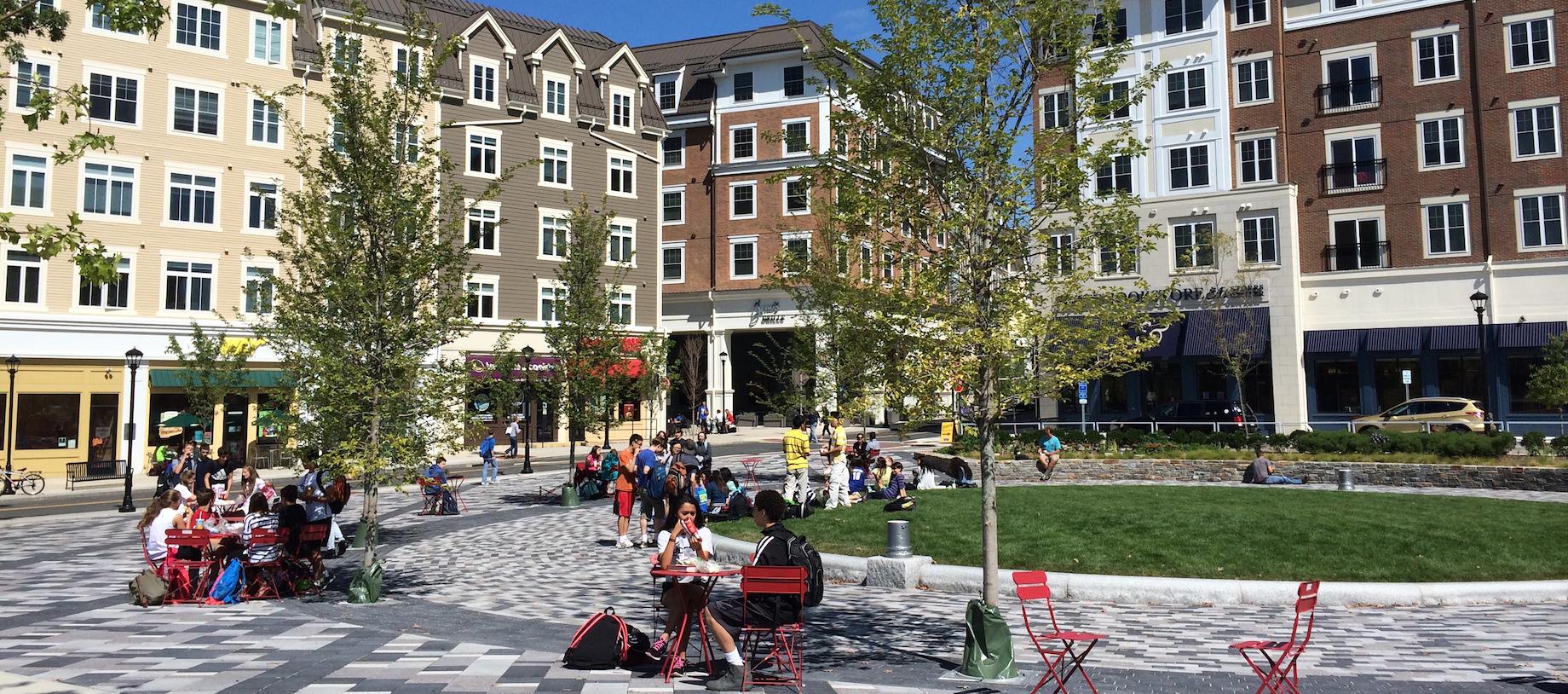
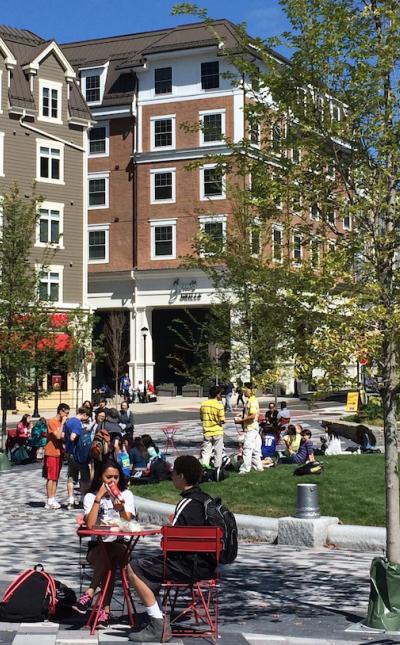
At CNU 35, we will explore the public realm as a foundational building block of strong, connected, and resilient communities.
Submit to the CNU 35 Call for Session Proposals here. On this page, you can learn more about the CNU 35 program elements:
- Key deadlines in the development of the program
- CNU 35 session types
- Questions the CNU 35 Program might answer
- Focus Language and its integration into the program
The CNU 35 Program is currently in development.
Key deadlines:
- October 29: Call for Session Proposals released to CNU Members
- November 1: Call for Session Proposals released to the public
- November 26: Call for Session Proposals window closes
- December 7 - January 15: Congress Program Committee works on final program
- February 5: All submitters notified of proposal status
- February 22: Early Bird Registration opens
- March 1: Deadline for selected presenters and speakers to register for Congress as confirmation of program delivery
- April 16: Last day for speakers to register with a discount
- April 30: End of Early Bird pricing
Session Types
Educational Sessions: These sessions provide the backbone of Congress learning opportunities. They are designed to be a deep dive by subject matter experts into core new urbanist topics, issues around the Congress Focus, or current issues in the practice. Educational Sessions can range from entry-level introductions to aspects of new urbanist practice and innovation, to advanced learning around technical subjects, practice, or design. They provide an opportunity for expert presenters to share knowledge directly with attendees. Attendees should be regularly engaged in conversation or activities throughout each session to advance their comprehension of the subject matter. Each educational session should have a facilitator who ensures the presentation is cohesive and delivers on the learning objectives, especially if there are multiple presenters.
Implementation Sessions: To help expand the body of built examples and adopted policies that make up the practice of New Urbanism, Implementation Sessions are designed to provide attendees with a demonstration of the effective implementation of a policy, strategy, or design technique used in achieving our shared vision. They provide an opportunity for practitioners of various levels of experience to share knowledge and direct experience of implementation with attendees. Each implementation session should have a facilitator who ensures the presentation is cohesive and delivers on the learning objectives, especially if there are multiple presenters.
Meetings: Curated outside of the call for session proposals, CNU makes space at the annual Congress for focused discussions, critiques, and deep dives into specific areas of new urbanist practice. Meetings are not panel presentations, should be related to the Congress Focus, and solicit meaningful engagement from the participants. Meetings should have an outcome (i.e. gather interest in drafting a document) and do not provide CEUs. Examples of a previous successful meeting and its outcome: At CNU 33, a group of transportation planners got together to discuss the landscape of their work given the political climate of 2025. As a facilitated conversation, attendees shared individual experiences, goals, ideas, and concerns - ultimately resulting in the group building an agenda for what New Uranists in transportation fields wanted to accomplish. This meeting resulted in a formal Transportation Resource Forum, a group that continues to meet and is planning a formal gathering in conjunction with CNU 35. Each meeting should have a facilitator to lead the discussion towards the intended outcome and a scribe to capture the outcome. If you are interested in hosting a meeting, email us.
Project Showcase: This session type is your opportunity to show a single project or suite of projects that demonstrate an aspect(s) of or innovation in the new urbanist practice. Project Showcase sessions can include critiques, practical analysis, lessons-learned, demonstrations of success or failures, the disconnect between the plans and reality of a project, or project outcomes. This session type is designed to be a quick look at something attendees can learn from - with the expectation that each project fits in a 15-minute window (inclusive of questions). Single project submissions will be combined by the Congress Program Committee into cohesive sessions that are topical, thematic, or otherwise make sense together. In the instance of combined projects, CNU may assign a facilitator to ensure the session remains cohesive for the attendees within a 75 or 60 minute session.
Workshop: Workshops at the annual Congress are how New Urbanists innovate together in person; where our attendees can brainstorm solutions to problems in real time with their peers. They are curated by CNU in partnership with the Local Host Committee and our members. They provide an opportunity for attendees to be led in in-depth discussion and ultimately produce a knowledge resource that furthers the practice of New Urbanism in a specific area. Oftentimes, Workshops address the intersection of policy and design, but this is not a requirement. The workshops themselves are 120+ minutes of a multidisciplinary group of attendees and speakers working together on an issue or problem. Workshops are run by a Chair and at least one facilitator, who prepare activities, agenda items, discussion points, and proposed outcomes in advance. The workshop continues a multi-disciplinary approach to problem solving through strong leadership, facilitation, and attendee participation. Workshops arrive at a set of conclusions that will help advance new urbanist practice. Successful workshops require a dedicated chair who provides leadership and curation. The chair ensures the Workshop is not simply a long panel by preparing a detailed agenda, recruiting facilitators and discussion leaders, and encouraging the participation of attendees. The chair is also responsible for ensuring notes, graphics, drawings, etc. are captured as well as lead the development of a Workshop Report (knowledge resource) that captures the thought leadership of the event and any applicable next steps. What can you expect as a participant at a Workshop? Collaborative problem solving on an issue.
Workshops may require pre-registration and prep-work prior to attending. Attendees should expect to participate and work towards an outcome. Interested in hosting a workshop? Email us.
Past Congress workshops and their results:
- CNU 32 Climate Workshop - resulted in the framework for the Climate Action Handbook, published in early 2026.
- CNU 31 Transportation Workshop - resulted in the coalition of Highways to Boulevard advocates who continue to work on the CNU Transportation Manual
- CNU 33 Housing Workshop - resulted in the organization of Council IX on Affordable Urbanism
What questions will the CNU 35 program ask?
- Designing for Social Connection: How can the physical form of streets, neighborhoods, civic spaces, and building frontages encourage social interaction, strengthen community identity, and foster a sense of belonging?
- Reclaiming the Public Realm: How can communities transform automobile-oriented streets, disconnected neighborhoods, and underutilized spaces into welcoming places that prioritize people and shared civic life?
- Connecting Design and Community Resilience: What role does the public realm play in strengthening social networks, supporting local problem-solving, and helping communities respond to economic, environmental, and social challenges?
- Rethinking Transportation Planning, Engineering, and Street Design: What changes to street design standards, transportation policies, and infrastructure investment priorities are needed to balance mobility and access with walkability, human-scaled design, and vibrant community life?
- Advancing Inclusive Public Spaces: How can planning, design, and public investment create places that are accessible, welcoming, and meaningful to people of different ages, abilities, backgrounds, and incomes?
- Breaking Down Professional Silos: How can planners, designers, engineers, developers, public officials, and community organizations collaborate to create a coherent public realm rather than a collection of disconnected projects?
- Aligning Policy, Investment, and Design: What changes to zoning, transportation standards, development regulations, financing, and public investment are needed to make connected, human-scaled communities easier to build and sustain?
- Learning from Implementation: What can successful projects, emerging practices, and lessons from unsuccessful efforts teach us about creating and maintaining public spaces that support vibrant community life?
- Working within Market Restrictions: How can we strive to build beautiful, well-functioning spaces while dealing with the very real demands of capital financing and market response?