Neighborhood combines affordable housing with design excellence


The Village of Heulebrug is a 66-acre urban village, an extension of the City of Knokke-Heist, Belgium, that delivers social and affordable housing along with exceptionally competent vernacular architecture. DPZ CoDesign was recognized by the 2026 CNU Charter Awards jury.
This village takes the form of an urban neighborhood—a modified grid at the scale of a five-minute walk from the center to the edge—comprising a near-complete example of traditional neighborhood design. DPZ collaborated with the late Leon Krier in the 1998 charrette. The vision has been implemented and stewarded over nearly three decades by the municipal client, WVI (West-Vlaamse Intercommunale).
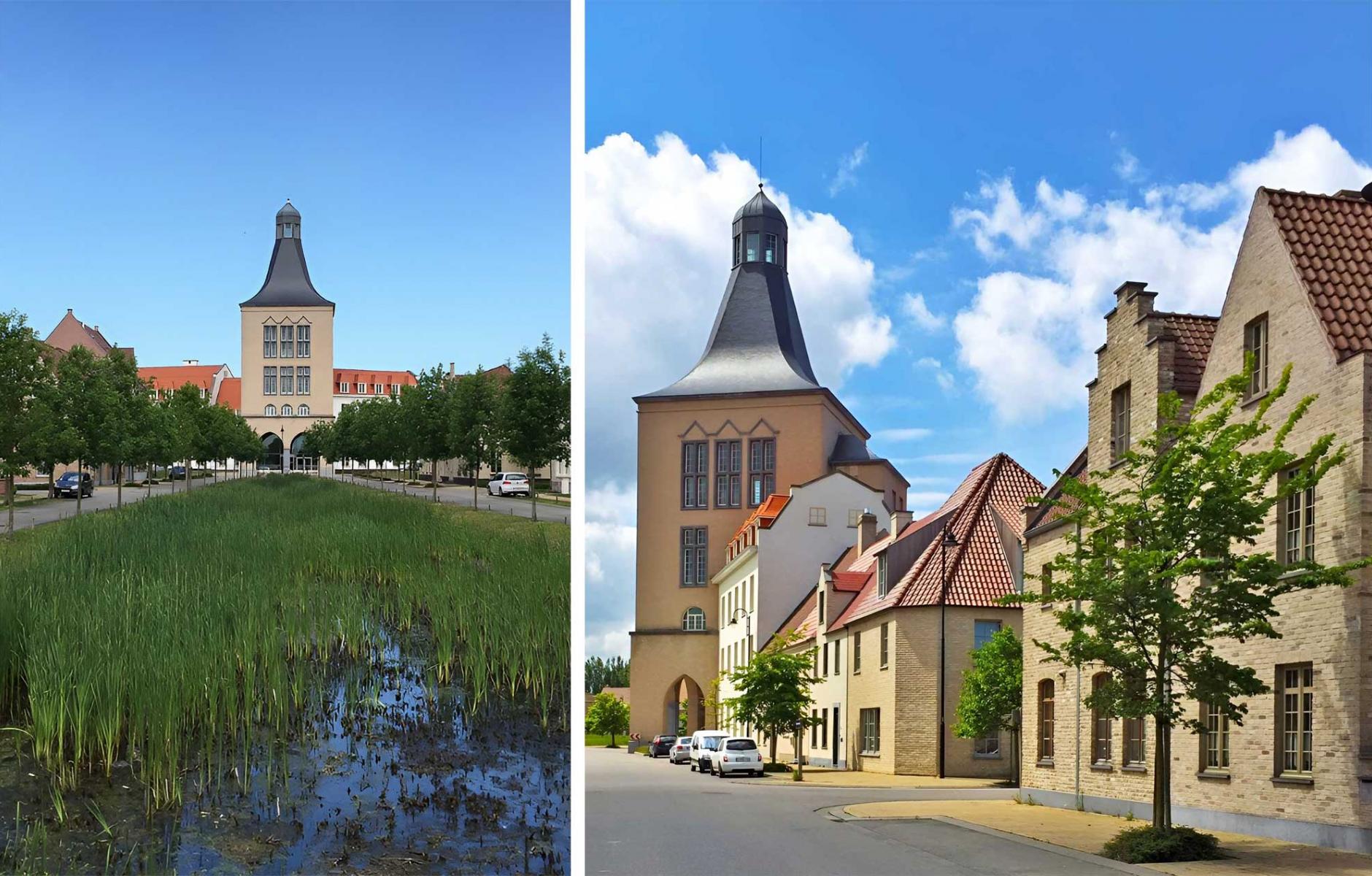
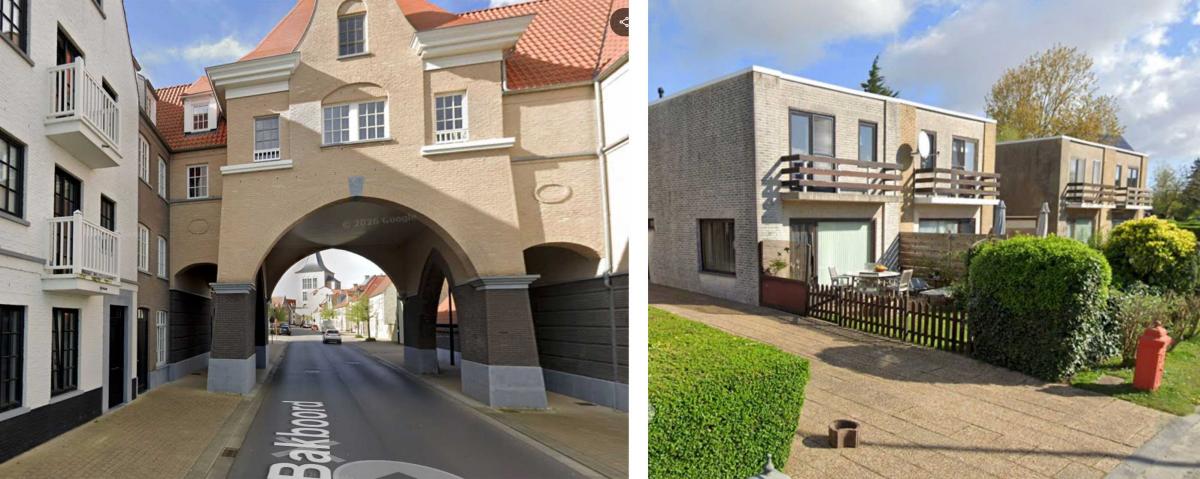
The blocks are organically shaped, with narrow streets that emulate the best neighborhoods of the historic seaside resort city. Even the one busier street through the village was reduced to a size that keeps traffic moving slowly, balancing power among pedestrians, bicyclists, and drivers. A tower next to a square punctuates the center of the new neighborhood.
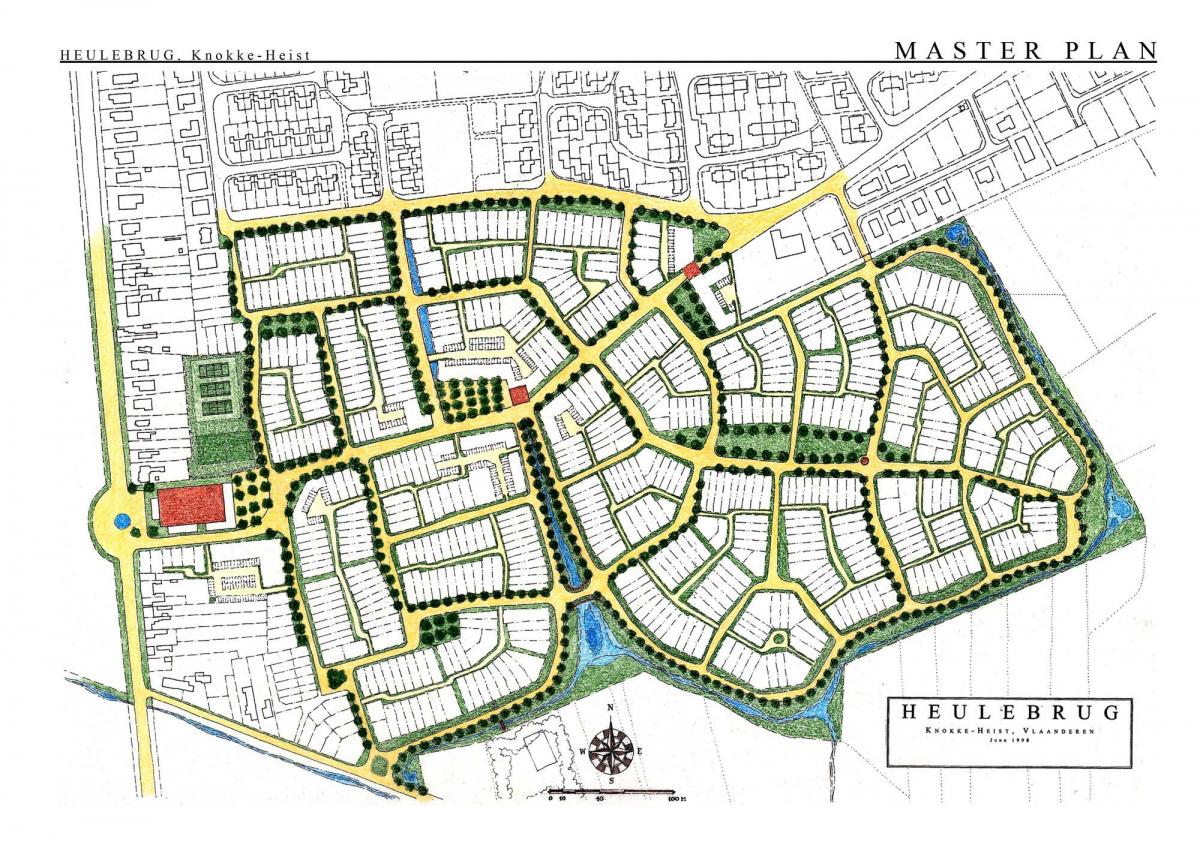
The civic tower terminates views and is visible over the roofs of buildings throughout much of the village, orienting pedestrians to the center. Northern and western edges of Heulebrug seamlessly connect to the existing urban fabric, while the southern and eastern edges face the City’s greenbelt. A trail and right-of-way preserve views of the open space, which the planners describe as a “second coastline.”
Heulebrug offers a mix of market-rate and affordable housing through public-private partnerships, including a wide range of housing types for the City, which has experienced rising prices due to international demand for real estate. Heulebrug’s first phase, launched in 2002, included 185 building plots, 26 social (publicly owned) housing units, and 124 private apartments, reports the design team. Of the 124 apartments, 90 were available for sale, while 34 (25 percent cheaper) were offered exclusively to buyers meeting income conditions.
Sales for the second and final phases began in 2017, including 159 council plots for single-family homes and at least 54 social housing units, they report. The plots were allocated objectively, prioritizing young resident families, and conditions were tightened to prevent financial speculation, such as a 20-year ban on reselling the building plot.
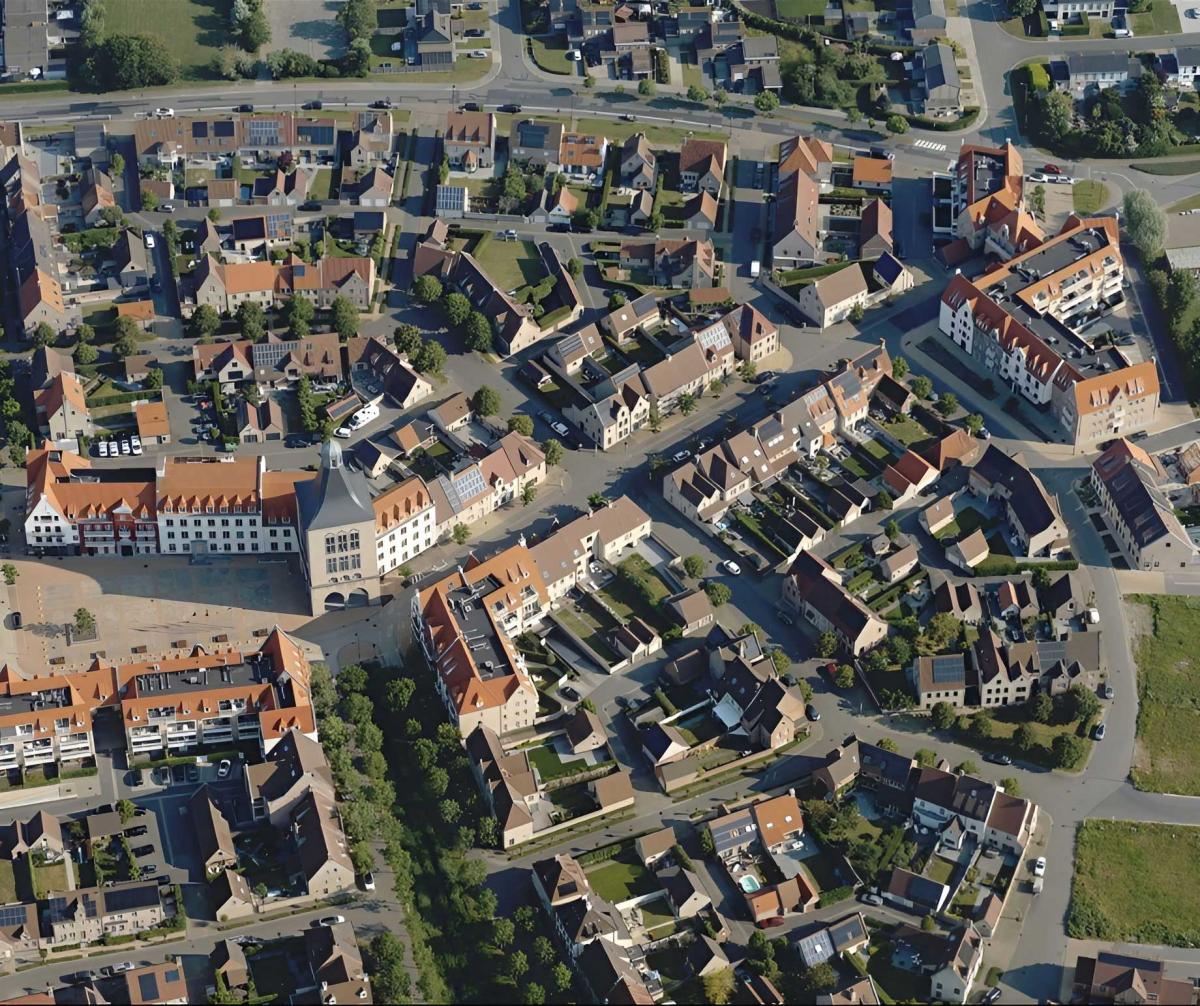
This phase nearly completes Heulebrug, with affordable, high-quality, and sustainable rental homes on 24 of the 159 plots, which will be offered to the Affordable Rental Agency in Knokke-Heist. The village is about 80 percent built out with 851 living spaces, civic uses, and a small amount of commercial space.
At the time, traditional architecture was difficult to build in Belgium, and the plan and design came under attack from the architecture profession. But it had the support of then-Mayor Leopold Lippens, who decried the ugliness of late 20th Century city building and sought a better example for Knokke-Heist. He insisted on hiring DPZ after learning about Seaside. Lippens died five years ago, but lived to champion the project for decades—along with people he hired like engineer-architect Mathias Delrue, who has worked on Heulebrug for more than 25 years.
Recognizing the difficulty of building Flemish vernacular styles in a Modernist design environment, the team created a simple yet precise one-page code of urban and architectural standards. The code governs design aspects like roofs, windows and doors, exterior walls, and other elements. The team also created an elevation matrix and renderings to make the text code visually clear to architects, builders, public officials, and residents. The public championing of the design code paid off in today's remarkable results.
This village demonstrates that a municipally-sponsored development designed to address the housing needs of lower-income residents can transcend the conventional perception of a “housing project.” Social housing typically consists of uniform, repetitive buildings set amidst minimal, ill-defined landscapes that disregard both natural and cultural contexts.
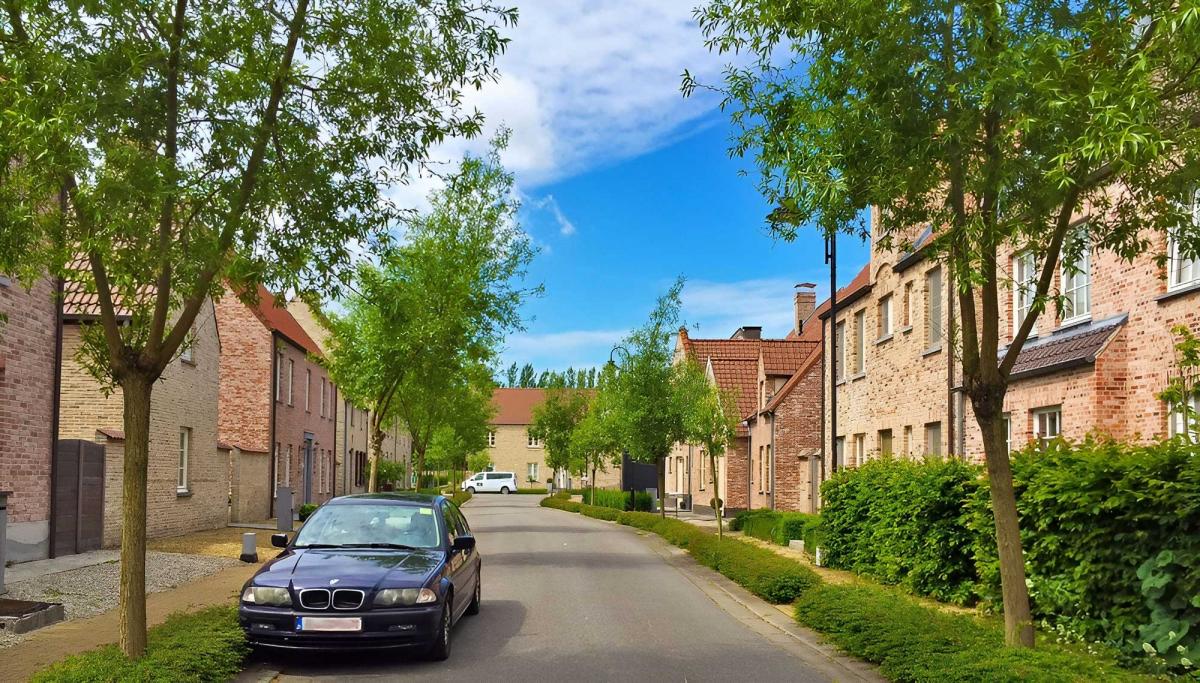
The approach for affordable housing has inspired policy changes throughout the City. “Thanks to the continued commitment of the mayor and the entire town council, the Heulebrug project has led to the establishment of a broader and more ambitious affordable housing policy for the entire municipality,” explains Delrue. “One important outcome has been the introduction of diverse housing typologies within the neighborhood, including terraced houses, small-scale apartment buildings, and ground-floor spaces for commerce and services. In addition, the renewed appreciation for terraced housing—supported by the platting system (including service alleys and the potential for accessory dwelling units in rear garage structures)—has made these typologies increasingly common in densification, urban infill, and repurposing projects throughout Heist.”
The plan emphasizes civic space for play, activities, and general physical exercise, and civic buildings. The municipal tower and community building at the Central Square (named ‘Kraaiennestplein’ or ‘Crow’s Nest Square’ in English) includes the offices of the public social welfare center, the social housing company, the municipal affordable renting organization, a local police station, and community gathering spaces. The top two levels of the tower include several large public meeting rooms that are used by local associations, and the official city council meeting also takes place there twice a month.
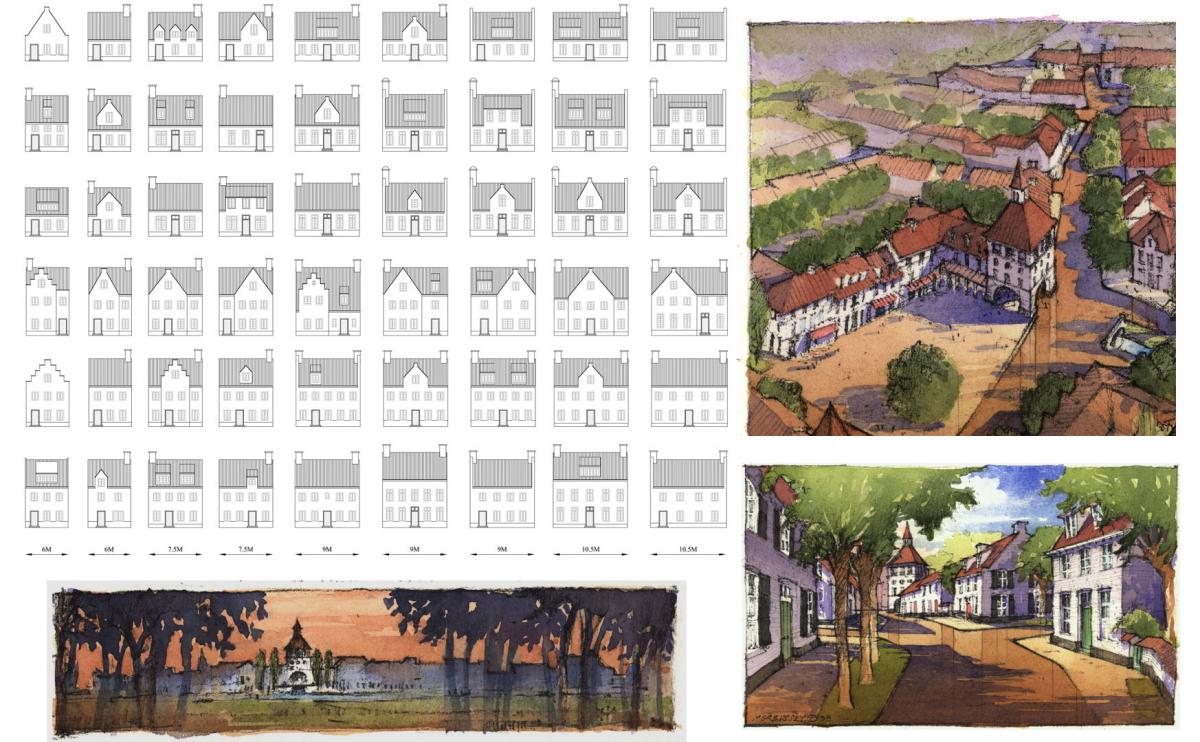
There’s also an eastern gate over the main road that goes through the village, which is a civic monument, and a bridge at the central canal. Both feature views of the tower.
“The master plan for the Heulebrug residential area in Heist was ahead of its time,” explained the late Leopold Lippens. “This large-scale residential project was developed in the late 1990s by a visionary team of designers according to the principles of New Urbanism. Creating a true village on a human scale was the key principle. I was committed to defending it.”

Village of Heulebrug, Knokke-Heist, Belgium
- DPZ CoDesign, Principal firm
- Leon Krier, Master planner
- WVI (West-Vlaamse Intercommunale), Municipal client
2026 CNU Charter Awards Jury
- Eric Kronberg (chair), Principal, Kronberg Urbanists + Architects in Atlanta, GA
- Majora Carter, CEO of Majora Carter Group in the Bronx, New York City
- Marques King, Studio Director + Senior Architect, Pure Architects, Detroit, MI
- Jeremy Lake, Principal, Union Studio Architecture & Community Design, Providence, RI
- Joanna L. Lombard, Distinguished Professor at the University of Miami School of Architecture, FL
- Rico Quirindongo, Director, City of Seattle Office of Planning and Community Development
- Ashley Terry, Director, President of Development at Pivot Real Estate, Oklahoma City, OK