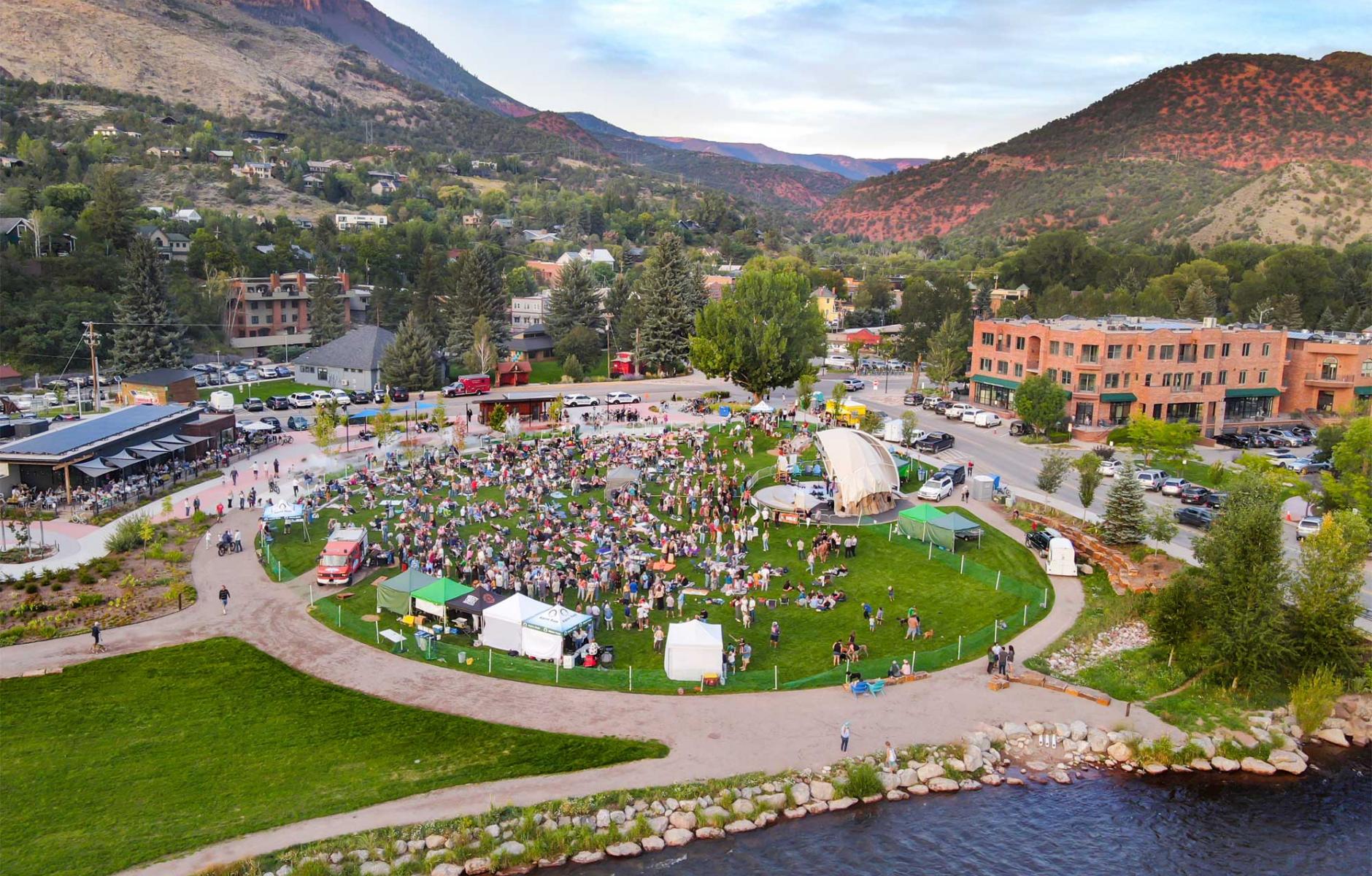
Downtown transformed by new streetscape and park


A streetscape and park project revitalized the economically struggling downtown of a historic Colorado mining community while engaging the town’s history and culture. The Basalt Downtown Streetscape & River Park overcame controversy and a mid-project special referendum to create accessible gathering spaces for the entire community. Connect One Design won a Merit Award in the 2026 CNU Charter Awards.
The project represents a large public investment in the public realm of Basalt, a coal-mining town that thrived through the railroad era. “But by the 2010s, the town lay in a social and economic quagmire,” according to the design team. “Straddled between the youthful, artistic towns down-valley; and the elite prosperity of Aspen up-valley, Basalt had a reputation for stagnation and lacking its own identity.”
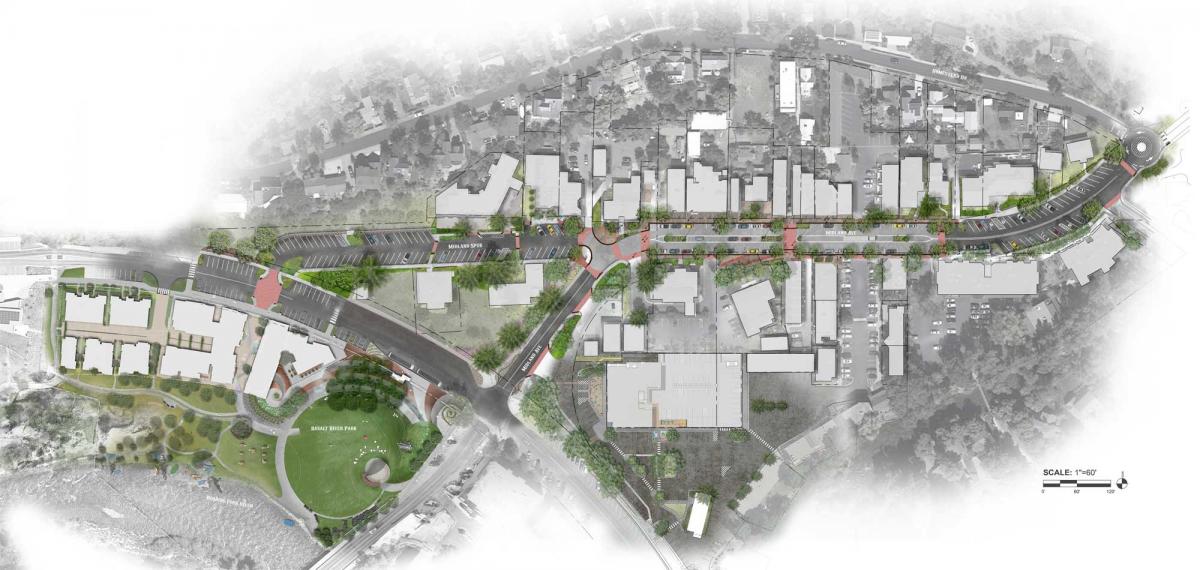
A $2 million riverfront park generated a seven-fold increase in visitors. “Along the banks of the Roaring Fork River, the 3-acre Basalt River Park was a nearly decade-long transformation from historic man-camp threatened by yearly floods into the Town’s beloved primary gathering space.”
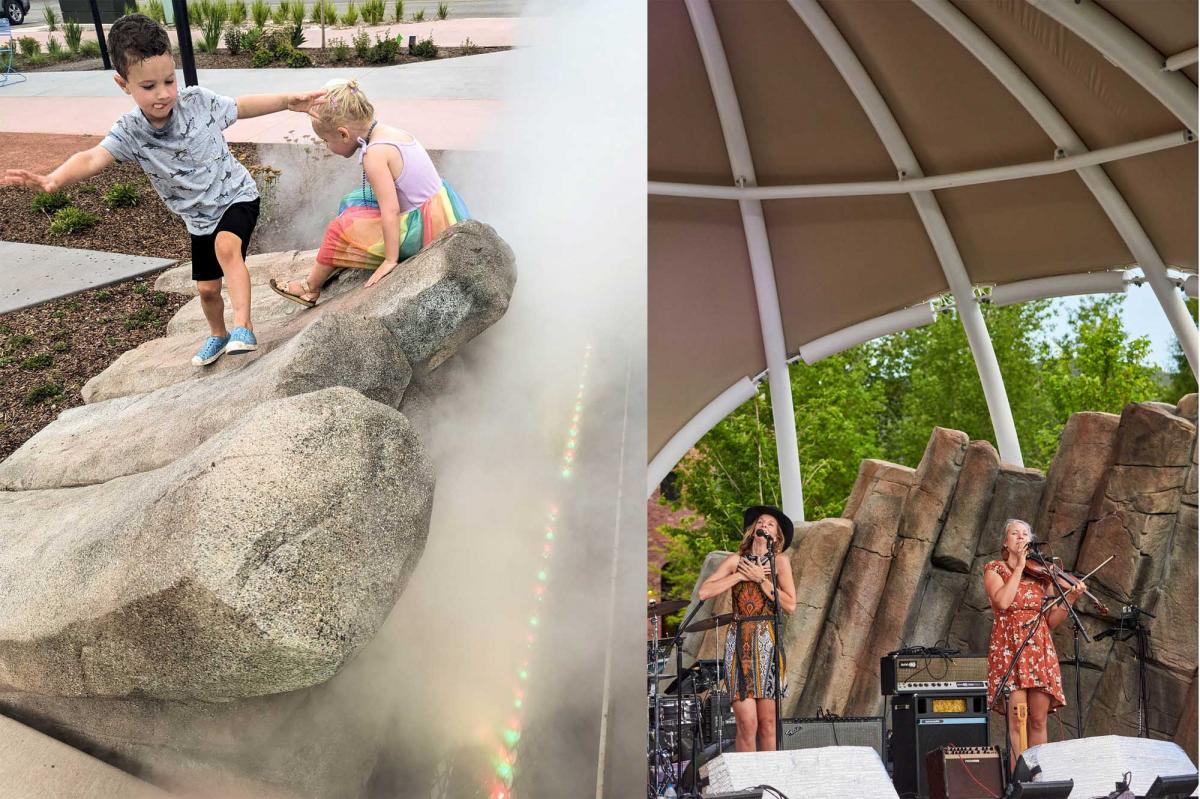
Designed as a circular river “eddy,” the park includes spaces for art, play, and respite. The iconic bandshell features a bouldering wall. In the plaza, basaltic uplift formations, which give the town its name, host a water-misting feature. The design includes a triple-wide slide, slack lines, willow forts, café tables, and a railroad track that provides seating during concerts. In short, it’s a cool space on the water, walkable to the downtown core.
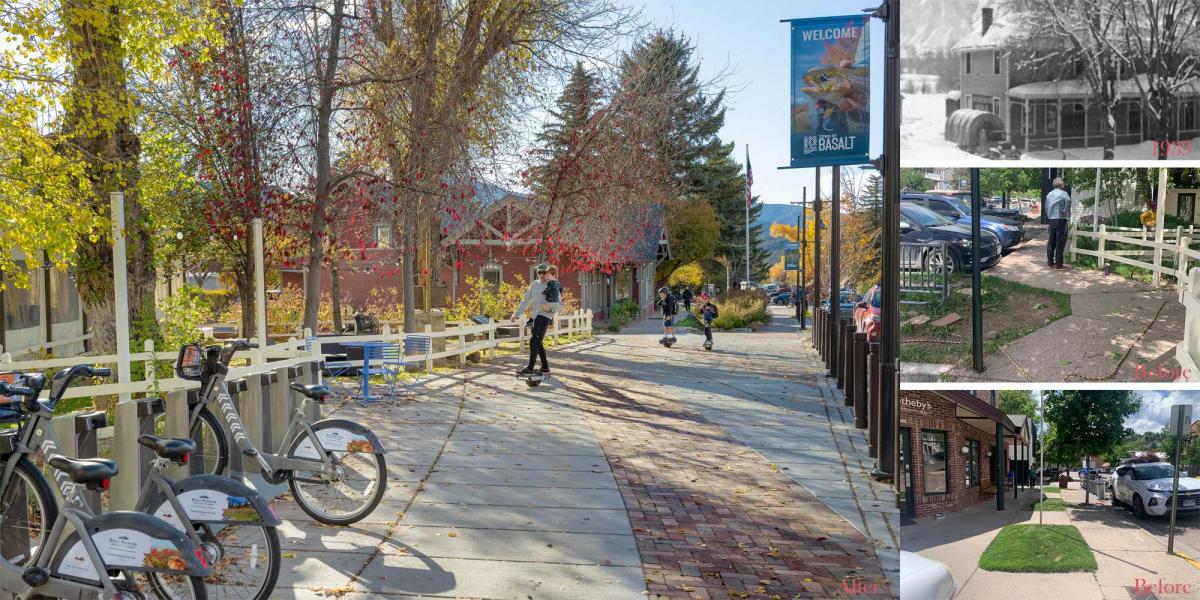
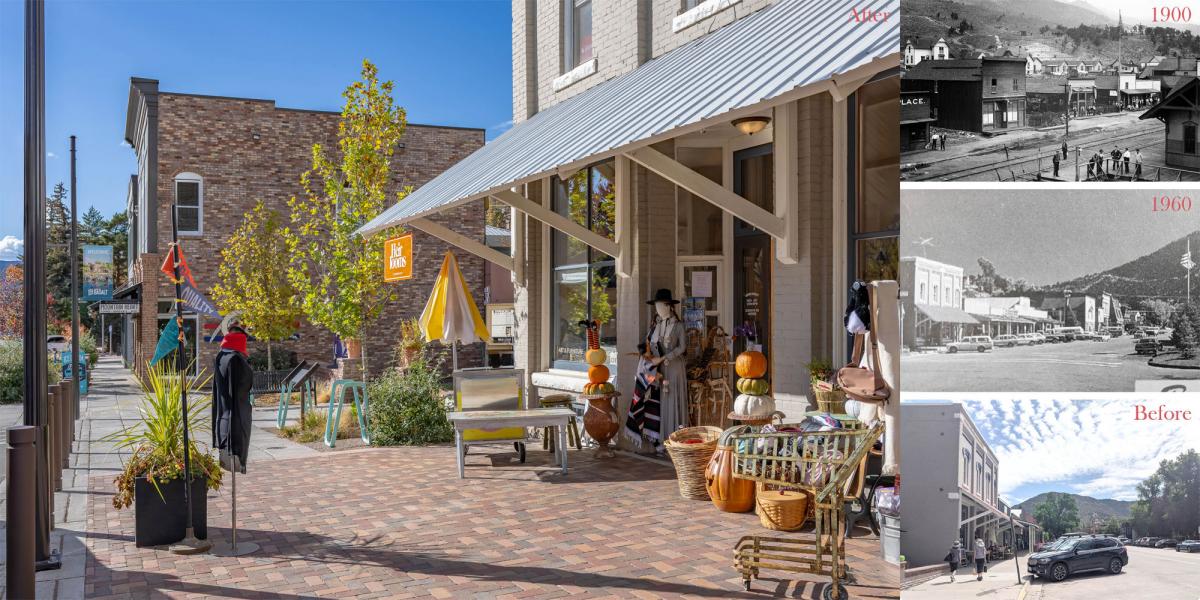
The larger part of this project involved a nearly $10 million revitalization of the historic main street, Midland Avenue, which needed upgrades to the failing utility and above-ground infrastructure. The new design is based on the Dutch “woonerf” concept. The two-block core of the street was switched from angled to parallel parking to provide more room for pedestrians and outdoor retail space. In other areas of the downtown, angled parking was added to maintain the total number of on-street spaces. Protected crosswalks were built, and curb extensions reduce crossing distances at intersections. Rain gardens next to crosswalks create a safe space for pedestrians at the center of the street. The wooden beams sticking up from the rain gardens speak to the historic railroad design aesthetic and fit the town's informality.
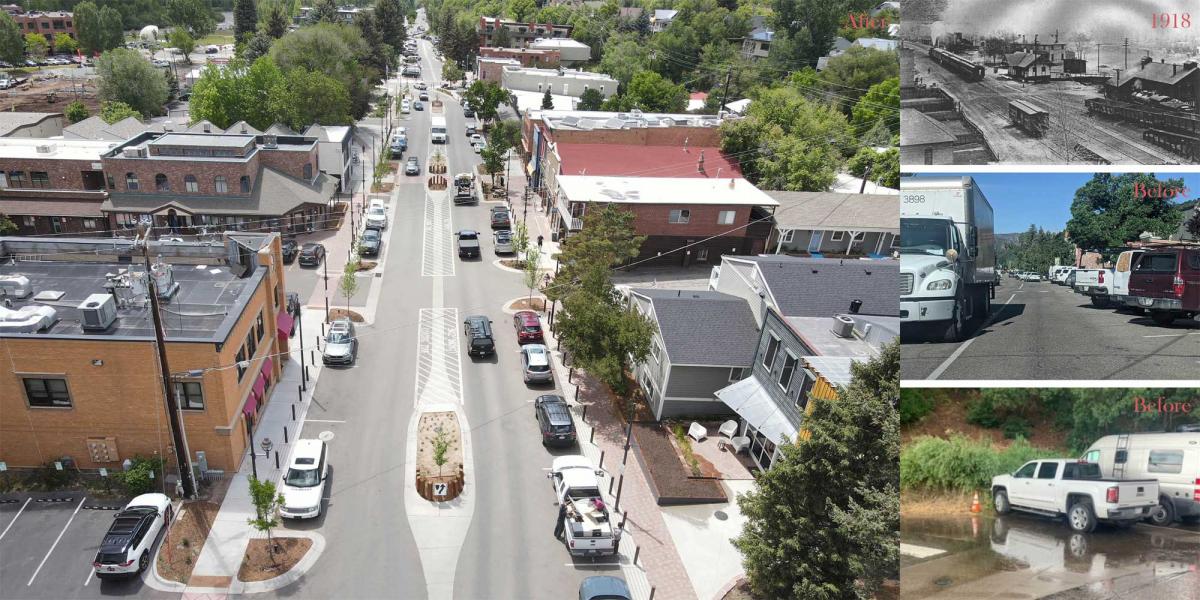
“An immense amount of research was done by the design team to understand the context in which the sites developed over the century, but also to get intricate details of the design historically accurate,” notes Connect One Design. “For instance, each historic property line along Midland is demarcated with an engraved paver stone, illustrating who owned that property circa 1900.”
Principles of the New Urbanism informed the project throughout. Public realm strategies of Jane Jacobs, William H. Whyte, Jan Gehl, Michael Southworth, and Eran Ben-Joseph were employed. The team approached streetscape projects as a means of creating “complete streets” that serve all users, particularly those outside of automobiles.
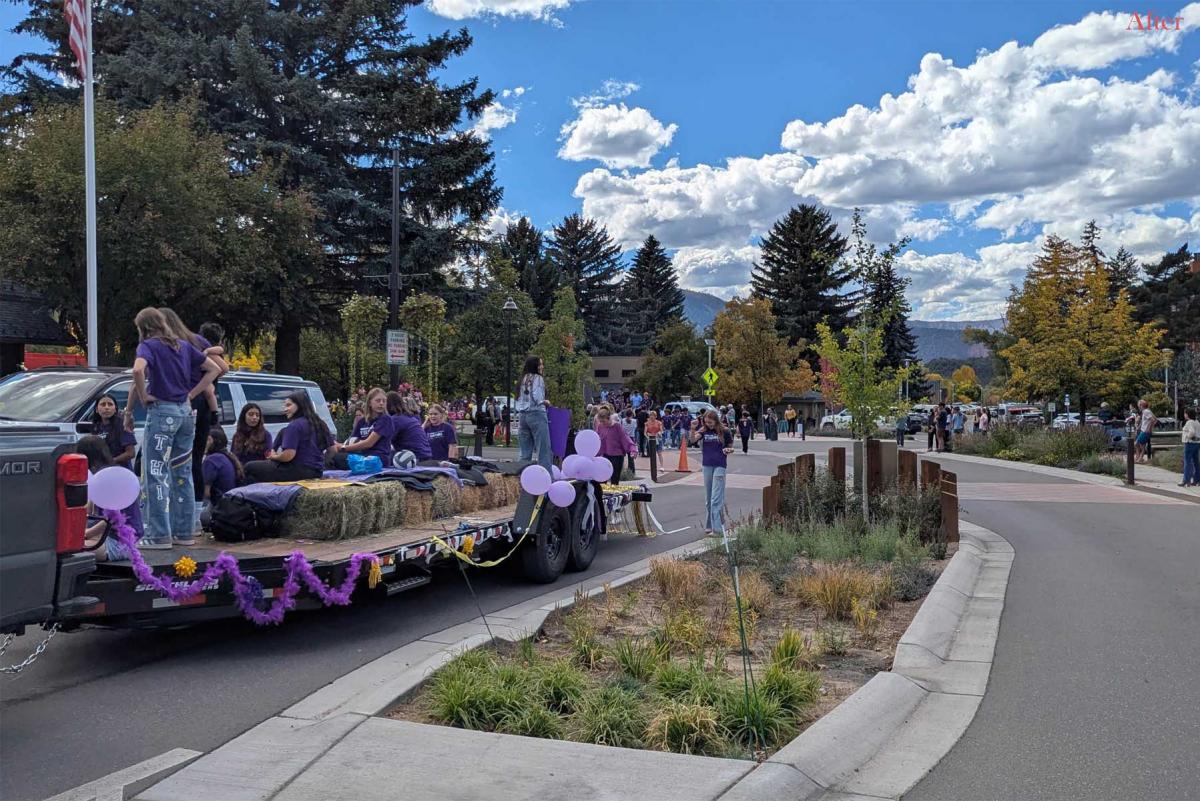
The town overcame harsh criticism from a faction of the community to complete the work. The opposition centered around loss of parking spaces in the two-block core, and the impact of construction on main street businesses. The critics tried to stop the Midland Avenue changes, even when the project was well under construction, by spearheading a special election. Yet citizens voted 71-29 to complete the renovation, mirroring the results of a previous referendum to fund the project in the first place. “The public engagement was comprehensive and inclusive, even in the face of loud opposition from a minority of residents,” the team reports.
Downtown merchants had barely survived the Covid recession, and the negative impact of construction was widely feared. The construction plan went to great lengths to reduce the economic hardship. “Hardscape along the businesses was carefully demo-ed, formed, and poured all in one day (one 20-foot building face at a time) so that businesses maintained operating hours,” the team explains. “Additionally, a 36-hour all-nighter to install and connect the water main so that businesses didn’t lose water for more than one day was miraculous.”
All of this work is setting up Basalt for economic revitalization and social cohesion for years to come. “Basalt’s downtown revitalization truly strengthened the coherence of the town by linking the new riverfront Basalt River Park with the historic commercial core through accessible streets and more unified public spaces,” explains Catherine Christoff, Town Engineer and Project Manager.
The two interconnected projects are not alone in contributing to the transformation of Basalt over the last 15 years, the team notes: Other developments, backed by private investment, include affordable housing in the downtown core, restaurant space on the park, indoor community activity space, a non-profit Roaring Fork River conservation foundation, and a non-profit climate institution. However, the park and streetscape projects showcase the deliberate public investment in the public realm.
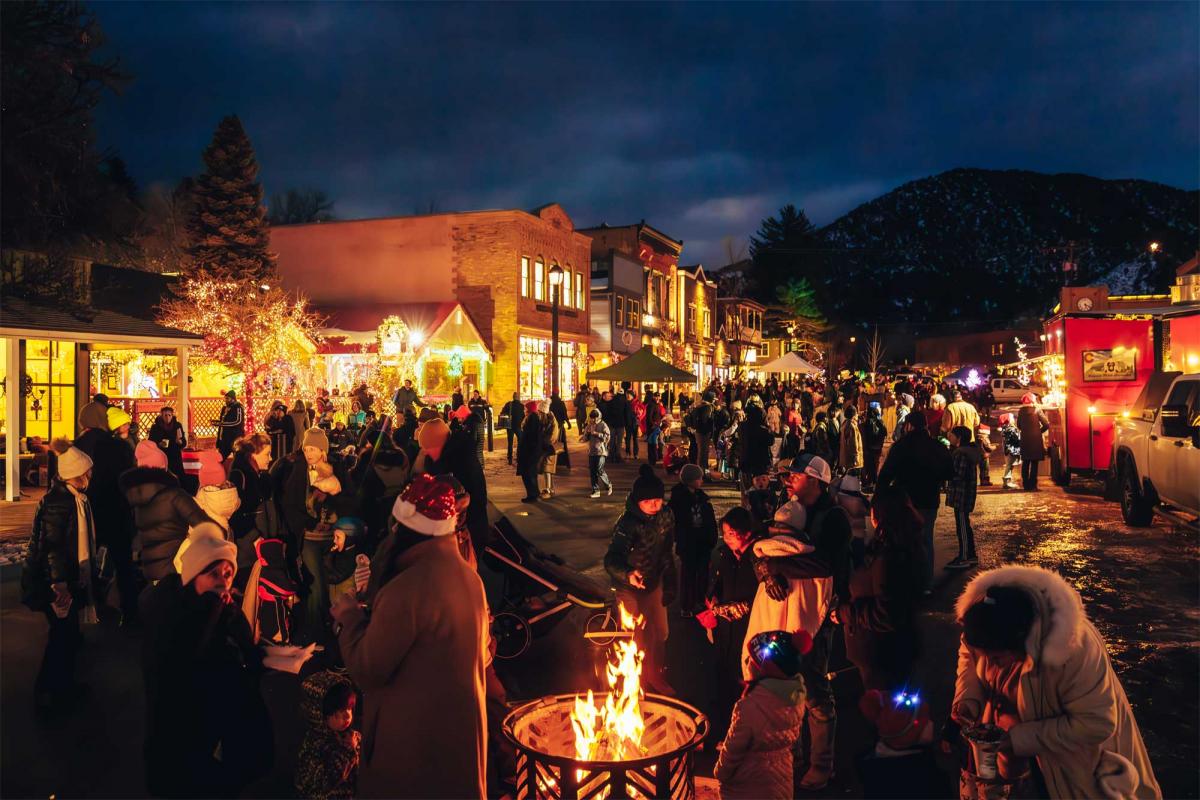
Kris Mattera, President of the Chamber of Commerce, sums up what the streetscape and park project have meant to the city: “The Midland Avenue Streetscape project has honored the historical, railroad roots of downtown Basalt, while allowing for modern utilities and amenities. Not only are the wider sidewalks a great improvement for walkability regardless of mobility needs, but it also provides local businesses additional physical space to interact with people walking by. The additional space has also created opportunities for new public art installations, dotting downtown. The greatest aspect is the use of Midland Avenue as an event space—Basalt's Merry on Midland celebration is the highlight of the year, made possible by this project, creating a wonderful, accessible gathering space for locals and visitors alike.”
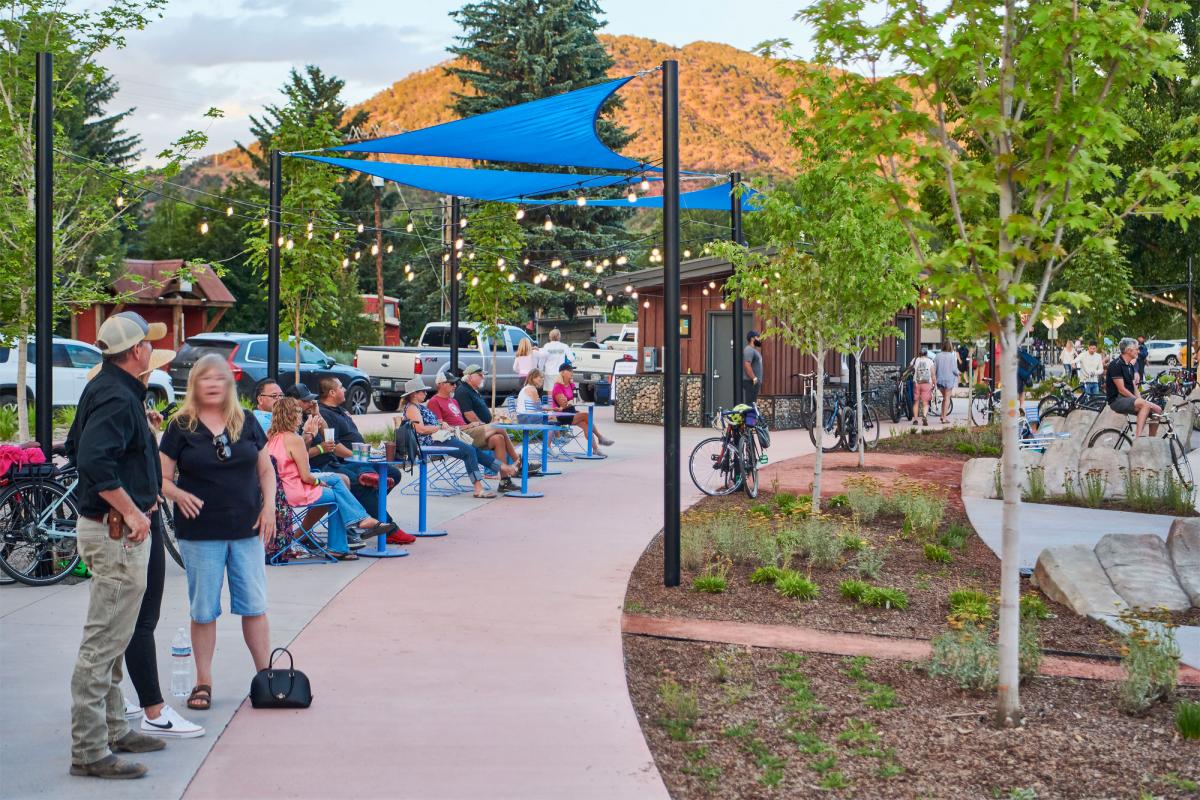
Basalt Downtown Streetscape & River Park
- Connect One Design/Lionheart Places, Principal firm
- Town of Basalt, Client
- Sopris Engineering, Civil engineer
- Rocky Mountain Custom Landscapes, Landscape contractor
- Stutsman Gerbaz, Streetscape General Contractor & Earthmoving
- Wember Inc., Streetscape Owner's Representative
- ID Sculpture, Basalt Geologic Misting Features & Climbing Wall Design and Fabrication
- Full Light Communications, Streetscape Public Communications & Engagement
- Ashley Concrete Structures, Streetscape Concrete Sub-Contractor
- Azure Engineering, Streetscape Irrigation Design
- Cushing Terrell, Streetscape Electrical Engineer & Phase 1 Civil Engineer
- Bryan May Architecture, Eide Industries, Burlingame Construction, Bus Shelter/Bathroom Architect
- Z Group Architecture, Bus Shelter/Bathroom Architect
- Basalt Chamber of Commerce, Communications & Business Liaison
- The Lighting Agency, Lighting Representative
- Snooks Concrete, Park Concrete Sub-Contractor
- Colorado Outdoor Environments, Park Irrigation Design
- Walters Company, Park Phase 1 Infrastructure & Concrete General Contractor
2026 CNU Charter Awards Jury
- Eric Kronberg (chair), Principal, Kronberg Urbanists + Architects in Atlanta, GA
- Majora Carter, CEO of Majora Carter Group in the Bronx, New York City
- Marques King, Studio Director + Senior Architect, Pure Architects, Detroit, MI
- Jeremy Lake, Principal, Union Studio Architecture & Community Design, Providence, RI
- Joanna L. Lombard, Distinguished Professor at the University of Miami School of Architecture, FL
- Rico Quirindongo, Director, City of Seattle Office of Planning and Community Development
- Ashley Terry, Director, President of Development at Pivot Real Estate, Oklahoma City, OK