City adopts code for compact, sustainable growth


Note: CNU 34 will be held in Bentonville, Arkansas, May 12-16, where the plan and code will be discussed along with important urbanism topics worldwide.
The Bentonville Community Code, a unified, Transect-based land-use code, was adopted by the City Council in mid-April. The action codifies the City’s recent New Urbanist community plan, approved in 2025. Led by DPZ CoDesign, Plan Bentonville, including both plan and code, was recognized by the 2026 CNU Charter Award jury.
Bentonville, Arkansas, the headquarters of Walmart, is experiencing rapid, intense growth that has transformed what was a small town in 1980 into a city of more than 60,000 residents—and it is expected to more than double in population to 140,000 by 2050. The development has been ad-hoc, largely low-density, and automobile-dependent. Fiscal analysis shows the recent growth cannot pay for itself, the planners report.
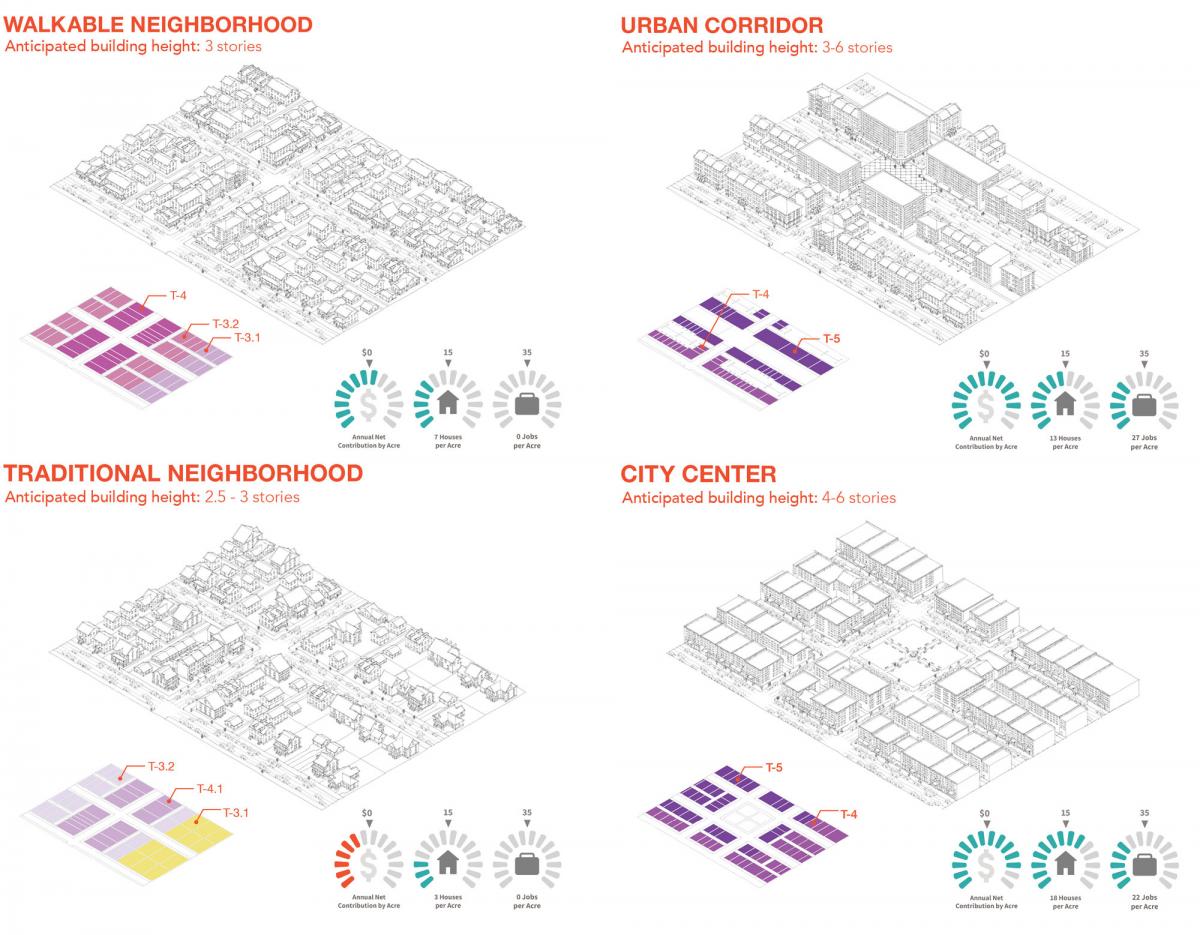
“Left unaddressed, these conditions would have continued to erode public trust, strain municipal finances, and force growth decisions into contentious, project-by-project negotiations,” says DPZ CoDesign. Plan Bentonville, which sets an example for the Northwest Arkansas region, can now be implemented with the Council’s action.
Plan Bentonville directs growth to new and existing walkable centers with access to jobs, services, and transportation. This compact growth yields stronger long-term returns for tax expenditures, while preserving existing neighborhoods and natural areas. The new code replaces the uncertainty of discretionary approvals with clear, by-right outcomes that align zoning, development standards, and procedures with the new policy, the planning team explains.
“Plan Bentonville is the City’s foundational planning document to guide the next 25 years of growth and beyond,” says Tyler Overstreet, the City's Planning and Community Development Director.
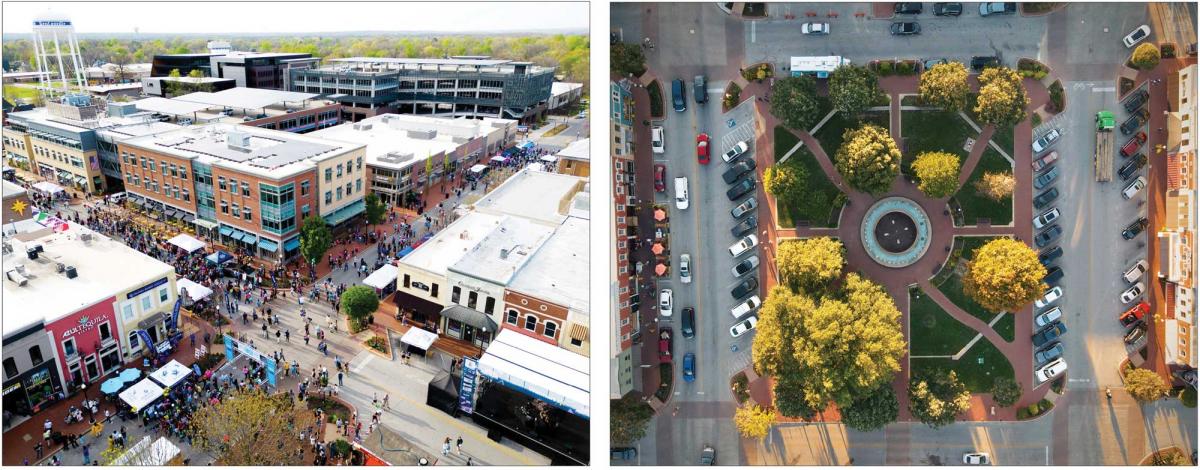
Infill housing in walkable areas
By legalizing missing-middle and small-scale multifamily housing in walkable areas, the code expands access to housing near employment, education, and daily services. Incremental infill development is permitted by right when it meets the standards, significantly reducing reliance on rezoning and discretionary approvals, the planners told CNU.
That makes development more predictable. Context-sensitive, form-based standards govern building placement, scale, and frontage in both higher- and lower-intensity areas. These standards apply consistently across projects, supporting small and large projects without project-specific negotiation.
Street and block standards in the code require connected networks that support walking, cycling, and future transit expansion, while maintaining access for vehicles and services. Streets are conceived as public spaces that foster interaction and safety, reinforcing the Charter of the New Urbanism’s emphasis on human-scaled environments and universally accessible civic realms.
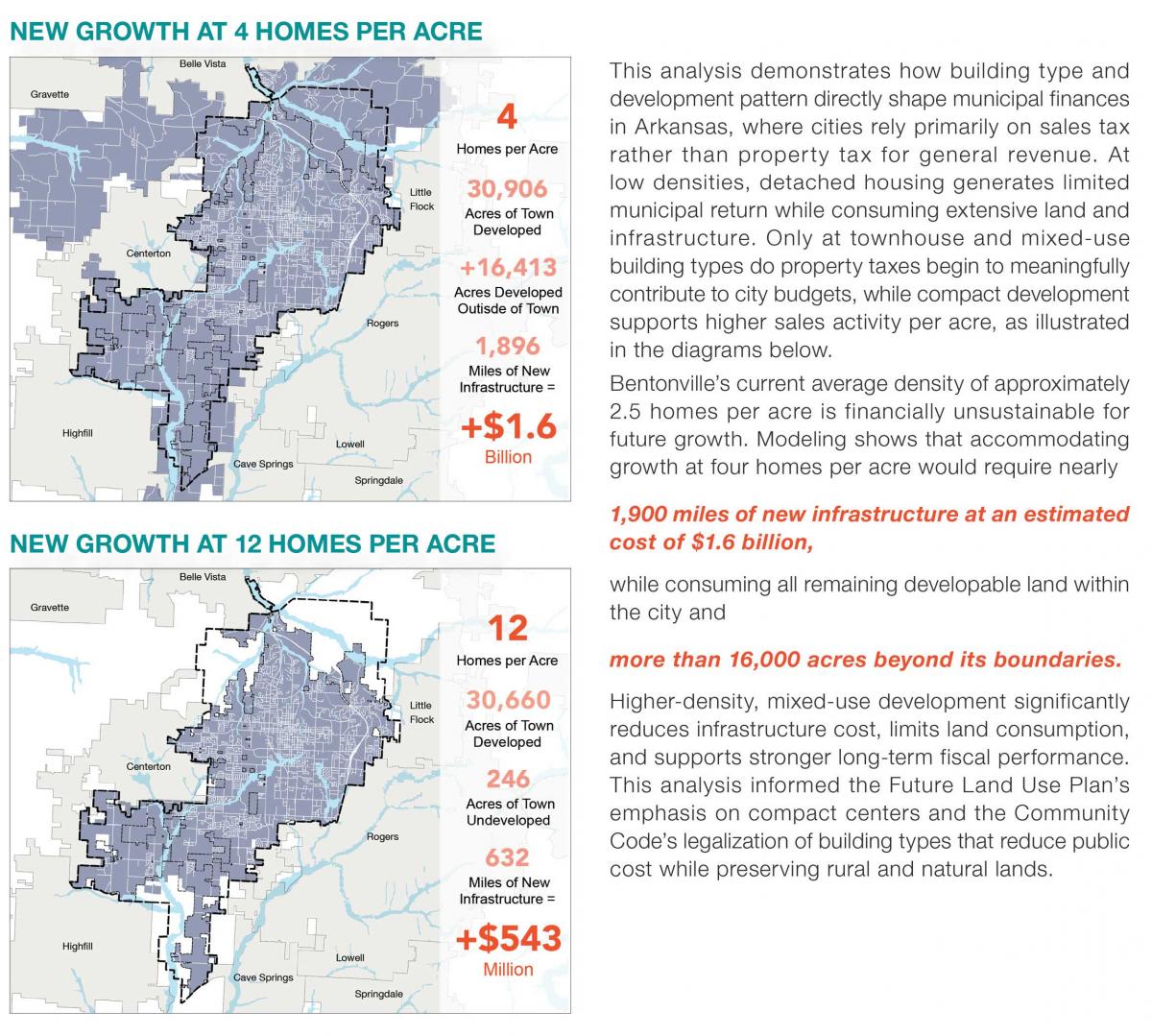
A defining feature of Plan Bentonville is the integration of fiscal performance into urban policy. Place-based fiscal analysis confirmed that compact, mixed-use places generate stronger long-term public returns than dispersed growth. By aligning fiscal outcomes with urban form, Plan Bentonville suggests that economic resilience, environmental responsibility, and social equity are not competing goals, but mutually reinforcing obligations of good governance, the planners say.
Plan Bentonville coordinates fiscal analysis, policy, regulation, and capital investment. Transportation, power, water, and wastewater departments are aligning their long-range capital improvement plans within the same planning framework, closing the gap between aspirations, regulations, and infrastructure investment that underlie policy plans.
For a city with a nascent public transit system, Plan Bentonville lays the foundation for transit-supported growth. Rather than planning transit routes in isolation, the plan places neighborhood and urban centers along corridors that are likely to be major transit routes as the region grows.
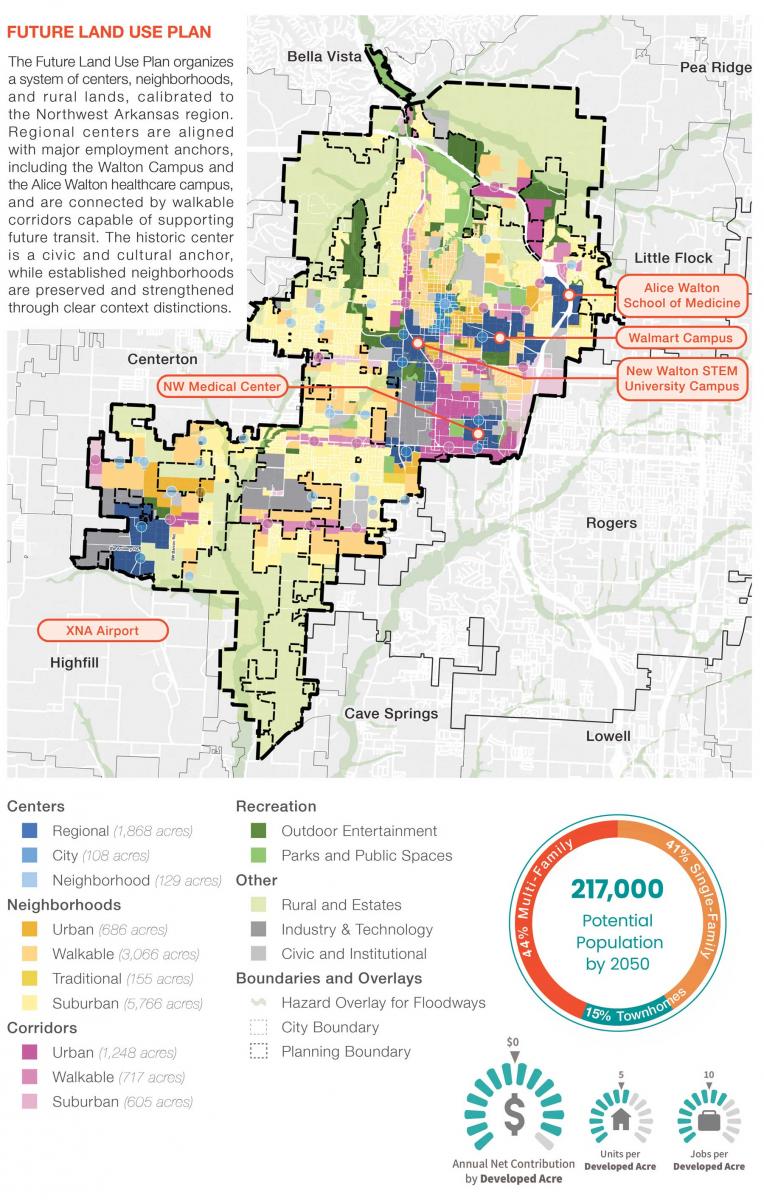
Bentonville elevates New Urbanism as a financially responsible development practice, the team reports. Compact, mixed-use places are not only encouraged but also incentivized because they perform better for residents and the public balance sheet.
“The strength of Plan Bentonville lies in its intentionality—pairing visionary leadership with data-driven decision-making rooted in place,” notes Kalene Griffith, CEO/President of Visit Bentonville. “It reflects a community that understands it is making significant, long-term business decisions about urban form, mobility, and quality of place, rather than reacting emotionally as a small community. This approach positions Bentonville for thoughtful, sustainable growth.”

Plan Bentonville
- DPZ CoDesign, Principal firm
- City of Bentonville, Client
- PlaceMakers, Primary collaborator
- LandUseUSA | Urban Strategies, Market analyst
- The Geoaccounting Institute, Fiscal analyst
- Bill Lennertz, CDI LLC, Stakeholder engagement
- Andrew von Maur, Designer & illustrator
2026 CNU Charter Awards Jury
- Eric Kronberg (chair), Principal, Kronberg Urbanists + Architects in Atlanta, GA
- Majora Carter, CEO of Majora Carter Group in the Bronx, New York City
- Marques King, Studio Director + Senior Architect, Pure Architects, Detroit, MI
- Jeremy Lake, Principal, Union Studio Architecture & Community Design, Providence, RI
- Joanna L. Lombard, Distinguished Professor at the University of Miami School of Architecture, FL
- Rico Quirindongo, Director, City of Seattle Office of Planning and Community Development
- Ashley Terry, Director, President of Development at Pivot Real Estate, Oklahoma City, OK