French Garden City changes ugly to beautiful


The New “Cité-Jardins”—the New Garden City—in Le Plessis-Robinson outside of Paris, France, is surely one of the most dramatic redevelopments in the history of New Urbanism.
“This town did the impossible. It was able to transform itself from a gloomy, dispirited town dominated by concrete flats, into a thriving, friendly, and beautiful community,” explains The Aesthetic City, a European website that promotes urbanism.
The 2026 CNU jury awarded the New “Cité-Jardins” a Charter Award in The Neighborhood, District, and Corridor category to be presented at CNU 34 in Northwest Arkansas.
The project was led by visionary Mayor Philippe Pemezec, who has been in office 37 years. Pemezec has pursued a policy to beautify and humanize the built environment to improve lives in the city of 28,000 people. The unique and creative 50-acre master plan was designed by Atelier Xavier Bohl.
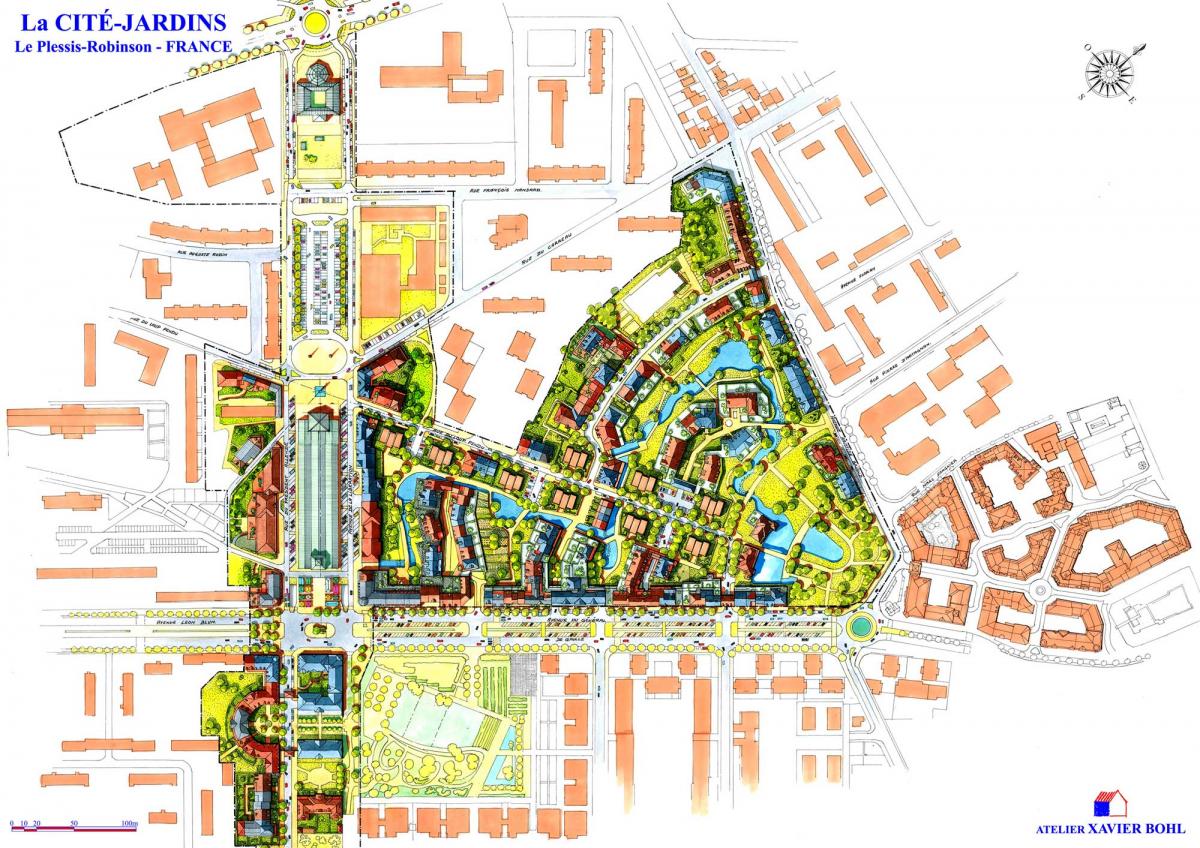
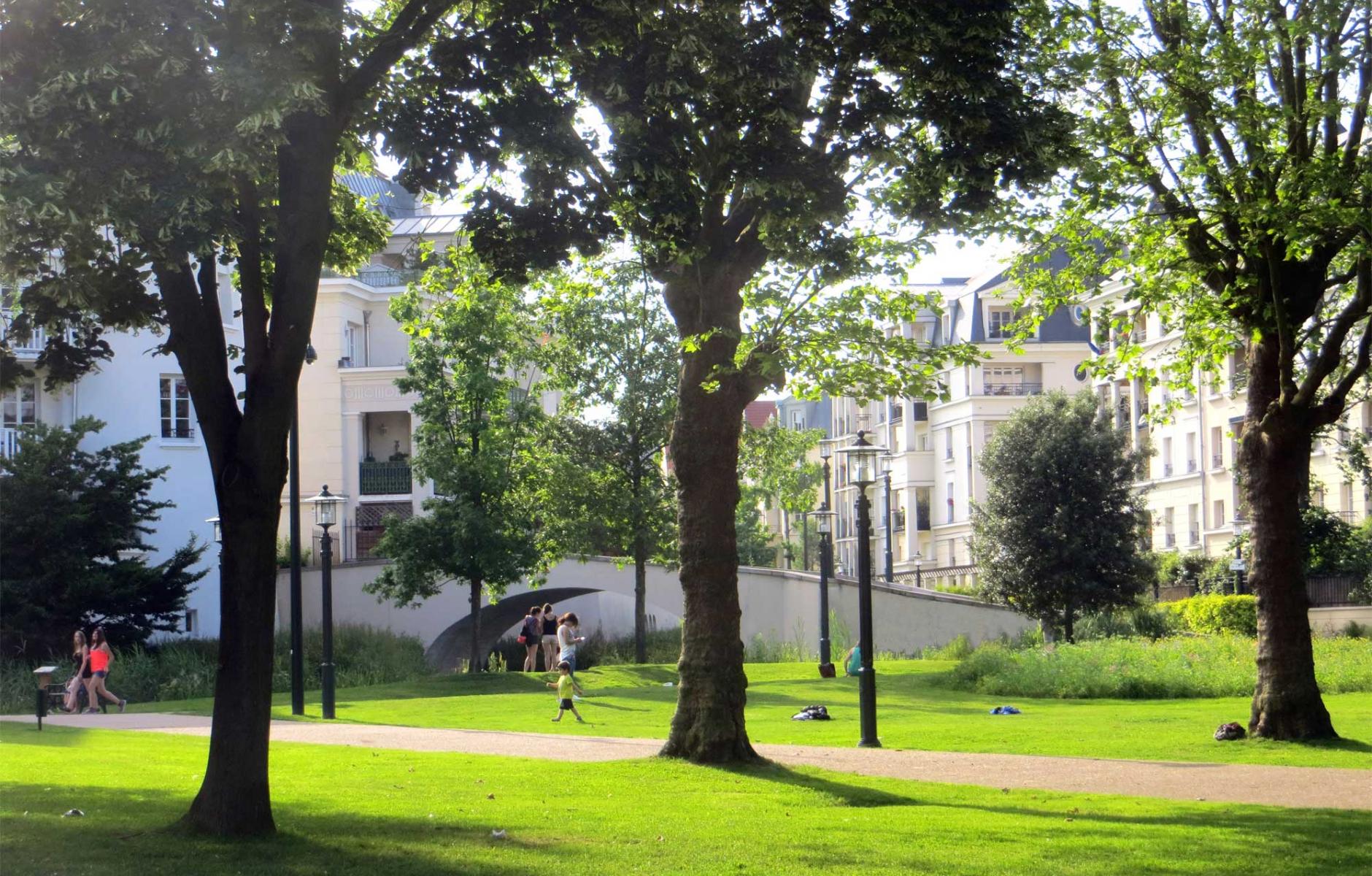
The Le Plessis-Robinson project—completed in 2008—is recognizably New Urbanist in its walkability, mix of uses, network of human-scaled blocks, and use of architecture to shape the public realm. And, it is unusual and innovative in its integration of nature into a dense neighborhood.
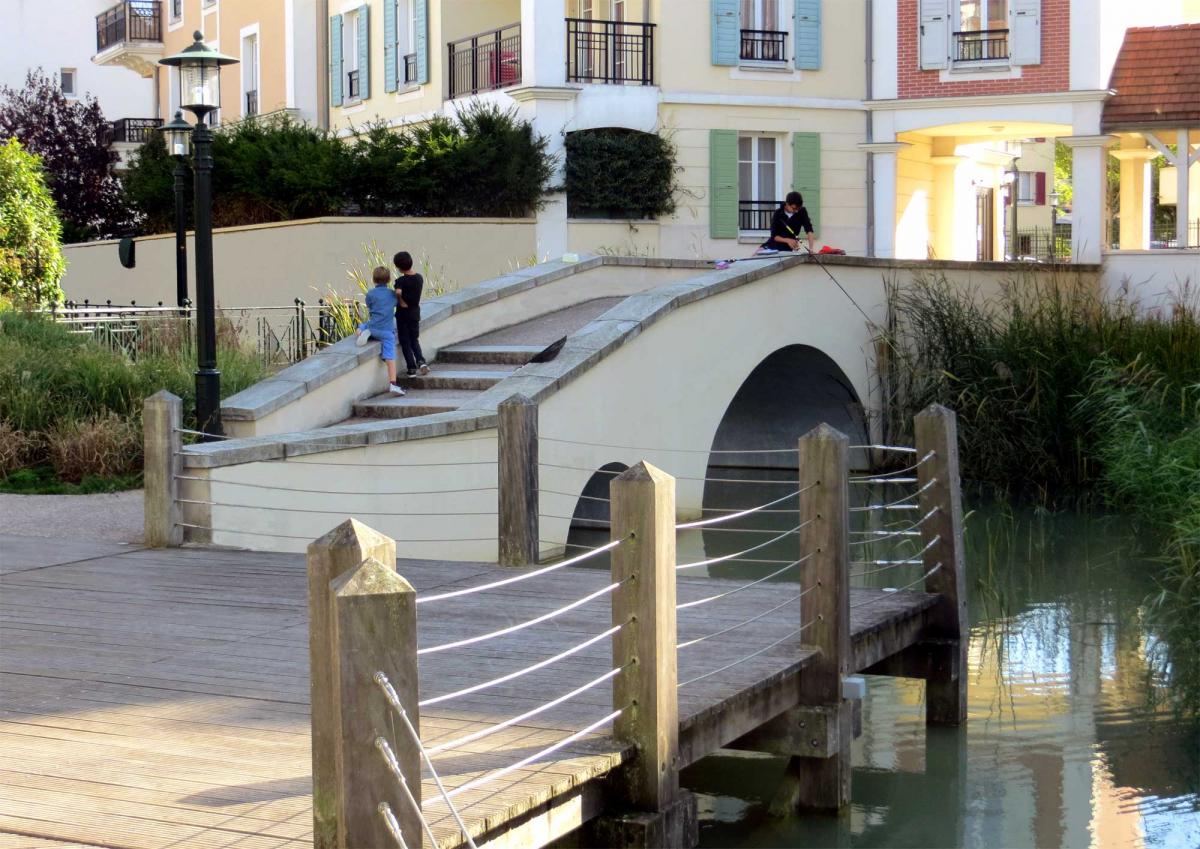
“The project radically rethinks the role of nature in the city,” notes the design team. “While the CNU Charter encourages the integration of green spaces, Plessis-Robinson makes them the beating heart of the neighborhood. The central park, shared gardens at the base of buildings, and the kilometer-long (0.6 of a mile) riverside promenade, with its bridges and populated by fish and dragonflies, are not just decorative; they form an ecological framework that structures the entire site.” The stretch of waterway is biodiverse—true nature within a city.
Underground parking frees up public space for pedestrians and cyclists, and most automobile traffic is kept at the periphery, creating a tranquil and safe village-like atmosphere. Motorists can drive into the 50-acre site, but only on very narrow streets that access parking under the units. Otherwise, very little land is devoted to cars.
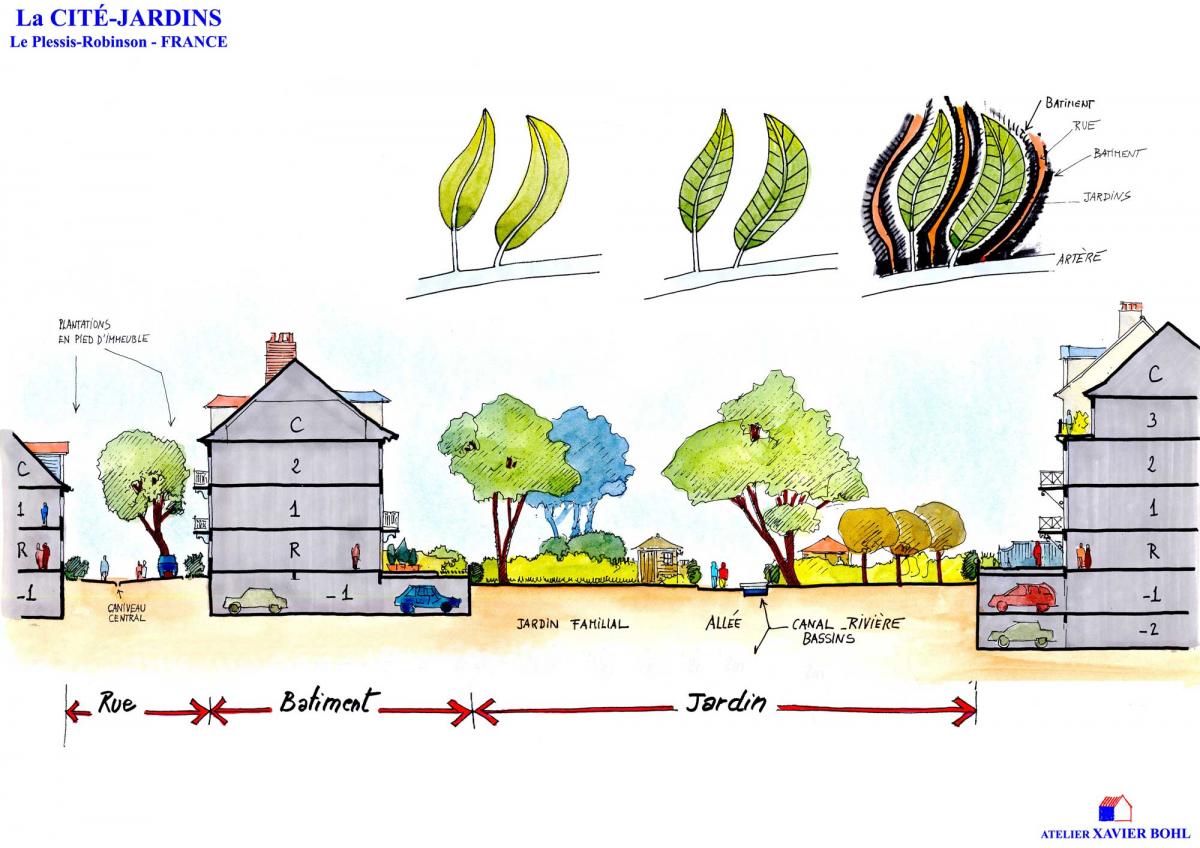
“At a time when climate and social challenges demand bold solutions, the Cité-Jardins of Plessis-Robinson offers a replicable and inspiring model, where urban planning becomes a lever for social and ecological transformation,” the design team says. The model:
- Can serve as a laboratory for future garden cities, demonstrating how to blend tradition and innovation to address the urban challenges of the 21st century.
- Prevents urban sprawl on natural or agricultural areas by renewing the city within itself.
- Re-establishes water features and green spaces into the city.
The project achieves a relatively high density of 24 units to the acre (gross), with substantial commercial and green space. “The project confirmed that urban density and quality of life are not incompatible, provided spaces are thoughtfully hierarchized and connections to nature are multiplied,” explains the design team.
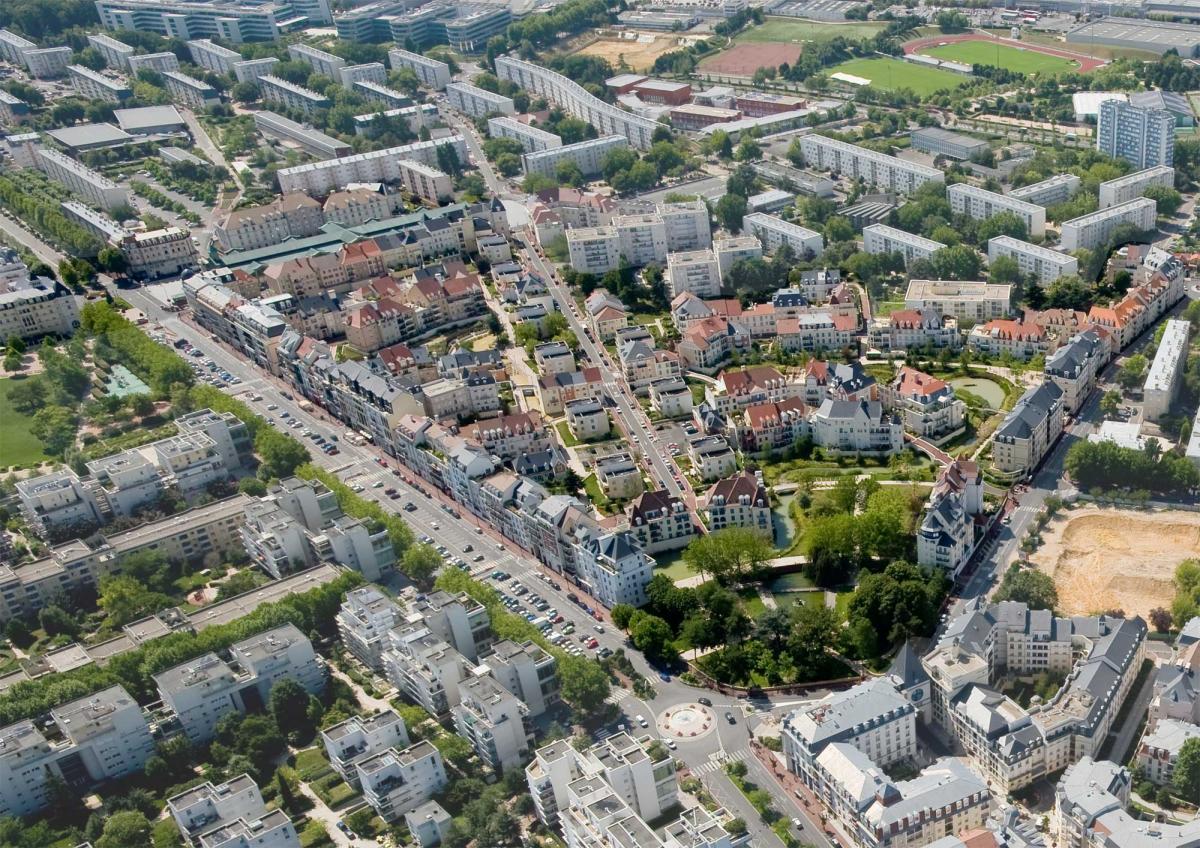
The architecture features sloped roofs, windows with depth, shutters, and balconies. It would not be out of place in the center of Paris, 10 miles away. “One of the most significant lessons was the art of reinventing tradition without resorting to pastiche. Drawing inspiration from local architectural heritage while integrating contemporary solutions demanded uncompromising creativity.” The plan incorporates, and new buildings are placed comfortably around, some of the former towers.
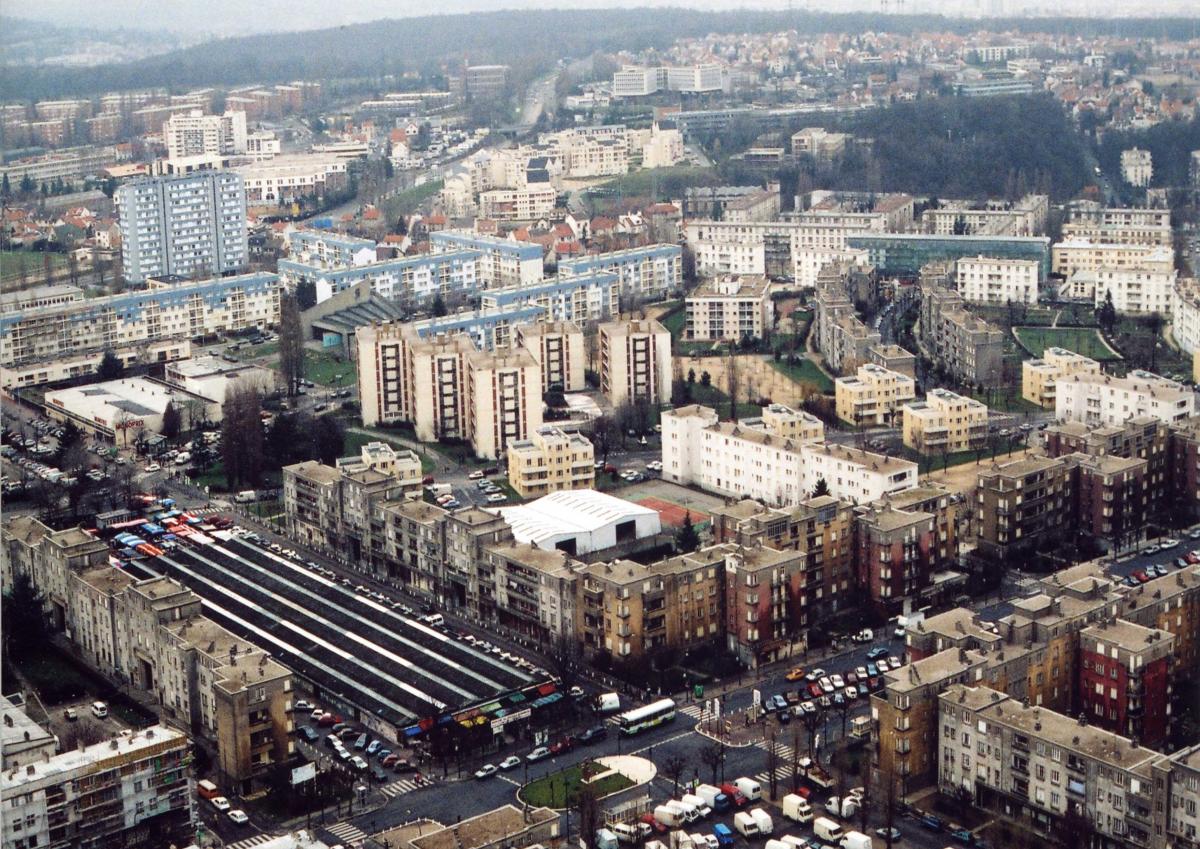
The commune of Le Plessis-Robinson was largely built in the form of modernist flats in the decades after World War II, with a significant amount of social housing. By the 1980s, two-thirds of the buildings were in a bad state: Energy inefficient, vandalized, and poorly maintained. The municipality experienced problems with crime.
The solutions that Pemezec arrived at, and Atelier Xavier Bohl designed, are not that different from the HOPE VI public housing program in the US: Create a high-quality public realm, promote homeownership, and make the “social housing” indistinguishable from market-rate housing on the outside. The implementation at Le Plessis-Robinson is unusually high quality.
The town has aged very well. The new community is diverse, including families with children. Employment is up, and the central marketplace is alive with business and shoppers. Residents can walk to their daily needs. The center includes an active cultural center.
“This project demonstrated that urbanism is an art of the long term: a neighborhood is not built merely for its inauguration day, but for the generations who will call it home,” explains the design team.
The New "Cité-Jardins"—Le Plessis-Robinson
- Atelier Xavier Bohl, Principal firm
- Philippe Pemezec, Mayor of Le Plessis-Robinson
2026 CNU Charter Awards Jury
- Eric Kronberg (chair), Principal, Kronberg Urbanists + Architects in Atlanta, GA
- Majora Carter, CEO of Majora Carter Group in the Bronx, New York City
- Marques King, Studio Director + Senior Architect, Pure Architects, Detroit, MI
- Jeremy Lake, Principal, Union Studio Architecture & Community Design, Providence, RI
- Joanna L. Lombard, Distinguished Professor at the University of Miami School of Architecture, FL
- Rico Quirindongo, Director, City of Seattle Office of Planning and Community Development
- Ashley Terry, Director, President of Development at Pivot Real Estate, Oklahoma City, OK