Workforce housing, grounded in trade-offs, for a famous ski resort


Housing costs in Jackson, Wyoming, are among the highest in the US, with average home values of nearly $2 million, according to Zillow, and one-bedroom units rent for nearly $3,000. The affordability crisis in this mountain and ski resort town has worsened drastically over the last decade: in 2013, one in three homes was affordable to median-income households; by 2020, only one in ten.
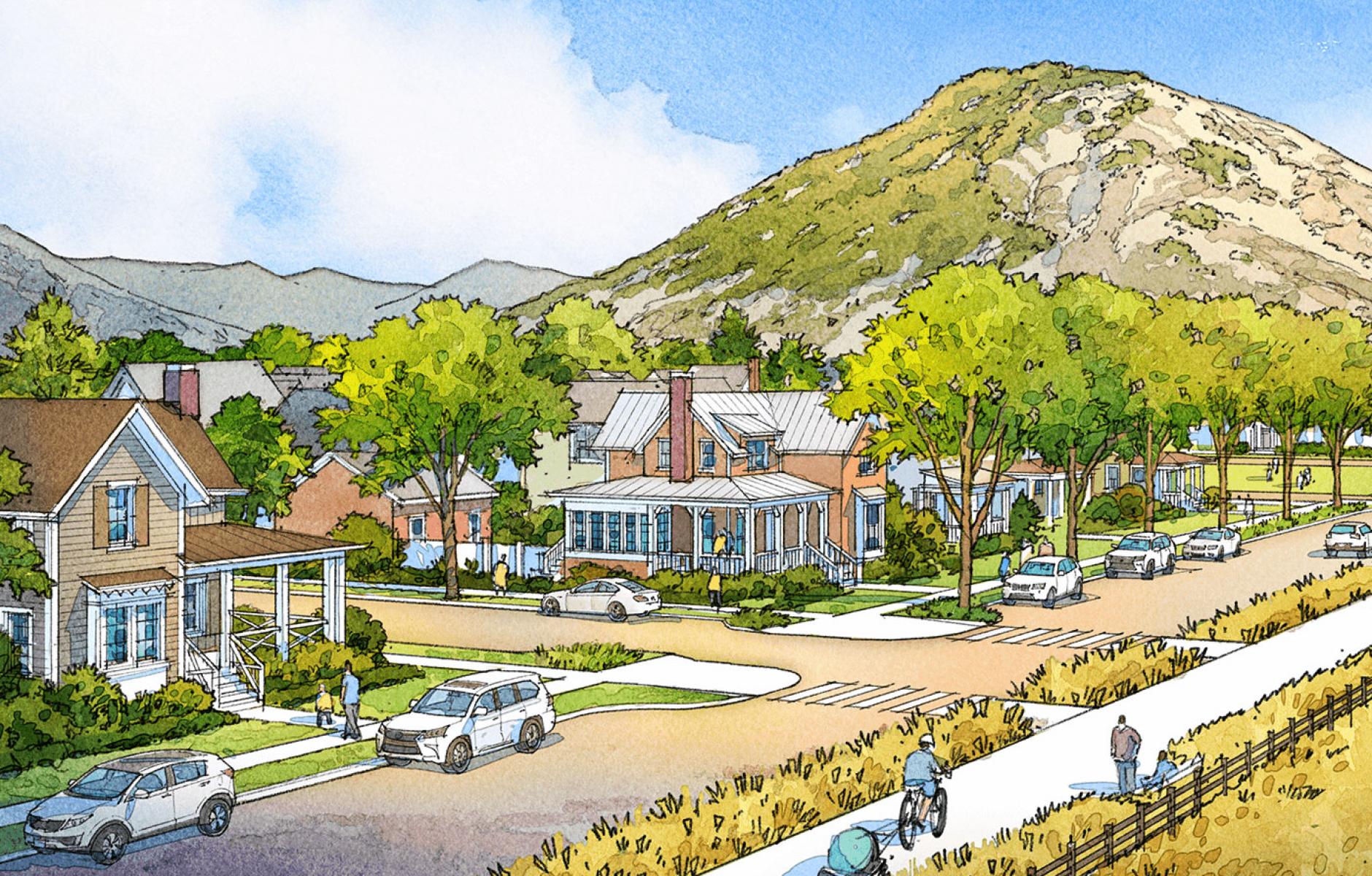
Workers in the town of 10,000 people, home to three ski resorts, have been forced to commute long distances. Opticos Design led a multidisciplinary team to develop alternatives for a 225-acre site owned by two ranching families. Adjacent to schools, transit, and amenities, the site was previously zoned for 118 sprawling estate homes. Instead, plans are approved and moving ahead with amended zoning to build 1,319 additional Missing Middle, workforce, and affordable homes in walkable, mixed-use neighborhoods. Opticos won a 2026 CNU Charter Award in the Neighborhood, District, Corridor category.
The Northern South Park Neighborhood Plan establishes a vision for the site at the southern edge of Jackson, under Teton County jurisdiction. “Identified in the Comprehensive Plan as a critical opportunity for workforce housing, the challenge was proving that a mix of housing types and affordability levels could compete financially with large estate homes allowed under previous zoning. This effort combined design with financial modeling to create a plan that met city and county goals while remaining viable for property owners,” Opticos explains.
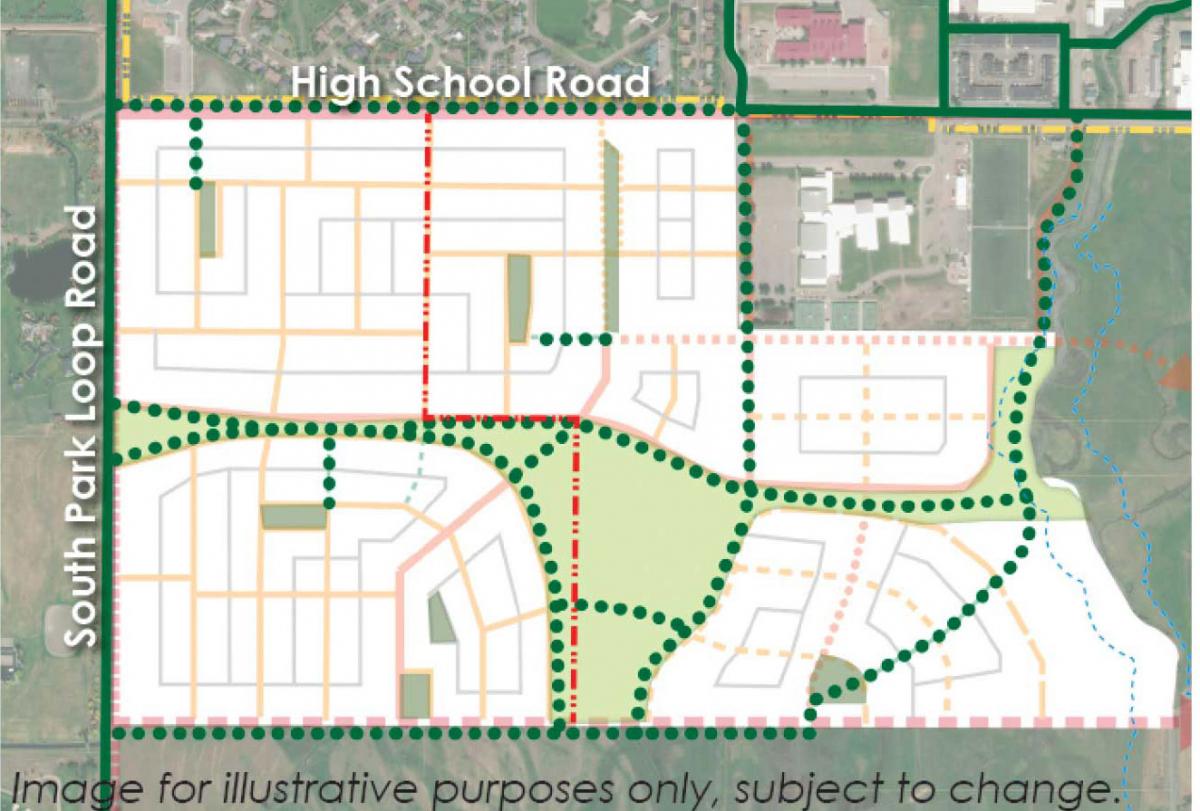
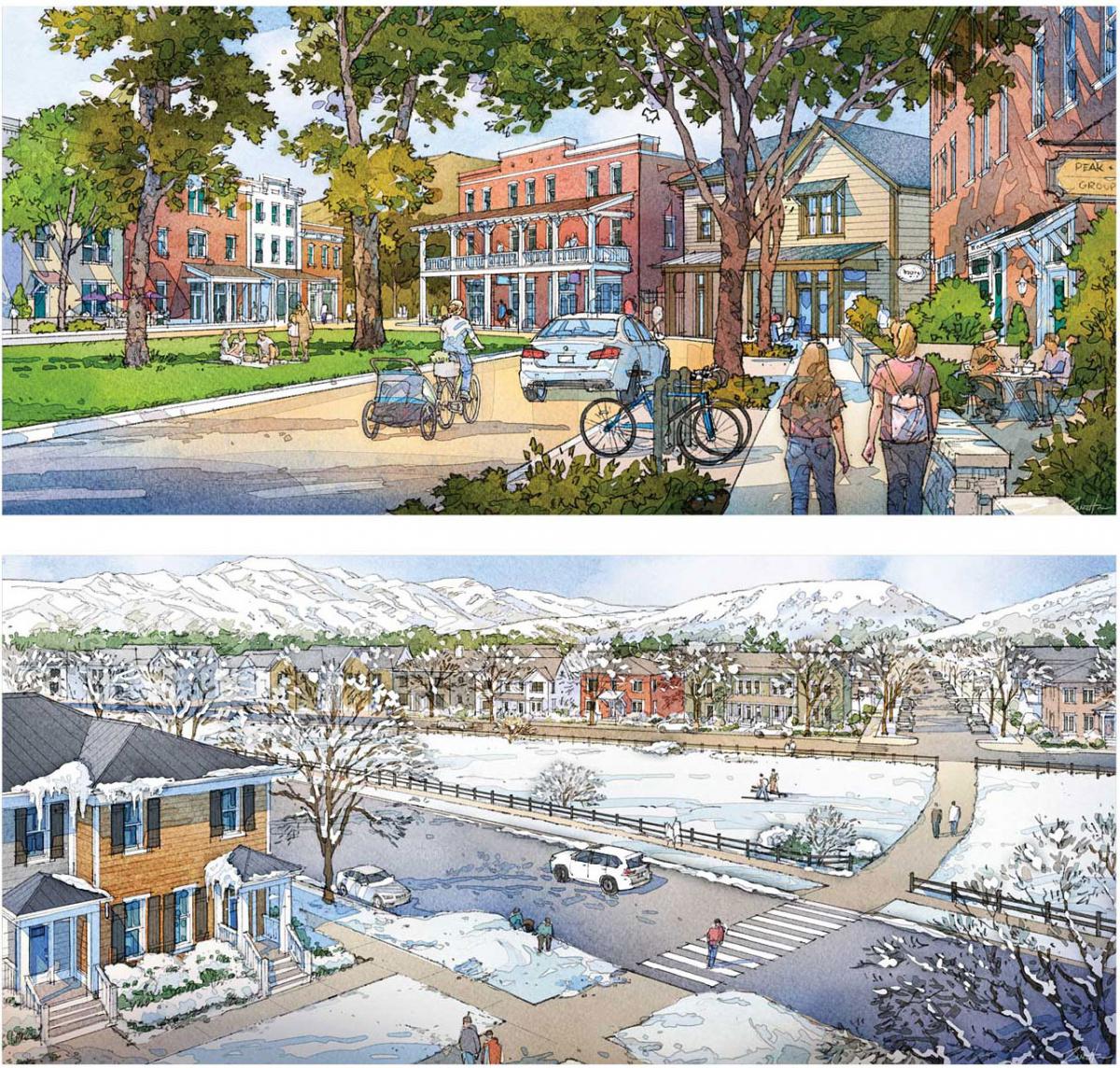
At least 70 percent of homes will be deed-restricted, with 40 percent affordable and up to 30 percent workforce housing—balancing diversity and private development incentives. The site, owned by the Gill and Lockhart families, has been the subject of decades of debate and legal challenges. The plan creates an urban framework of walkable streets and blocks on the site, which greatly increases the potential for compact housing of various types that are compatible with the historic character of Jackson Hole.
“Implementation is opt-in, offering landowners additional entitlements in exchange for meeting new standards,” notes the design team, reporting that the Gill family has committed 45 acres to Habitat for Humanity and the Housing Trust. The first proposal—up to 685 homes on 101 acres—has been submitted, marking the start of what could be Teton County’s largest housing initiative, Opticos reports.
“In terms of accomplishing the goals of this community — to take all the housing that could spread out throughout the county and put it all in one place — we are removing the pressure to build elsewhere in the county,” said Teton County Chair Mark Newcomb. “We have to keep that in mind. This is finally a place where we are reaching a balance with all of our goals, primarily to provide a neighborhood for the future of this town.”
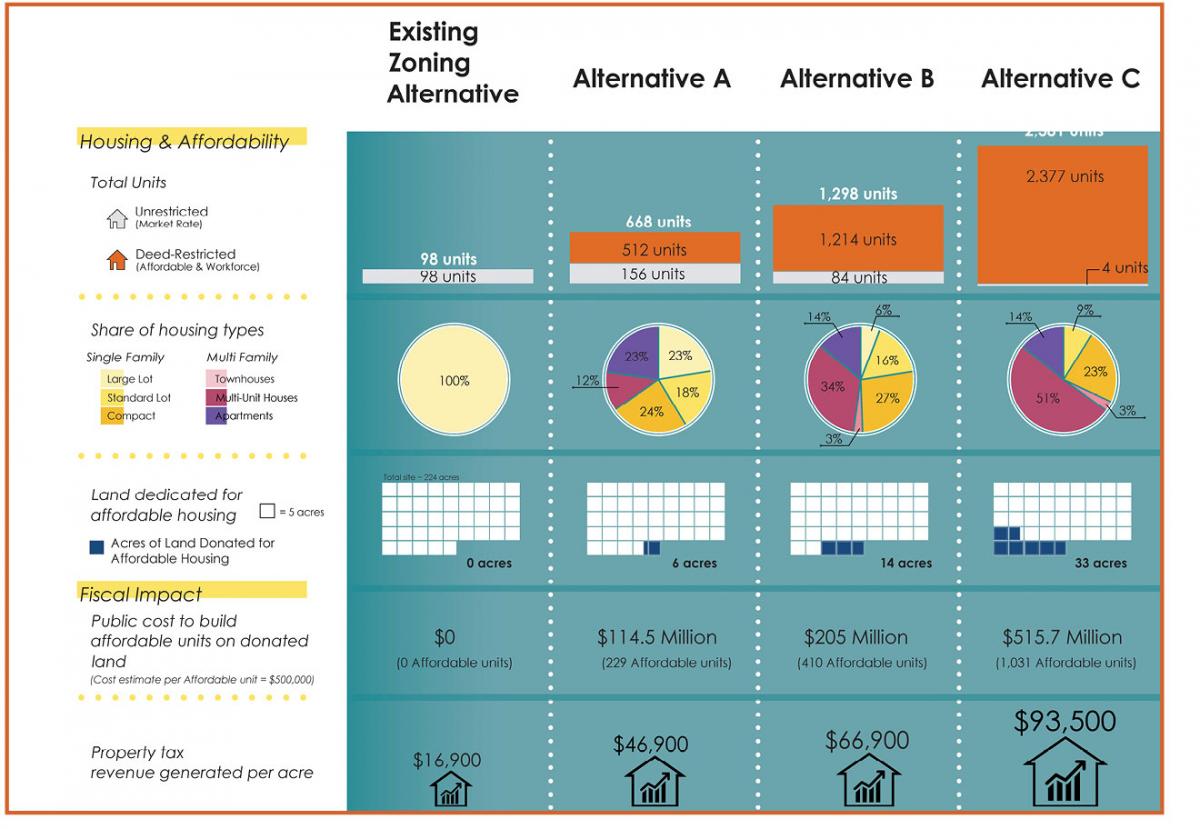
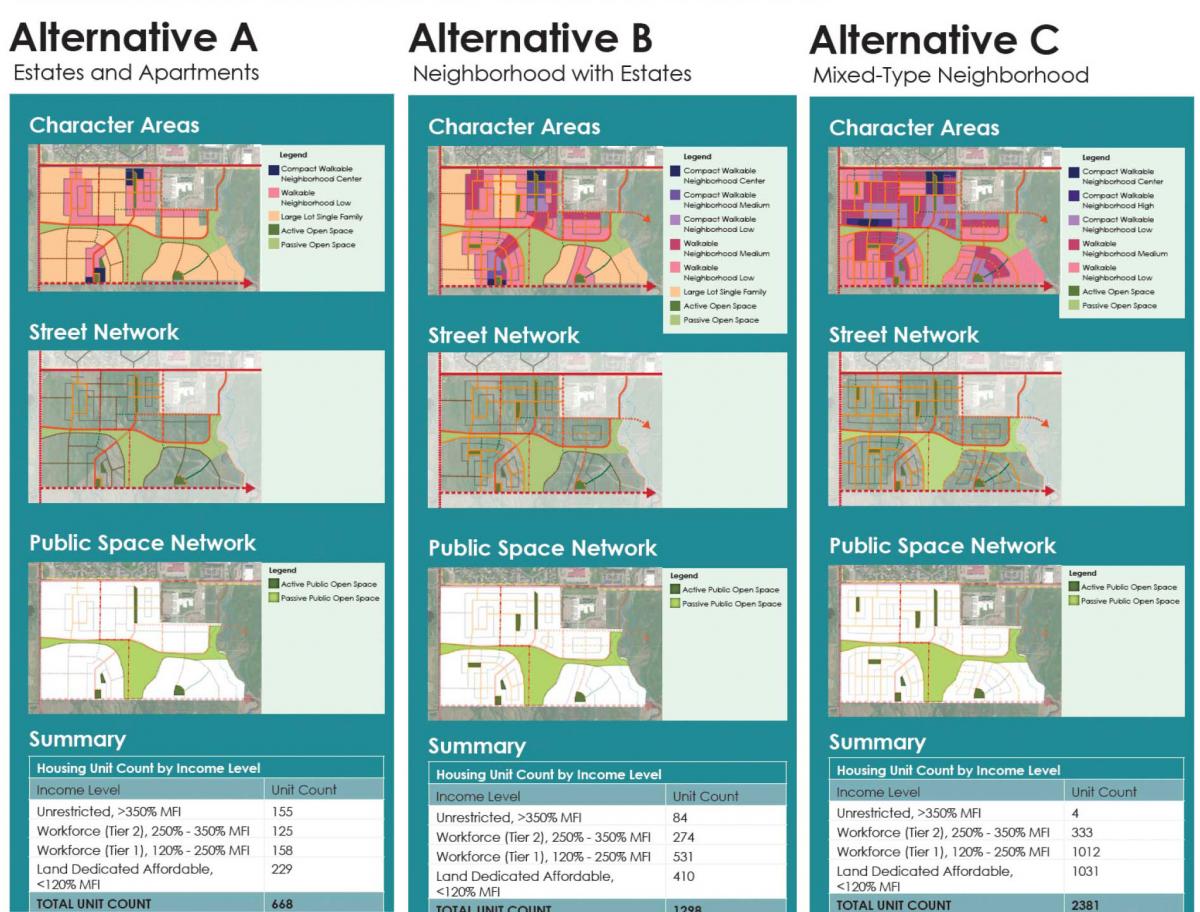
The public process was key to achieving the consensus to move forward. The planning team compared alternative scenarios to development under the pre-existing zoning, which would have done nothing to ease the affordability problems. Missing Middle Housing alternatives A, B, and C examined more compact, deed-restricted housing. Planning, market, and financial analyses looked at property tax revenues, transportation impacts, job generation, and energy and water use for the alternatives relative to the existing zoning. The more compact, the better the alternatives performed. The community ended up choosing the middle-density option.
All of the alternatives included pedestrian-oriented street design, a complete network of pathways, public open spaces, green infrastructure, a center for each of the three neighborhoods in the plan, a diversity of housing choices and price points, and wildlife permeability. The site offers an unprecedented opportunity due to its legacy property owners, proximity to services and transportation, and inclusion in the county’s comprehensive plan.
Neighborhood engagement was central to the plan’s approval. Over four years, the process included multiple rounds of public input, stakeholder meetings, and refinement guided by a Steering Committee. The opt-in zoning strategy, where landowners voluntarily adopt new regulations in exchange for entitlements, reflects a collaborative, incentive-based approach to implementation. This policy innovation aligns with the Charter’s principle that meaningful change requires cooperation among residents, public officials, and developers. Other towns with conditions like Jackson’s, with land available for new development, could follow a similar process to achieve similar results.
At its core, the plan advances the Charter’s call for neighborhoods that are diverse, compact, and connected. “It proposes a complete neighborhood form with a mix of housing types, civic spaces, and neighborhood-serving amenities within walking distance,” Opticos says. “The plan’s structure supports a range of incomes and lifestyles, with at least 70 percent of new units permanently deed-restricted for Affordable and Workforce housing. This commitment to social equity and economic diversity directly reflects the Charter’s emphasis on inclusive neighborhoods.”
“Please approve this plan,” local resident Rose Caiazzo told commissioners prior to the vote, “for every working person in Jackson determined to build their dream future in a community that they have loved for so very long.”
Jackson WY Teton County Northern South Park Neighborhood Plan and Code
- Opticos Design, Principal firm
- Cascadia Partners, Outcomes scenario modeling, market analysis + financial feasibility
- Crabtree Group, Infrastructure + civil engineering
- Charlier Associates, Transportation + mobility
- Cambridge Systematics, Transportation modeling
2026 CNU Charter Awards Jury
- Eric Kronberg (chair), Principal, Kronberg Urbanists + Architects in Atlanta, GA
- Majora Carter, CEO of Majora Carter Group in the Bronx, New York City
- Marques King, Studio Director + Senior Architect, Pure Architects, Detroit, MI
- Jeremy Lake, Principal, Union Studio Architecture & Community Design, Providence, RI
- Joanna L. Lombard, Distinguished Professor at the University of Miami School of Architecture, FL
- Rico Quirindongo, Director, City of Seattle Office of Planning and Community Development
- Ashley Terry, Director, President of Development at Pivot Real Estate, Oklahoma City, OK