-

Build the city, but for whom?
While CNU moves on from its stint in Cincinnati, those who attended CNU 32 are inspired to continue their work locally, as they always have.Note: this article first appeared in Soapbox Cincinnati . This past May, national nonprofit the Congress for the New Urbanism (CNU) held their annual flagship event in Cincinnati. The event gathered 1,454 total attendees from across the country (and world) to share ideas and inspiration about urban...Read more -
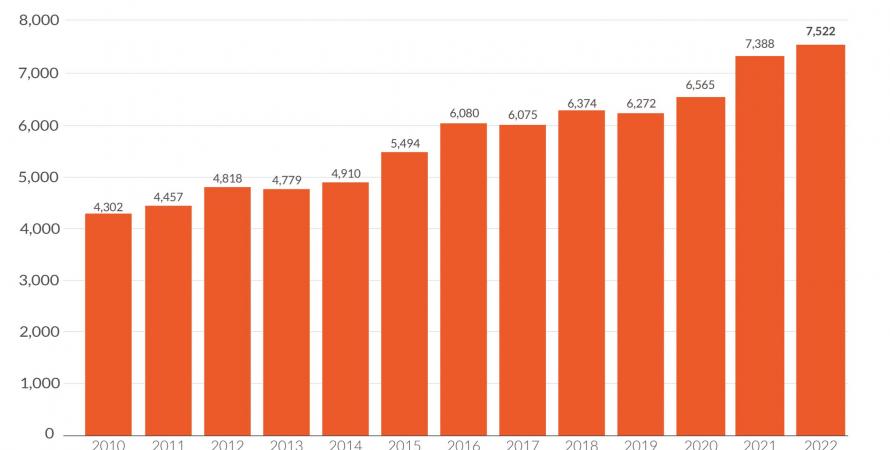
Highlighting the rising pedestrian deaths nationwide
The semi-annual Dangerous by Design identifies the most dangerous regions and deadly modern thoroughfares, designed so that too many people die in the prime of life.This week is a big one for the ongoing battle for safe, livable streets. The important book Killed by a Traffic Engineer was published, and Smart Growth America released its semi-annual Dangerous by Design report. US pedestrian deaths have risen 75 percent since 2010 (see chart above), and that...Read more -

History informs a response to the housing crisis
River City Rising shows how Spokane draws on its streetcar neighborhood origins to address its current housing problems.Like many cities across the US, Spokane is struggling with a lack of housing affordability. Housing costs have sharply risen in the last decade, as the city has rapidly grown. People are moving from other parts of the country to enjoy Spokane’s rich history connected to a beautiful natural...Read more -
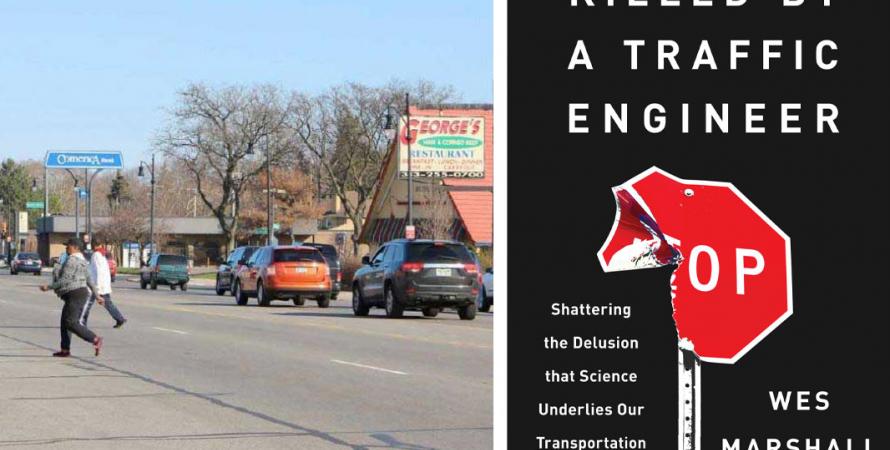
Exposing the pseudoscience of traffic engineering
Wes Marshall’s new book, Killed by a Traffic Engineer, reveals the profession’s shaky, unscientific foundations—and points the way to safer, healthier streets.Profound frustration with traffic engineering has bedeviled New Urbanism since the movement formed in the early 1990s. Of all of the barriers to building good urbanism, two stand out: land-use codes and street planning and design. While code reform has steadily advanced, changes to street practice...Read more