Bentonville: The ‘growing edge’


Bentonville is best described as a town that has evolved into a city. Its challenge is not whether growth will occur, but how intentionally it can be structured as scale, complexity, and civic expectations increase.
Its growth is driven by a major economic force: Walmart and the ecosystem surrounding it. The presence of Walmart’s global headquarters has introduced an intensity of capital, talent, and ambition that few communities of comparable size experience.
This economic gravity has expanded the city’s capacity to act, allowing Bentonville to invest early in public space and cultural assets. At the same time, it has heightened the importance of governance, placing greater emphasis on ensuring that growth outcomes align with long-term public benefit rather than short-term momentum.
As Bentonville urbanizes, maintaining a sense of small-town character has become a central planning challenge. This tension shapes decisions related to street networks, block size, building form, and the public realm.
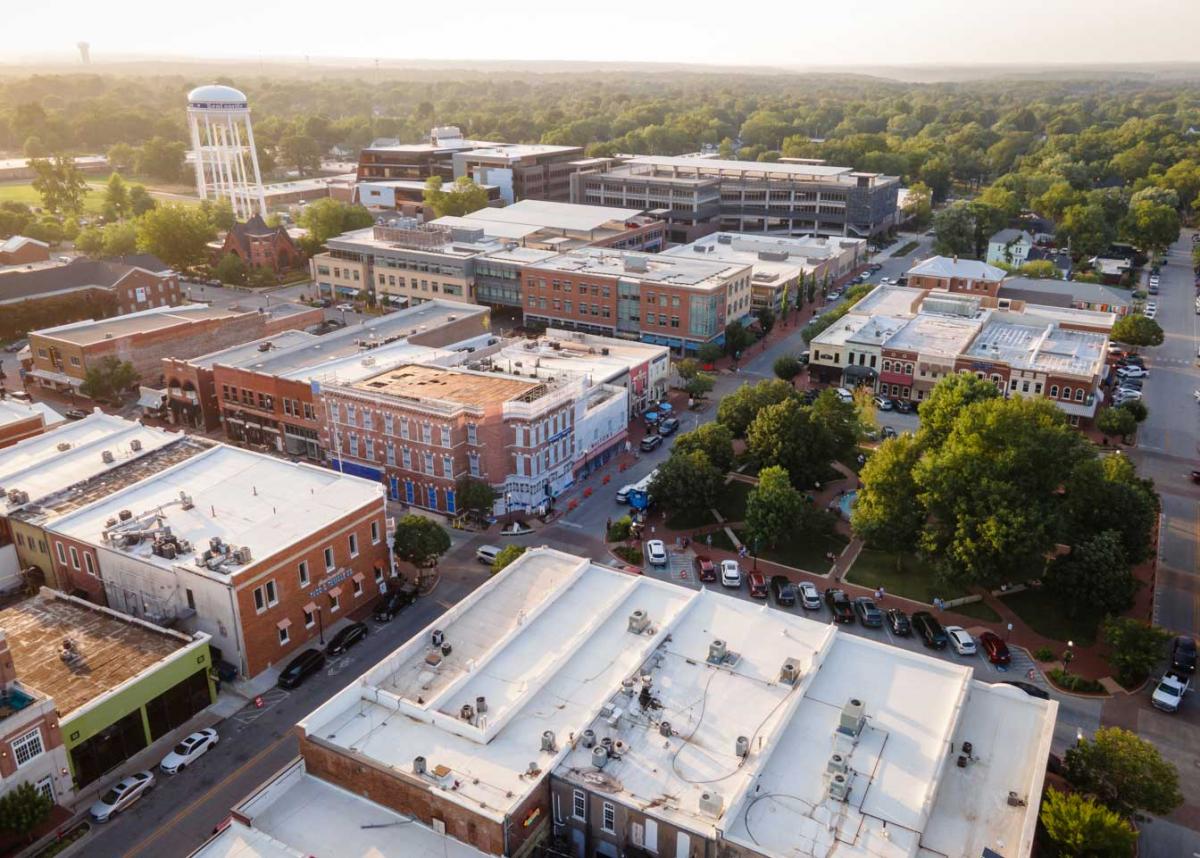
The city has recently collaborated with DPZ CoDesign to update its Future Land Use Map and is working toward adoption of a unified development code. Together, these efforts reflect a recognition that conventional zoning tools are insufficient for managing growth.
Bentonville often grows by adding new edges rather than slowly layering inward. New districts, campuses, museums, trails, and developments appear quickly, sometimes feeling like bold moves planted into the landscape.
That creates a “growing edge” condition:
- Big ideas arrive fast.
- Large footprints get built.
- Nature, trails, and open space need to remain part of their identity.
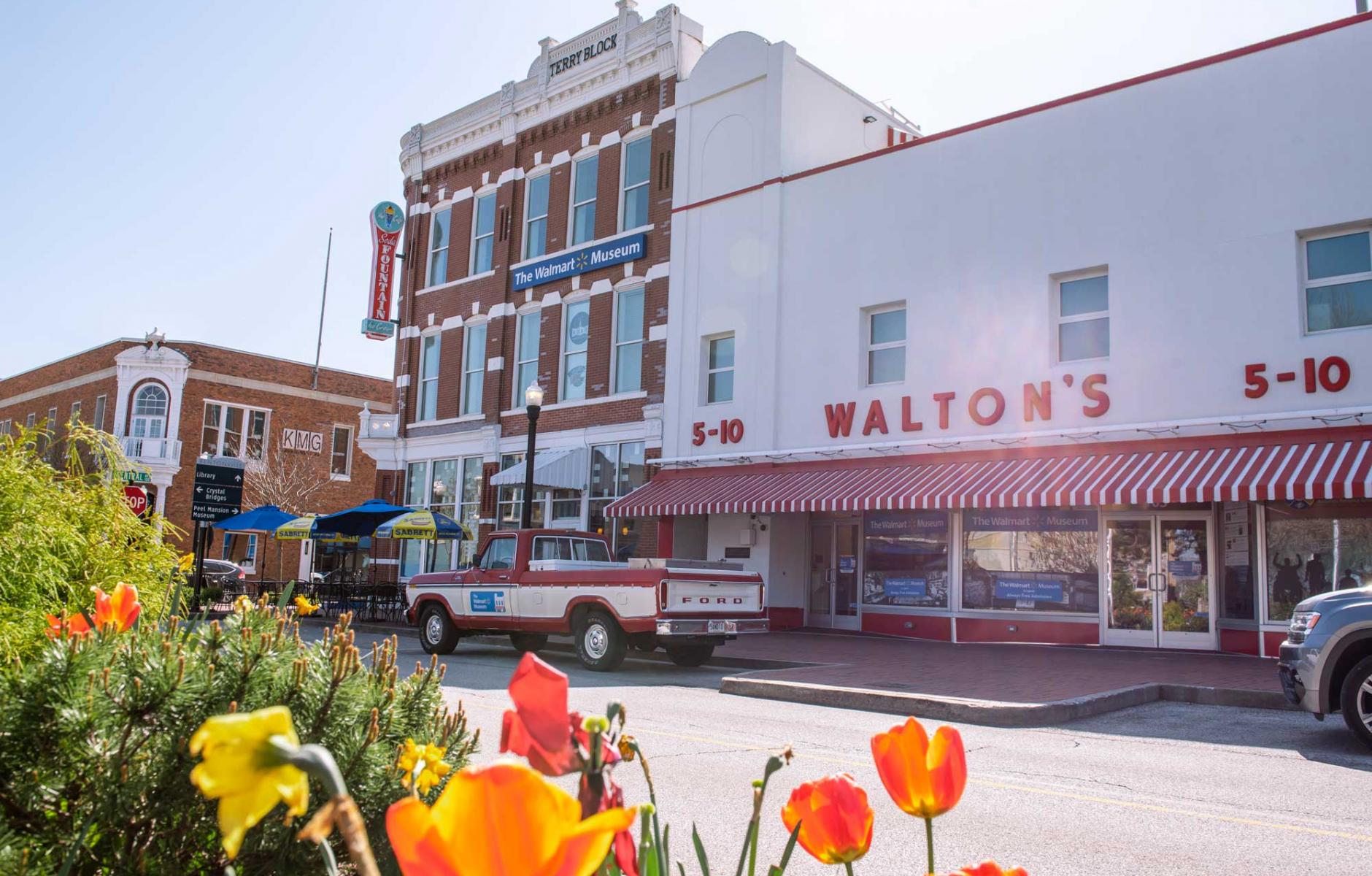
Bentonville’s approach to placemaking reflects its position on this growing edge. Public investments in downtown, trails, cultural institutions, and civic spaces have been intentionally front-loaded, often preceding the density that would traditionally justify their expense.
For a city experiencing rapid growth, this sequencing matters. By establishing walkable centers, connected public spaces, and civic anchors early, Bentonville has created a framework into which future development can be integrated—reducing sprawl while reinforcing a coherent urban structure.
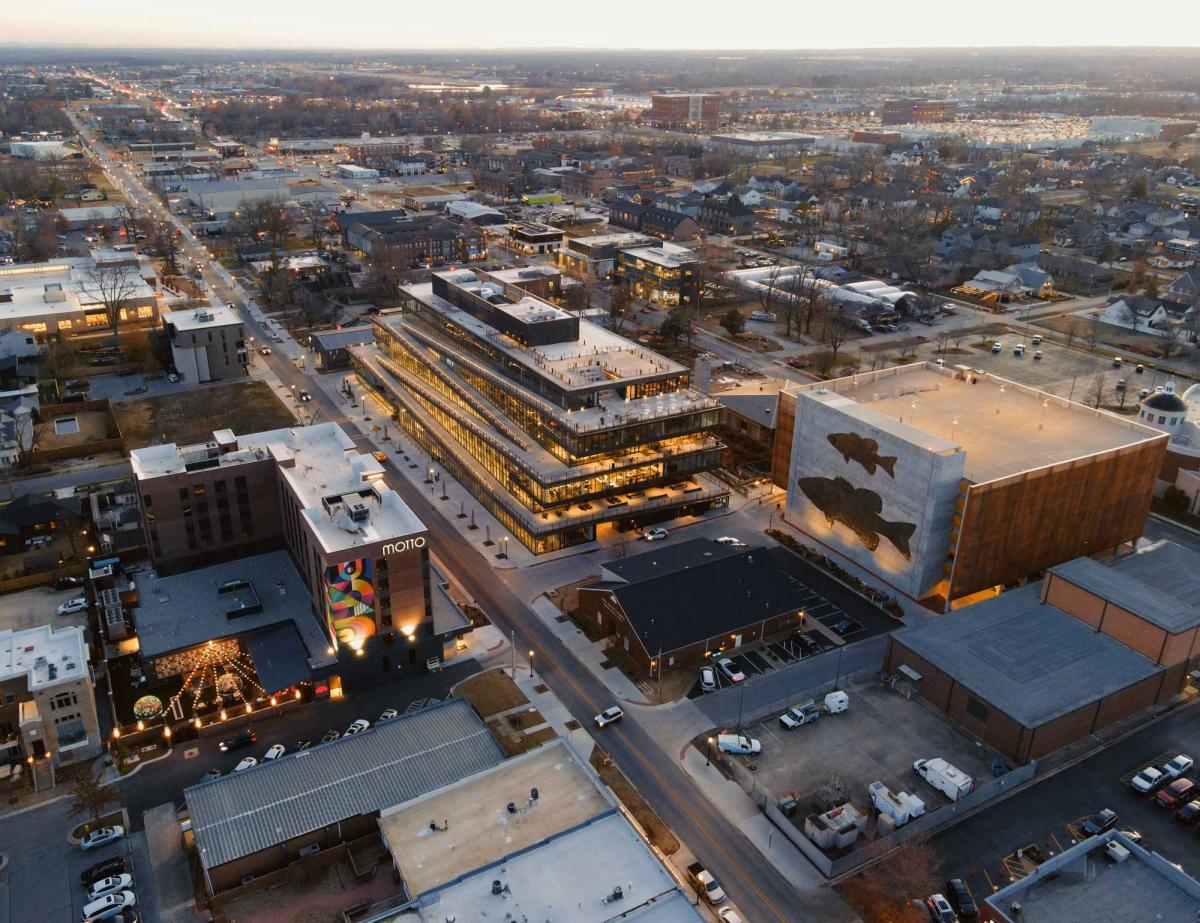
Bentonville feels spacious but active. There are interesting places surrounded by beautiful landscapes.
Bentonville’s evolution cannot be understood in isolation. Its success increasingly depends on how well it connects to Rogers, Springdale, Fayetteville, and smaller communities that are navigating parallel growth pressures.
Infrastructure such as the Razorback Greenway functions as both a mobility network and urban structure, linking centers, neighborhoods, and employment hubs while reinforcing a regional identity. Regional planning efforts further support this connectivity by encouraging coordination across jurisdictions with differing scales and development patterns.
Bentonville is becoming something larger and more complex than it was originally designed to be. That transition requires intentional governance, adaptable planning tools, and sustained investment in the public realm.
For fast-growing communities, Bentonville offers a relevant lesson: growth at the edge is most successful when paired with early infrastructure, clear regulatory frameworks, and a shared vision for civic identity. The work ahead is about more than accommodating growth; it's about structuring that growth to produce durable, walkable, and connected places.
Bentonville is a cohost and venue for CNU 34, which will be held in Northwest Arkansas on May 12 through 16, 2026. Attendees will stay in Bentonville and Fayetteville. Early bird registration opens today. For more information, go to CNU 34.