-
Why ‘house-scale’ is key to neighborhood building diversity
A missing middle coding expert explains why planners should understand and use this term.I have heard the term “house-scale” but never gave it much thought. Now I understand why it matters for incorporating Missing Middle Housing into residential neighborhoods in a way that looks compatible with existing houses, thanks to a recent column by Tony Perez. “By defining what we mean by...Read more -
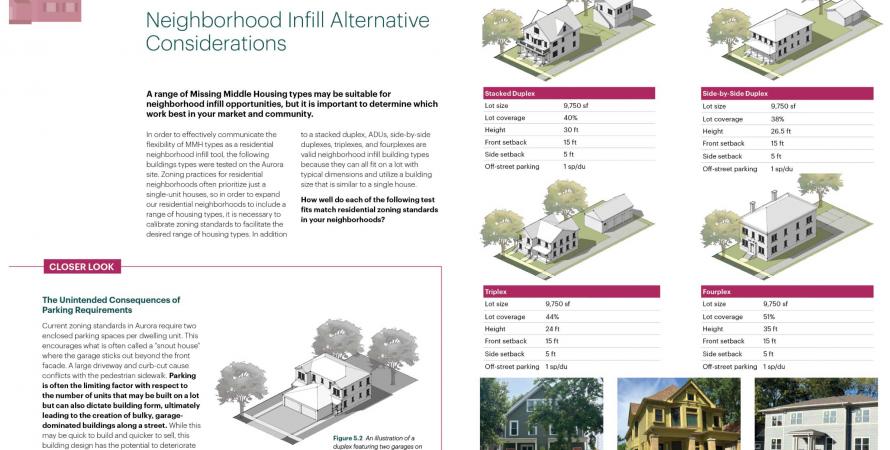
A regional missing middle strategy
If Missing Middle Housing is to be built at a scale that will go far toward solving our housing problems, we need regional thinking and this toolkit fits the bill.Eighteen municipalities, totaling about 600,000 people, collaborated on a Missing Middle Housing Toolkit for the Chicago Region in 2025. “At its core, the toolkit promotes a shift in zoning and planning that better supports diversity, affordability, and sustainability,” says Opticos Design, who...Read more -
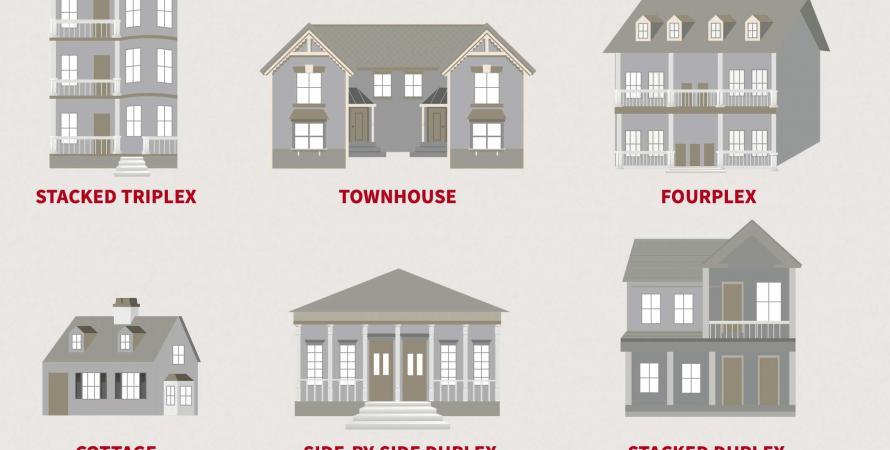
How housing affordability relates to choice
Expanding the range of housing choices enables new housing that adapts to the needs of a changing demographic.The Impact of New Urbanism in Northwest Arkansas: CNU is proud to present this article as the third of a 5-part series documenting the impact of New Urbanist principles, as presented at CNU34.Northwest Arkansas. Over five articles, we reflect on key reforms including public infrastructure...Read more -

Three courts, three conditions, one neighborhood
Three cottage court designs demonstrate the versatility of this housing type, even within the same neighborhood development and under the same design team. Now becoming legalized more widely, the cottage court offer a housing toolkit of exceptional power.Selah is a traditional neighborhood development outside Norman, Oklahoma. Sommer Design Studios was part of the original masterplan team from the beginning — working alongside Brown Design Studio as lead, Moser Kelly Design Group on landscape, and Thompson Placemaking on the urban design framework...Read more