How housing affordability relates to choice


The Impact of New Urbanism in Northwest Arkansas:
CNU is proud to present this article as the third of a 5-part series documenting the impact of New Urbanist principles, as presented at CNU34.Northwest Arkansas. Over five articles, we reflect on key reforms including public infrastructure investments, parking and traffic, and context-sensitive density—issues that are critical to the healthy growth of neighborhoods, cities, and towns across Northwest Arkansas, and in so many rapidly growing places across the country. This series serves as a lasting resource to those who may not have been able to attend CNU 34, and demonstrates CNU's commitment to ensuring that Northwest Arkansas has a future built on New Urbanism long after this year's transformative Congress. This series will be available for download as a complete Report on CNU 34.Northwest Arkansas following publication. ~ Mallory Baches, CNU President
Northwest Arkansas (NWA) is growing rapidly, and the region faces housing challenges shared by many regions across the US: home prices have accelerated upwards, and the kinds of living spaces people need are often difficult to entitle, build, and finance.
Large-lot single-family housing has long dominated housing production. About 70 percent of the region’s housing is single-family, geared largely towards families with children. This focus on large-lot subdivisions drives housing further from jobs, into areas that require motor vehicles for every trip. Yet the region’s household profile is changing. About two-thirds of households don’t have children, and the percentage of smaller households and retirees has risen1. Outside of NWA’s largest cities, transportation costs often top 20 percent2, and combined housing and transportation (H+T) costs are often higher than 50 percent of household income.
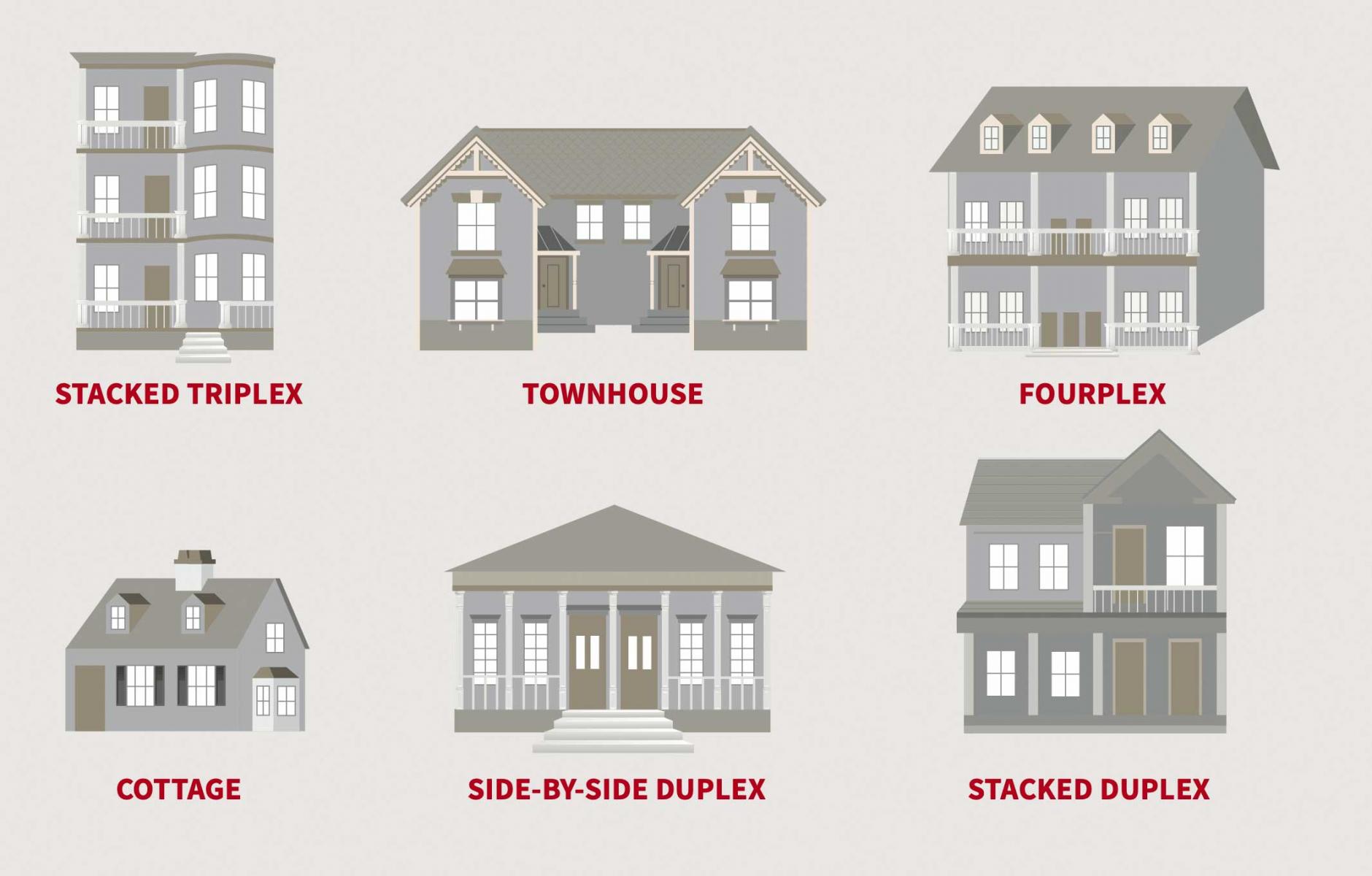
One answer is to expand the range of residential types—from accessory dwelling units (ADUs) and duplexes to cottage courts, townhouses, small apartment buildings, and other forms of medium-density housing. These types can be built in walkable neighborhoods, offering buyers more choices to reduce overall household costs.
The term “Missing Middle” refers to residential buildings that fall between detached single-family houses and large apartment buildings. As AARP has noted, the nation is largely missing this middle portion of the housing spectrum. These homes are typically smaller, use land more efficiently, require less street frontage and infrastructure, and can provide more attainable housing options.
Missing Middle was a major topic at CNU 34 in Northwest Arkansas in May. The top housing recommendation in Growing Home NWA3, the new regional growth strategy that was presented at CNU 34, is “Increase the share of small homes, duplexes, triplexes, townhouses, condos, and apartments. Measure progress by the share of annual permits for each housing type, by city.”
Unlocking middle housing
Code reform is one important way to restore these choices. Arkansas took a significant step in 2025 when it passed HB 15034, becoming the first southern state to enact a statewide ADU law. Texas adopted SB 8405 the same year, requiring larger cities to allow multifamily and mixed-use housing in commercial zones. These reforms demonstrate how state and local governments can unlock new infill housing opportunities. Local governments have also taken steps to change regulations. Bentonville and Rogers have adopted Transect-based codes that promote diverse urban housing types. Fayetteville, similarly, has updated its unified development code to promote infill development.
But changing zoning alone is not enough. Parking requirements, building codes, and permitting procedures can create equally significant barriers to what some call “gentle density.”
Reducing or eliminating excessive off-street parking requirements can make small-scale housing much easier to build. Fayetteville has eliminated parking requirements for commercial properties, while residential parking minimums may be reduced through transit provisions and bicycle and micromobility parking. Rogers eliminated parking mandates entirely in 2024, promoting more infill development. Adaptive reuse of older buildings and Missing Middle housing construction are significantly easier without stringent off-street parking requirements. For example, a duplex with an ADU on a typical urban lot would likely be unable to accommodate most municipal parking mandates. That is true even though on-street parking is available, and the need for cars is reduced in walkable neighborhoods. By eliminating or easing parking minimums, such development becomes more feasible in cities like Rogers.
Single-stair reform is another promising opportunity. Many building codes in the United States require two staircases in buildings taller than three stories. Emerging research indicates that this practice can add substantially to construction costs without necessarily improving safety. Several states and municipalities are reforming these rules, making small midrise housing more feasible.
Building-code reform can also help. Allowing small apartment buildings, triplexes, and fourplexes to use the International Residential Code rather than imposing the more demanding International Building Code can substantially reduce construction costs and complexity. Under current rules, a fourplex proposal may face the same code requirements6 as a 200-unit apartment complex, which obviously discourages incremental development. This may mean engineering studies, longer permit times, and higher design fees7—raising overall costs for relatively small projects. Many cities and states are legalizing up to four units on single-family lots, but without building code reform, removing these zoning restrictions will have less impact.
These reforms matter because building codes can create particularly large barriers for small developers. As Memphis developer Andre Jones observed at CNU 34, the regulatory burden can make projects that are physically and economically straightforward much more difficult to deliver.
ADUs: Housing without new land
ADUs offer one of the simplest and most versatile forms of Missing Middle Housing. They can be detached or attached, located above a garage, built as a basement or first-floor apartment, added as a second story, or designed as a separate wing of an existing house.
One of their greatest advantages is that the land is already there—and, in most cases, already paid for. Adding a dwelling unit to an existing property therefore avoids one of the largest costs associated with new housing: acquiring land.
ADUs can provide rental income for homeowners, increase property value, and create smaller and potentially more attainable homes for renters. They can also help families live near one another while maintaining separate residences.
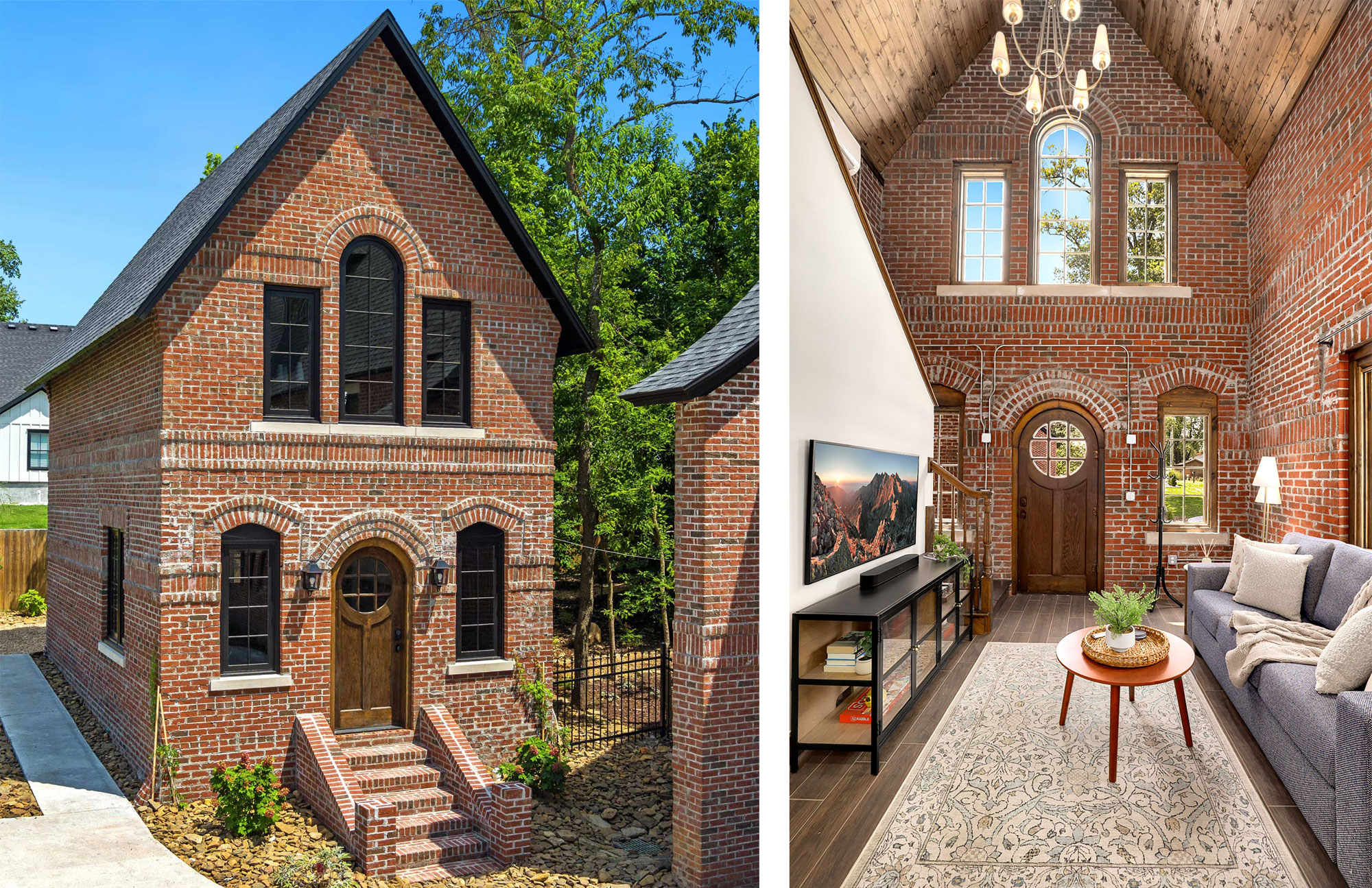
A brick ADU in Bentonville8 provides a local example of how this approach can produce attractive housing that fits comfortably into an established neighborhood. This lofted, one-bedroom accessory dwelling unit is built of true triple-wythe brick construction, and it is an attractive addition to the neighborhood. For many years, ADUs were prohibited by zoning in many Arkansas cities, but in 2025, Arkansas passed HB1503, the first statewide ADU law in the South.
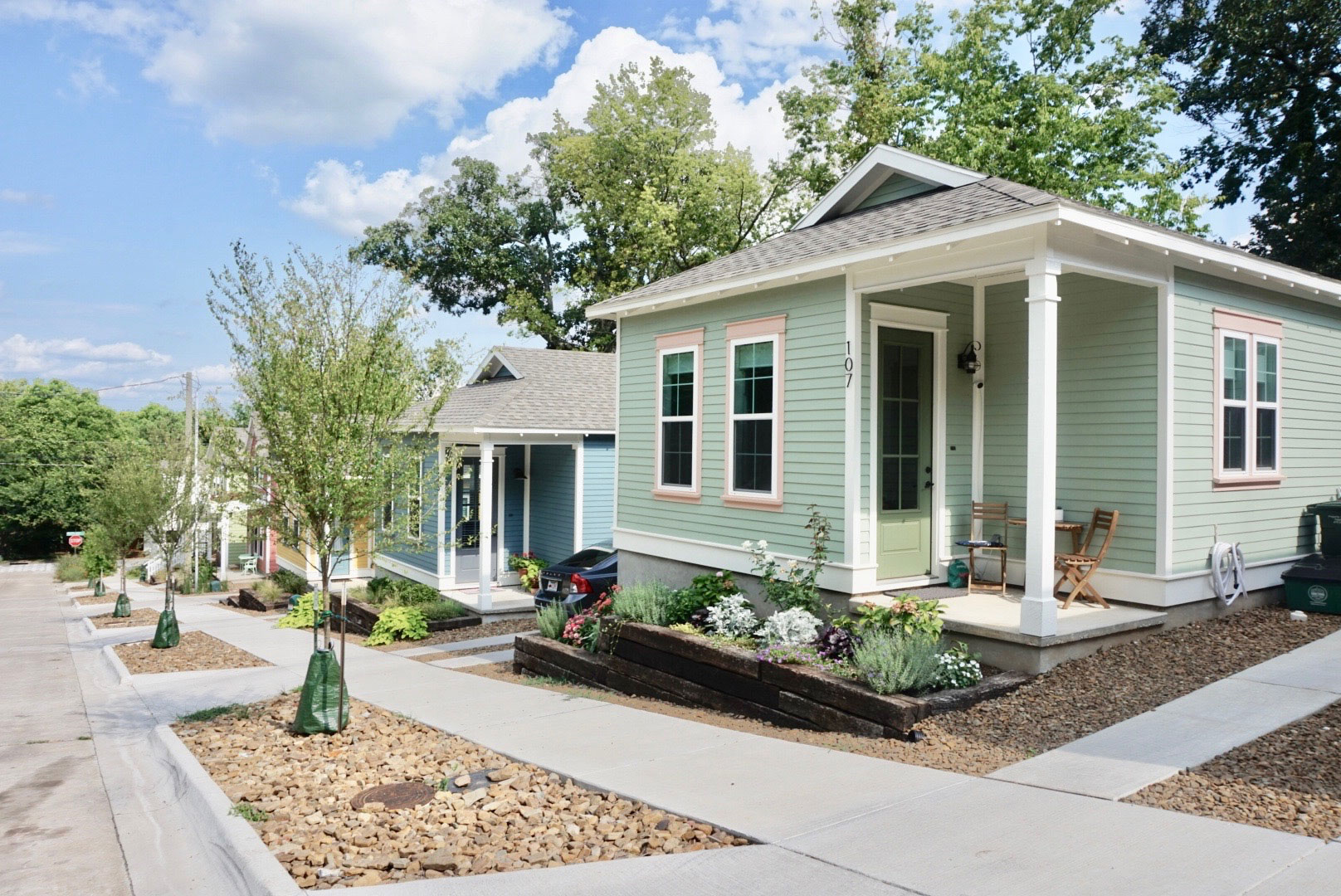
NWA has other good examples of new Missing Middle housing built affordably. The Painted Babies9 on East 9th Street in Fayetteville are cute, colorfully painted 520-square-foot microhomes on tiny lots. The one-bedroom cottages are efficiently designed, with a small kitchen and living space suitable for couples or singles. A single off-street uncovered parking space is provided. The small size and repetition of four cottages in a row minimize costs. “Each home achieves affordability without subsidies, selling at a price point attainable to 60 percent AMI households while remaining less expensive than nearby one-bedroom apartments,” according to Flintlock LAB, the designers. All of the homes were sold, with the occupants including two retired couples, a professional couple, and a single professional, it was reported.
Making housing easier to build
Pre-approved building plans can further reduce the cost and uncertainty of Missing Middle Housing. Fayetteville offers pre-approved residential building plans through its Permit-Ready Building Design Program10, created in 2025. There are more than 30 designs available, including a range of single-family homes, townhomes, duplexes, and backyard cottages. The program was established to save residents time and money, and the houses have been selected for their architectural compatibility with existing neighborhoods. Rogers followed suit with a Pattern Zone Program11 in June, 2026, also offering pre-approved plans. The city’s goals are to “encourage more infill development, improve architectural quality, and establish examples of missing middle housing.”
As reported at CNU 34, pre-approved plans can be developed at different scales, from regional catalogs to neighborhood-specific collections. The Cape Cod Commission in Massachusetts, for example, has created a regional catalog addressing Missing Middle Housing across multiple jurisdictions, which won a CNU Charter Award in 2025. Tulsa's HOME Program provides another model, offering plans ranging from ADUs to 12-plexes while combining streamlined permitting and zoning flexibility. Bloomington, Indiana's Hopewell pilot demonstrates a neighborhood-scale approach to pre-approved plans, in which detailed site planning produces shovel-ready small development projects.
The Congress for the New Urbanism's Legacy Projects12 demonstrate another way to promote Missing Middle Housing. Legacy Projects leverage the expertise of CNU to make a long-term impact on the host region every year. All three 2026 Legacy Projects in NWA used Missing Middle types in neighborhood-scale plans by CNU urban designers. Two projects, Cave Springs and Elm Springs, show how Missing Middle building types can contribute to walkable neighborhoods in rural areas. The Cave Springs project, a plan to revitalize a Main Street, proposed cottage courts, townhouses, and housing above retail. The Elm Springs project envisions a new, 61-acre village at a crossroads with a range of housing types. The third Legacy Project, La Plaza District in Rogers, envisions the transformation of a conventional suburban commercial district into a mixed-use center.
Housing for changing households
Demographic change makes this work increasingly urgent. Household sizes are declining while the population is aging. Many older adults want to move from large houses into homes that are more compact, affordable, accessible, and easier to maintain. They may also want to live near family members who can provide assistance as they age.
Missing Middle Housing can accommodate these needs while supporting younger adults, families, and other household types.
The opportunity extends beyond conventional housing. Co-living and single-room occupancy models can provide additional compact and affordable options, although these approaches often require changes to zoning, building codes, and landlord-tenant regulations, it was reported at CNU 34. Underused faith-based properties could also be transformed into walkable, mixed-use neighborhoods, creating housing while advancing congregational missions.
Ultimately, the goal is not a single housing solution but a broader toolkit: ADUs, infill development, Missing Middle Housing, pre-approved plans, form-based codes, community land trusts, co-development, and public-private partnerships.
The goal is to provide ample new housing of a wide variety of types, ideally in walkable neighborhoods. This was how cities across the US provided new housing before sprawl became the norm. NWA is expected to grow to a million residents by 2050. The region is setting out to demonstrate its capacity to deliver new, affordable housing that works for people at every stage of life. By reforming codes, reducing regulatory barriers, and providing pre-approved designs, communities can greatly increase housing choice while maintaining broadly affordable housing.
References
1Glasco, Annie, “Fayetteville tackles housing crisis with new Housing Action Plan,” Northwest Arkansas News, June 24, 2026
2H&T Index, https://htaindex.cnt.org/map/, Center for Neighborhood Technology
3Growing Home NWA website, www.growinghomenwa.com, 2026
4Arkansas State Legislature, https://arkleg.state.ar.us/Bills, 2025
5Legislan, https://legiscan.com/TX/bill/SB840/2025, 2025
6Petty, Matthew, Hoffman, Matthew, “Your city legalized triplexes. The building code said no,” Public Square, April 1, 2026
7Petty, Matthew, Hoffman, Matthew, “Your city legalized triplexes. The building code said no,” Public Square, April 1, 2026
8Steuteville, Robert, “Coolest ADU I’ve come across,” Public Square, June 10, 2026
9Steuteville, Robert, “Cute infill houses are affordable without subsidy,” Public Square, August 21, 2026
10City of Fayetteville, Arkansas, “Permit-Ready Building Design Program,” 2025
11City of Rogers, Arkansas, Pattern Zone Program, 2025
12CNU website, Legacy Projects, cnu.org, 2026