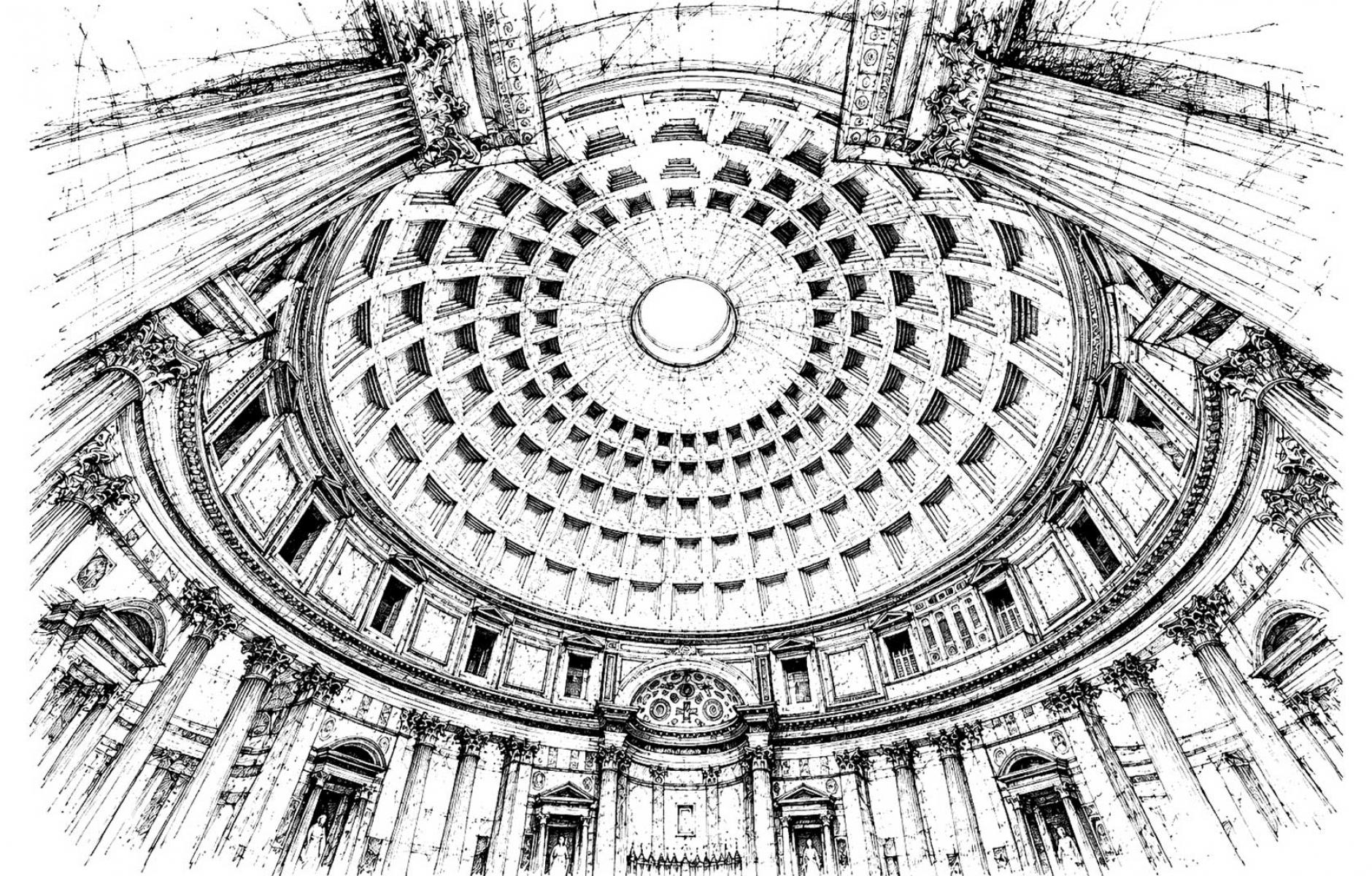
Revisiting the Pantheon


Author's note: My first visit to the Pantheon was fifty years ago. In the decades since, I have returned many times, and with each visit this extraordinary work of architecture and urbanism continues to reveal something new. I have drawn and studied the Pantheon repeatedly, returning to it as one returns to a great teacher. For me, drawing is not simply a means of recording what I see, but a way of experiencing the place over a period of time and understanding the subtle dialogue between architecture and urbanism.
For the past two millennia, the Pantheon in Rome has been a touchstone for architects and urbanists. The approaches illustrated here reveal an extraordinary sequence that begins in the surrounding streets, where only glimpses of the building are visible. The narrow streets create a sense of compression and anticipation before opening onto the Piazza della Rotonda, where the great portico, principal façade, and central fountain are revealed.
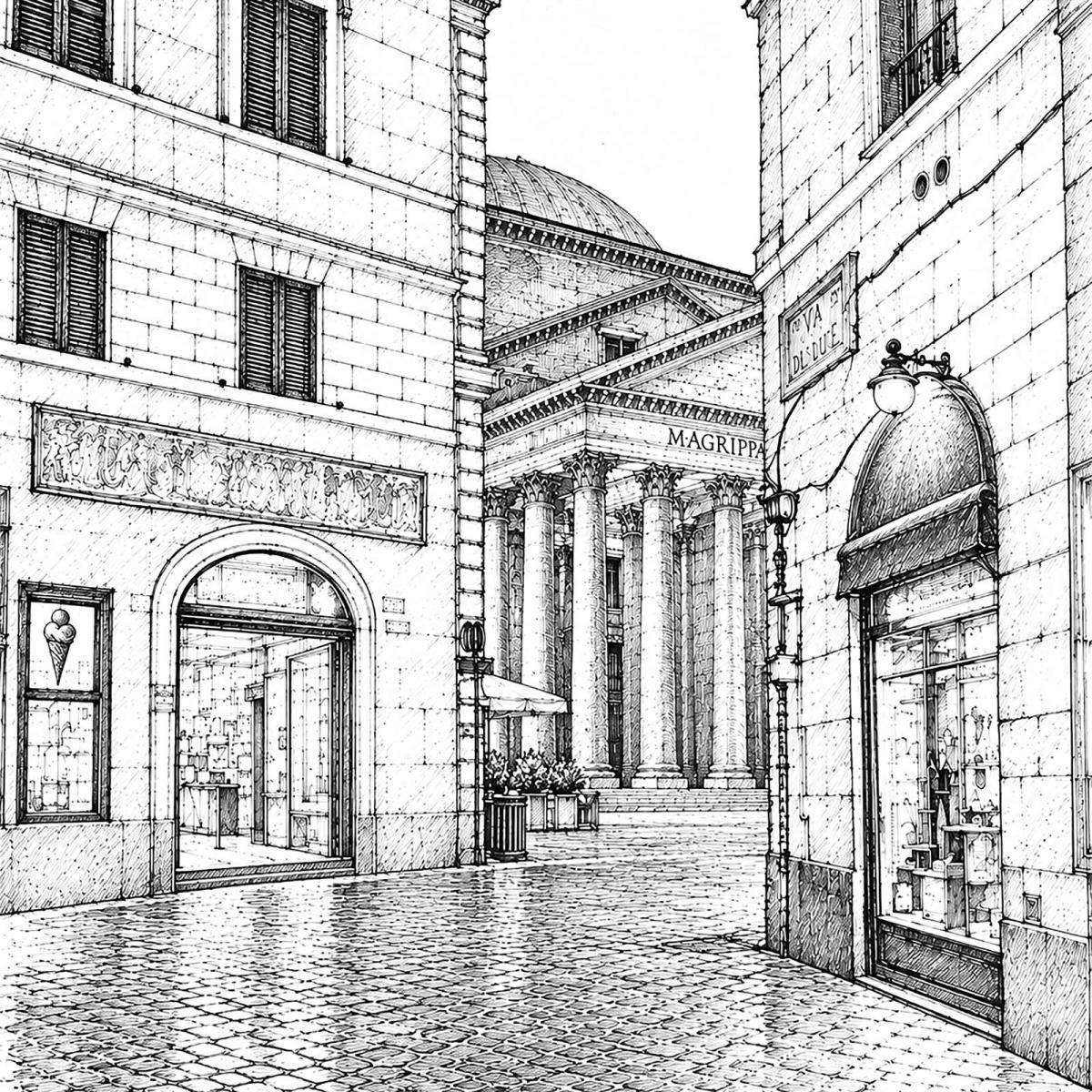
This promenade—from city, to piazza, to portico, to threshold, and finally to the revelation of the great interior—has influenced architectural design for centuries. It remains one of the finest examples of a civic structure harmoniously connected to civic space. There is a symbiotic relationship: the building makes the place, and the place makes the building.
Architecturally, the Pantheon possesses an extraordinary clarity of conception: a sphere contained within a cylinder. The diameter 142 feet (43 meters) of the rotunda is essentially equal to its height, allowing an imaginary sphere to fit precisely within the interior volume.
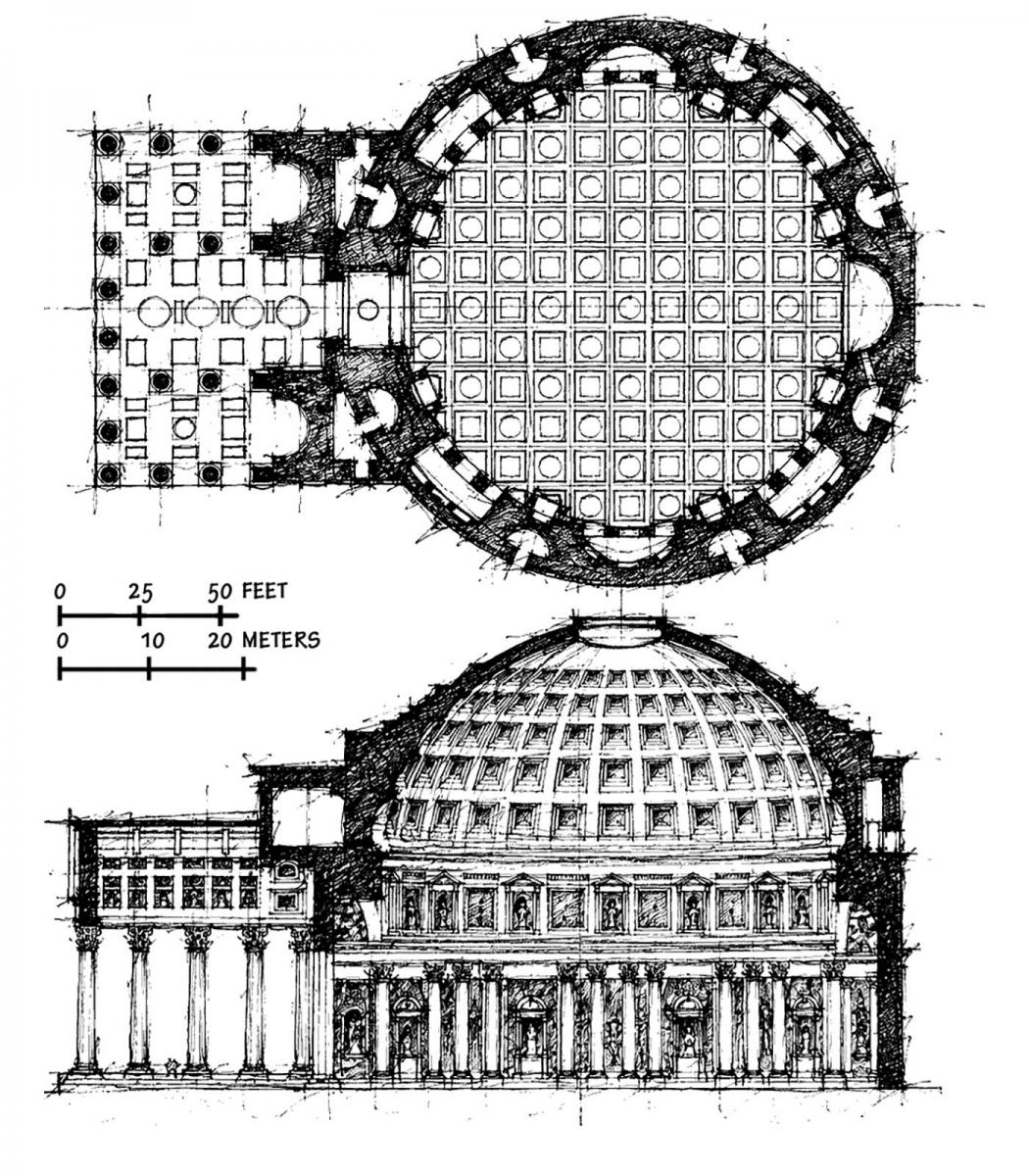
Light itself becomes architecture. The nearly 30-foot (9 meters) diameter oculus is the principal source of natural illumination, casting a constantly moving circle of light across the dome, walls, and floor. The static, platonic geometry of the interior thus becomes an instrument for registering time, weather, and the passage of the sun, while the oculus establishes an axis mundi connecting the earthly room to the heavens above.
Equally remarkable is the Pantheon’s structural achievement. The builders progressively reduced the weight of the dome through changes in concrete aggregate, wall construction, coffering, and thickness as the structure rises toward the oculus. Structure and architectural expression are therefore inseparable. The dome does not merely cover the room; the dome is the room.
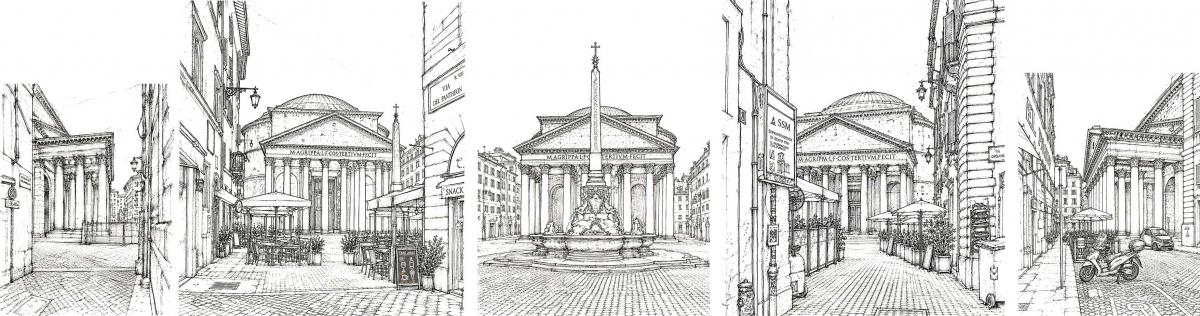
For the urbanist, however, the Pantheon cannot be understood as an isolated architectural object. Its relationship with the Piazza della Rotonda demonstrates one of the great characteristics of traditional urbanism: a monumental building gains power from the ordinary urban fabric surrounding it.
The narrow streets of Rome deliberately deny the distant, symmetrical vista that might ordinarily announce a monument of such importance. Instead, one approaches indirectly. The Pantheon appears incrementally—fragmented by streets and framed by surrounding buildings—before suddenly dominating the relatively intimate piazza. Compression gives way to release; anticipation to revelation.
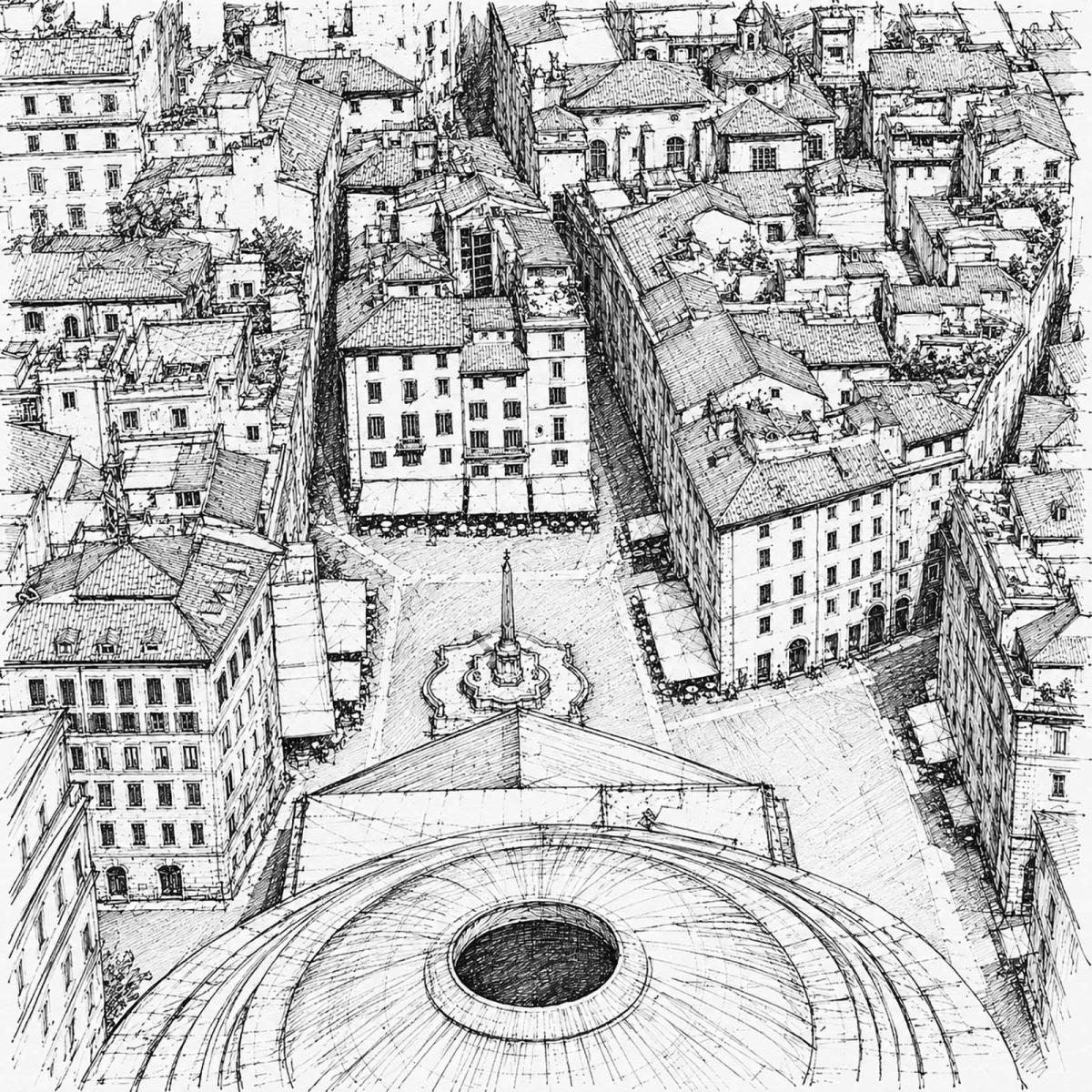
The Pantheon therefore offers a remarkable collection of enduring architectural and urban principles: geometric clarity, hierarchy, proportion, structural legibility, controlled light, procession, threshold, spatial surprise, urban enclosure, the juxtaposition of ordinary and monumental fabric, and the reciprocal relationship between public building and public realm.
Perhaps its most enduring lesson is also its simplest: architecture and urbanism are not separate disciplines.
