How art shaped decades of New Urbanism


The Art of the New Urbanism Volume 2 (2010-2025) is now available and is even more impressive than Volume 1, which was published in 2025. There are well over 600 individual images, compared with about 350 in the first volume. Some are groups of images brought in after a single image in the series was selected, or from earlier years that were missed.
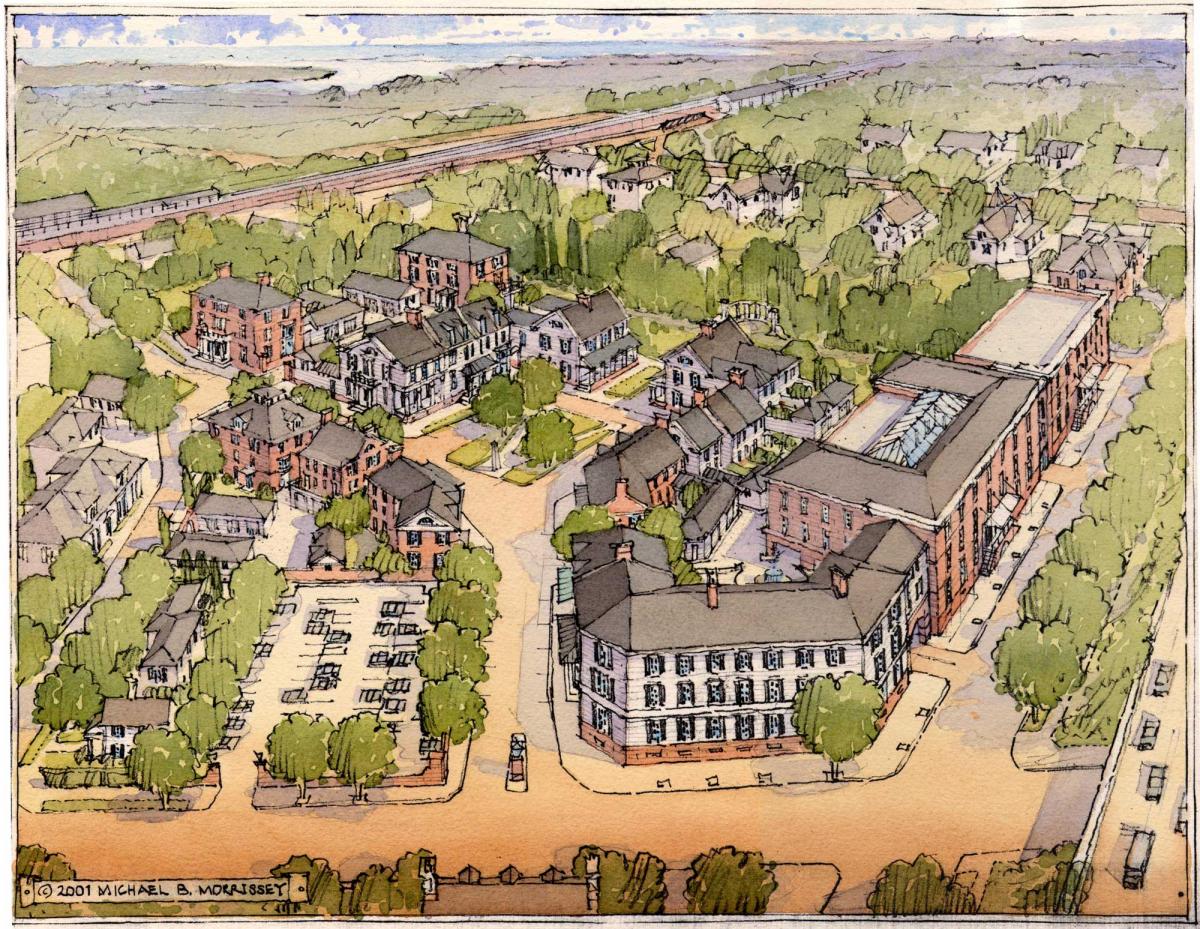
“We knew there were important images missing from Volume 1,” which covered 1980-2010, says Victor Dover, coauthor with Charles Bohl and James Dougherty of Volume 2. “Some people were left out, like the amazing Michael Morrissey.” Morrissey, a prolific illustrator of New Urbanism, especially in the 1990s and 2000s, has many renderings in this volume, as do other artists from the early days.
The new volume is bigger, with 400 pages compared to 290 for Volume 1, although it covers a shorter time period (15 years versus 30 years), highlighting more recent New Urbanist renderings, plans, polemical drawings, and photographs. It contains the work of 163 creators, representing many New Urbanist firms. The first book was about the role that art played in launching New Urbanism and carrying it through the early years. The second is about the movement's maturation, as told through its art. The first book was beautiful, and the second even more so. The images “show a picture of a better world that people get excited about and feel some urgency to go out and help create,” Dover says. “But they were also works of fine art in their own right.”
Together, these books tell the story of 45 years of New Urbanism. Since Volume 2 takes us to the present day, it is likely to be the last—at least for a long time. The New Urbanism has been constantly changing over nearly half a century. The movement didn’t even get its present name until the early 1990s. When it started, it was predominantly greenfield. New Urbanism always included redevelopment, but it was best known in its early years for traditional neighborhood developments like Seaside, Kentlands, Harbor Town, and Orenco Station. That was the center of action in US real estate, notes Charles Bohl, a tenured professor and Director of the Master’s in Real Estate Development + Urbanism Program at the University of Miami’s School of Architecture.
Eighty percent of the nation's population growth, from 1950 to 1970, was suburban—52 million housing units. Another 24 million were built between 1980 and the signing of the Charter of the New Urbanism in 1996, he says. And it wasn’t just housing that comprised suburban sprawl. Enormous development took place in suburban retail (e.g., malls, commercial strips, shopping centers, fast-food restaurants, gas-station convenience stores), as well as in office and industrial parks, stand-alone commercial buildings, hotel chains, and civic buildings. New Urbanism focused on that enormous challenge of sprawl, right up to the 2008 housing crash.
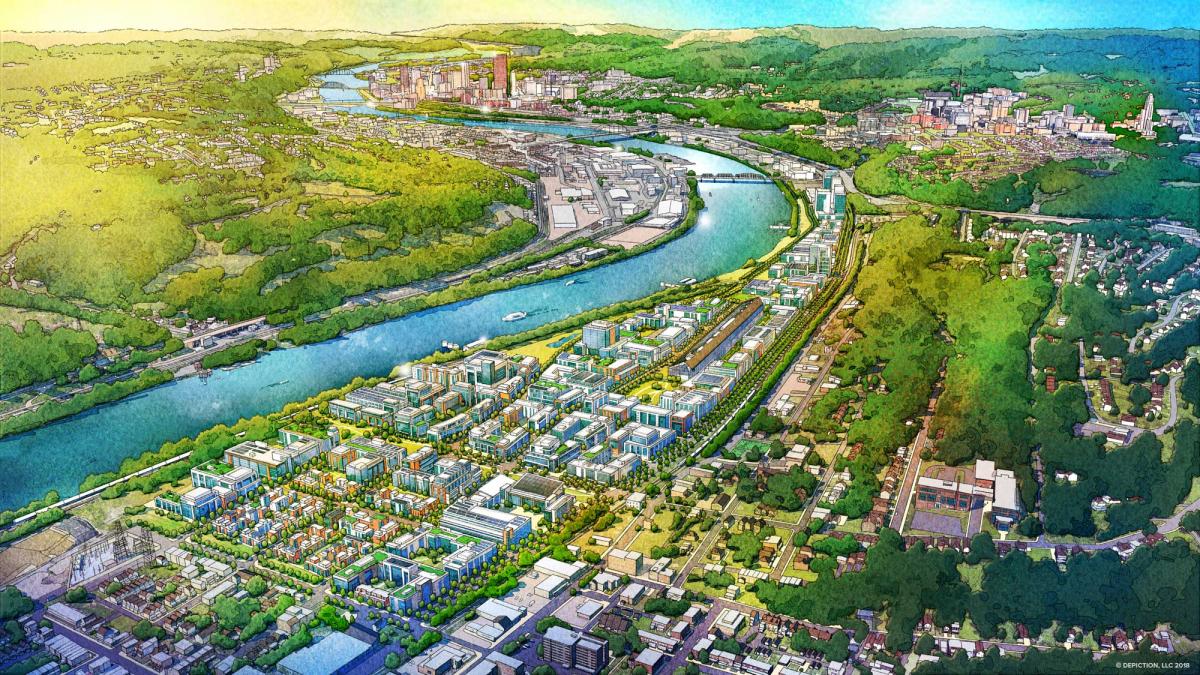
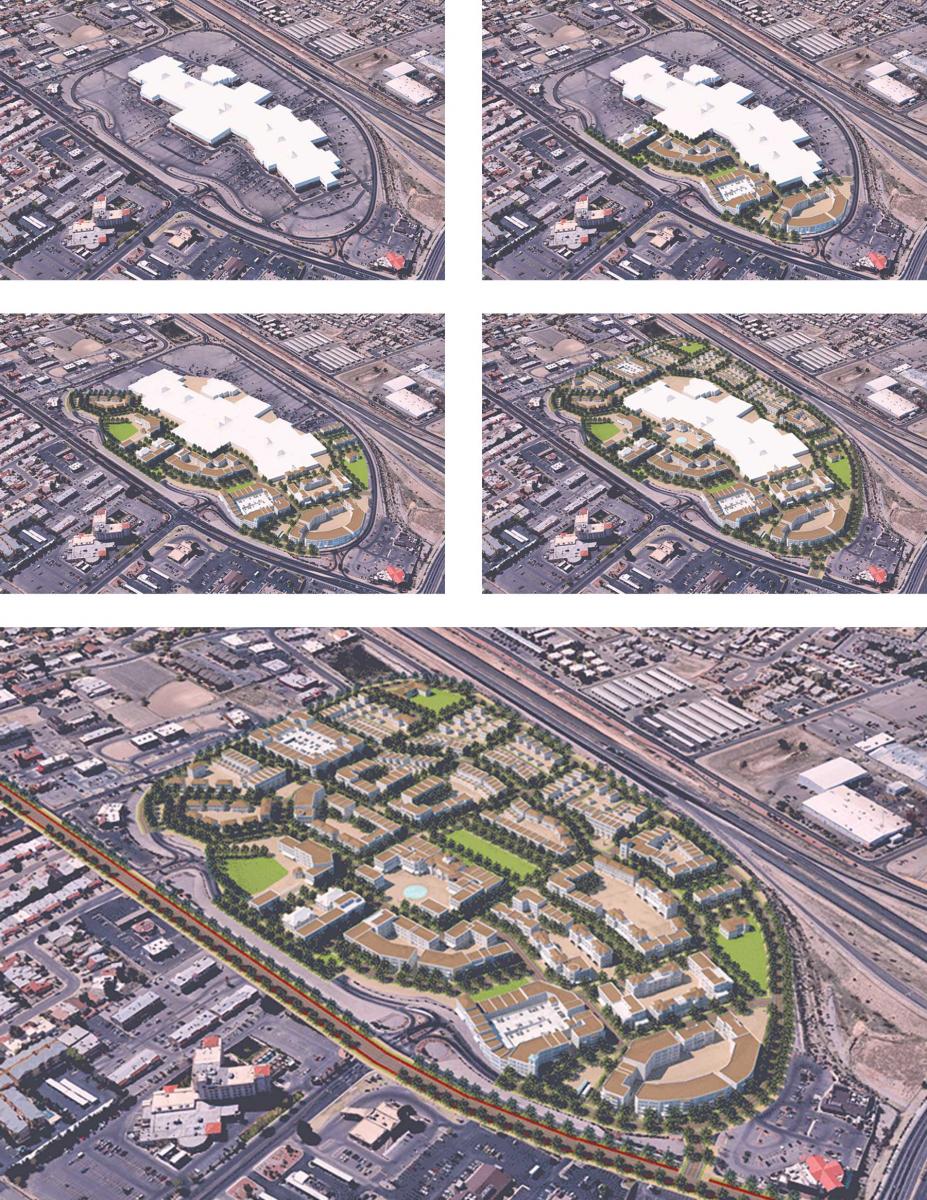
From 2010 to 2025, there were still greenfield projects (and hence images), but the greater focus was on redevelopment, adaptive reuse, infill, historic preservation, transit-oriented development, street design, incremental development, and Missing Middle, Bohl says.
The authors were not expecting the level of response and quality that was received. In a two-week period, 1,200 images were submitted. A jury of eight experts from across the US rated all of them, which made the first 250 images fairly easy to select. After that, the authors selected those that represent the variety and range of New Urbanist work over the last 15 years.
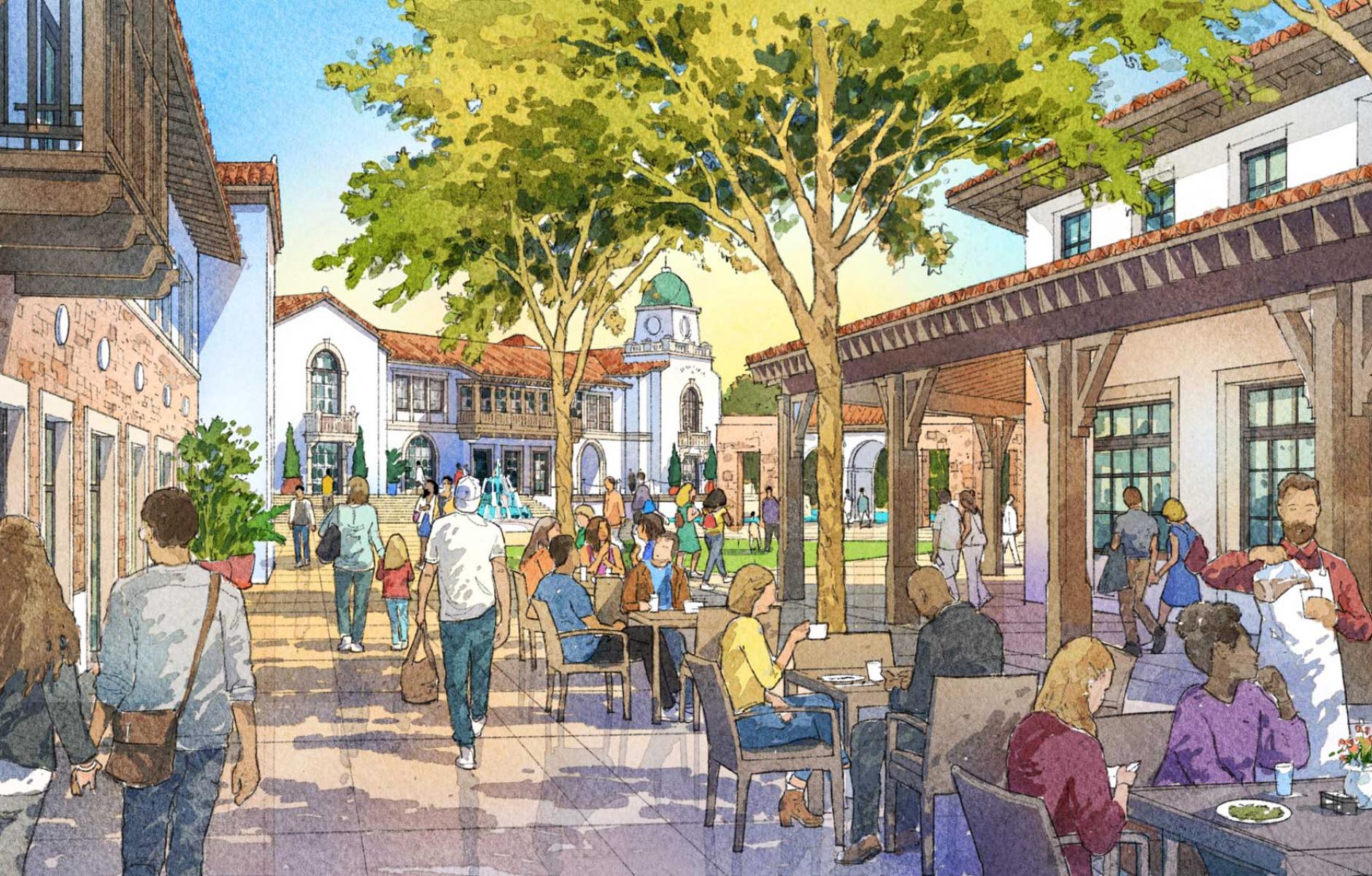
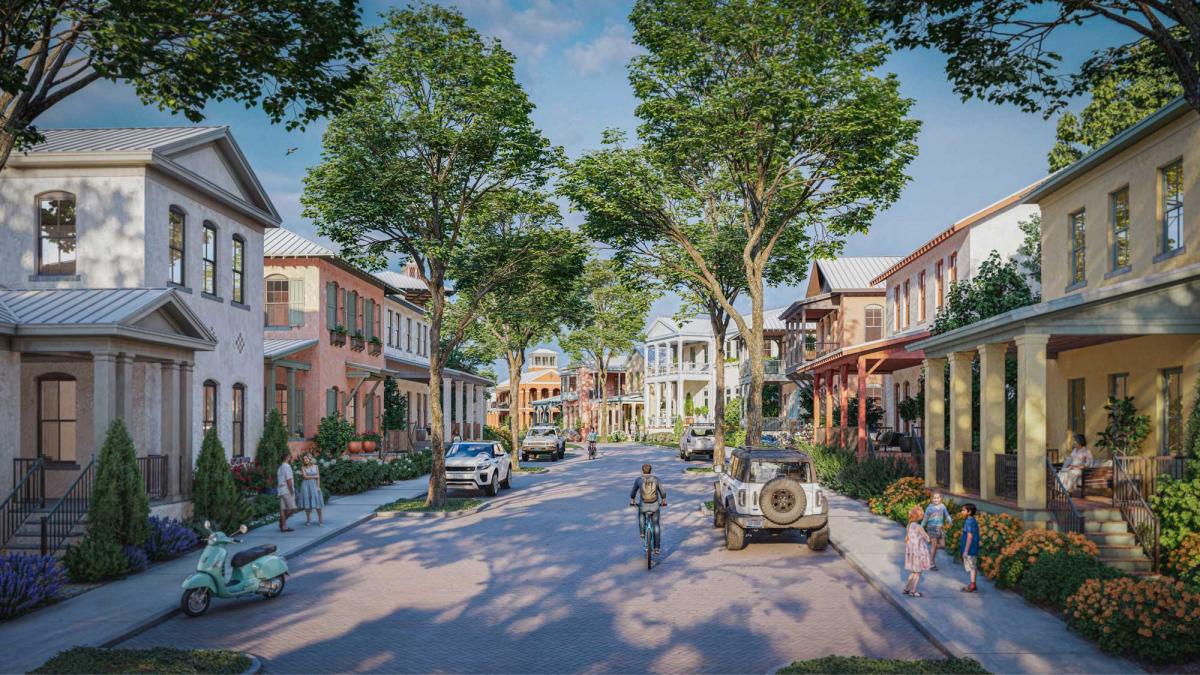
The highest rated image of all was a collaboration between illustrator JJ Zanetta and Valle & Valle Partners (see the image at the top of the review). Dover “stared and stared” at the rendering, trying to figure out what made it the most appealing among many great images, and he finally realized there are no cars. “In the first era of NU, there would have been cars, or at least it would have been apparent that you could drive through the space. Here's a public space that is car-free, and in 2025, you can show that.”
In putting this volume together, the authors were thinking of the present-day audience and future posterity. It’s a resource that could be used 50 years from now, when students and academics won’t know the names of the people who helped design New Urbanist communities. As recently as the 1980s, classic planning works like Civic Art were largely forgotten, but when rediscovered, they reintroduced planners to important historical designers. The book shows why and how New Urbanism emerged over time. “The Art of the New Urbanism is the art of communicating timeless ideas of placemaking, or urbanism, as well as the fact that they are amazing artistic works,” Bohl says. “We do feel like we have captured, through hundreds of artists, that body of work.”
Art plays a crucial role in the planning and charrette process in two ways: it can show the public how change is possible and visually test hypotheses. When an idea is drawn, it becomes clearer. It answers crucial questions: Is the idea likely to work? Does it have citizen support? In other words, artists in charrettes allow for ideas not merely to be dismissed but to be explored through renderings. Some ideas prove popular; for others, at least citizens know they were taken seriously.
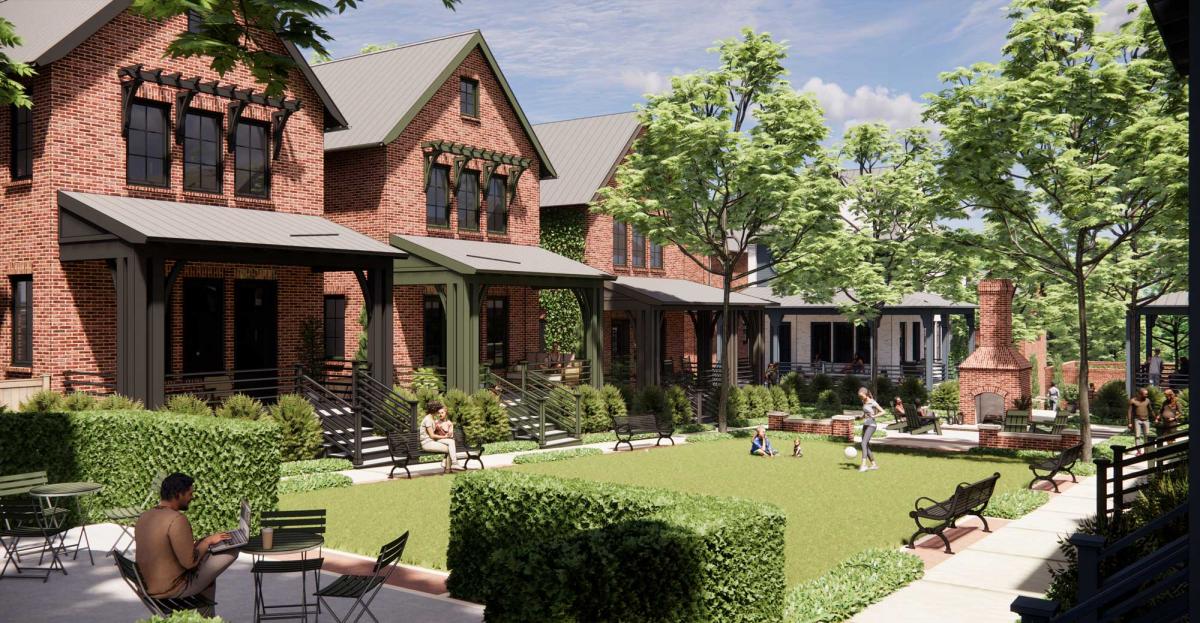
The authors expected to get a ton of digital images from the last decade and a half. “We didn't expect to see a lot of images that started as computer/digital images, and then were painted over,” Dover says. “That creates images that have the computer accuracy, but the spirit of the hand-drawn illustration.”
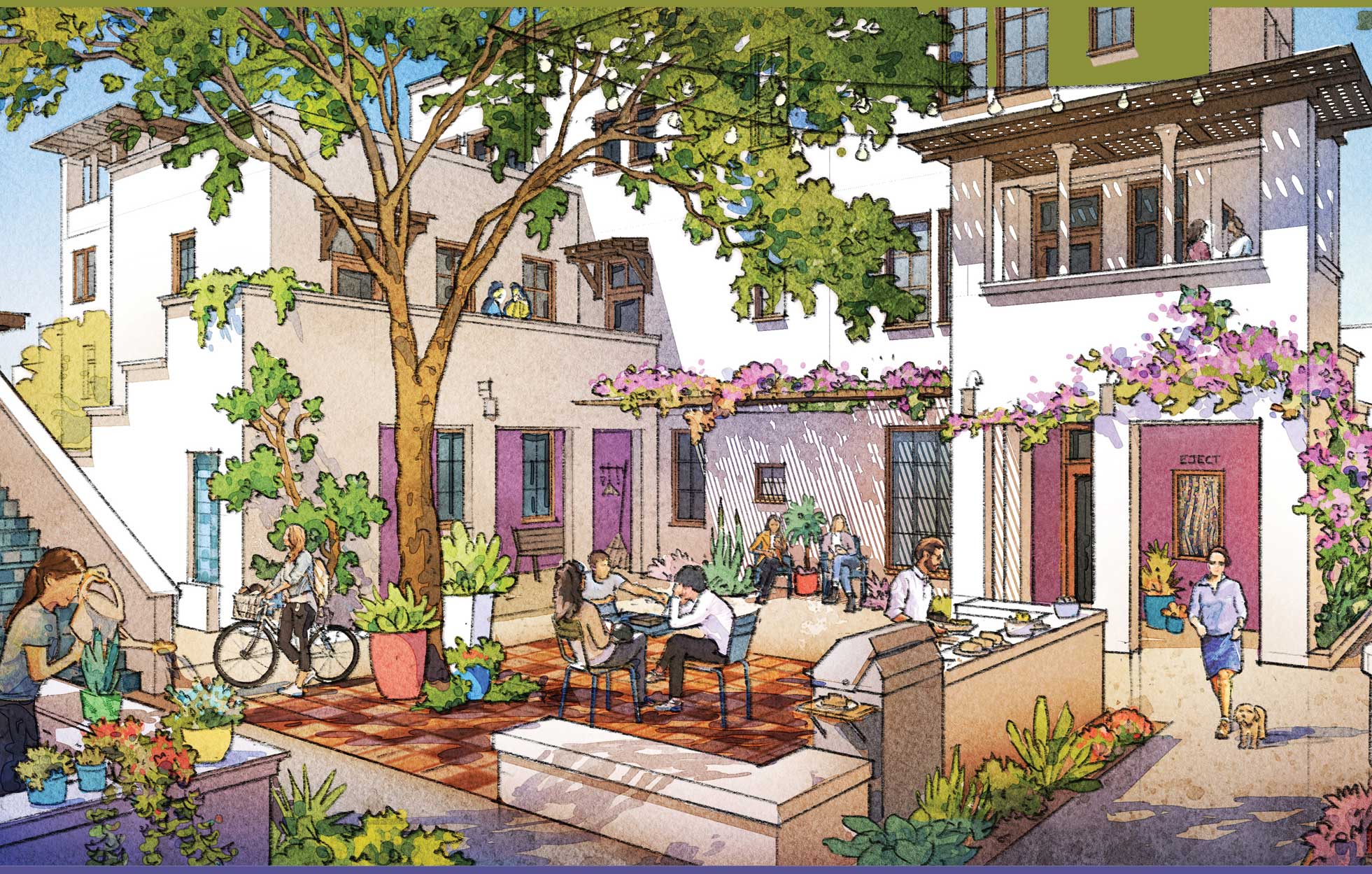
The images also show evolving techniques in urbanism, including greenfield development, land stewardship, redevelopment, adaptive reuse, infill, historic preservation, and transit-oriented development. Also, light imprint, agrarian urbanism, LEED-ND, Incremental Development, and Missing Middle—"all of the areas where New Urbanists were super active," notes Bohl. That was especially true after the crash. “Suddenly, the capital to do larger projects was not there. More efforts to promote smaller-scale development came to the fore.”
New Urbanism was always less car-centric, but “car-free” development became a thing. The rural-to-urban Transect continues to be highlighted, in some cool and unusual ways. The Florida Department of Transportation drew a unique Transect for their context-sensitive design system. Another surprise was the international reach of New Urbanism in regions such as the Middle East and Latin America. New Urbanism is not just a North American phenomenon. Some of the images are unique. A future rendering of Lisbon, drawn as ceramic tiles, looks like something from the Renaissance.
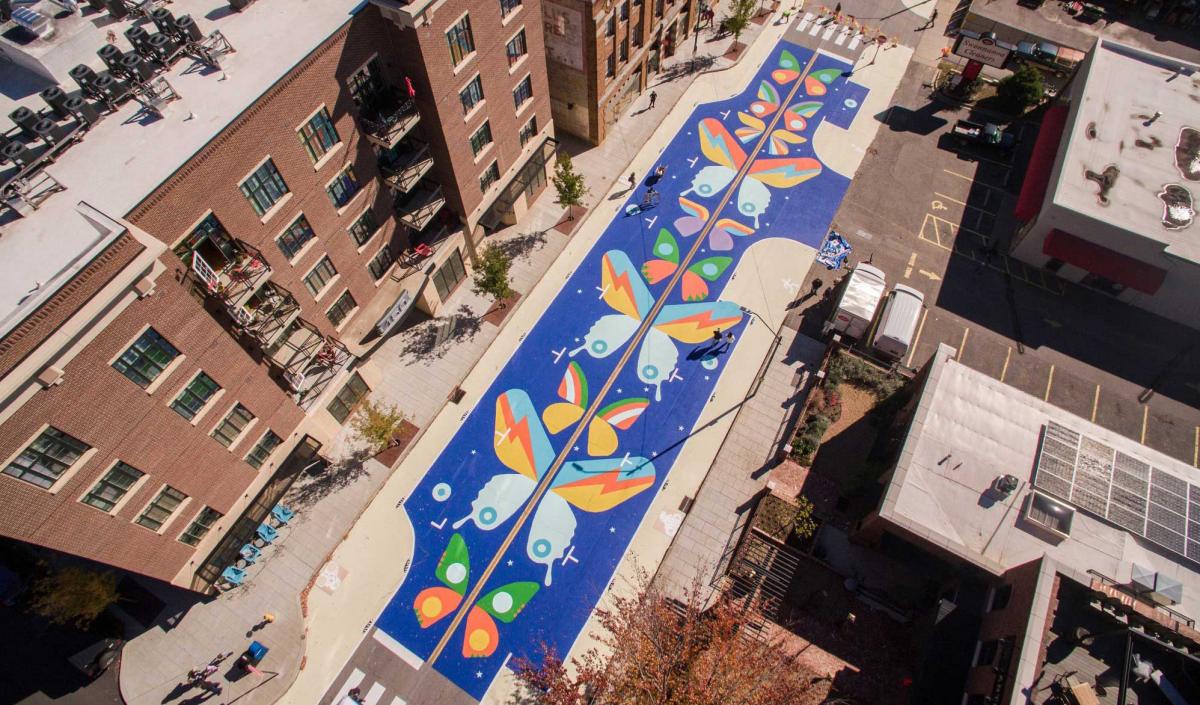
Form-based codes one of the biggest areas of impact in this time period. Hundreds have been produced since 2010. These, in turn, provide models that influence federal policies, Bohl says. The Highways to Boulevard movement produced some great images. Tactical Urbanism, one of the major sub-movements of New Urbanism, took off during the pandemic, as shown by some of the images.
The book features key essays by the authors.
- Charles Bohl discusses how New Urbanist designers solved problems through art, such as in urban redevelopment, suburban retrofit, or agrarian urbanism.
- Victor Dover interviews New Urbanist artists to discover from whom and where they draw their inspiration. That section includes citrus fruit box art, works inspired by WPA posters, pop art, and more.
- James Dougherty writes about the technical details of how images are composed. He breaks down the structure of renderings to show the underlying form and how that affects the character of the drawing.
There’s something for everybody in this volume. While designers and firms will likely have both volumes, non-designers will find them useful as well. “Someone who gets inspired by a picture can take that to a meeting, slide it across the table, and say, ‘How come we can’t have a street like that in our town? How come we can’t have a neighborhood like that?’ There’s a way they can use it,” says Dover.
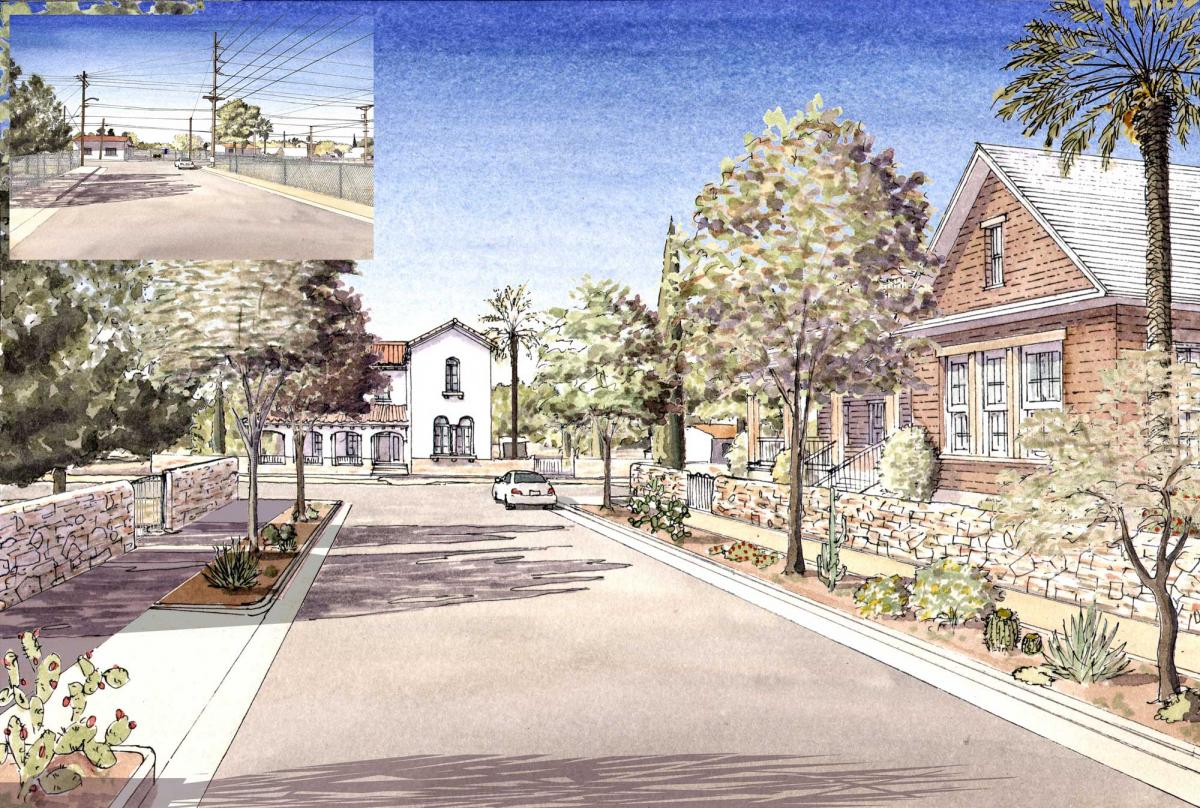
It's also helpful for developers to understand what is possible. "We made sure that the content was a good representation of the principles of New Urbanism. It can serve as an idea resource for projects," he says.
As Volume 2 is released, AI is beginning to transform the economy, including image creation. “It’s important that humans maintain their skills,” notes James Dougherty, whose renderings graced the covers of both volumes. “It’s conceivable there could be atrophy of skills. We worked really hard over decades to resurrect these skills in visioning and placemaking, and it would be a shame to see human capacity reduced. As long as people are mindful of maintaining their ability, AI could be a great tool on top of that. Like using a car. It is possible to go far with a car, but if someone only uses a car, their physiology gets weaker.”
As such, The Art of the New Urbanism serves as a marker and sets a bar for how humans can communicate planning through art. If human skills atrophy, it won’t be because we lack easy access to great examples of community design artistry in The Art of the New Urbanism, volumes 1 and 2.
Get The Art of the New Urbanism, Volume 2 (2010-2025), published by Wiley.