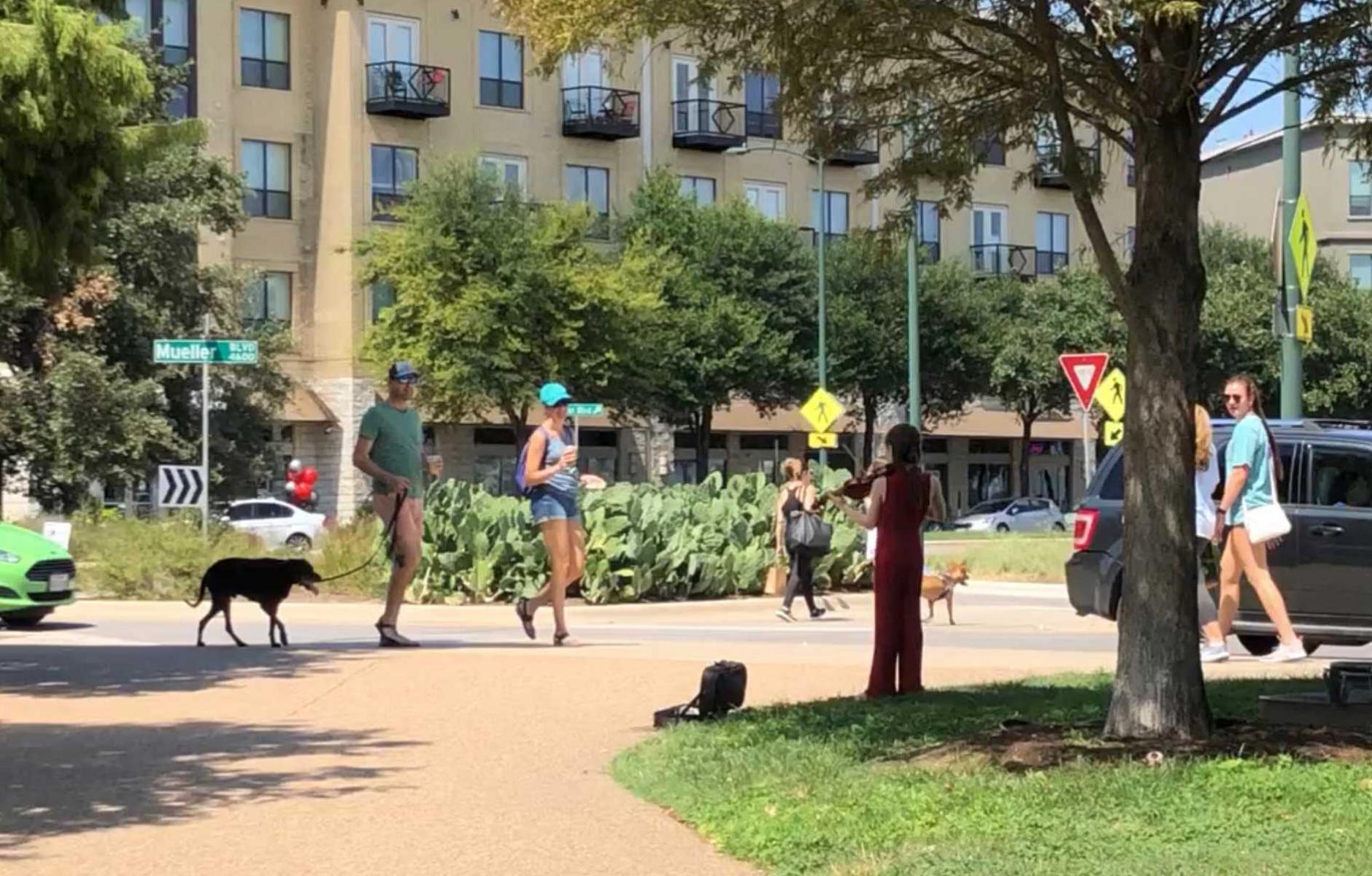
Lived experience and urbanism


I have long been wary of the term “lived experience,” as it seemed redundant. If you live through something, isn’t that an experience by definition? And isn’t all experience lived? After I heard the term applied to urbanism, however, I am coming around.
Lived experience relates to day-to-day living. Whereas “experience,” while it could be day-to-day, is often applied to something unusual. “That was quite an experience,” you might say, after canoeing 100 miles and encountering a moose along the way. But that’s not typically your lived experience unless you are a wilderness guide. Lived experience is relevant to urban planning and the communities we live in, because the places we live in have a profound effect on day-to-day life.
In New Urbanism, we talk about the goal of building walkable communities rather than drivable places. We typically discuss walkability in technical terms rather than in terms of lived experience. A walkable community provides mobility choice, we say, and offers mixed-use in proximity to where we live. It increases real estate values per unit of land and generates higher tax revenues for a municipality. We say walkable places are compact, use less land, promote transit use, and reduce our dependence on automobile travel, thereby cutting pollution from unnecessary automobile use. We may add that living in a walkable place is good for your health. Or that it preserves the character of a community by preventing the countryside from being gobbled up by low-density sprawl. We argue that it contributes to a unique community, rather than generic commercial strips and residential streets fronted by garage doors.
All of these are generally true, and they are common arguments in favor of form-based codes or New Urbanist plans. But they say little about, or at least don’t emphasize, the experience of living in walkable places.
I started thinking about lived experience and urbanism in a recent conversation with Wes Craiglow, director of ULI Northwest Arkansas, while writing a paper about the challenges that the fast-growing region faces as it gains 40 people a day due to its economic development and attractiveness. I asked whether the region is in danger of losing its character as subdivisions are built further into the countryside, merging once-distinct communities into one urban mass. He said he doesn’t like to talk about community character because it is often misconstrued, and that people view change as a degradation of character. Lived experience is a better metric, he said.
“The character of Bentonville has changed,” he says, and that may upset some residents. “But I can show you how the lived experience in many specific ways has improved over the last 25 years.”
CNU 34 was held in Northwest Arkansas this year, with venues in Bentonville, Fayetteville, and Rogers, and so I visited the region a few times recently. I had also been to Bentonville a quarter-century earlier and noted the change.
It’s harder to park now in downtown Bentonville, and it probably takes you a few minutes longer to drive through, because there are so many more cars and people than there were 20 years ago. The City appeared to come back to life. Now you can get on a bike and access a 40-mile-long regional trail. The central square, once deserted, is active 18 hours a day. There are art museums, more restaurants, and more things to do. It’s a better place to walk because destinations have proliferated and the city has invested in multimodal streetscapes. Many of these changes contribute to a better lived experience for thousands of residents.
To be sure, the cost of living has risen along with the quality of life in Bentonville in recent years. That is part of a national trend and is also due to Bentonville being home to Walmart, the world's largest corporation by revenue. It is the most expensive city in Northwest Arkansas, with median sales prices 15-20 percent higher than the national average. If you live in a walkable part of Bentonville, and that means you drive less, you will get some of that back in reduced automobile expenditures. In NWA, you could live somewhat more cheaply in a city like Rogers or Fayetteville, and still have a choice of lifestyles—walkable or drivable.
So, what is the difference in the lived experience of a walkable versus a drivable place (you can still drive in a walkable place, but not so much the reverse)? As urban planners, we often speak of these as Platonic ideals. In a walkable place, you have the freedom not to get in your car, to walk down the street and go to the park, a main street, or visit a neighbor. You can probably also get on a bike and go even further, maybe to your place of employment or to a waterfront. In a drivable residential area, your options are more limited because uses are separated and farther apart, and reaching the shopping center or other services probably requires getting on the main road. You probably have to get in the car to go nearly anywhere—and walking around the subdivision gets boring fast.
The research shows that living in a walkable place leads to better health (see here and here), and that ultimately that comes down to lived experience. That can be attributed to three factors. First, the ability to walk out your front door and go to a park, under the shade of street trees, connects you to greenery and nature. Second, walking to the main street for daily needs increases your step count and provides physical activity in your daily routine. Third, along the way, you may encounter friends or visit a “third place,” increasing the number of social encounters and connections. These brief, casual encounters improve health in measurable ways and can even mean the difference between life and death in a crisis, as sociologist Eric Klinenberg demonstrated in his much-cited study of a severe Chicago heat wave.
I have been speaking in Platonic terms about walkable versus drivable, but in reality, every place is a little different. The people in each place are different. Someone may live in an unusually tight-knit cul-de-sac where people know and watch out for each other. Or they may live in a walkable neighborhood that is a bit unfriendly. Everyone’s lived experience varies.
The idea of lived experience doesn’t have to be black and white, with no shades of gray. Day-to-day experience can be improved incrementally, regardless of the kind of neighborhood you live in. If a family lives in a conventional subdivision, it doesn’t have to be retrofitted into a full-blown traditional neighborhood development to make a difference in somebody’s life. Maybe a stretch of sidewalk allowing kids to walk to school safely would make a tremendous difference for a family. Maybe a bicycle trail that allows someone to get to town on an e-bike without using the main road would measurably enhance their sense of freedom.
And urbanism isn't for everyone. Or maybe it isn't for everyone all the time. Even if people like the suburban lifestyle, they have probably gone on vacation to an urban place. Maybe they went to Nantucket, Key West, San Francisco, Rome, or Seaside, Florida. You can remind them of how great it was to get around on foot through charming public spaces without the hassle of parking and driving.
That’s not to diminish the importance of building complete, walkable neighborhoods, which is obviously the best way to do it if you can manage it. Such neighborhoods not only represent a better quality of life for residents but also tend to enhance the lived experience of neighboring subdivisions.
The idea of lived experience offers a powerful framework for reaching people, regardless of their lifestyle preferences or where they live, and for advocating for improvements, whether incremental or comprehensive. We should emphasize the tangible impact of community design on people’s day-to-day lives, rather than just arguing for abstract societal benefits.
There’s place for both, obviously, and it depends on the audience. But most people make decisions based on whether something will improve or degrade their daily lives. And they are very protective of that. Opposition to urbanism often stems from fears about traffic and the difficulty of finding parking, which people associate with hassle. A strong emphasis on how urbanism can improve lived experience and reduce hassle may be the best way to overcome that fear and to mobilize those likely to agree with us.