New Urbanism boosts social connections and health


The value of New Urbanism in promoting social connections is gaining recognition among social scientists, not least because of a growing body of evidence demonstrating that social connections are highly important to overall health and well-being.
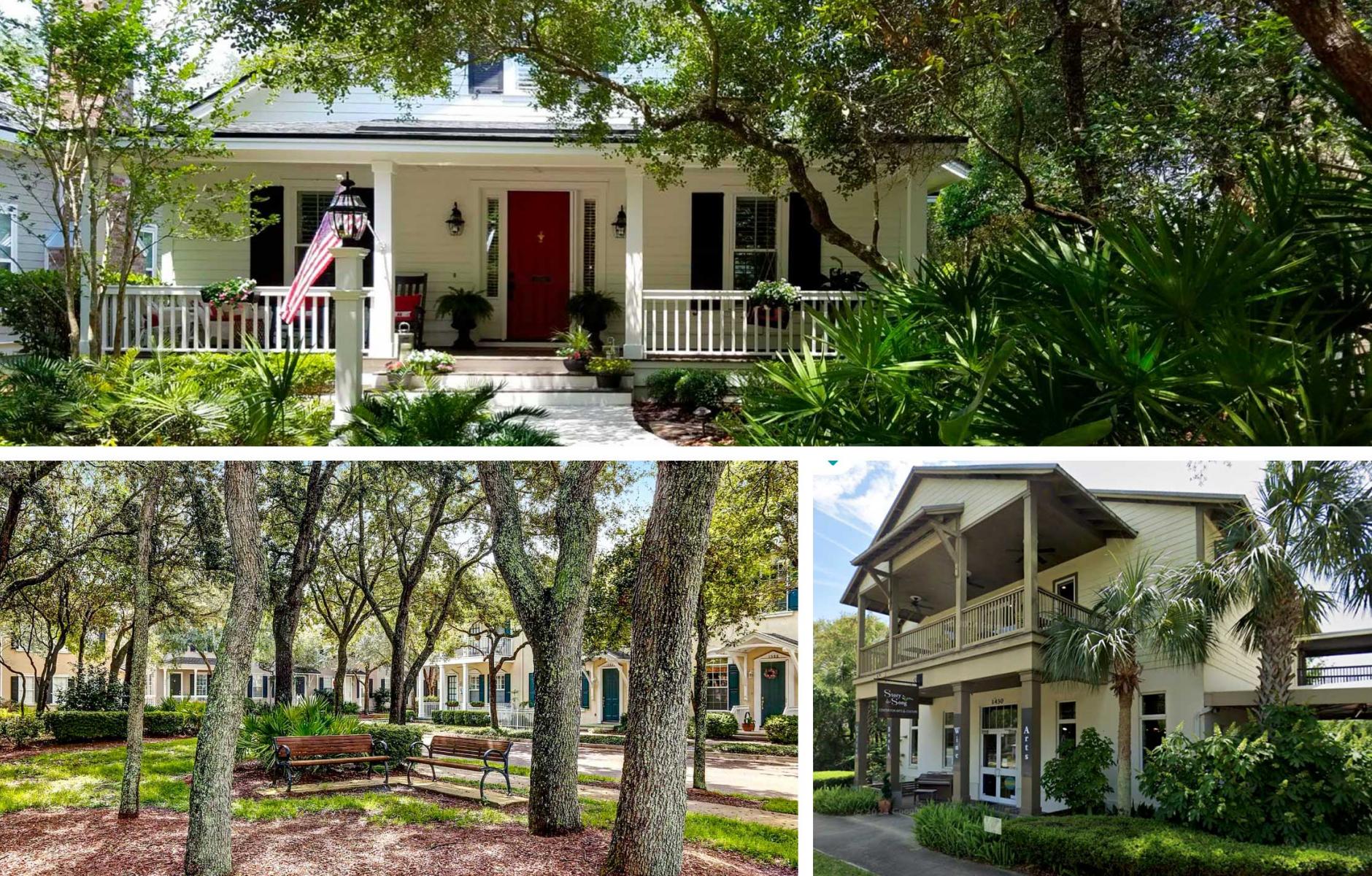
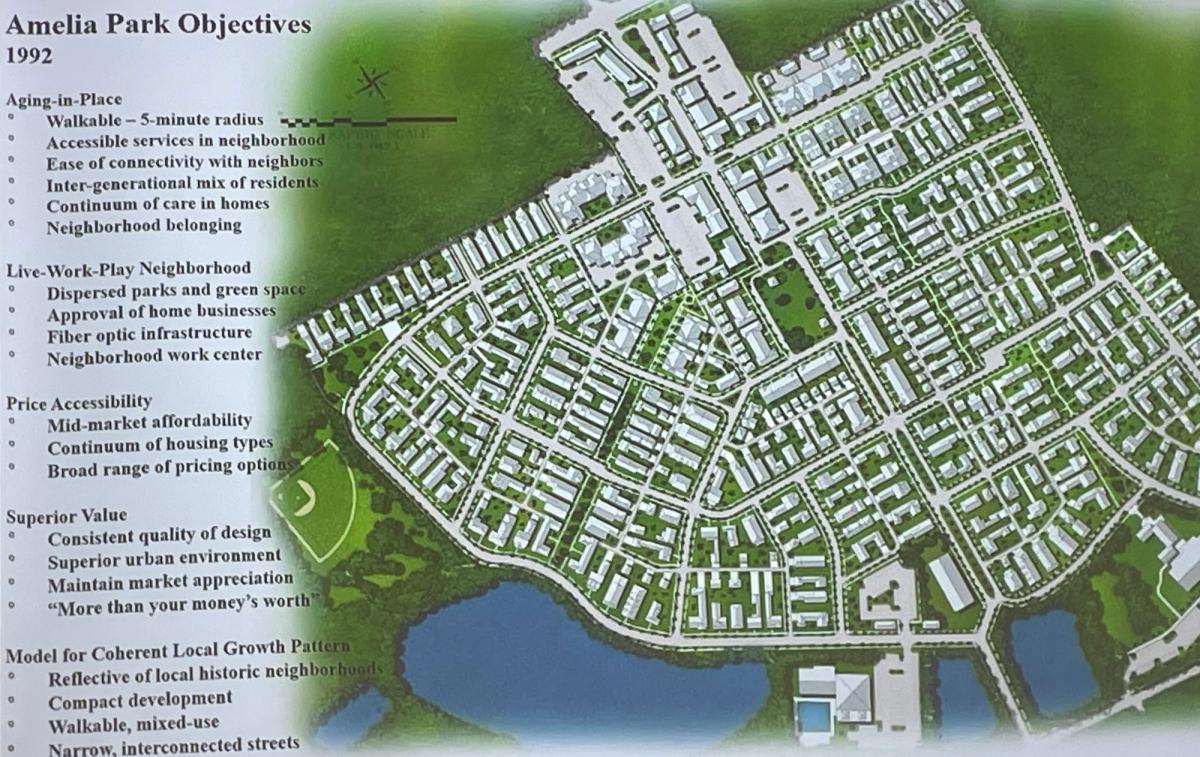
The latest example is a recent academic study of Amelia Park, a 106-acre traditional neighborhood development (TND) begun by developer Joel Embry in 1997, based on a design by DPZ, one of the founding firms of New Urbanism. The report, A Survey of Community Engagement and Well-Being of Amelia Park Residents, suggests that Amelia Park residents report higher levels of social engagement with neighbors than other residents of Amelia Island, Florida.
“Survey respondents all reported feeling valued and embedded in the general community, regardless of neighborhood. These findings suggest Amelia Park, and the residents within, foster an environment of neighborhood connectedness and cohesion,” according to the report by the Pepper Institute on Aging and Public Policy at Florida State University (FSU).
“Amelia Park residents also reported better health, memory, and well-being than the comparison group in the local community. This could reflect a community design that supports well-being or the draw of health-minded residents to a neighborhood like Amelia Park. Regardless, survey results paint a picture of Amelia Park residents as healthy and thriving.”
Specifically, the findings show:
• Amelia Park residents report engaging in more informal gatherings with their neighbors such as unplanned chats than nonresidents (2.27 to 1.62). This was measured on a scale of 1 to 5 (1=not at all, 5=every day).
• More Amelia Park residents engage in planned chats with neighbors in their homes or public space than nonresidents (2.8 to 2.08). This was also measured on a scale of 1 to 5.
“These findings suggest that Amelia Park residents are more frequently engaging with neighbors compared to other Amelia Island residents. Importantly, these two questions tap into different facets of community connectedness and design. Higher levels of unplanned gatherings suggest residents are more likely to have chance encounters with known neighbors within the neighborhood or elsewhere in the community. Higher levels of planned engagement suggest neighbors not only know each other but foster relationships through residence in Amelia Park. These findings also mirror stories of Amelia Park residents during the Town Hall meetings.”
• Residents were asked to rate their own health, and Amelia Park residents score an average of 3.27, versus a nonresident score of 2.88 (1=poor, 5=excellent), a statistically significant difference. Looking more closely at the responses, 85 percent of Amelia Park residents rated their health as very good or excellent, compared with 65 percent of nonresidents.
• Residents and nonresidents were asked about their memory (because the island has a large number of retirees, the average age is significantly higher than in Florida as a whole). This translates to 87 percent of Amelia Park residents rating their memory as very good or excellent, compared to 65 percent of nonresidents.
• On a scale of 1 to 7, Amelia Park residents reported higher overall life satisfaction. The average score for residents on this scale was 6.31 compared to nonresidents who averaged a score of 5.92. (Residents were asked to respond to the following statements: In most ways my life is close to ideal; The conditions of my life are excellent; I am satisfied with my life; So far, I have gotten the important things that I want in life; If I could live my life over, I would change almost nothing.)
“The findings suggest that Amelia Park residents report higher levels of health, memory, and overall well-being compared to other Amelia Island area residents.”
Amelia Park residents and nonresidents both report high levels of community belonging, with Amelia Park residents reporting slightly higher levels that are not statistically significant (3.9 out of 5 for Amelia Park, versus 3.75 out of 5 for nonresidents). “This similarity between Amelia Park residents and non-residents could reflect a high sense of belonging in the area regardless of neighborhood residence (3.8 out of 5 is a high average). It could also reflect respondents all interpreting ‘community’ as Amelia Island more broadly instead of their neighborhood.”
Although survey responses cannot establish cause or effect, significant differences show that Amelia Park residents interact more with their neighbors and have better health than other residents of Amelia Island, the researchers explain.
These findings are consistent with broader research showing that walkable, accessible neighborhoods and communities can foster connectedness among neighbors and promote engagement, physical health, and well-being, the team notes.
A growing body of research connects urbanism with physical activity, social engagement, and well-being, explains Tim Chapin, dean of the college of social sciences and public policy at FSU. Chapin reported these findings at CNU 34 in Northwest Arkansas in May:
- Walkable and mixed-use environments are linked to increased physical activity, lower obesity risk and improved mental well-being
- Access to parks, green space and active transportation infrastructure contributes to reduced stress and higher life satisfaction
- New Urbanist developments are associated with higher reported neighborhood satisfaction and happiness through both social and environmental pathways
- Evidence suggests that human-scale, connected and aesthetically appealing environments support healthier and happier daily lifestyles
Chapin was not the only social scientist to report on the impact of New Urbanism at CNU 34. Keynote addresses were given by Raj Chetty, an economist of Harvard University, and Eric Klinenberg, a sociologist and author. Chetty reported that HOPE VI public housing projects, which use New Urbanist design, have increased upward mobility and reduced intergenerational poverty among children who lived in these developments.
Klinenberg reported on the importance of what he called “social infrastructure,” such as parks, playgrounds, libraries, and museums. The design of TNDs like Amelia Park focuses heavily on social infrastructure.
The evidence that New Urbanism boosts social engagement and active living goes back at least to 2009, when Bruce Podobnik, a researcher at Lewis and Clark University, conducted a series of studies at Orenco Station, a New Urbanist community in Hillsboro, Oregon. Orenco Station residents reported higher community participation, a stronger sense of a community, and that they walk to the store substantially more. “The Orenco Station study is probably the first to show, in an academic study, such a big difference in social activity between a new urban community and a comparable suburban development. Also, it is the first to show such high rates of walking to stores,” as I reported in New Urban News in September of 2009.
Despite that study, which aligned with non-academic community surveys and widespread anecdotal evidence, few, if any, social scientists followed up for years. But the recent research, particularly Chetty’s, which generated widespread media coverage, is turning that around.
Chapin says that more evidence is needed to show, conclusively, that New Urbanism boosts social engagement and that, in turn, improves health. FSU is looking into a study of 8-10 New Urbanist communities, compared with non-New Urbanist communities, over a period of 3-5 years.