-

Why walkability is not a luxury
Walkable places are vital to health and welfare—and contrary to perceptions, they also reduce household costs.Joel Kotkin criticized walkable neighborhoods as elitist in his 2016 book The Human City : Urbanism for the Rest of Us . The title of the book refers to the idea that compact, walkable neighborhoods are not for middle-class Americans who are struggling to raise families, put children through...Read more -

The Thirty Years’ War: New Urbanism and the Academy
What if the Academic criticisms of New Urbanism are right? What if the idea of fabric and monument buildings is inadequate to build a city?To most American architects and to almost all schools of architecture, New Urbanism is a bizarre, little known, sub-culture that they look upon with attitudes that range from indifference, to dismissiveness, to active hostility. Many in CNU happily return the favor and see the digital razzle dazzle...Read more -
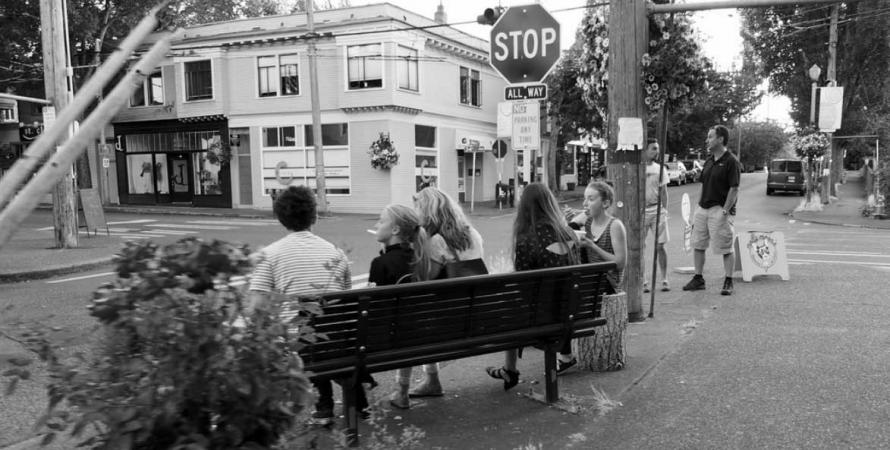
With an ‘urban diary,’ everyone’s a city planner
Each of us sees the city from a slightly different angle. By capturing the perceptions of city dwellers, decision makers will be better equipped to plan cities and respond to urban change.We may inhabit the same city, but we live in different worlds. Each of us sees our city from a slightly different angle, the view filtered through lenses of race, class, and circumstance. Even when we encounter the same scene, we experience it differently. Consider this: for a young professional in...Read more -

The new urban Christian connection: A Detroit networking invitation
CNU has a vital toolkit that Christian community workers badly need to provide solutions to the problems they face in cities and neighborhoods.I’m not ashamed to admit it. I love CNU, warts and all—the people, the charter, the commitment, the restless pushing of intellectual and professional boundaries as we square up to changing realities and new challenges. We’re a scrappy bunch. I like that. But we have heart too. Real places have a...Read more