-
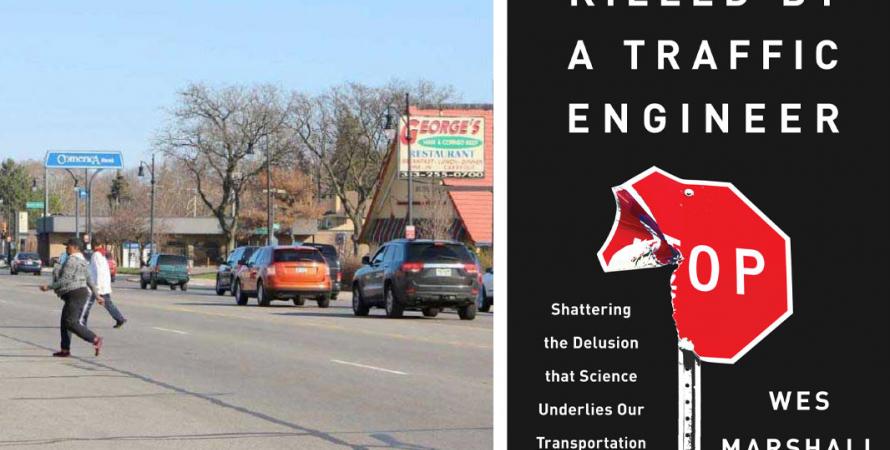
Exposing the pseudoscience of traffic engineering
Wes Marshall’s new book, Killed by a Traffic Engineer, reveals the profession’s shaky, unscientific foundations—and points the way to safer, healthier streets.Profound frustration with traffic engineering has bedeviled New Urbanism since the movement formed in the early 1990s. Of all of the barriers to building good urbanism, two stand out: land-use codes and street planning and design. While code reform has steadily advanced, changes to street practice...Read more -

Syracuse I-81 freeway transformation clears legal hurdle
The demolition and replacement of Syracuse’s I-81 viaduct with a “community grid” cleared a key legal hurdle , as a New York State court unanimously overturned a lower court ruling blocking the project. The February 9 decision apparently opens the door for one of the nation’s most important...Read more -

Engineers resist narrow lanes, but change is coming
An American Society of Civil Engineers survey shows the challenges to creating more walkable streets, yet the way forward is to enable more context-based design.A little over a month ago, Johns Hopkins University released the largest-ever research on travel lane width and safety, providing conclusive evidence that 9- and 10-foot lanes do not contribute to greater automobile crashes and, in some cases, reduce collisions. Traffic engineers have long shunned...Read more -

Connected streets are needed to support mixed-use, study reports
A study looks at hierarchical and interconnected street networks, concluding that you can't have effective mixed-use without street grids, which provide many benefits.Nearly all local land-use comprehensive plans nowadays call for mixed-use and walkability, but they often lack specific instructions on streets to enable those outcomes. A study in the Journal of Geotechnical and Transportation Engineering claims that well-connected street networks—e.g., street...Read more