‘TOD streets’ law would ban ped-hostile uses along corridors


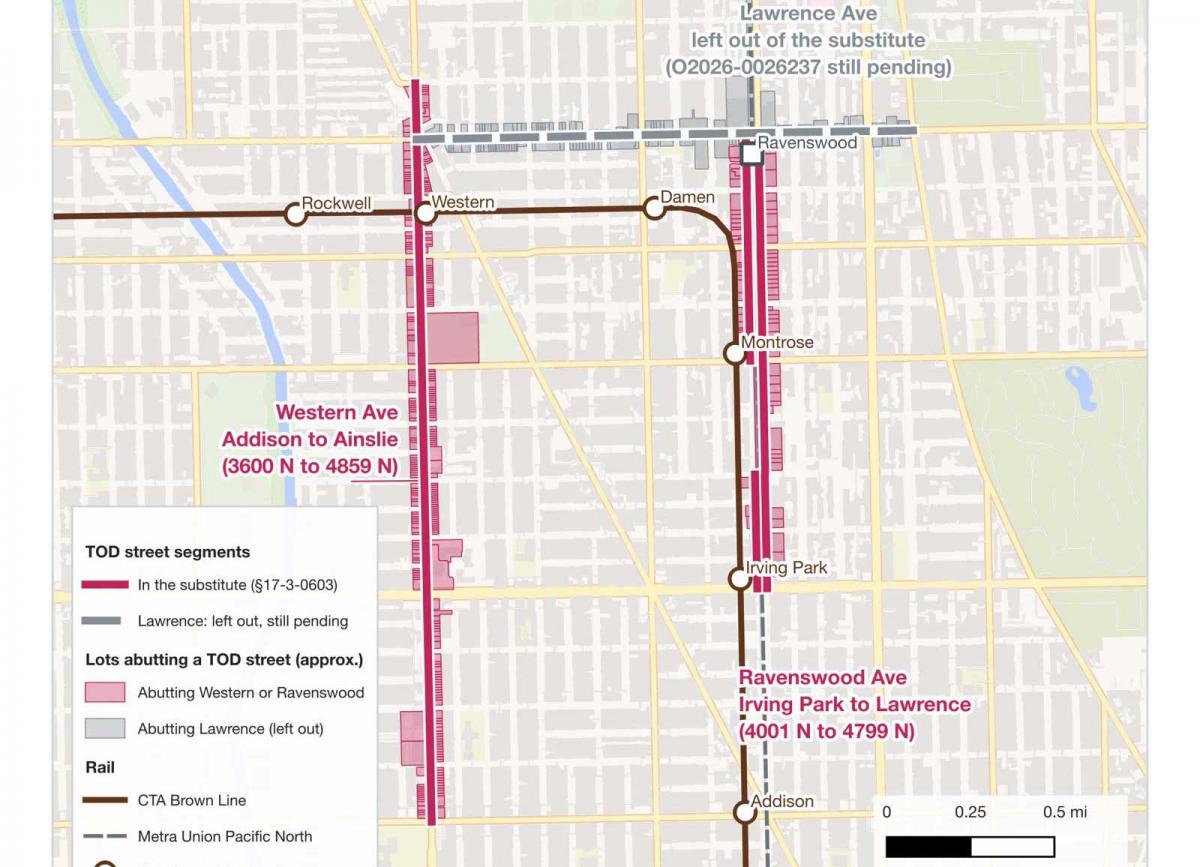
Chicago City Council approved a new version of an ordinance for “TOD Streets” that makes pedestrian-oriented uses required near train stations, and designates the first two “TOD Streets”—Ravenswood Avenue and Western Avenue on the North Side.
The ordinance bans certain uses deemed hostile to pedestrians along these corridors to promote pedestrian-oriented streets. The idea would be similar to, in New Urbanist parlance, creating an “A” street—one containing consistent pedestrian-oriented uses and frontages.
The ordinance would ban strip centers, drive-throughs, gas stations, car washes, motor vehicle repair shops, vehicle sales and service with outdoor storage, self-storage buildings, and data centers. The Chicago Cityscape blog reports that this ordinance improves on one adopted in May. “The original proposal had an easy escape hatch: an owner could get an administrative adjustment around the ban by providing a public plaza or another pedestrian amenity” the blog states. “The substitute ordinance that passed dropped that part of the proposal and if an alderperson wants to allow one of the above uses they would have to remove the TOD Streets designation by a minimum of one block.”
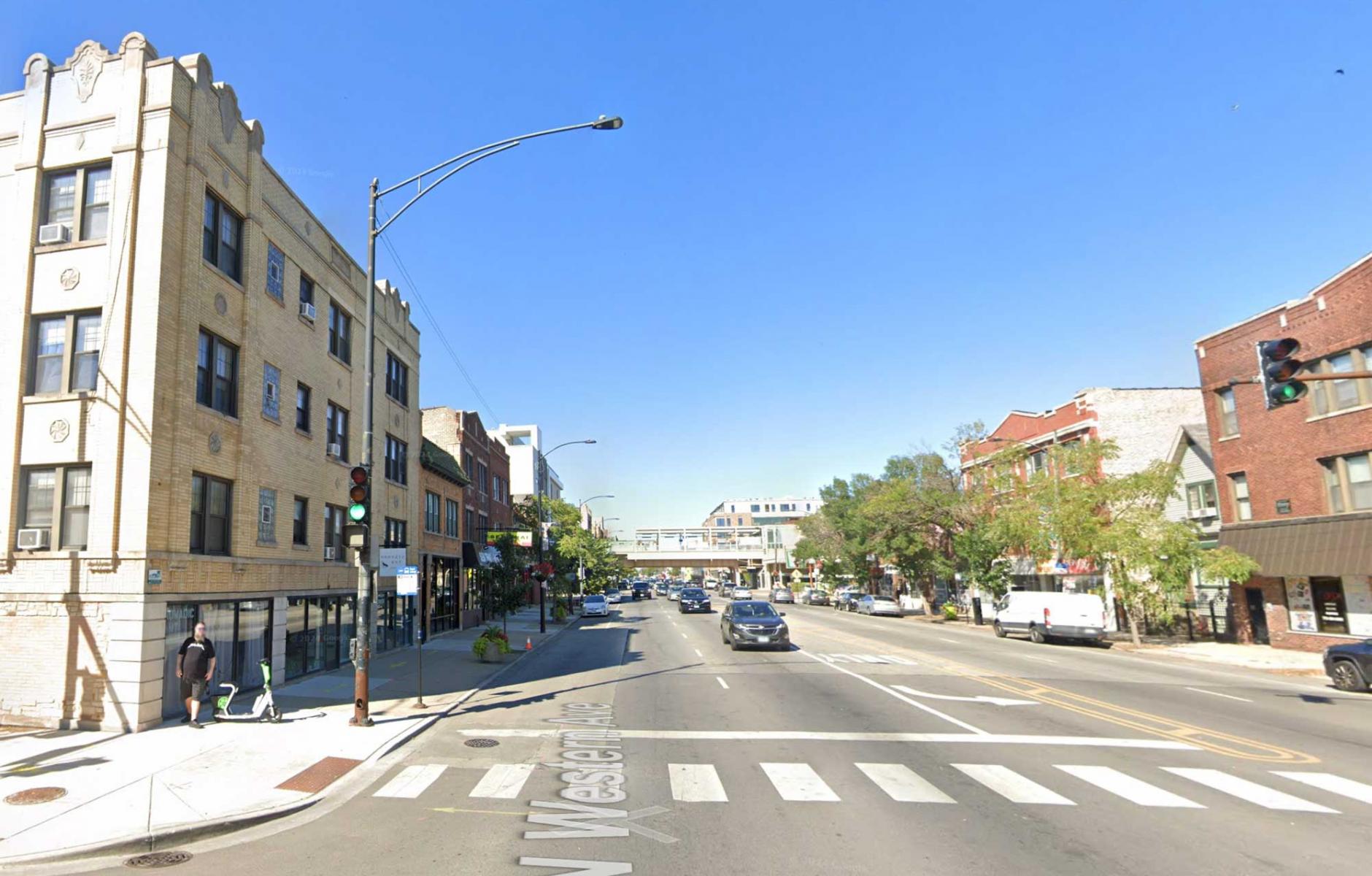
The two corridors are from a mile to a mile and a half long, adjacent to train stops. These are test cases for the TOD Streets idea, located in a relatively wealthy, maturely developed area with a strong housing market. Western Avenue currently has a lot of automobile traffic on five lanes. “Western is a dangerous arterial, if it can get more foot traffic, it would be more enjoyable to be on,” says Gary Scott, a Chicago-based Transportation Planner and Senior Project Manager in suburban paratransit operations at Pace Suburban Bus.
The ordinance would tend to promote more pedestrian-friendly uses, such as housing, along the corridor. “There are a lot of people who support preservation, but still are interested in building multifamily housing units,” says Scott, who is on the CNU Board of Directors.
Designation of these corridors also would likely promote streetscape improvements. Alderpeople each get funds, called “Menu Money,” for infrastructure improvements annually in the Ward. Such funds could be earmarked for the improvement of designated pedestrian-friendly corridors.
Although existing buildings containing the banned uses will likely be grandfathered, but there is a lot of economic pressure to build housing, Scott says. There will be pressure on the part of local politicians to make use of that space over time.
Although this new proposal was adopted unanimously, the other proposal with the exceptions outlined by Chicago Cityscape remains pending, the blog states.