You, too, can be a small developer


Will Hanrahan, a marketing professional from Lexington, Kentucky, attended the Incremental Development Alliance (IncDev) workshop held in conjunction with CNU 32 in Cincinnati in 2024.
Hanrahan found a one-acre former industrial site in his walkable Lexington neighborhood, listed on Facebook Marketplace, and wanted to become a small developer. After talking with urbanist developer and designer John Anderson at the workshop, he had a concept to maximize the site’s urban potential and development efficiency.
Hanrahan had to figure out how to finance and entitle the project, and get it designed in detail. Two-plus years later, The Railyard is coming out of the ground. Three three-story wood-frame buildings are framed, and two roofs are complete (as of last week).
The infill site is located about two miles from downtown Lexington. The site on Delaware Avenue is near extensive reuse of industrial and warehouse buildings, repurposed into an urban entertainment district.
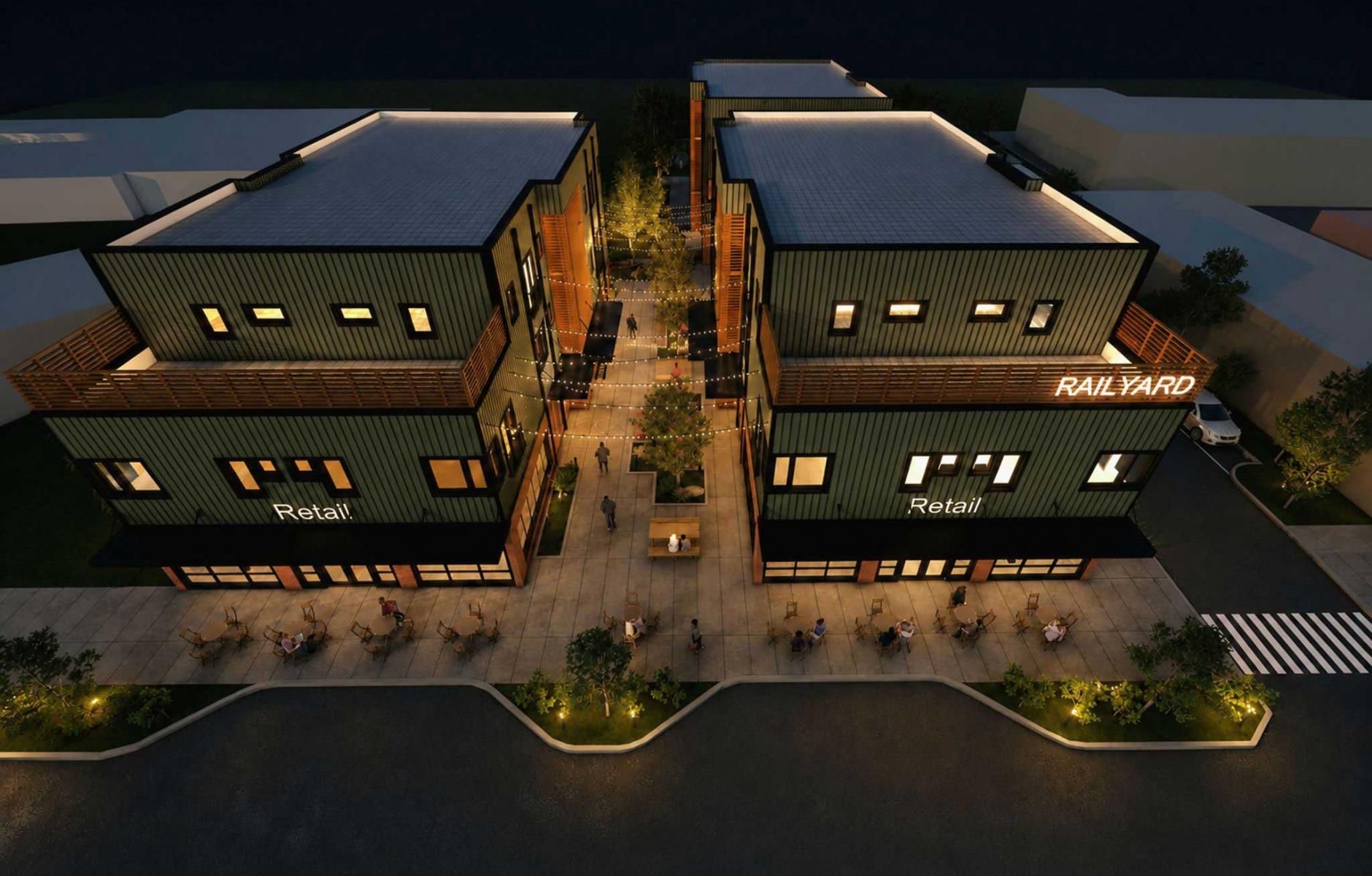
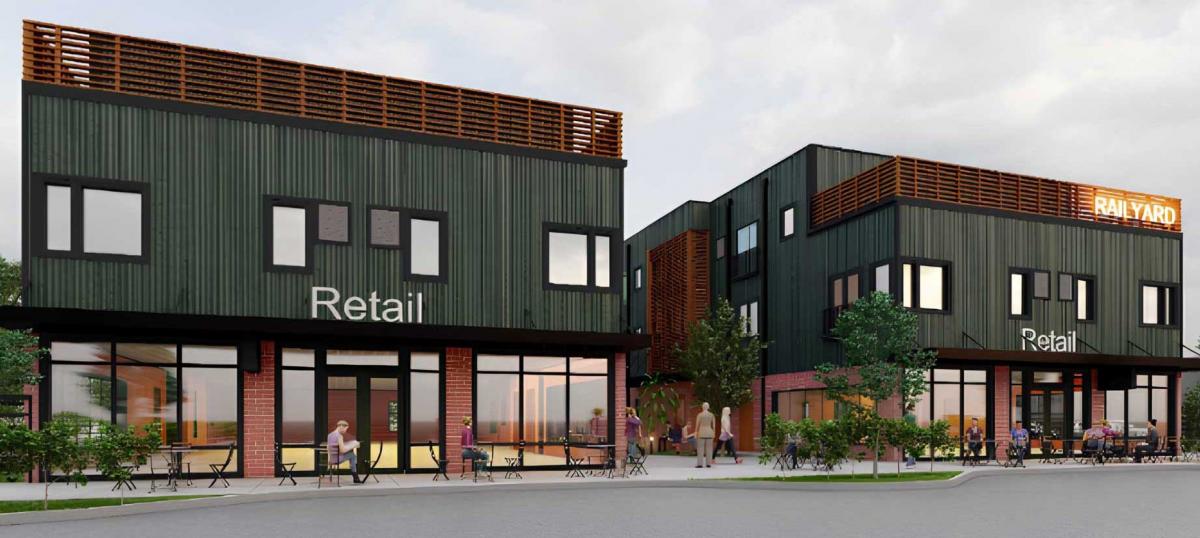
The Railyard comprises 32 rental units and two small retail sites totaling 3,000 square feet. The concept involves three buildings, two of them street-facing mixed-use. One residential building is in the back. A courtyard sits between the two mixed-use buildings. “The courtyard between two buildings makes it special,” Hanrahan says. “Pedestrians will want to be on the street in front of the retail, or in the courtyard area.” Parking is in the back, accessed by a driveway.
Studio A Architecture designed the buildings and, with some adjustments, implemented the idea that came out of the Cincinnati event, Hanrahan says. Changes include a step-down to two stories at the street to match the neighborhood's scale.
“I came into this without an institutional development company, a large balance sheet, or decades of experience,” says Hanrahan. “The project only became possible through a combination of persistence, a city willing to work through difficult issues, financing partners, architects and contractors willing to problem-solve, and a lot of learning as we went.”
The larger point is that small developers, with help from local communities, can help solve housing problems. “We spend a great deal of time talking about the housing shortage as something that elected officials, planners, or large developers need to solve. Those conversations matter, but I increasingly believe we also need more people willing to become small developers themselves and take responsibility for the overlooked parcels in their own communities. But The Railyard has convinced me that small, complicated sites can become housing and neighborhood-serving places when local government, lenders, community organizations, designers, builders, and individual developers are willing to work through the obstacles together.”
The $7.5 million Railyard was financed through a $4.6 million construction loan from Fahe, a nonprofit community development financial institution, and this part of Lexington qualified. Hanrahan also received $1.6 million in city grants, mostly earmarked for affordable housing. In exchange, The Railyard has 12 units designated as affordable at 80 percent of the area median income (AMI) for 20 years. Hanrahan also has an equity partner and he put skin in the game through sweat equity. For two years, he has worked on the project unpaid and taken significant personal risk. “It’s not a get-rich-quick scheme,” he says. He now better understands how difficult being a small developer is, but also how rewarding. “You have to do it because you see a bigger reason.” He believes in the neighborhood and walkable places. In the end, he will have equity in a substantial real estate project.
The entitlements were surprisingly easy. “We breezed through the planning commission, and they were all really supportive. Lexington has an urban service area,” which was established in 1958 to manage growth and preserve the horse farms in Fayette County, he explains. “The City wants to see infill projects happening.” The site was zoned industrial, with an adaptive reuse overlay as an option. Because the site next door, a successful restaurant, had already gone through the process, “all we needed to do was add on to that adaptive reuse. It was kind of a formality.” The site on the other side of Hanrahan’s property, a motorcycle shop where the owner wanted to open a bar in front, joined in the adaptive reuse application, and that bar has already been open for a year.
Lexington removed parking minimums in 2022, which helped make this project possible. The project has 29 total off-street spaces. Many cities would have required more parking, which may have changed the financial feasibility. Lexington, at about 330,000 people, is one of the largest cities to remove parking minimums.
The building code also was not a problem. The Railyard uses type 5 wood-frame construction, which is most efficient for a project of this size and standard for incremental development. While Hanrahan hasn’t started pre-leasing, he has had many inquiries from people who have been following on social media. One of the retail sites is spoken for. “The demand is definitely there,” he says.
Hanrahan has come far in a little over two years. After he got the concept, he had many coffee meetings with other local developers and networked with lenders and contractors. “I had to keep pushing it forward myself, learning as I went along.” A professional contractor is handling the actual construction and the details. He surrounded himself with architects and contractors who know what they are doing. Hanrahan says he would be interested in another project if the timing was right, but for now, he just wants to finish The Railyard, lease it, and stabilize it. His marketing experience will help.
“I love meeting people and bringing people together,” he says. “I’ve never had satisfaction like I have had with this project.”