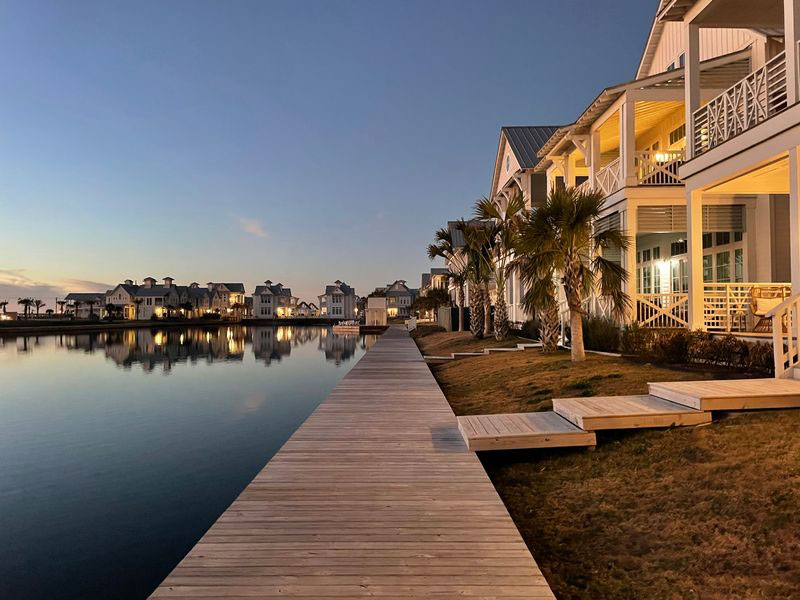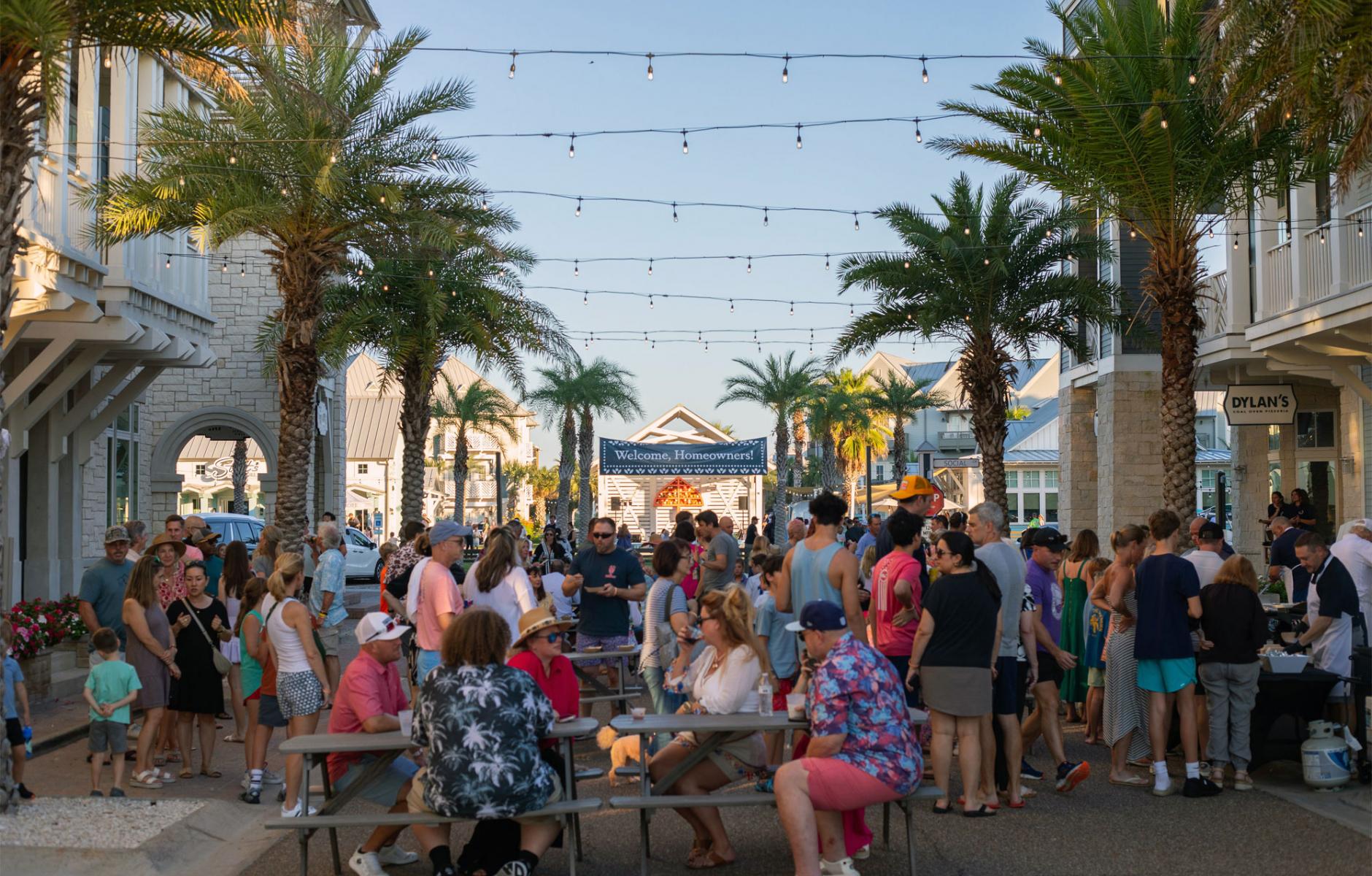
Walkable urbanism on the Texas coast


The towns along 30A in Walton County, Florida, have inspired many New Urbanist emulators, including Cinnamon Shore in Port Aransas, Texas. Cinnamon Shore is a series of walkable urban developments along State Highway 361 on Mustang Island and is not well known outside of the Lone Star State.
“Since its inception, Cinnamon Shore has set a new benchmark for thoughtful, community-focused development in Port Aransas," says Wendy Moore, the mayor of Port Aransas. D Magazine, which covers Dallas, reports: “Insistence on continuously improving quality of construction, and ongoing work with governing bodies to develop codes that encourage a pedestrian-friendly street can have lasting positive impact beyond the boundaries of Cinnamon Shore.”
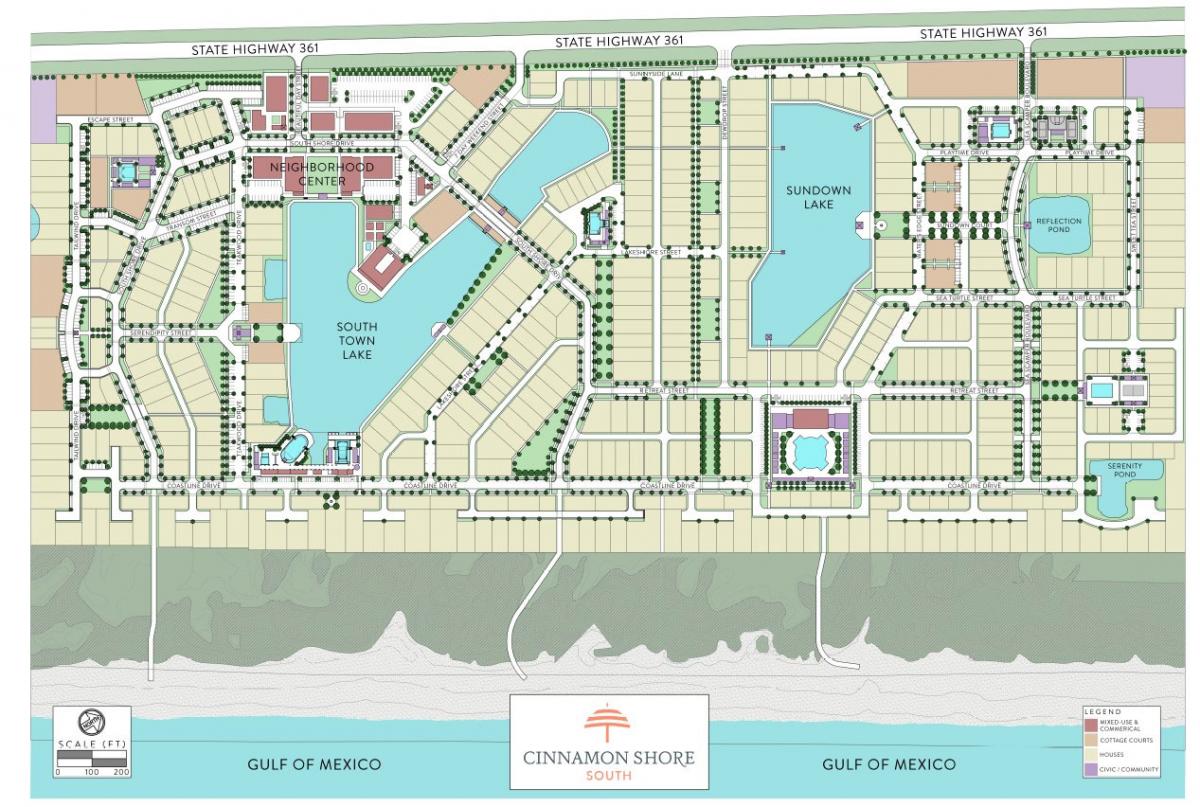
The first 60-acre neighborhood, called Cinnamon Shore North, began 20 years ago and is 95 percent complete. About a mile south, the next neighborhood, Cinnamon Shore South, 147 acres, is well underway and expected to be finished in a few years. Other adjacent and in-between neighborhoods are planned, totaling more than 800 acres under the Cinnamon Shore name.
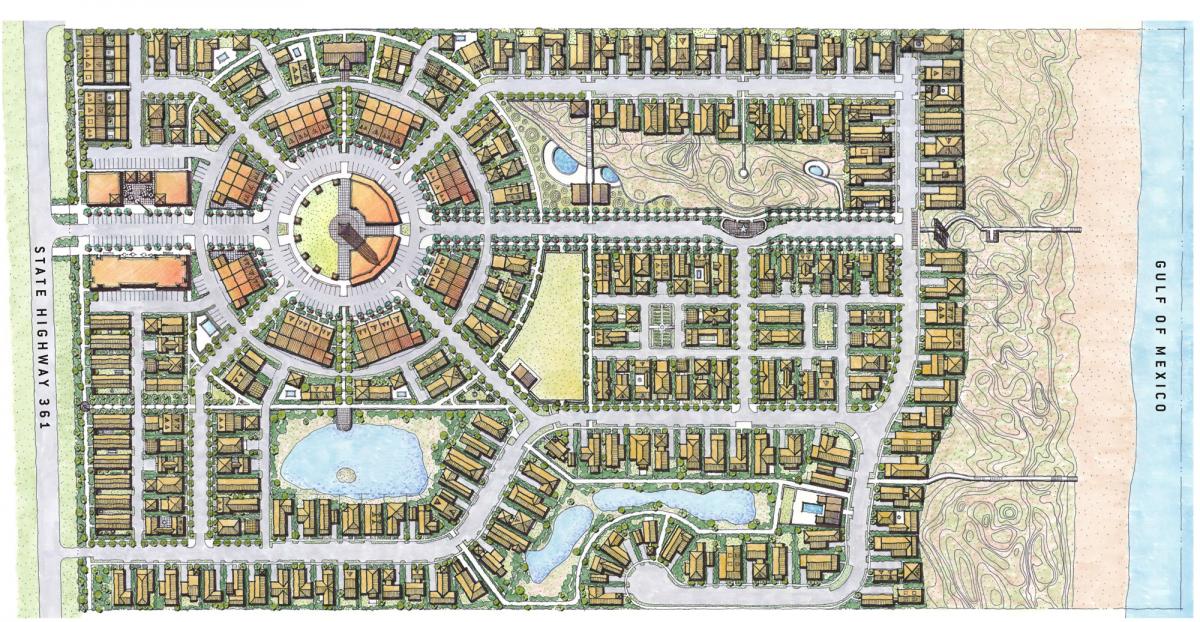
The planning is by architect Mark Schnell, who lives near Seaside, Florida, and was inspired by that town, Rosemary Beach, Alys Beach, and other towns on 30A.
Like Seaside, Cinnamon Shore employs metal roofs that reflect the sun and also are sturdier in high winds. The layer of dunes along the coast has been preserved, leaving natural coast protections in place. Elevated walkways lead to the beach. Buildings utilize passive cooling techniques such as porches and roof overhangs to mitigate the heat. The unique landscape design system saves water by requiring a minimum number of native plants. “It survived Hurricane Harvey with minimal damage thanks in part to forward-thinking design/construction,” the team says.
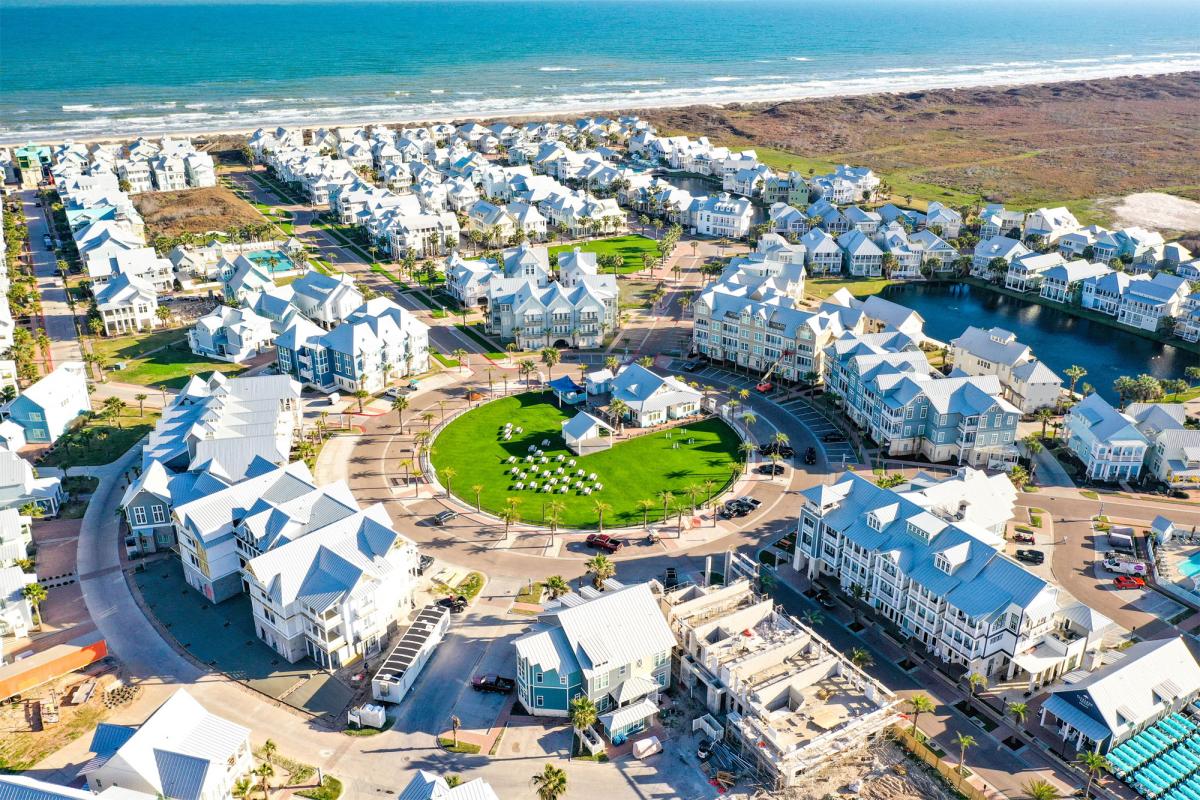
Mostly, however, Cinnamon Shore employs the tools of walkable urbanism. The connected street network is that of a neighborhood of small blocks, on the scale of a five-minute walk. The rural-to-urban Transect informs the architecture and public spaces. This contrasts with the sprawl model, which is dominant on most of the Texas coast.
The project has introduced some development models new to the coast, like cottage courts and other Missing Middle configurations.
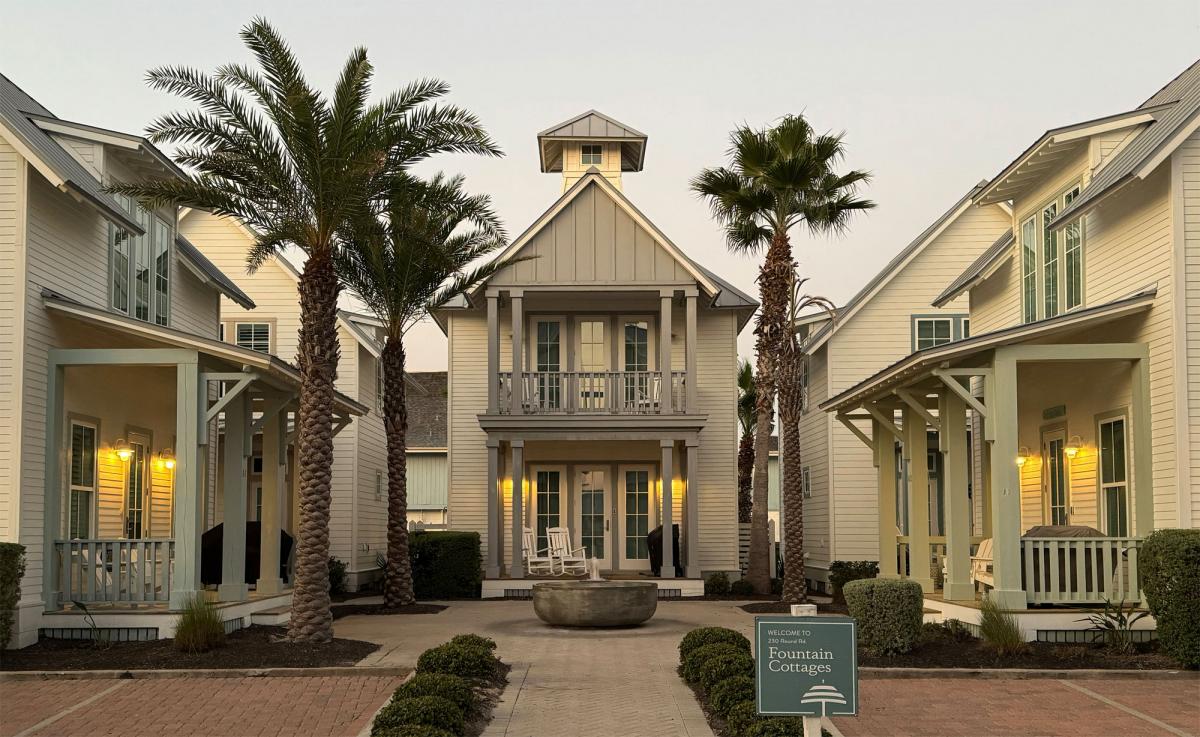
There is a wide variety of amenities, including large parks suitable for active recreation and events, community gathering spaces with stages and restaurants, pocket parks, pavilions, pools, fitness centers, sport courts, playgrounds, fire pits, walkways, and more. Cinnamon Shore is a long way from its ultimate buildout and could be more diverse. The mixed-use mostly consists of restaurants and boutiques. It could use more basic day-to-day necessities, whereas now residents mostly drive to get these things.
Port Aransas has a bus shuttle system with a stop at Cinnamon Shore. The development will be set up for future bus stops because the Cinnamon Shore neighborhoods are designed for mixed-use centers at the intersection with Highway 361, a linear corridor that goes into the heart of the Old Town.