Alleys and (re)urbanization: Repairing broken urban form


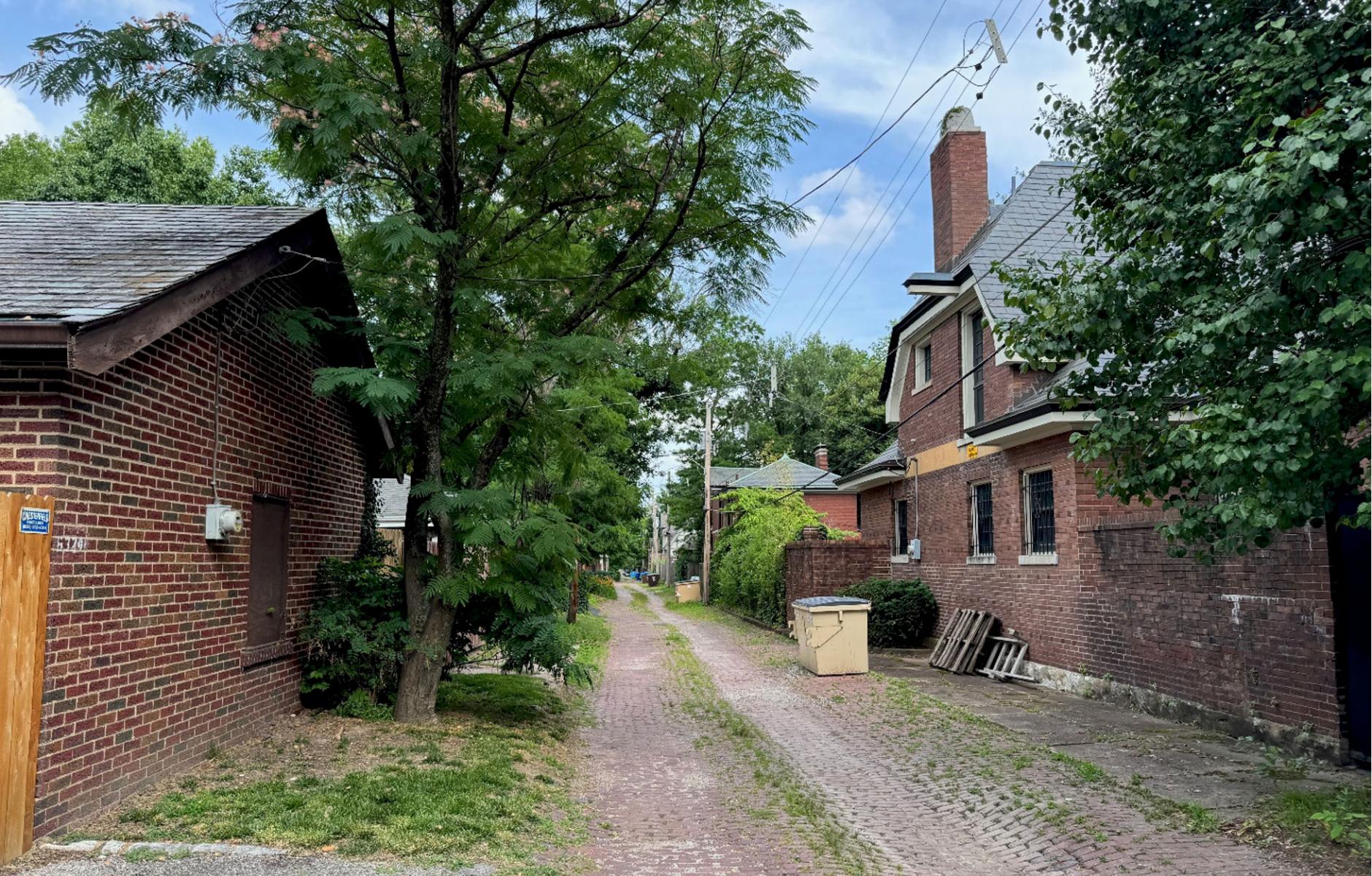
While only comprising an exceedingly small footprint in urban areas, different flavors of alleyways add livelihood and functionality to cities across the world. Yokochos in Tokyo, wynds and closes in Edinburgh, minor streets/mews in Philadelphia, laneways in Vancouver and Melbourne, Montreal’s ruelles vertes (green alleys).
The most essential aspect of alleys is their ability to encourage more sustainable urban form. Despite this fact, many cities have severed their historic alley networks, producing innumerous curb-cut driveways, trash bin-blocked sidewalks, and garage “carchitecture.” Since discussing alleys’ ability to increase residential density and reduce roadway lanes is increasingly common in urbanism, this piece will set out to answer two tangential research questions:
- What does a fully fleshed-out alleyway activation look like in practice?
- What happens when a city attempts to repair a severed alley network?
Alleyway activation
Rebel Garages, a research booklet by the firm Future Lab, proposes a fascinating framework to activate alleys with nine policy recommendations. My hometown is St. Louis, so I will include the red tape currently inhibiting some of these measures from being implemented here.
- Rebel blocks. Organize and limit “Rebel Blocks” at the city scale. Diversify businesses through startup enterprises. In St. Louis, businesses such as dancing schools, doctor and dentist offices, repair shops, restaurants, private clubs, and tourist homes are prohibited as home occupations.
- Bigger home businesses. Take over the garage with your home business.
- Hang your shingle. Design garages to reflect how they’re used.
- Everyone’s invited. Welcome others: more clients, employees, and deliveries. In St. Louis, regulations prevent home occupations from regular employment of someone who does not live at the address. Regulations prohibit the display of a sign, or “regularly and routinely” accepting customers and clients, or advertising and soliciting the general public into the home.
- Legalize coach houses. Build new coach houses.
- Garage first, house second. Develop garages as investment strategies.
- No parking. Reduce parking requirements. (St. Louis does not require off-street parking for an accessory unit).
- Garage starchitecture. Let garage architecture shine.
Each of these policy buckets comes with its own hurdles. For example, in many cities, it is still not even legal to build or convert coach houses to accessory dwelling units (ADUs). And if it isn’t legal to have residential uses on the back of your plot, it certainly isn’t legal to have commercial uses outside of a self-containing home occupation. The booklet details how cities could remove these policy hurdles and fully activate alleyways—at least on a limited scale to start.
Fixing a severed alley network
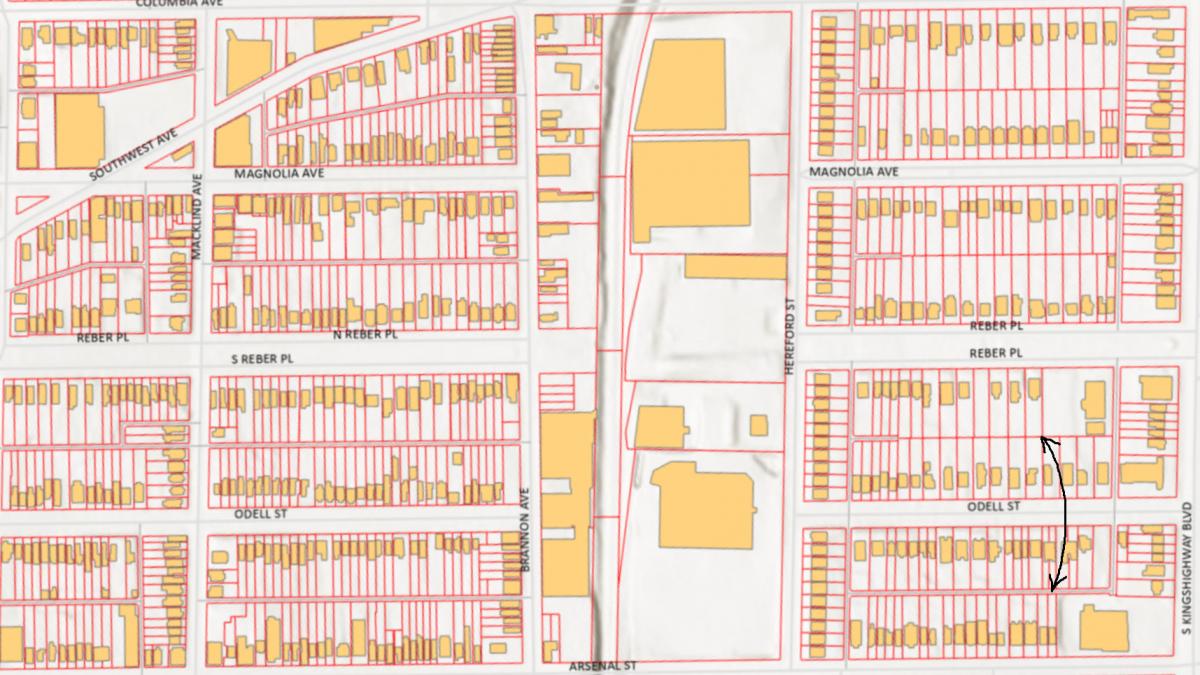
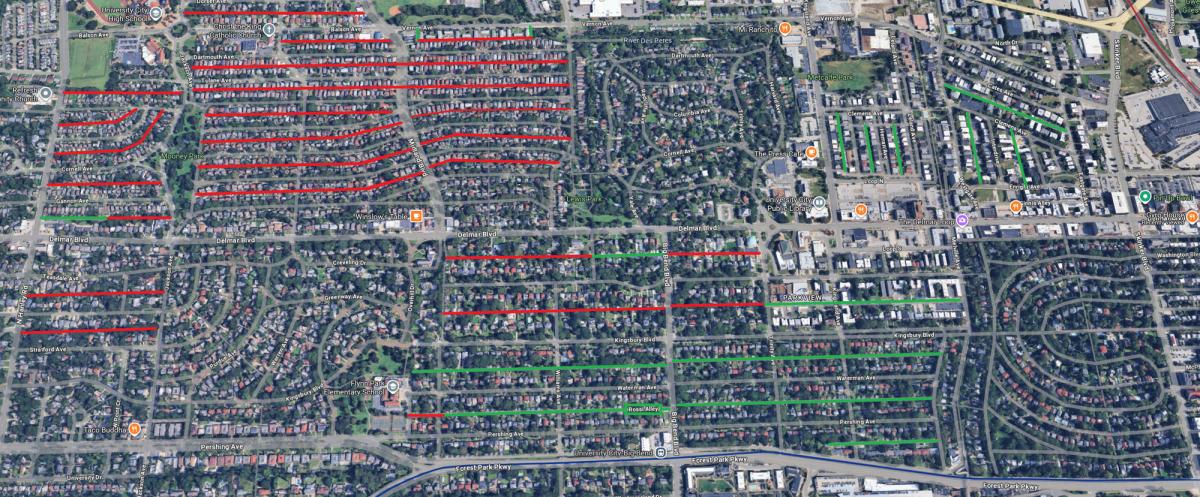
We have now established a viable framework for alleyway activation, but what if there is no alley? With the dominance of the automobile in the 20th Century, historic cities around the country began to see alleys as unnecessary infrastructure. As a result, many alleys were “vacated,” a legal process that officially relinquishes public right-of-way to private property. In St. Louis, this is visible in certain neighborhoods like Southwest Garden, Lindenwood Park, and Boulevard Heights, along with inner-ring suburbs where the grid is still at least partially intact (e.g., University City, Richmond Heights, and Shrewsbury)
There is no shortage of projects around the US that seek to restore an underutilized alley, but the concept of redrawing a block with a new alley—even if it formerly had one—is practically nonexistent.
Property law is an infamously sore subject, and rightfully so: top-down planning from the last century entrenched deep distrust in urban areas across the US, making any variety of public easements or land acquisitions a heavy lift. Take a new passenger rail line—cities have to go down the line and individually convince property owners that this will benefit them to sell. They often refuse, and cities resort to eminent domain. Additionally, since there are so many route variants, the city doesn’t even know who to convince before the final design is selected. The crucial distinction between the difficulty of a (theoretical) alley recovery program and other transportation projects is that the city would already know every property owner along a vacated alley before starting. They could also be public easements, in which the property allows public use but remains technically private, rather than eminent domain.
Shifting our perspective from vehicular circulation to incremental habitation completely changes the math of a fractured grid. We don't need a fully continuous alley to unlock value; every fraction of a lot recovered is a win, adding land for development. Even if an entire block can’t agree, a neighborhood can bypass the “one holdout” problem by pairing internal pockets of reclaimed alley space with fence-line pedestrian passages. Cities across the US already have a history of this infrastructure. In St. Louis, look at Varsity Walk in University City, Limits Walk south of the Delmar Loop, or the midblock cut-throughs in Richmond Heights.
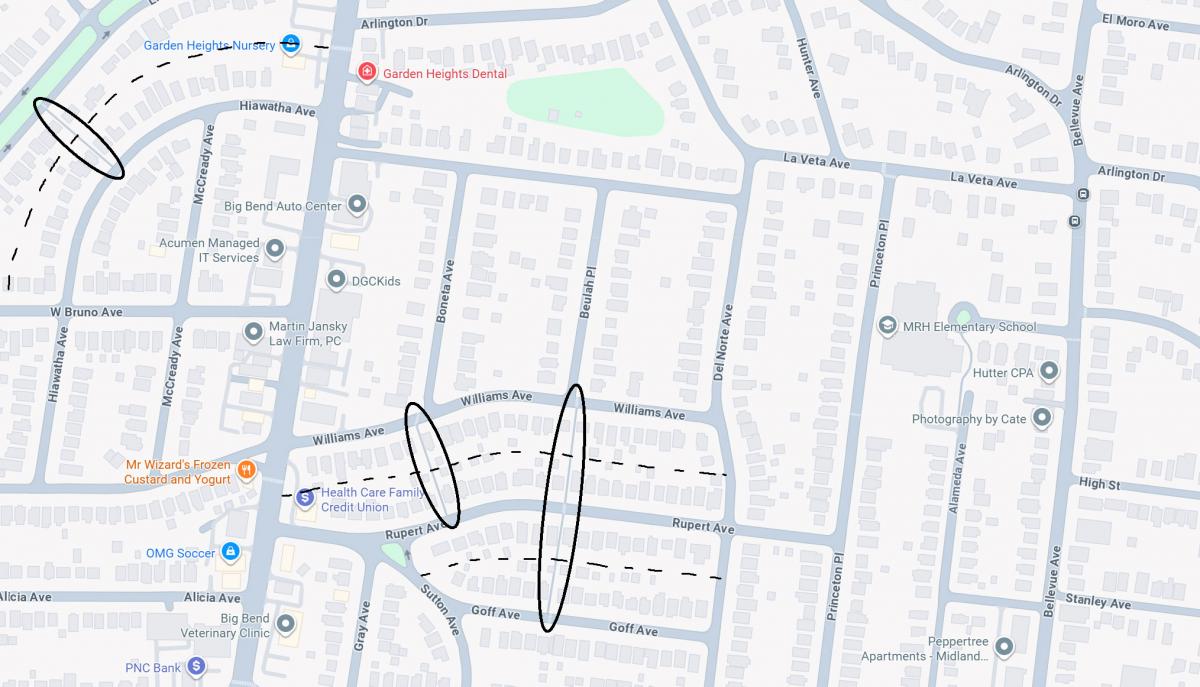
Regardless of the hurdles—the social, environmental, and economic benefits of compact urban form cannot be overstated, and with a national housing shortage, cities should not be afraid to think outside the plot. Thousands or tens of thousands of previously nonexistent acres for development could be transformational for a neighborhood’s housing supply.
Takeaways
For decades, American planning has treated the alley as a disposable utility corridor; a place to hide our trash, our cars, and our power lines, and a breeding ground for crime. But as we look for solutions to a national housing shortage and look to build walkable, incremental wealth, these forgotten back-lot networks stand out as a viable frontier.
If we give adjacent property owners the legal flexibility to cooperate incrementally, we can easily unlock thousands of acres of land for development, land that is right under our noses. A hybrid future of Tokyo-style economic granularity and Montreal-style ecological greening isn't a pie-in-the-sky fantasy. The building blocks are already present, waiting for assembly.
So next time you take a walk, take a stroll down your local alley. They hold an unbelievable amount of potential and are far more captivating than meets the eye.