How roundabouts helped to build a downtown


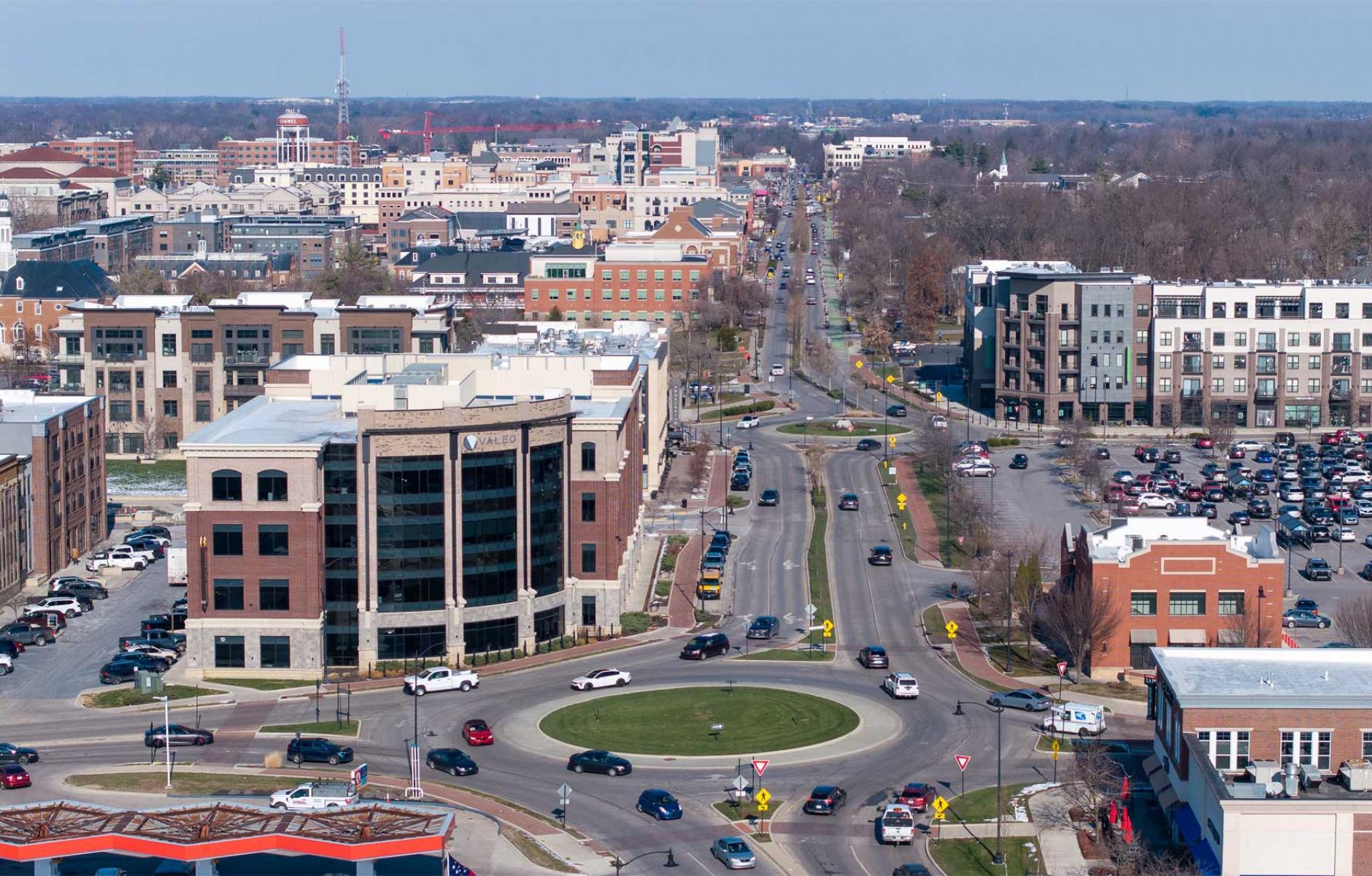
Carmel, Indiana, a city of just over a hundred thousand people, has eliminated nearly all of its traffic lights—a remarkable achievement—and replaced them with 158 roundabouts that calm traffic and keep it flowing on a network of suburban arterial roads.
Carmel is a “boomburb,” defined as a city of at least a hundred thousand people that has experienced double-digit growth for at least three decades, and is not the principal city in its metropolitan region (that’s Indianapolis, just to the south).
What sets Carmel apart from other boomburbs is that the City has transformed its entire network of arterial roadways—no other City in this class has even attempted such a project. Also, Carmel has built a substantial, mixed-use, walkable downtown from scratch in the last quarter century. That accomplishment is highly unusual, given that Carmel grew from a tiny rural settlement of 1,000 people in 1950 and thus had no historic downtown beyond a few platted streets near a railroad depot.
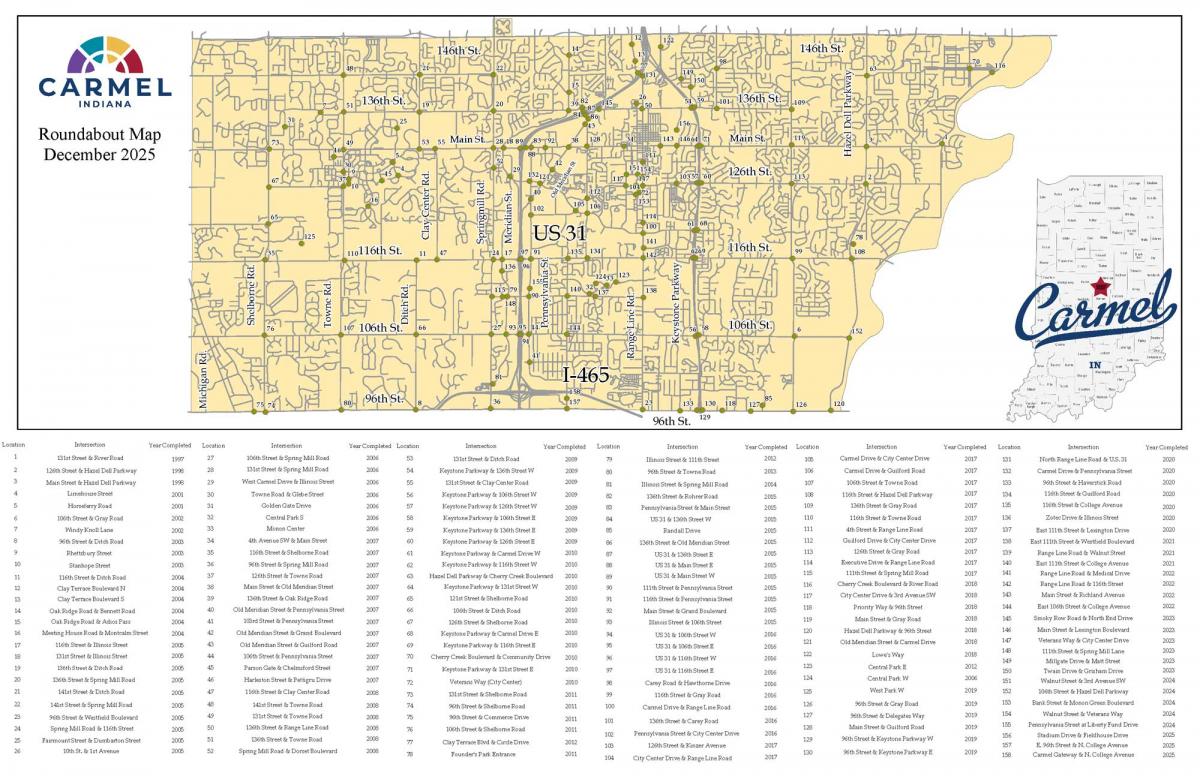
I have written about Carmel’s roundabouts before, but now I want to describe the role of roundabouts in Carmel’s downtown development.
Many urbanists do not admire roundabouts, even though they have been used to good effect in several New Urbanist developments. Typically, they are used at the edge of developments in suburban areas, where traffic calming is desperately needed to support a new, walkable place.
Roundabouts are rarely needed in the best historic cities and towns. But they are important tools for suburban retrofit. A city with few traffic lights, such as Carmel, needs few turn lanes—which blow out intersection dimensions and make crossing distances much longer. Instead, crossings at roundabout intersections are broken into two, giving pedestrians refuge in the middle. Well-designed roundabouts slow traffic to 20 mph or less—speeds that are much safer for people outside of cars.
Moreover, roundabouts have been an important tool in the development of Carmel’s town center, one of the most significant such efforts in the US. This intersection type complements Carmel’s broader redevelopment efforts, which promote compact, mixed-use development and active transportation.
“In Carmel’s redevelopment areas, roundabouts have done far more than improve traffic flow; they have reshaped the city’s urban fabric,” notes Henry Mestetsky, executive director of Carmel Redevelopment Commission. “By replacing congestion with continuity, they created safer streets, cleaner air, and a public realm that invites walking, biking, and investment. Residents have embraced them because they make daily movement intuitive and stress-free, reinforcing a sense of place rather than interrupting it. These roundabouts have become catalysts for redevelopment, supporting compact, mixed-use districts and demonstrating how thoughtful transportation design can transform a city from the ground up.”
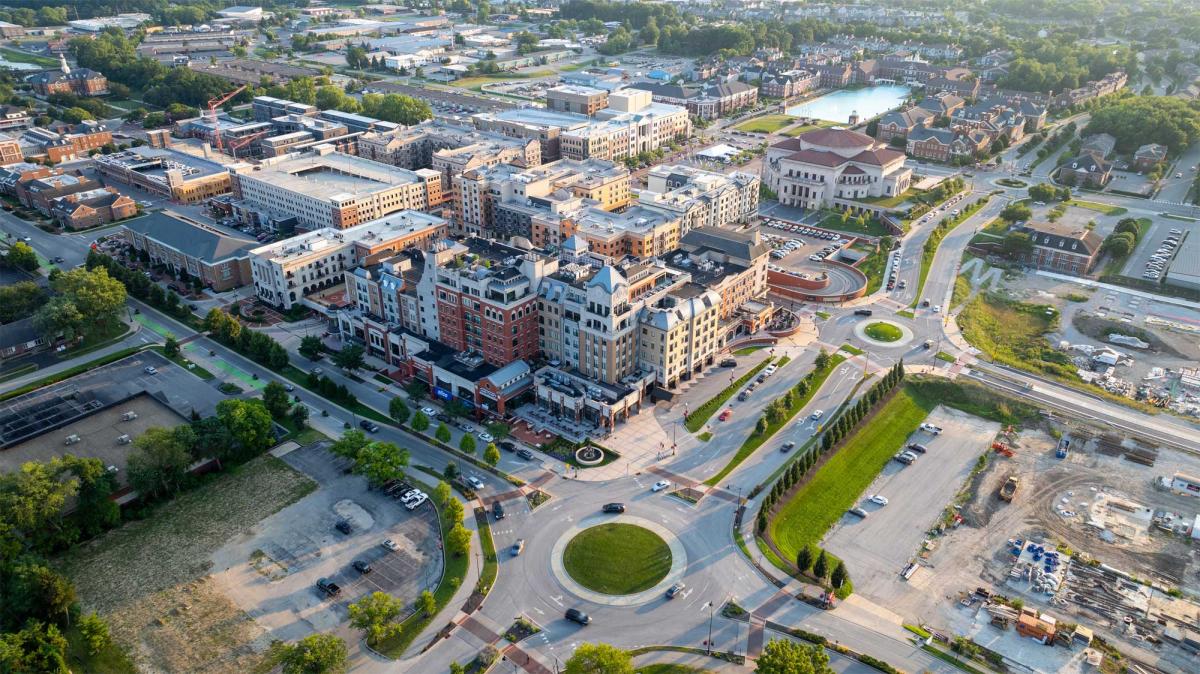
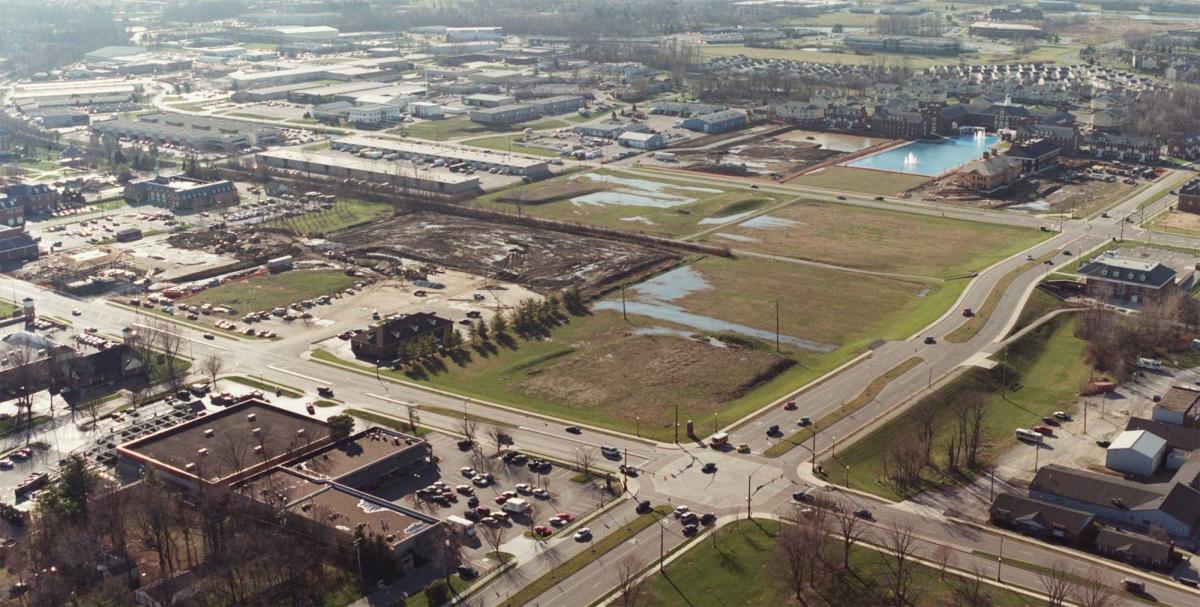
The City has created one of the most substantial mixed-use downtowns in the state. Not long ago, what is now Carmel’s town center was traversed by wide arterial roads with turn lanes at signalized intersections, designed for fast-moving traffic (when traffic was not stopped at red lights). Blocks were mostly large and sparsely developed.
Carmel built 13 roundabouts in and around its growing town center. After slowing the arterial traffic with roundabouts, former superblocks can be broken into smaller urban blocks, creating frontage for walkable, mixed-use development. The resulting smaller urban blocks don’t need roundabouts. But the roundabouts are a key piece of infrastructure, setting all of this in motion. They enable pedestrians to cross the arterials, while the arterials themselves avoid undue congestion.
Rather than expand outward, Carmel reinvested within its existing urban footprint, the city explains. Combined with initiatives like the Monon Greenway, which won a CNU Charter Award and Midtown redevelopment, the roundabout system reinforces infill development, revitalizes corridors, and preserves open space at the city’s edge, the City explains.
Carmel’s roundabouts are part of a broader mobility and livability vision, according to Bradley Pease, the City Engineer. “Carmel’s investment extends to multi-use paths, thoughtfully narrowed roadways, and the intentional activation of public spaces that encourage walking, biking, gathering, and everyday community life,” Pease explains. “Together, these elements reflect the principles championed by the CNU Charter: designing streets and places that elevate people while supporting safe, efficient mobility for all users. The results are substantial. Serious injury crashes have fallen by nearly 80 percent, and overall crashes by roughly 40 percent, consistent with national safety research.”
Roundabouts also put green space, not asphalt, at the center of every major intersection in Carmel. That offers a site for civic art. Many are designed as neighborhood landmarks with public art, landscaping, and interpretive elements that reflect local history, culture, and ecology.
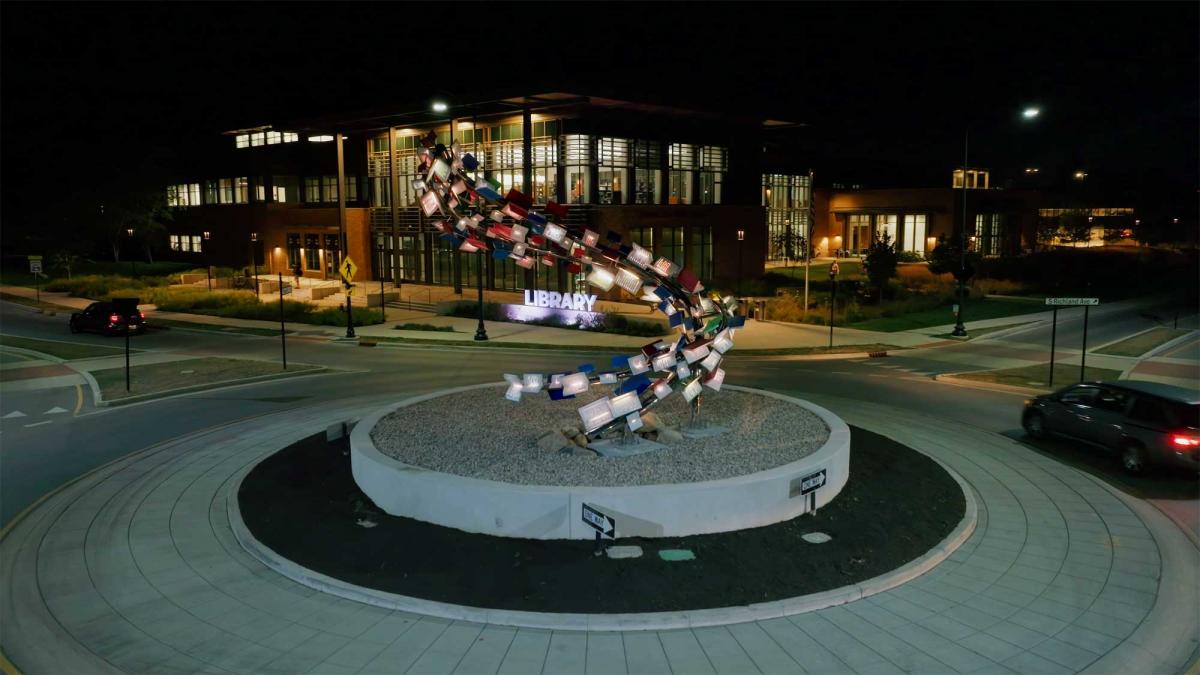
Many of the complaints that New Urbanists have about roundabouts stem from poorly designed roundabouts, according to Peter Swift, one of the most respected traffic engineers in New Urbanism for many years. Carmel has also experimented and refined its roundabout designs over the years to avoid that problem. In some cases, the City has combined roundabouts with road diets, removing traffic lanes and adding bike lanes. Carmel has also incorporated designs for “mini-roundabouts,” which can fit into far smaller intersections. The first such mini-roundabout, installed by Carmel in 2005, was built as a compact, painted-circle intersection. Residents didn’t know how to use it, and some treated it as a stop sign. “Confusion led to its removal just days after opening, underscoring an essential lesson: successful design innovation requires not only technical precision but also public education, consistency, and clear visual communication,” the City reports. “Subsequent mini roundabouts have been implemented with these lessons in mind.”
Roundabouts cost $1-3 million, the City reports. Assuming an average of $2 million per roundabout, that would put Carmel’s investment since 1997 at approximately just over $300 million. But what would 158 signalized intersections cost, including asphalt construction and turn lanes, the signals themselves, ongoing maintenance, and operational costs? By enabling the construction of a new downtown, roundabouts are an economic development tool. To be sure, they are not the only investments required to build downtown. Parking structures that allow mixed-use buildings to be placed close together on urban blocks are a bigger factor. But Carmel’s roundabouts have played their part.
The US has a chronic and worsening problem with pedestrian and bicycle deaths and injuries from automobile crashes. Most of the crashes occur on arterial roadways in America’s vast suburban regions built after 1950. Carmel’s remarkable track record of improving safety on these thoroughfares while also making its downtown walkable and bikeable offers a different model for how to proceed. Maybe other cities should come ‘round to approach.
“The true power of Carmel’s roundabouts is not any single intersection, but the connected urban network they form together,” explains Mayor Sue Finkam. “By applying people-first design principles across the entire city, what began as a response to congestion became a complete rethinking of how our streets move traffic, support development, and create great public places. By prioritizing safety, efficiency, beauty, and walkability at every intersection, we sparked a cultural shift in how our community experiences its streets. That network has transformed our mobility, our public realm, and our economy, proving that sustained, principled investment in infrastructure can shape a city for generations and serve as a national model for city building.”