Playa Vista: High density, happy residents


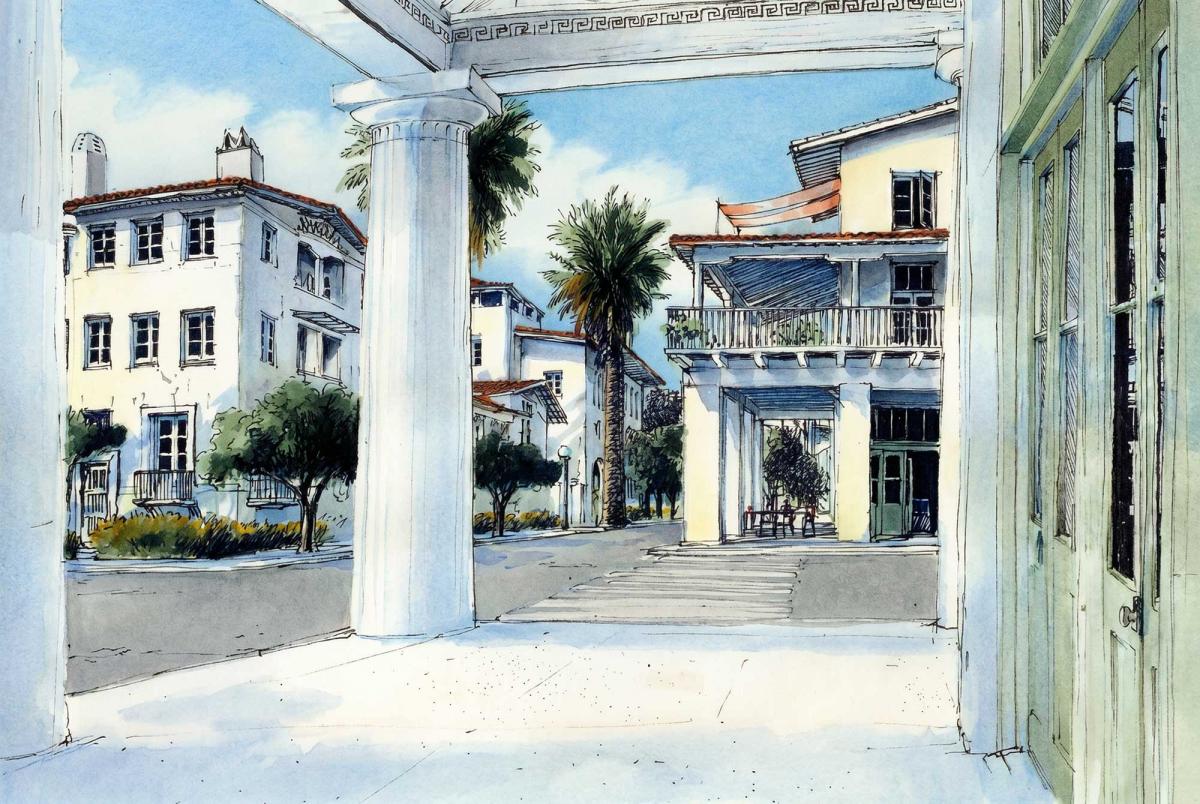
Playa Vista in Los Angeles was one of the most ambitious and artistically stunning early New Urbanist plans, designed in a 1989 charrette by two of the movement's founding firms. A major developer, Maguire Thomas Partners, called DPZ CoDesign, led by a young Andres Duany and Elizabeth Plater-Zyberk, who realized the project was too big for one small firm. They assembled a collaborative team including Moule & Polyzoizes Architects and Urbanists, Moore Ruble Yudell, Hanna/Olin, and Legorreta Arquitectos.
And yet this project took so long to break ground, with changes in developers and architects, that the quality of the outcome remained unclear for decades. Vertical construction began in 2000.
It is now clear that Playa Vista is a stunning achievement. “Playa Vista has become one of the most dynamic districts in the Los Angeles Area,” says Moule & Polyzoides.
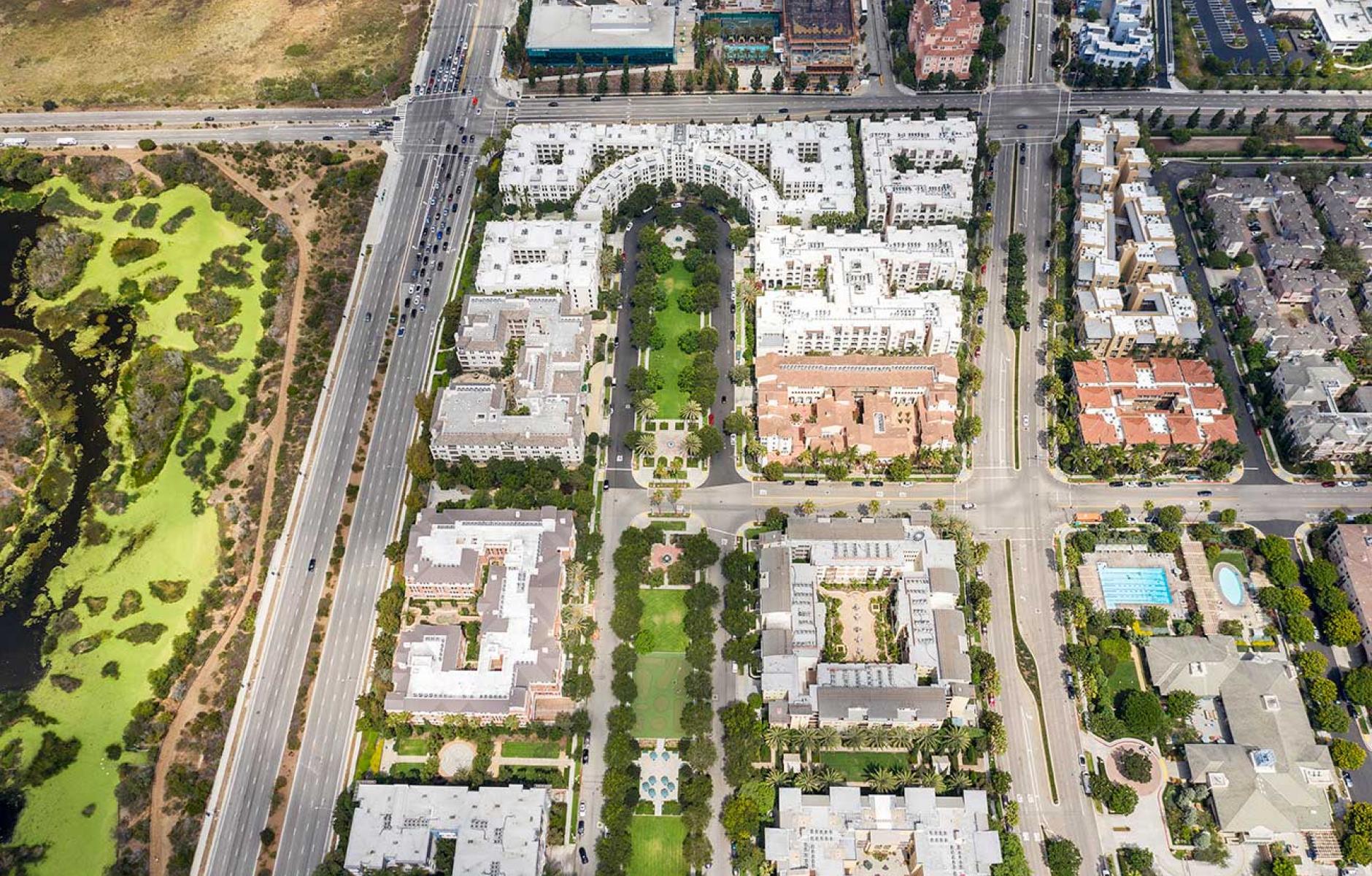
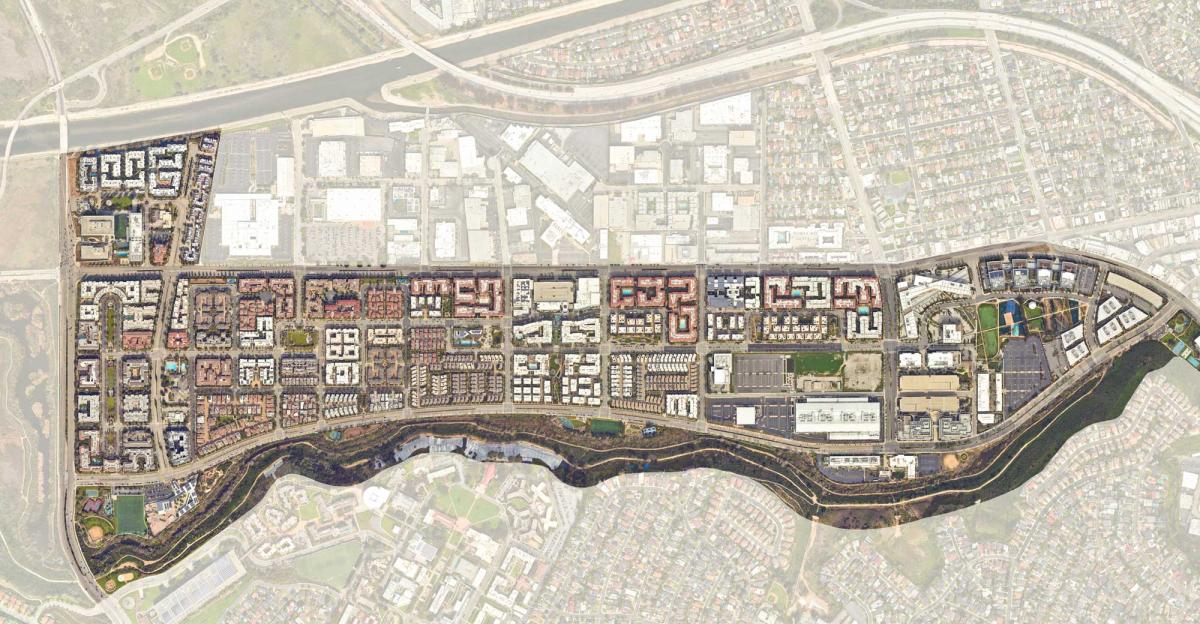
The 1,087-acre site was the former Howard Hughes aircraft facility, with an airport. Four hundred and sixty acres were eventually developed. About 60 percent of the site is retained as open space, including 300 acres of restored Ballona Wetlands, one of the last major tidal wetlands in the LA Basin.
The Playa Vista Institute (PVI), a nonprofit formed to preserve the history of Playa Vista and share best practices, recently conducted a survey of residents with startling results, according to Kevin Kelly, a pioneering sustainable developer with PVI. According to Kelly:
- 98 percent of the people who live here use the Playa Vista’s retail.
- 97 percent of the people are happy with where they live.
- 90 percent of the people are happy with the design, particularly the walkability.
- 88 feel safe, and they feel safer than in other areas they have lived in Los Angeles.
- 83 percent use the parks and amenities.
- 82 percent say they drive less because they live here and they walk more.
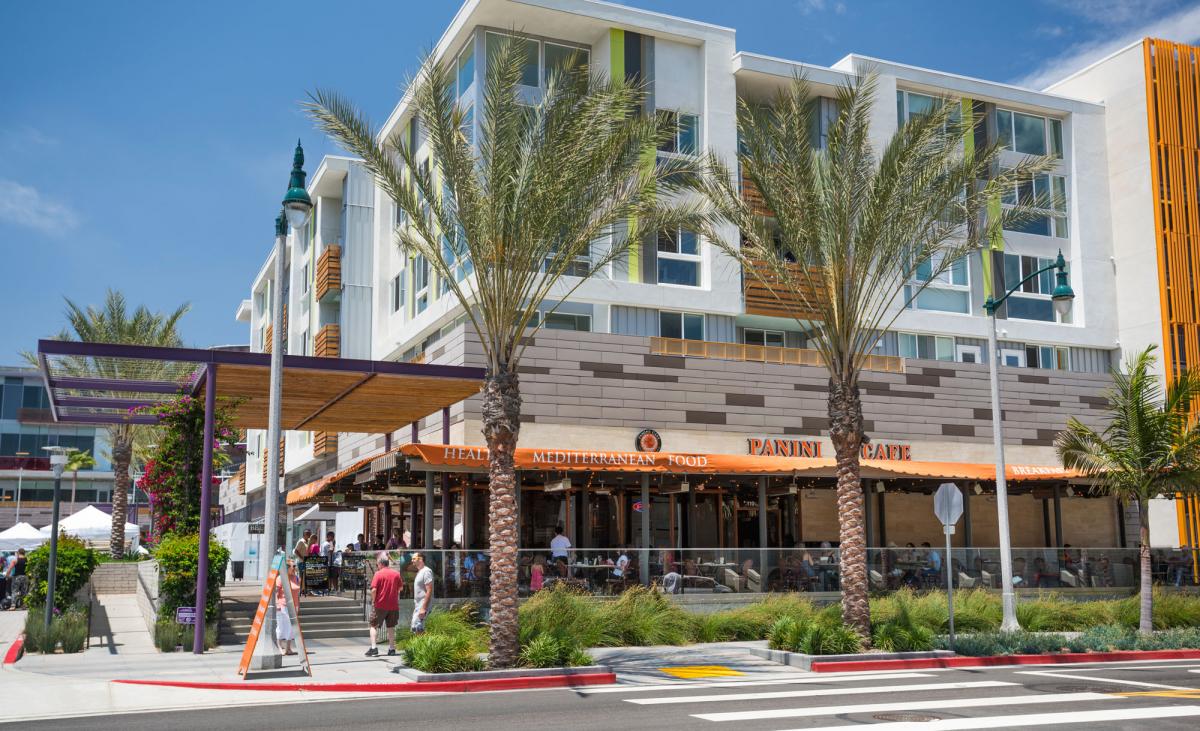
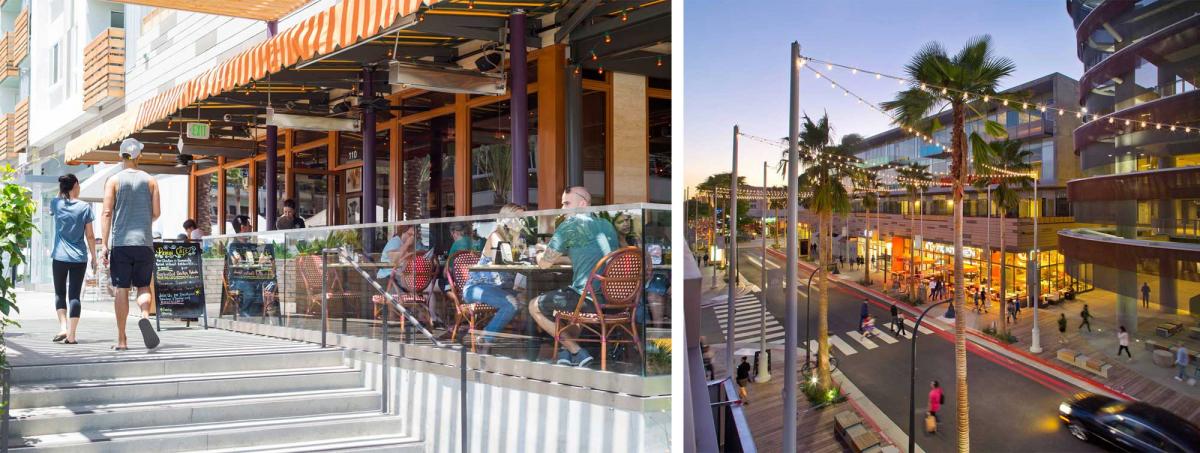
“The satisfaction rate would flow into what we call a healthy, wellness community,” he says. “Residents feel safer, they feel more engaged, they feel more connected, they feel a sense of belonging. They are just physically more active because they are out and walking around and more engaged.”
Playa Vista achieves very high densities for such a large project, averaging around 45 units to the acre, the institute notes. And yet it has the highest per-square-foot resale rates of all the neighborhoods around it—all of which are lower-density, Kelly says. Fifteen percent of the housing was subsidized and dedicated to low- to moderate-income residents.
The high density means that almost no one has yards, but all residents have abundant access to open space. There are 29 community parks—each resident has a park within a two- to five-minute walk. There are trails all around, including some that go into a riparian corridor and the wetlands. On weekends and holidays, a shuttle bus takes residents to and from the beach, which is just a couple of minutes to the west. Residents can walk to the doctor’s office or gym, restaurants, bars, movie theaters, grocery store, pharmacy, and other shops and destinations. There are schools, including a public elementary school.
Seeing the many children and how they get to and from school is inspiring, says Marlene Canter, who served on the LA Unified School District Board of Education when the elementary school was planned and built. "The kids and their parents fan out among the entire community, walking hand in hand. The whole idea is that your friends and your family are all in the same place. It builds a really deep community."
Playa Vista includes an employment campus with companies assuch of Google, Facebook, and FOX Interactive Media, as well as about 50 other firms. Many residents work in the community.
DPZ describes the urban plan: “Each neighborhood has a distinct character related to its location while also sharing common planning principles — highlighted by a street and block structure with frequent paths. The high-density, multi-family buildings are organized around courtyards according to Los Angeles traditions. The architecture gives streets strongly defined edges to encourage pedestrian activity and frames a series of greens and squares with neighborhood amenities like playgrounds.”
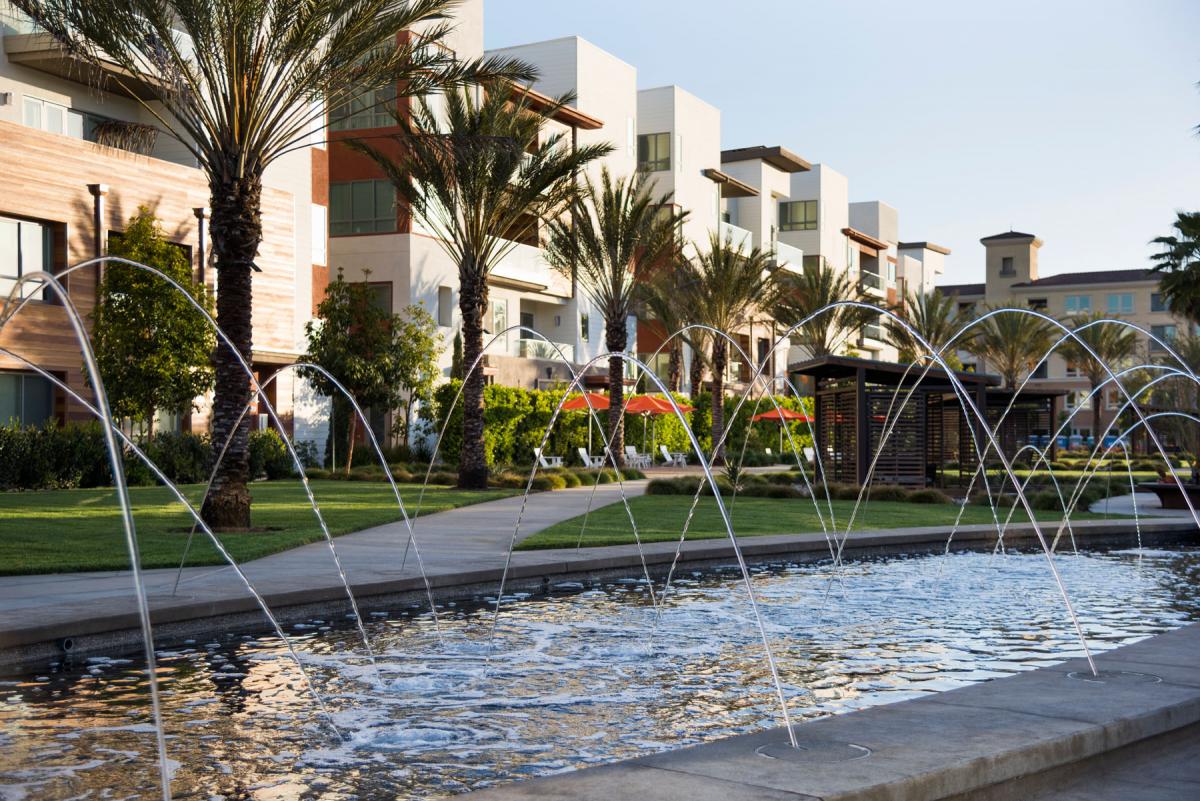
Duany, who was interviewed by PVI, says that Playa Vista offers lessons to large developers, including that density can contribute to a high level of happiness if the public realm is well designed and the amenities, like mixed-use and public space, are provided. Furthermore, the light level of coding has allowed for a great variety of architecture, which changes in character from west to east—which was how the community was built out, Duany says. Playa Vista is like a Transect of the history of architecture of the last quarter century because many different building designers were used, Duany says. “Use different architects all the way through, and make sure they are young,” Duany says. “It is much easier to stick with one, but that is very deadly.”
The list of contributors to the project is substantial, including top illustrators of the day like Charles Barrett and Bill Dennis. The illustrations helped to sell the project, which had support from the City Council. Yet it’s in California, where community opposition can tie projects up in legal battles for years, and the presence of the Ballona Wetlands contributed to a decade-long entitlement process—despite plans from the beginning to preserve substantial acreage. Activists won greater preservation, and Maguire Thomas sold Playa Vista in 1997 to Goldman Sachs and Morgan Stanley. A new team of designers was brought in, but the urban plan has held up over the decades.
The lesson: A good urban plan tolerates (and even thrives under) a wide variety of architectural approaches.
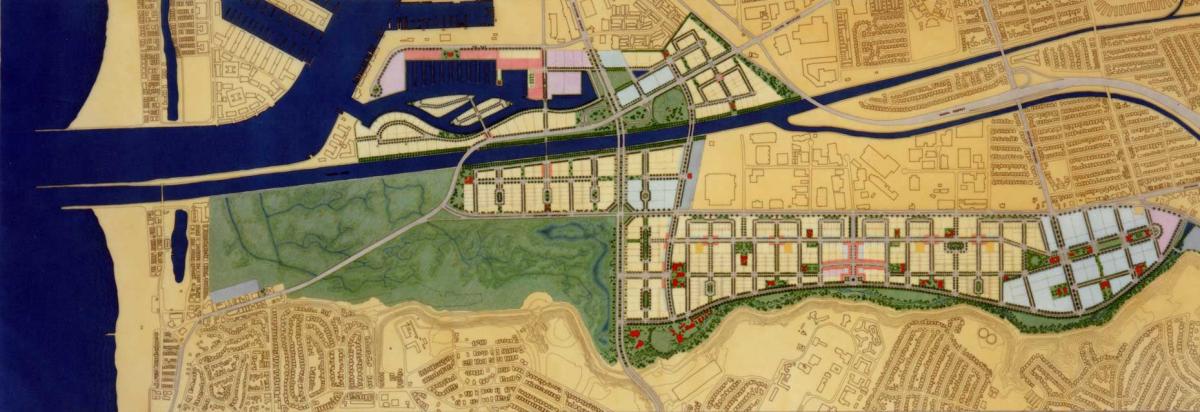
Playa Vista is an unusual project from the early days of the New Urbanism movement. Most notable New Urbanism from the late 1980s-early 1990s was designed on greenfield sites, with many single-family homes. That, after all, was how America was building at the time. Playa Vista showed the wide range of New Urbanism from the beginning. Although designed as a complete community, Playa Vista was located on a former industrial property in the heart of a city, mostly comprised of multifamily fabric. And the sheer scale of Playa Vista was enormous, larger than most other early New Urbanism developments.
If Playa Vista had begun construction quickly, as designed, it might have changed the impression of New Urbanism in its early days. But that was not to be, and it took a long time for this effort to come into its own.
PVI has created a documentary on the community's history, which you can find here.