Urbanists in the land of Walmart


CNU is on the last day of its annual Congress, CNU 34, which is taking place in Northwest Arkansas (NWA) this year. One of the fastest-growing regions in the US, NWA's economy is driven by its status as home to major corporations, including Walmart.
More than 1,200 urbanists gathered in Bentonville and Fayetteville, the first Congress to be held in two distinct venues, both small but rapidly growing cities, figuring out how to grow sustainably in the 21st Century.
On Wednesday, CNU had one of the best keynote addresses ever, the economist Raj Chetty of Harvard. In the early days of CNU, the organization created the design guidelines for HUD and its HOPE VI program, a $17 billion program between 1993 and 2010 that transformed 262 public housing projects.
Chetty is director of Opportunity Insights, which studied the multigenerational impacts of the HOPE VI program and the redesign of public housing projects as mixed-use neighborhoods. It turns out that neighborhood design has a powerfully positive effect on the lives of children who grow up in these places. Using “big data,” the economist determined that the place-based investments in public housing were directly shaped by the ideas of New Urbanism.
This had enormous economic benefits, he explains. Each year of revitalized public housing units raised children’s earnings by 2.8 percent. Because children in public housing move around a lot, most of them were only in these HOPE VI projects for a few years, but even so, the effects were clear. They really showed up in siblings. Younger siblings, who lived in HOPE VI for longer, clearly did better as adults. The reason is that HOPE VI reduced economic segregation. He described the public housing projects as islands of poverty. “Because of the urban design, HOPE VI built bridges to the surrounding community,” Chetty explained.
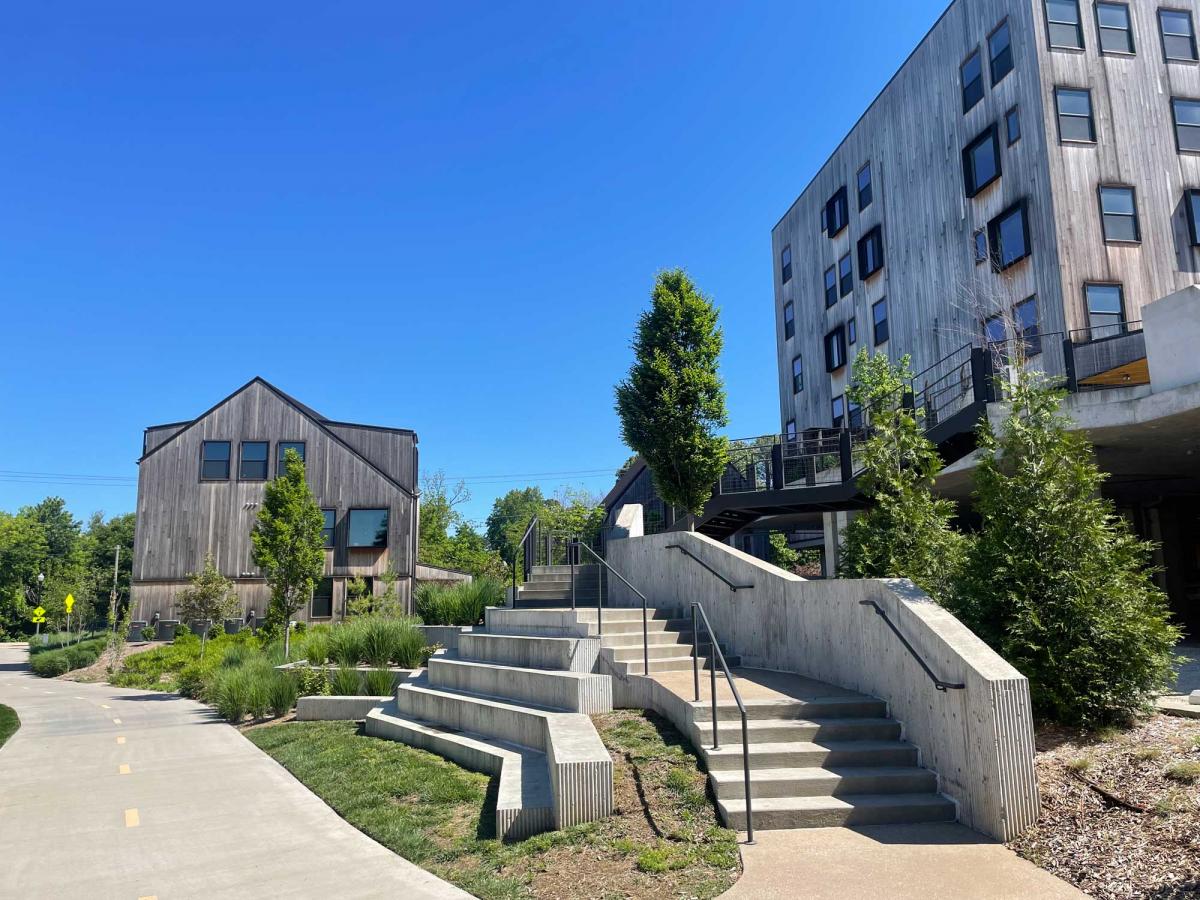
The Razorback Greenway is a very impressive urban design feature of Northwest Arkansas, designed and built in the last 10 years, with a federal grant matched by local funding. The Greenway is 40 miles long and it links the major cities in the region—Fayetteville, Bentonville, Springdale, and Rogers. It goes directly through three downtowns, and through the new Home Office of Walmart, the world’s largest corporation. I walked a section of the Greenway this week, and I was impressed that trail is already changing the form of development.
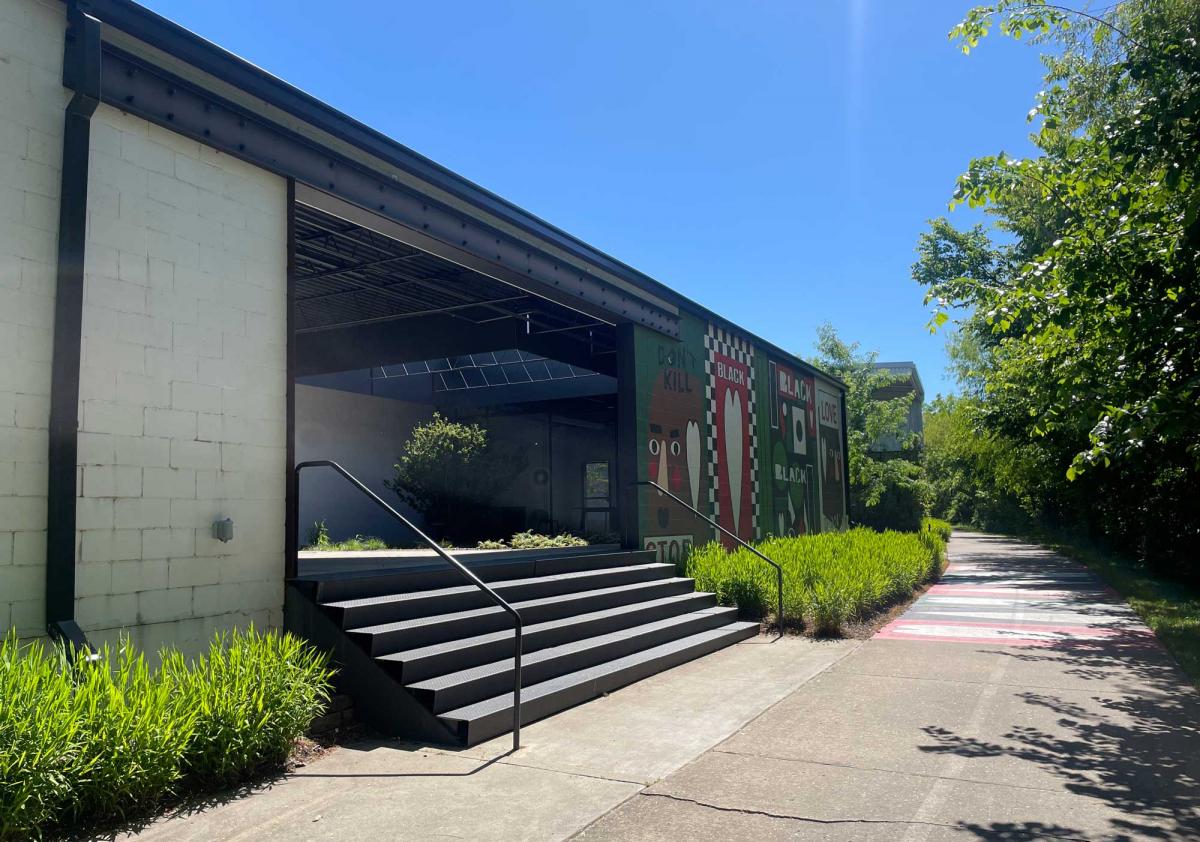
I found a new development that is being built on both sides of the Greenway, with connects to the trail. I saw pre-existing buildings that are opening up to the Greenway. This is just the beginning, because the cities are working together on a plan that promotes frontages along the length of the facility based on the Transect.
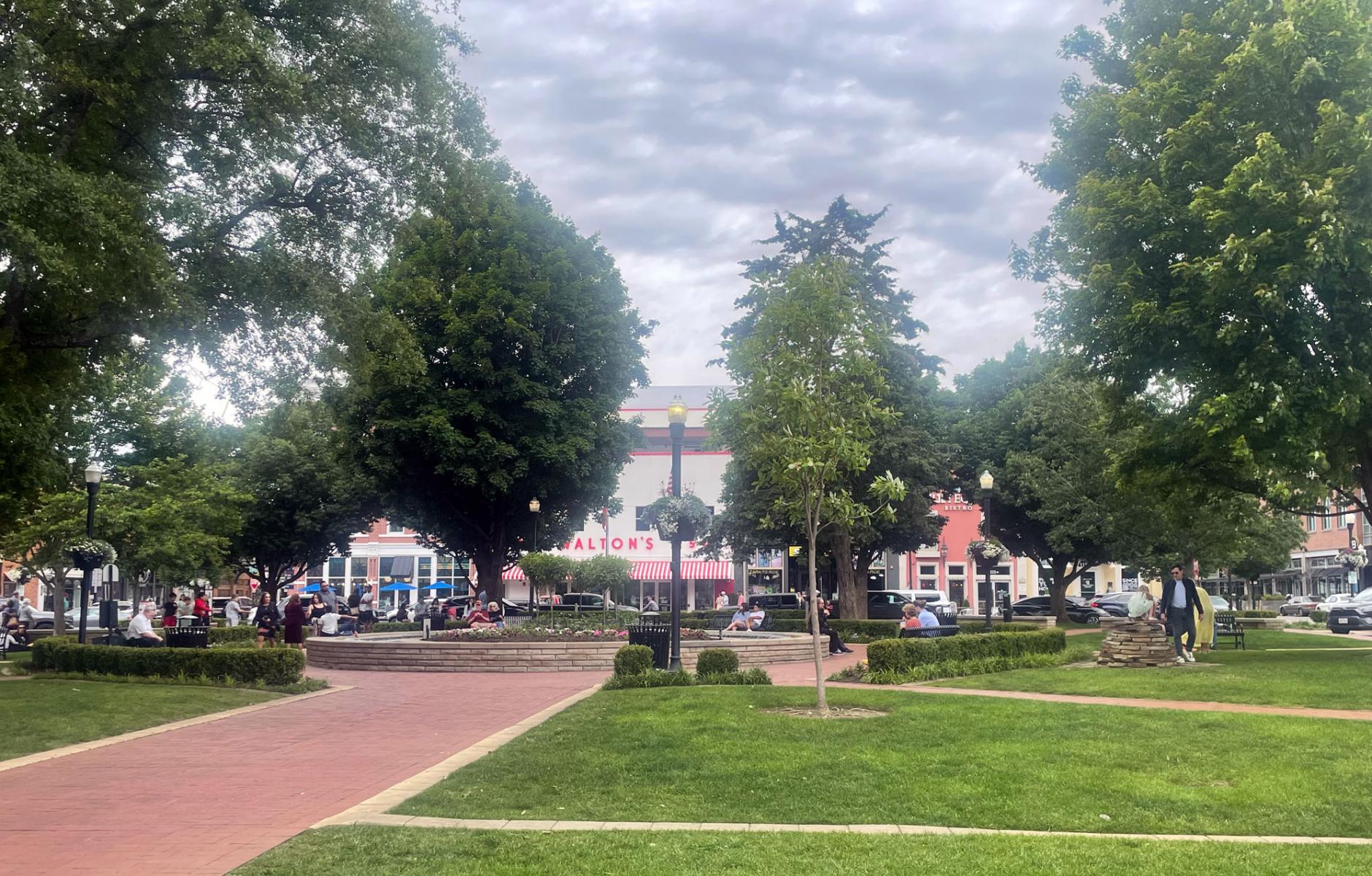
Bentonville has a perfect downtown square. It is one of the most active public spaces I have seen, full of pedestrians day and night. Families, children, old people, and young people are in the square every time I have seen it, a dozen times at least. The perfect weather may have something to do with it. Yet clearly, this place has social capital, and, as Chetty shows, social capital may be the most important factor in upward mobility.
This is important news for urbanists everywhere.
On Friday morning, the social scientist Eric Klinenberg talked about the concept of "social infrastructure," which is in the wheelhouse of New Urbanism. Social infrastructure are the aspects of the built environment that bring us together. They play a huge role in the quality of our lives. Social infrastructure may save our lives in times of stress—such as weather- or climate-related disasters.
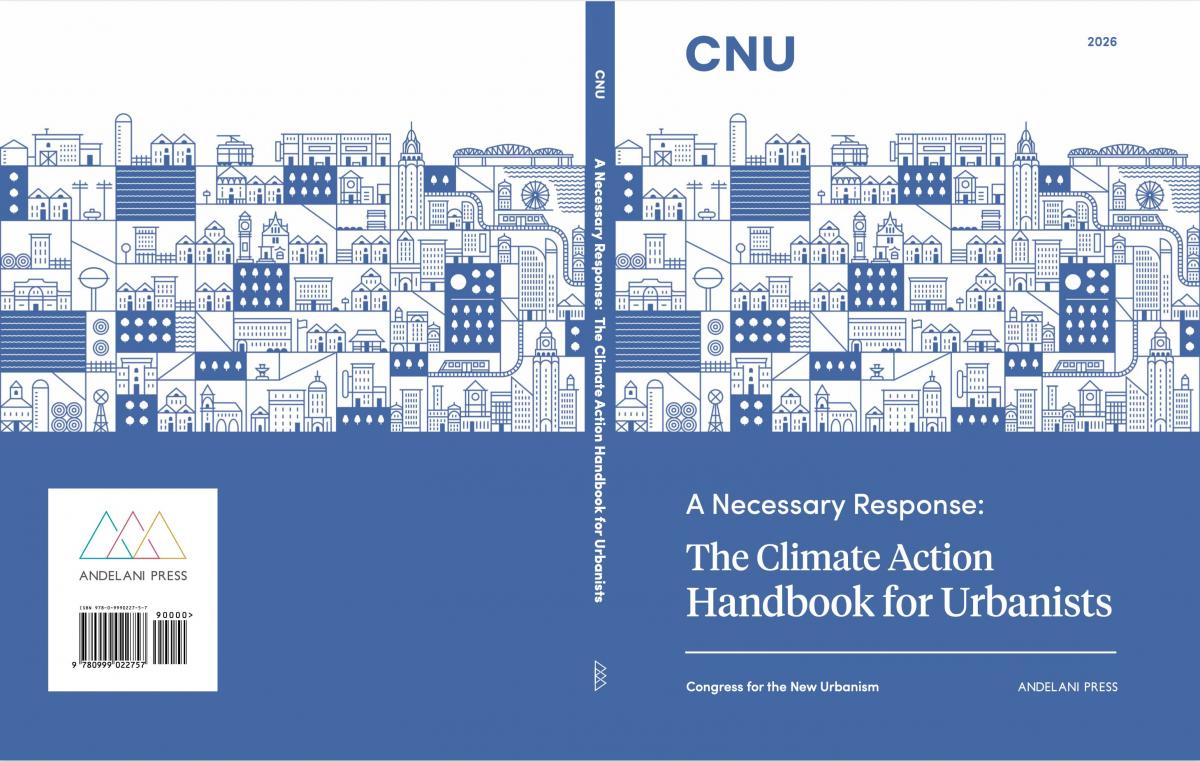
CNU has released its first book in a long time. It is called A Necessary Response: The Climate Action Handbook for Urbanists, published by Andelani Press. It is the essential resource for any planning or urban design dealing with climate change. We are very proud of it. It is for sale at CNU 34 and will soon be available online. We will keep you posted, but in the meantime, here is the cover.
"We are living in a pivotal moment in or knowledge of how to build cities well," Klinenberg told the CNU crowd. Stephanie Orman, the mayor of Bentonville, phrased the question: "How do we build places where people feel connected to one another?" In Bentonville, good examples are the Square, or the Greenway. The goal is for NWA to grow without losing what makes it special—its connection to nature and its people.