A statewide, build-ready catalog for missing-middle housing


For the past decade, Vermont planners have worked to legalize missing-middle housing. Duplexes are allowed. ADUs are permitted. Small multiplexes are back on the books.
Yet in many places, nothing changes.
The code says “yes,” but the housing market still says “maybe.” Projects remain expensive, unpredictable, and slow. Legalization without production has become a familiar pattern.
Vermont is testing a different approach.
Instead of stopping at regulatory reform, the state is asking a harder question: What would it take to make small-scale housing not just legal — but routine?
Building on its 2025 Charter Award–winning “Design and Do” Toolkit, Vermont has launched 802 Homes, a publicly accessible catalog of construction-ready, missing-middle housing plans aligned with administrative approval pathways, infrastructure investment, coordinated capital, builder training, and off-site construction.
The initiative does not treat design, permitting, infrastructure, and finance as separate problems. It treats them as parts of a single production system — one that must function predictably if incremental infill is to move from theory to reality.
Inspired in part by local pattern-book efforts in South Bend and Kalamazoo, the catalog includes ADUs, duplexes, townhomes, cottage homes, and small multiplexes — building types that once shaped Vermont’s walkable downtowns and villages but have become rare under outdated 20th century zoning codes.
The goal is clear: reconnect legalization with production and make small-scale housing feasible on a large scale.
Reviving predictability
Before layered discretionary reviews became the norm, builders relied on standardized plans and pattern books to create cohesive neighborhoods. Those systems offered something often missing today: predictability.
In partnership with Utile Architects and Planners, Vermont is developing ten construction-ready plan sets that will be freely available statewide. The designs are being tested through public workshops, visual preference surveys, peer review, and market analysis to ensure they meet code, reflect community expectations, and respond to demand. Utile is supported by a team of local and regional experts in Vermont’s development, design, and construction landscape: All At Once, Logic Building Systems, Bensonwood, Mass Timber Advisors, and Tom Bursey Designs.
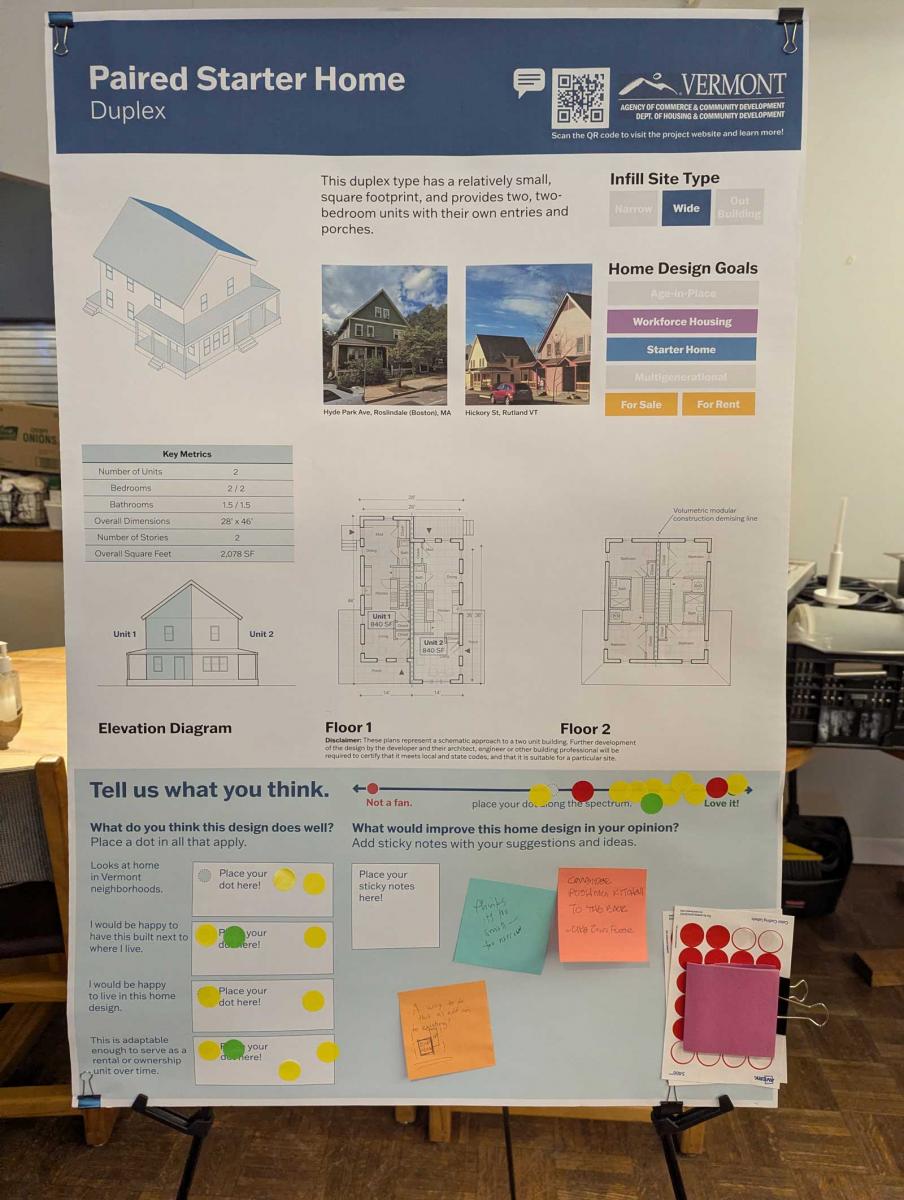
By shifting design vetting upstream — before projects enter review — the catalog reduces front-end uncertainty. Builders can select plans that are technically resolved and code-aligned, lowering soft costs and minimizing redesign. When paired with administrative approval pathways, predictability shortens timelines and reduces financing risk — critical for incremental development.
“If infill housing requires a lawyer and months of hearings, it isn’t truly allowed.” — Alex Farrell, Commissioner, Vermont Department of Housing and Community Development
Design as a tool for administrative approval
802 Homes builds on Vermont’s statewide code preemptions that reduced parking requirements, legalized duplexes, and increased density in serviced areas. Those reforms expanded what is legally buildable. The catalog seeks to expand what is practically deliverable. By pre-vetting designs and aligning them with local bylaws, municipalities can shift review of catalog homes toward administrative approval rather than discretionary hearings. In communities with limited staffing capacity, simplifying processes can matter as much as expanding entitlements.
“Regulatory reform opens the door, and a streamlined process helps builders walk through it.” — Jacob Hemmerick, Senior Planning Policy Manager, Vermont Department of Housing and Community Development
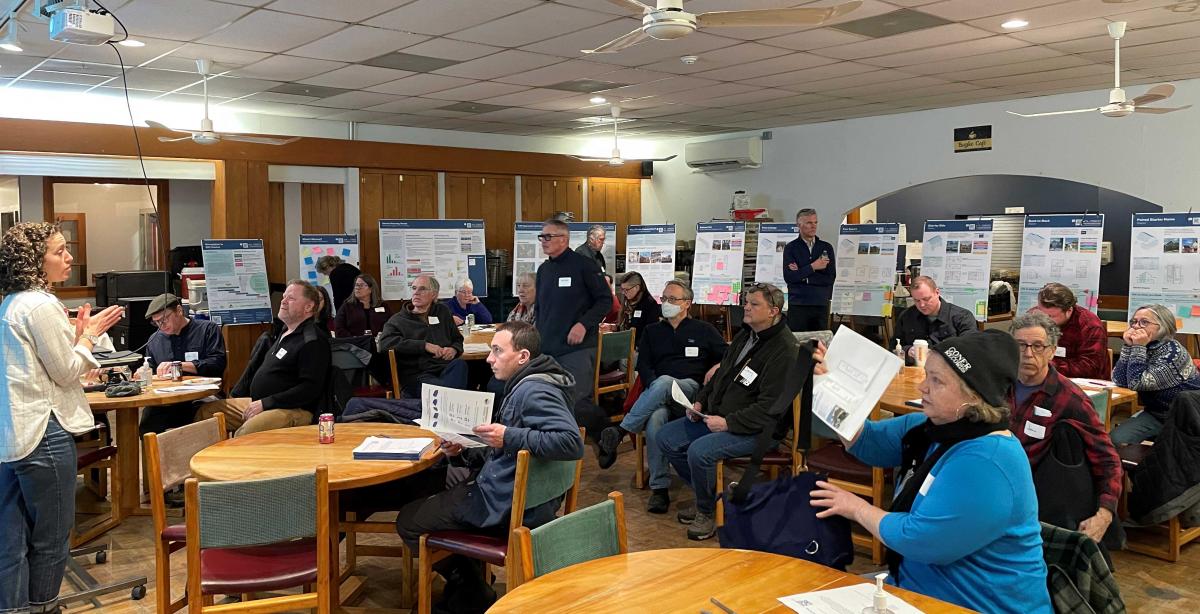
Three municipalities — Essex Junction, Hartford, and Manchester — are piloting this approach. As Utile Principal Matthew Littell notes, “Public engagement works best upstream — in setting rules and forms — rather than downstream at every individual hearing.” Moving the debate to the front end — around form and standards — can reduce project-level conflict while ensuring meaningful public input.
Aligning with off-site construction
Permitting reform alone cannot overcome structural constraints. Vermont faces a shrinking workforce, volatile material prices, supply chain instability, and a short building season. Small builders operate with thin margins and little room for delay.
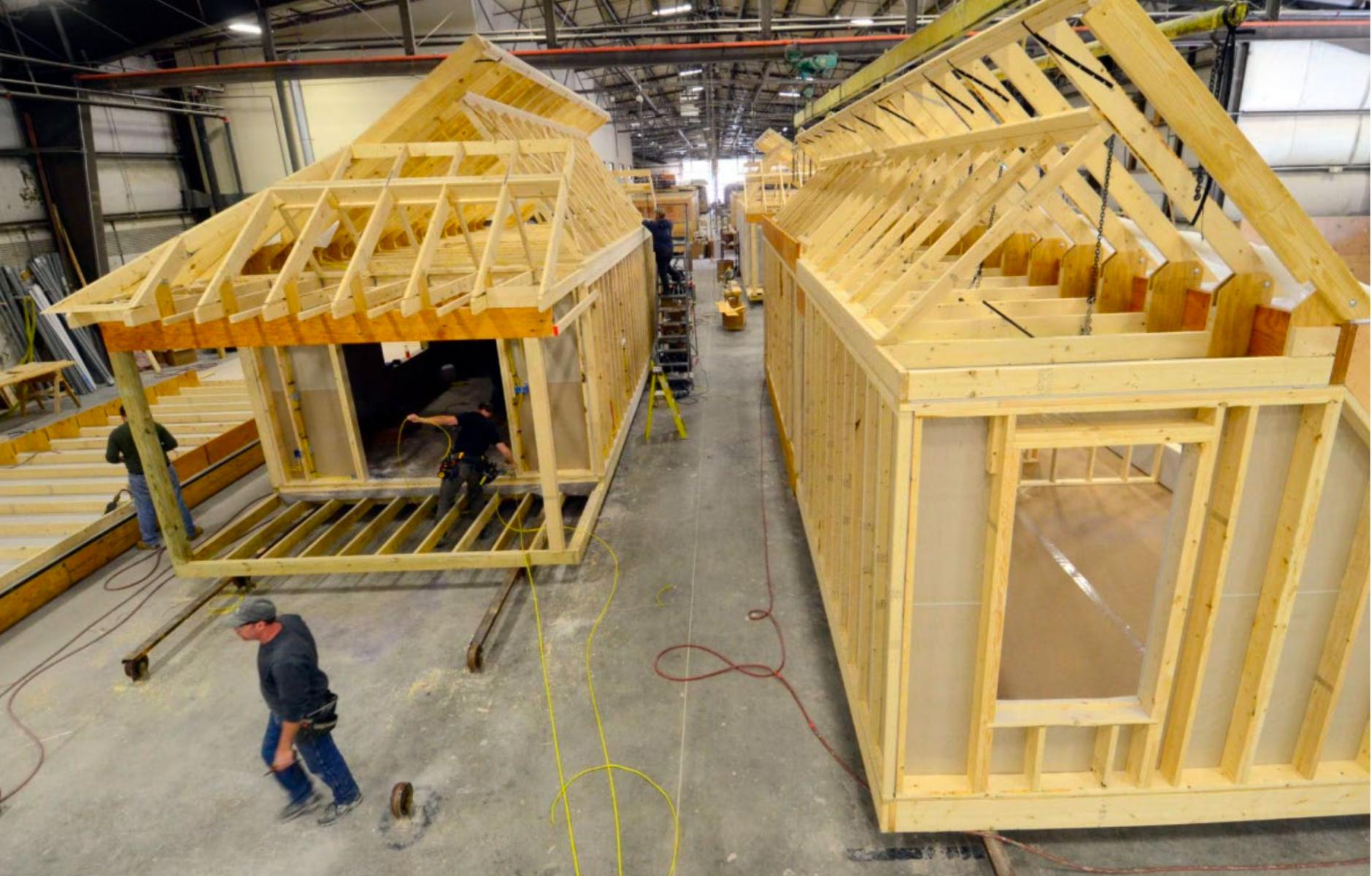
Each 802 Homes plan is compatible with modular, panelized, and pod construction. While homes can be stick-built, they are optimized for factory fabrication — where controlled environments and repeatable processes generate efficiencies.
Manufacturing housing can:
- Reduce per-unit costs through bulk purchasing
- Improve labor productivity through repetition
- Limit material waste
- Avoid weather delays
- Shorten timelines and reduce financing costs
These gains compound. A single infill project cannot capture economies of scale. Repeated production across communities, however, stabilizes supply chains and improves cost forecasting.
Standardization makes industrialized housing viable — even in smaller markets. To support scale, Vermont’s Legislature is advancing a proposal from the State Treasurer to authorize up to $12 million in purchase agreements to aggregate demand for off-site homes and stabilize production.
Importantly, the catalog does not promote placeless design. The homes draw from Vermont’s architectural vocabulary — pitched roofs, compact footprints, front porches — reinforcing neighborhood character while benefiting from industrialized efficiency.
Infrastructure and the coordinated capital stack
Design clarity and production efficiency address two major barriers to infill housing. A third is infrastructure and capital alignment.
In many Vermont communities, water and sewer systems have capacity for additional housing. Yet projects stall when property owners lack site-readiness funding or must navigate fragmented financing tools. Even by-right housing cannot proceed if infrastructure upgrades or upfront costs remain uncertain.
Vermont is aligning 802 Homes with its new $2 billion Community Housing and Infrastructure Program (CHIP), which funds water, sewer, stormwater, road, and sidewalk improvements.
Rather than funding infrastructure in isolation, CHIP investments are directed toward sites where predictable housing production can follow — linking public infrastructure spending with build-ready plans.
The state is also working to coordinate capital tools into a more coherent stack: CHIP funding, bulk-purchase agreements for off-site homes, revolving loan funds, and private financing. Aligning these tools around standardized designs reduces risk from site preparation through construction. When site readiness, predictable design, streamlined approvals, and production efficiency move in sync, capital can flow with greater confidence. Public investment becomes catalytic rather than speculative.
Rebuilding incremental capacity
Systems alignment lowers the threshold for participation in housing production. Homeowners adding an ADU, tradespeople building a duplex, and first-time developers constructing a fourplex can rely on plans that are technically resolved and code-aligned.
The state is partnering with the Incremental Development Alliance to provide hands-on training in financial modeling and small-scale project delivery. Production depends not only on what is allowed, but on who has the capacity and skill to build.
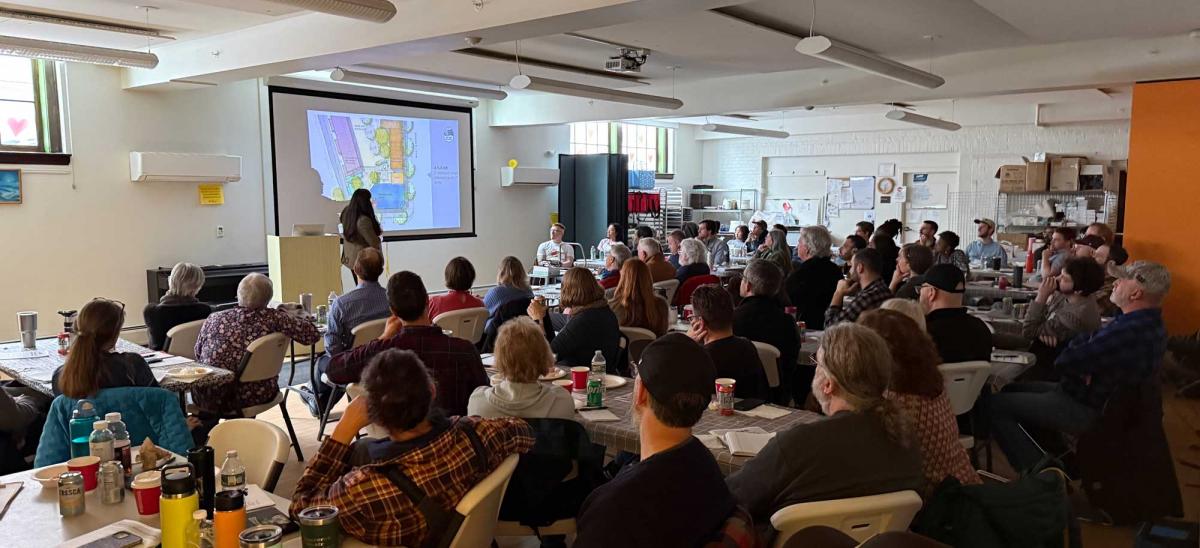
In many small towns, incremental growth — modest additions over time — better matches local markets than large-scale projects.
“Vermont’s plan for housing abundance is to churn out affordable duplexes and quads at scale.” — Senator Seth Bongartz, Bennington County
Implications beyond Vermont
The 802 Homes catalog will advance to full construction documents later this year, with statewide rollout anticipated in December. Its significance will depend on whether it reduces cost, time, and uncertainty.
Several lessons may resonate elsewhere:
- Upstream design consensus reduces downstream conflict.
- Infrastructure and capital coordination must align with regulatory reform.
- Capacity constraints are structural.
- Standardization enables industrialized construction.
- Scale drives affordability through bulk purchases and labor efficiency via repetition.
The broader question is whether pre-permitted housing catalogs will be seen not as niche experiments, but as practical tools for restoring a dependable housing production system.
See also, Vermont is bringing back missing middle housing