Greenway is key to revitalizing Mill District


A revitalization plan for a 535-acre district is key to infill development in High Point, a growing city of 120,000 people in North Carolina's Piedmont region. The Southwest Mill District is a quadrant connected to downtown and a historic center of the city’s furniture industry.
“The creation of the Southwest Mill District Plan will provide the foundation for the continued revitalization of Southwest High Point while supporting a walkable, connected, mixed-use district that embraces modern-day industry, jobs, and commerce along the Heritage Greenway,” explains the City.
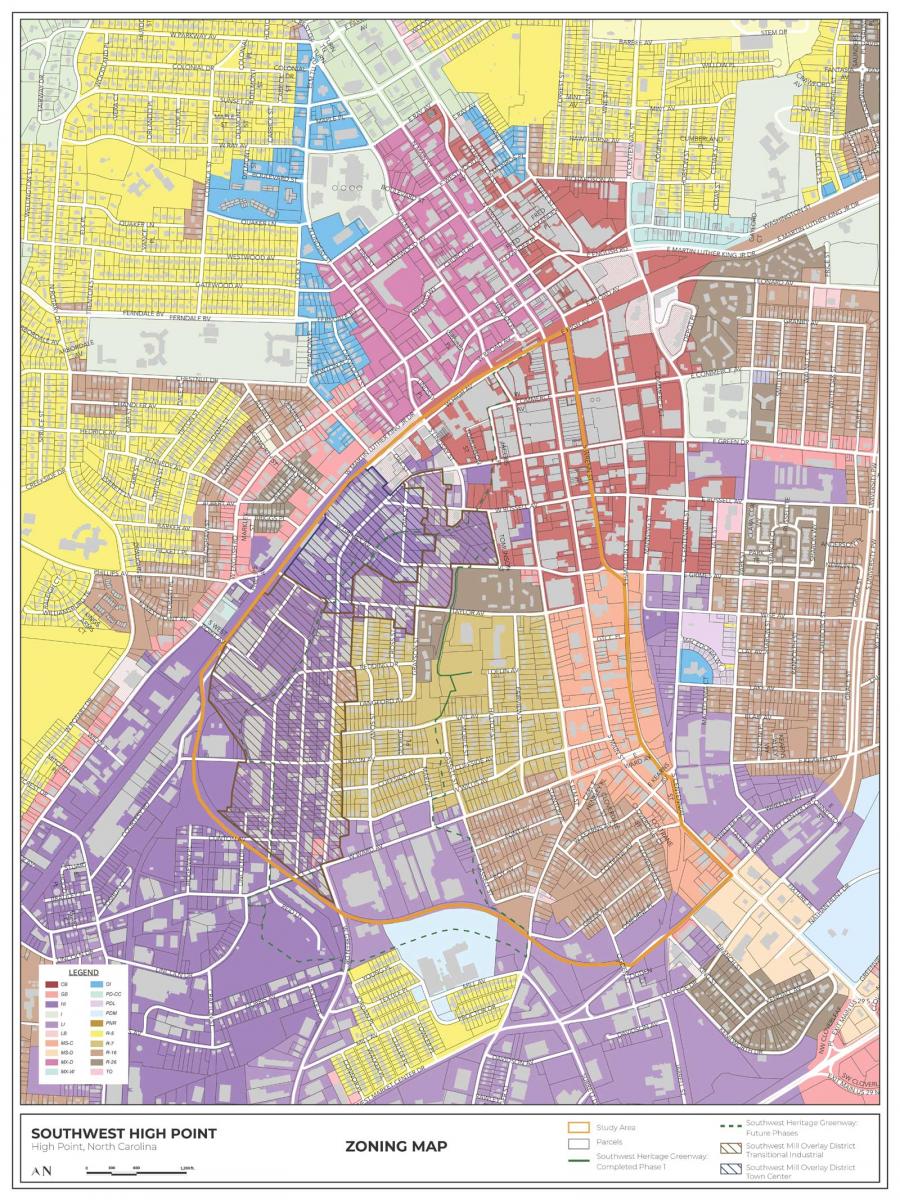
After Dover, Kohl & Partners authored the plan for the City and Southwest Renewal Foundation in 2025, City Council unanimously adopted a 171-acre Overlay zoning district that “establishes two specific subdistricts to encourage voluntary mixed-use and industrial development.” The overlay marks the first time in over 50 years that new mixed-use, walkable development is possible in the Southwest. The Southwest Mill District includes industry, commerce, and neighborhood fabric, as well as the Heritage Greenway, a multimodal link to downtown; the first phase has been built.
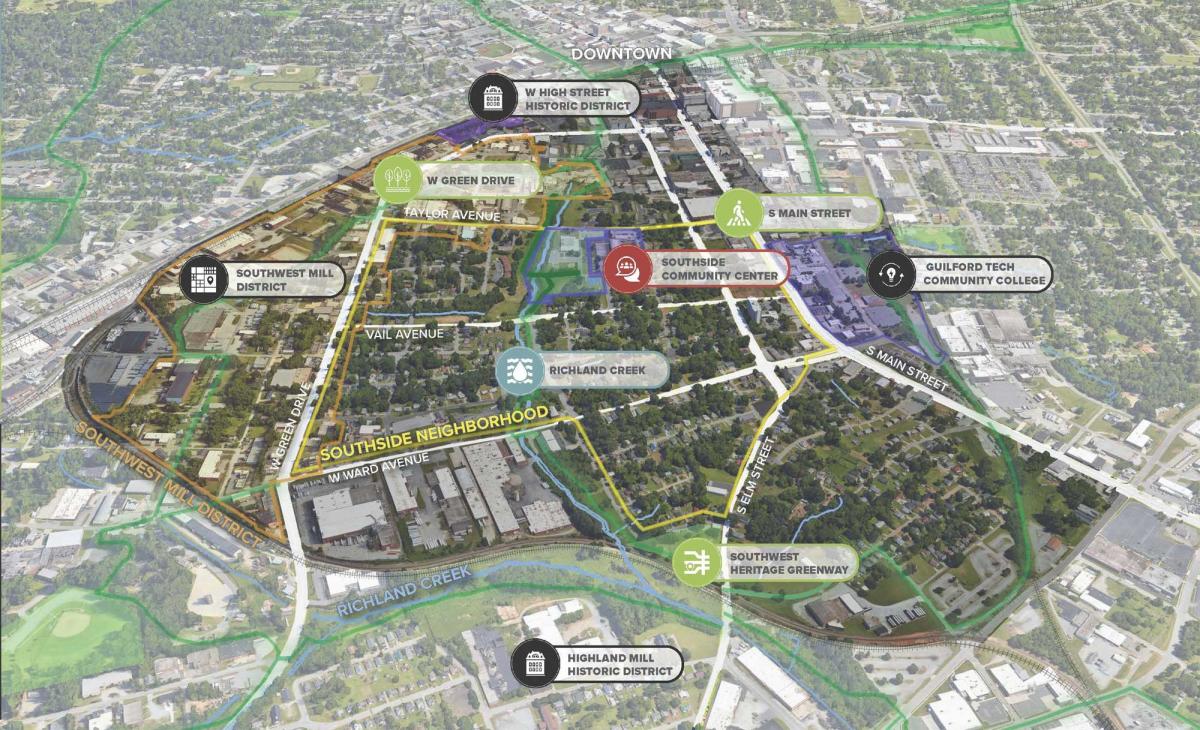
Southwest has 12 historic mills and 4 residential neighborhoods that once served this manufacturing base. The area includes small single-family homes once used to house mill workers, as well as multi-family townhomes and public housing complexes, Dover Kohl states. The plan works to protect community character while building a more complete neighborhood with a variety of housing types for a range of ages, stages, and incomes.
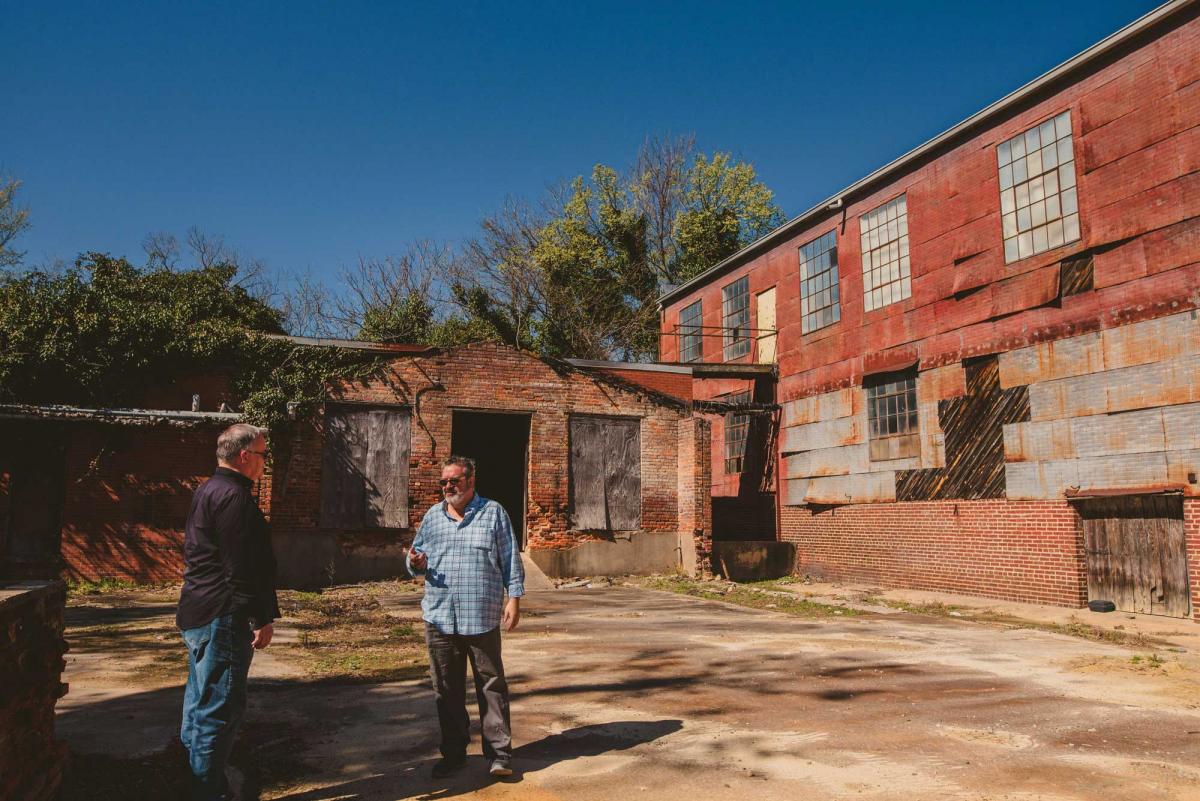
Many manufacturers have closed their doors over the years, and planners say urban renewal is partly responsible for dismantling the District’s once-bustling African American neighborhoods. The North Carolina Department of Commerce has designated this area as one of the state's “most in need.” Walkable, connected, safe streets where people could walk to jobs, visit with neighbors, shop for goods, and raise healthy families quickly became disconnected blocks with limited sidewalks, wide streets to move vehicles quickly through the neighborhood, and disenfranchised residents lacking access to resources, services, fresh foods, and safe places. Neighborhood housing was destroyed; streets were closed; and residents were displaced.
Southwest Renewal Foundation received a grant for Urban3 to analyze the district, downtown High Point, and the region to further support investment in the core city and southwest. In particular, the study highlighted the lasting impacts of urban renewal and redlining, and how zoning and land use can divide a community.
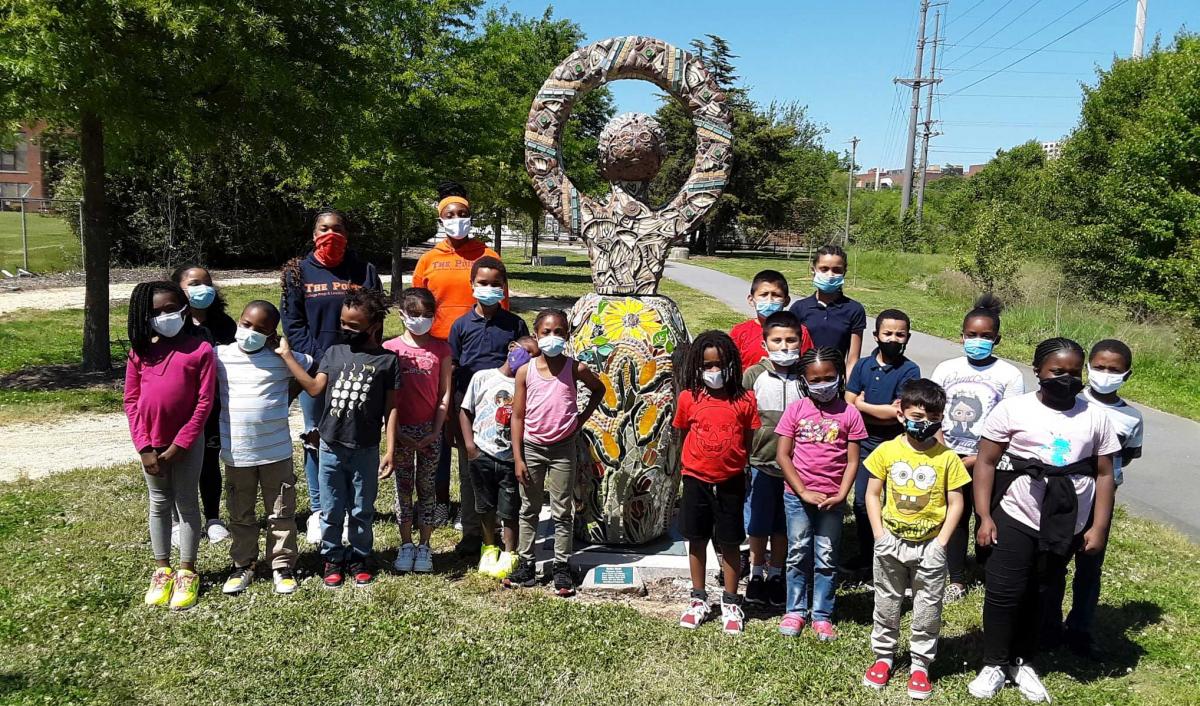
Joe Minicozzi of Urban3 notes that the Southwest neighborhood has carried the majority of the city's industrial uses for many years. The city at large is only 11 percent industrial, but this district is three times as much. "This is an industrial legacy that’s been anchored into the neighborhood, but it’s worthy of a conversation about the impact it has on [the] community to keep the real estate values suppressed.”
Greenway underway
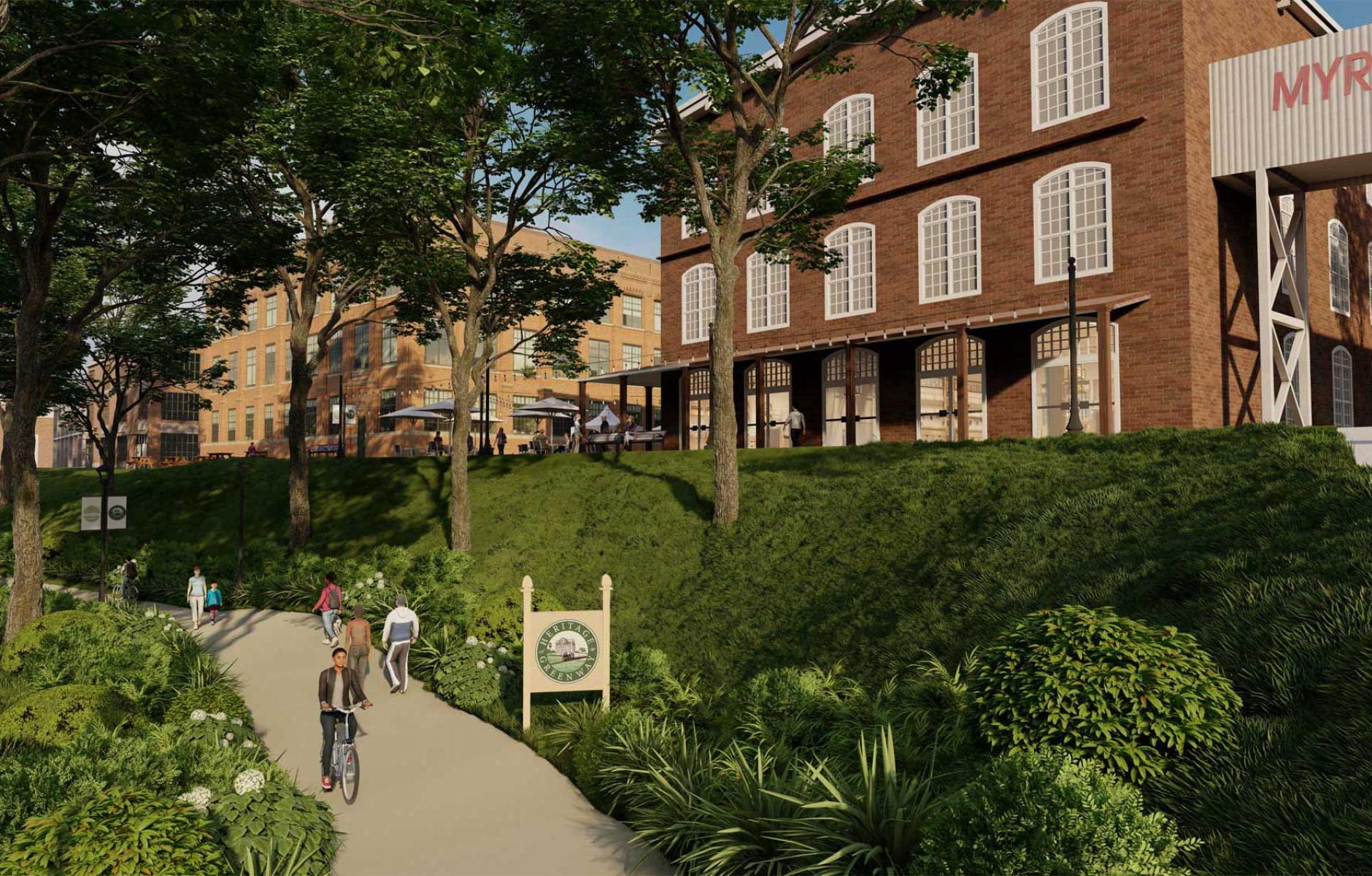
The Heritage Greenway follows Richland Creek through the heart of the district. The first half mile of the greenway is complete, with an additional 3.5 miles planned along a once-active rail corridor, funded by a US DOT grant. “Expanded economic development and redevelopment opportunities for properties adjacent to and within walking distance of the greenway will support the continued revitalization of the Southwest Mill District,” the project team states.
The greenway connects key assets, including an elementary school, recreation center, playground, and community garden. The project was built along an underutilized corridor of state-owned land running north-south through the area.
The Mill District has a connected street network, although the blocks are irregular, and some are larger than typical urban blocks. The Heritage Greenway will add more right-of-way and permeability.

New public art, in the form of a troll named “Little Sally,” created by artist Thomas Dambo, is drawing visitors to Southwest. The troll celebrated her first birthday in October, marking 89,200 visitors. “The response during her first year has been incredible,” says Melody Burnett, president of Visit High Point. “What began as a creative public art project has become a destination experience that brings families together, supports our local businesses, and introduces visitors to everything our community has to offer.”
Transportation corridors through the district are key to revitalization. Many streets in the district are oriented to automobiles, with few pedestrian amenities. West Green Drive is currently undergoing improvements to transform its oversized travel lanes into a place where people can safely walk and bike, while supporting ecological health.
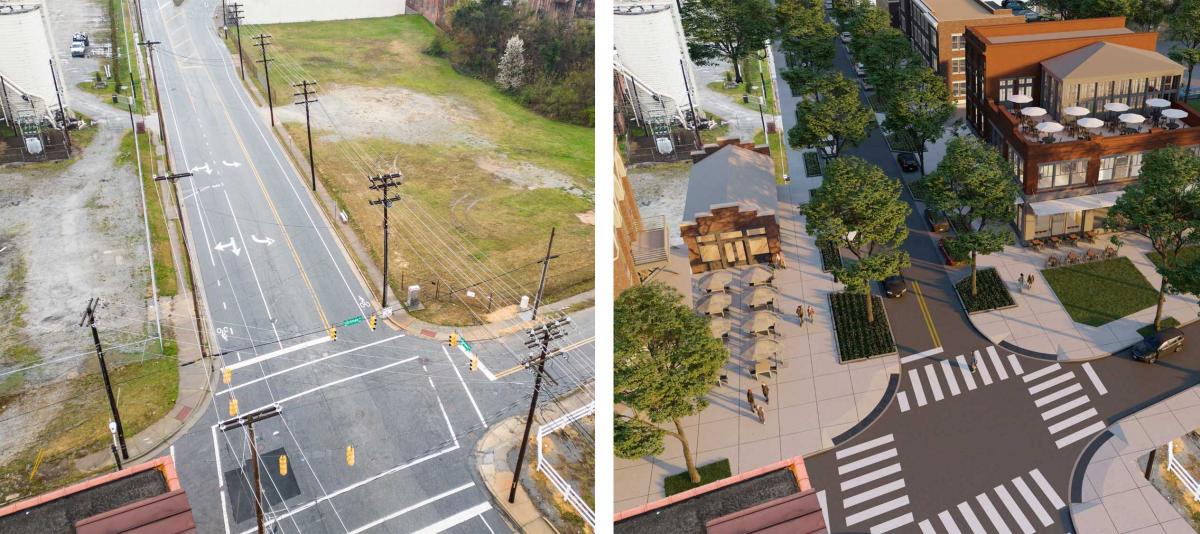
“By adding rain gardens and other modern-day tools to manage stormwater and clean it before eventually running into Richland Creek, improvements to West Green Drive can serve as a model of green infrastructure not only for High Point but the State of North Carolina,” the planners explain. The vision for a revitalized streetscape includes narrower travel lanes, shorter pedestrian crossings, and overall repurposing of the right-of-way to become walkable, with activated frontages and new street-oriented buildings.
With an over-arching theme of improved connections (physical connections in the form of walkability and complete streets; historic connections celebrated in building rehabilitation and reuse; community connections in the form of education, training, and neighborhood prosperity; and, environmental connections centered on the greenway, green infrastructure, parks, and Richland Creek), revitalization efforts in Southwest High Point are a model for neighborhoods and districts throughout the city.
Sharing the story of the Southwest Mill District at a recent state preservation conference, planner Victor Dover notes: “There is a lot to learn from High Point, a lot of transferable strategies. High Point is a learning opportunity for cities large and small, about learning to use what you’ve got, about grit and creativity, and putting design front and center.”