CNU expanding database for new urbanist projects


New Urbanism has been improving towns, neighborhoods, and cities for more than 30 years, but its impact is often difficult to measure. This is due to the variety in scale (what does New Urbanism mean when it’s a building? A city? Half of Southwest Louisiana?) but also the lack of consistent data across projects. Seeking to remedy this, CNU has begun the Sisyphean task of cataloging all of its projects and compiling a standardized dataset that can hopefully be used by students, professors, and researchers.
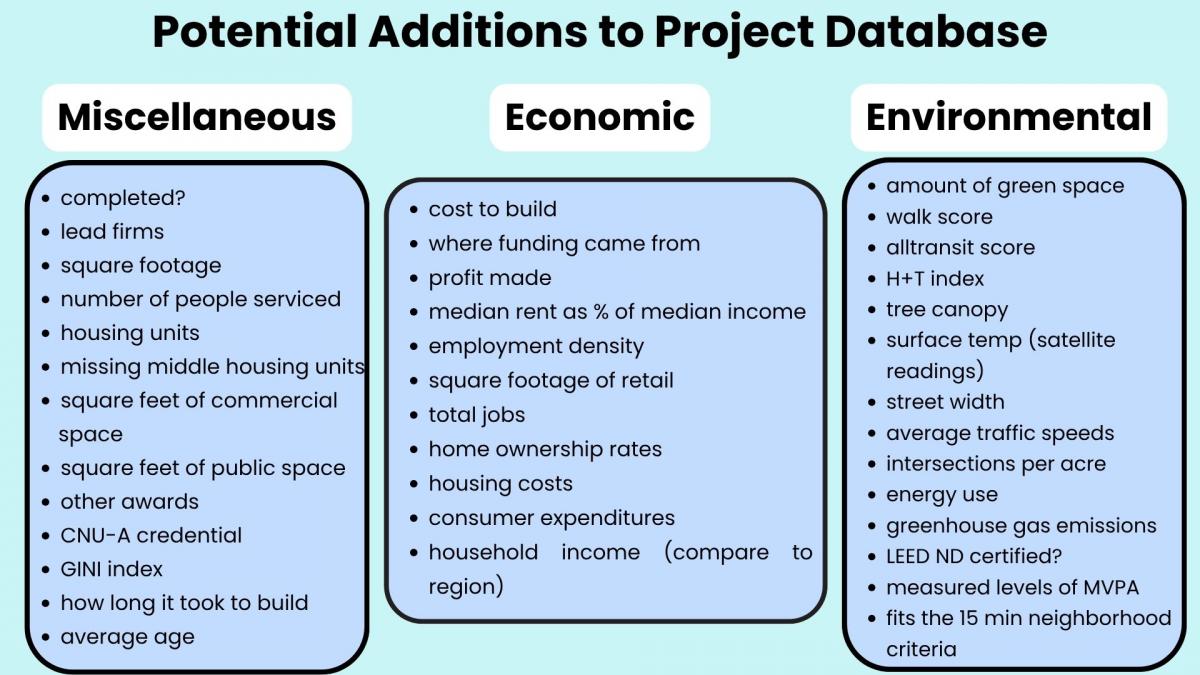
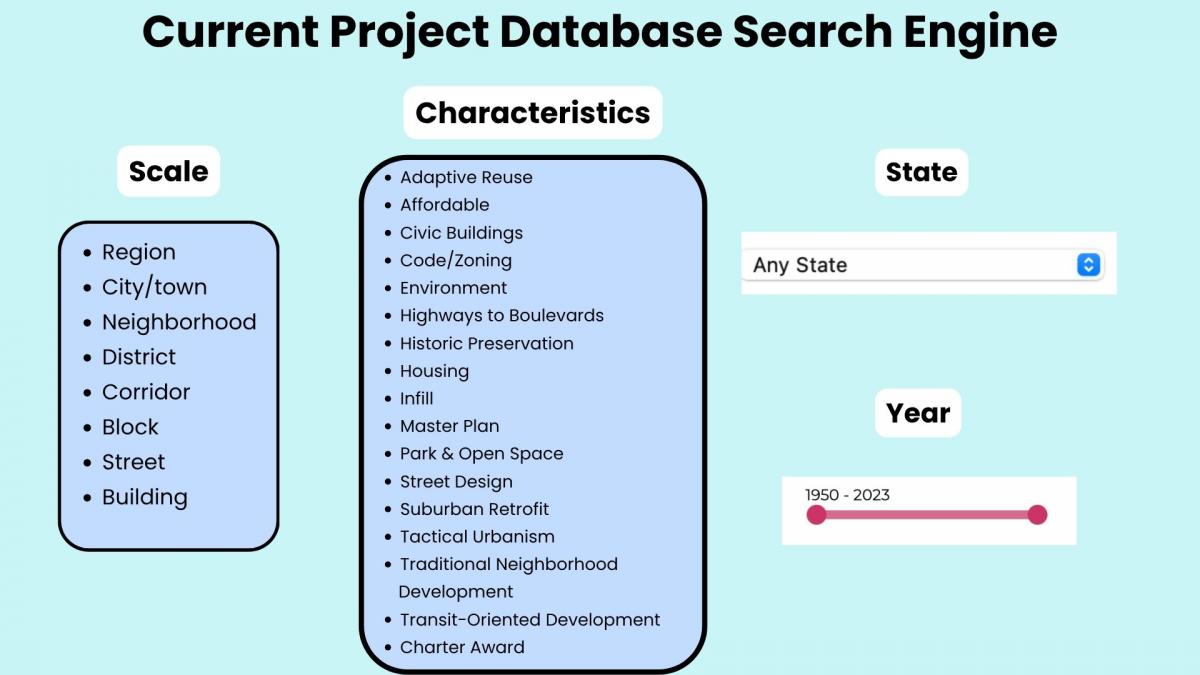
At the moment, the project database section of CNU’s website contains several hundred recorded new urbanist projects, searchable by scale, year, location, and characteristics. However, there is not currently a way to take the data from one project and compare it to the data from another project, or, perhaps more usefully, the data from a non-new urbanist project. Having a standardized data set that includes economic and environmental information along with basic points like square footage and number of housing units will provide a number of jumping-off points for areas of research.
Some of this information is currently available online, but not all—and almost none of it is consolidated. One of the principal ways CNU will be collecting this data going forward is by requesting it in the Charter Award applications, and then adding it to the database straight from the source. The updated database will be made public use, similar to the LEED project directory, and will contain consistent information across all entries.
For decades, new urbanist projects have been tackling issues like walkability, access to public transit, and lack of missing middle housing. However, New Urbanism has also been addressing less obvious problems that people don’t necessarily associate with urban design—such as climate change. Last week, CNU hosted a webinar titled “Urbanism and Climate Change” addressing the potential for New Urbanism to tackle the future of cities as stacked up against the growing climate crisis. The webinar was hosted to promote the new Climate Action Handbook that presents practical responses, using real-world examples. What stands out about this publication is how it examines climate change through the lens of urbanist solutions, acting as both a source of information and call to action.
In theory, the project database could build off of this information through a comprehensive framework of quantitative data. Rather than just looking at a couple of projects and saying “here’s what we need to replicate,” researchers could look at dozens of new urbanist projects at once, taking into account tree canopy, energy use, LEED certification, etc. This would provide a bird’s-eye view of where New Urbanism is succeeding when it comes to climate action, and where there is room for improvement. For example, if new urbanist architects are routinely going out of their way to include green space in their projects, but overlooking greenhouse gas emissions, that could be a signal for change. At the same time, if new urbanist architects are routinely clearing the bar for designing projects that take into account green space, greenhouse gas emissions, LEED certification, and numerous other benchmarks, they deserve a chance to highlight their achievements. And more than that, it is critical to show policy and lawmakers that New Urbanism is a valid alternative to sprawl for a number of different reasons.
As the project database is updated in the coming months, suggestions for additional categories are more than welcome. The ultimate goal is to make sure the tool is useful for as many people as possible, without requiring an overwhelming amount of data from the architects. The idea is to provide a comprehensive view of each project, doing justice to the details that the people working on them made sure to include. When complete, it can serve as both an overview and a celebration of the movement—demonstrating New Urbanism’s reach and impact.