An ode to Alexandria


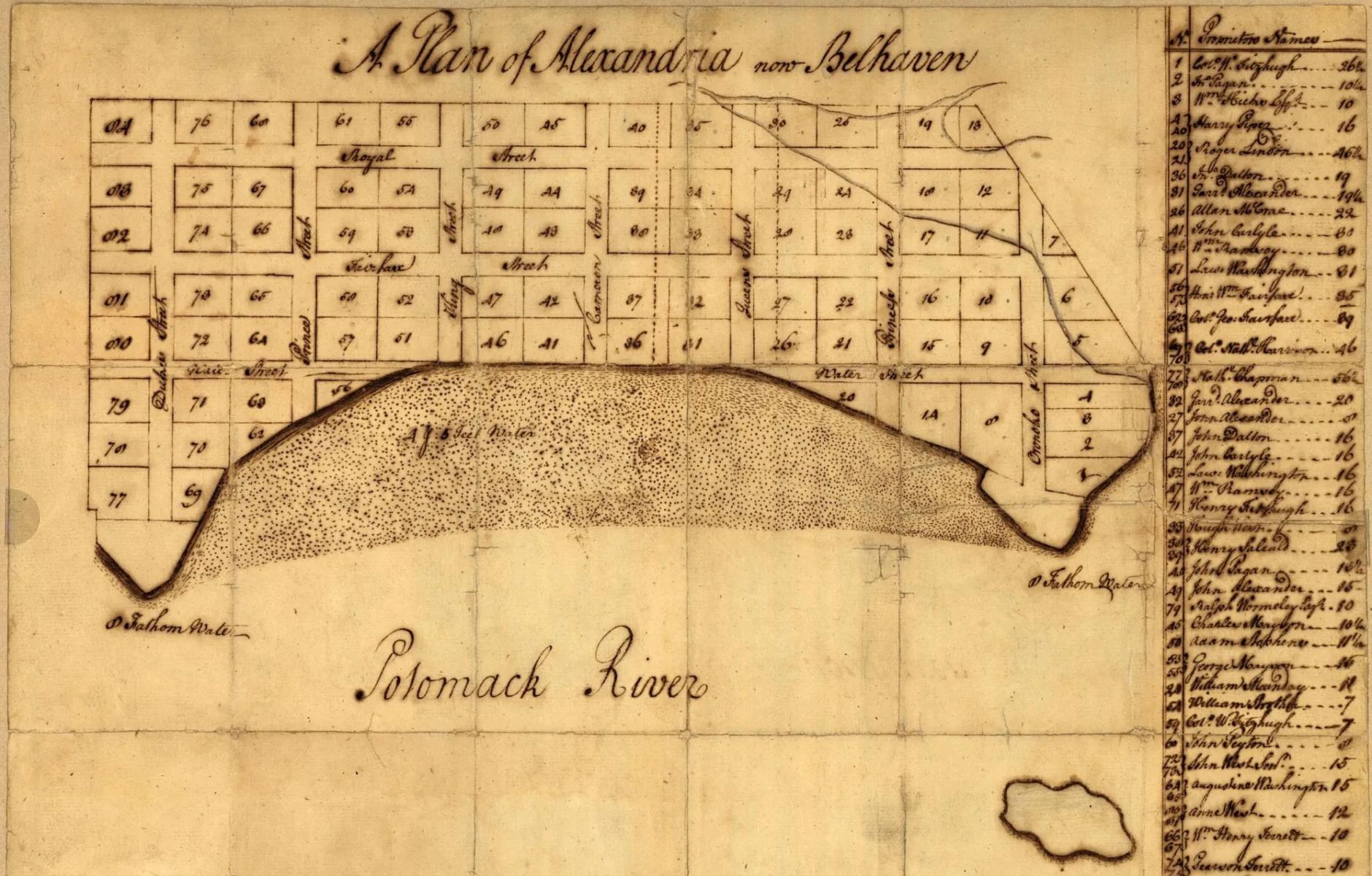
As the nation celebrates its 250th birthday this weekend, George Washington’s often-overlooked achievement is noteworthy. As a 17-year-old in 1749, Washington planned what is now the City of Alexandria, Virginia.
He surveyed and platted what are, to this day, more than 275 years later, the streets of Old Town Alexandria. In doing so, Washington created a foundation for a great mid-sized city that is flexible enough to have endured through centuries of technological, economic, social, and political change. Barring some great cataclysm, these streets are likely to serve a fine city 275 years in the future.
This achievement may pale in comparison to winning the Revolutionary War, leading the Constitutional Convention, or serving as the first President of the United States, but it ain’t nothing—especially considering George did this at an age when most people today are juniors in high school.
In his Substack Deleted Scenes, Addison Del Mastro writes about the understated present-day magnetism of Old Town, a walkable and charming place.
Rare as places like this are in America, they feel—for me, and I think for most people—absolutely and utterly normal, almost familiar even if personally unfamiliar. C.S. Lewis put this idea very nicely, speaking of the human inkling that the divine really exists: “The echo of a tune we have not heard.” That is what urbanism feels like, I think, for many of us: not just something we like, in a lifestyle sense, but something that should have been, and almost metaphysically is, our normal, our home.
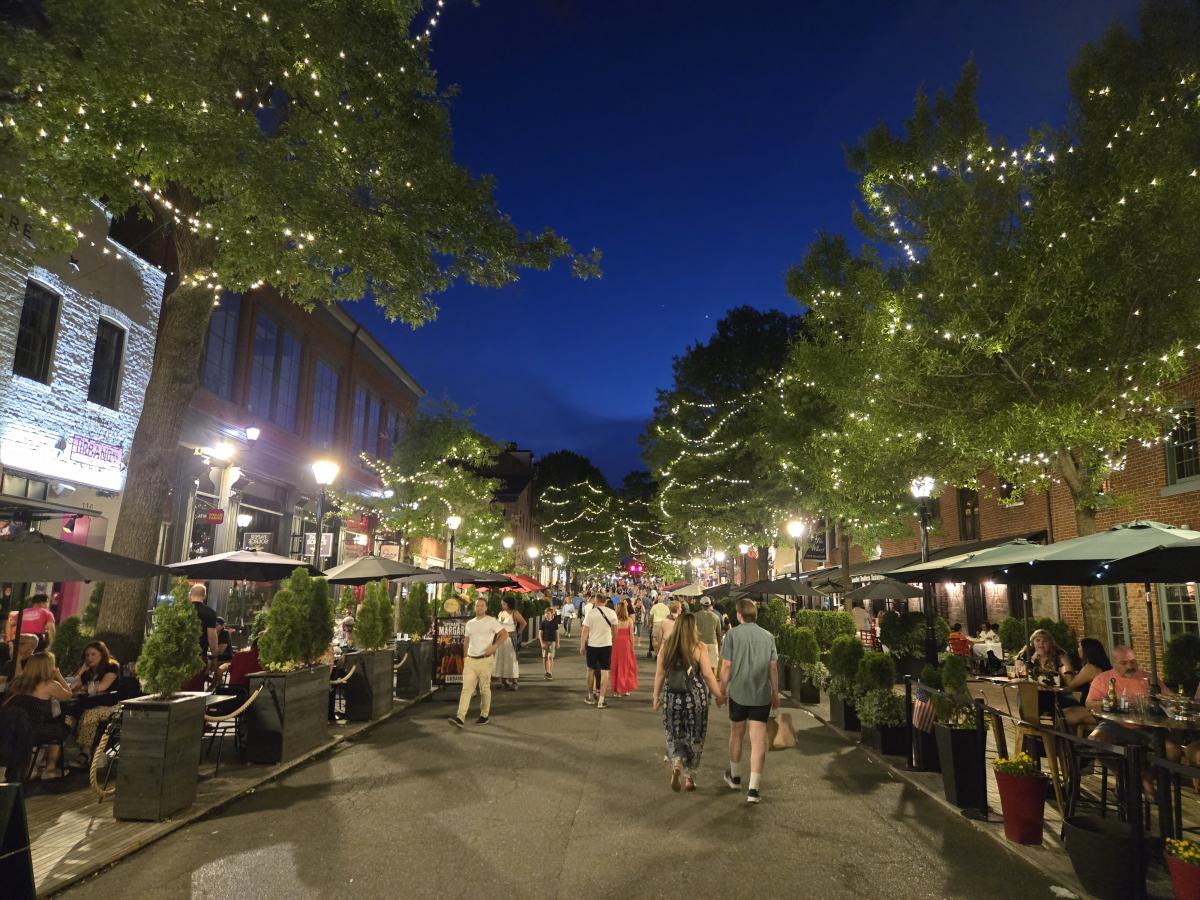
That Old Town feels normal and familiar, and that it was planned by a Founding Father, may be related. Platting a town the way that Washington did was, up to the middle of the 20th Century, as American as the Gilbert Stuart portrait that appears on the dollar bill. In the 18th, 19th, and early 20th centuries, the city grid was the default approach to land-use planning. The plan created frontage for land development, which in turn created value out of a low-lying area that has persisted to this day. It was efficient at creating value. In fact, Alexandria’s problem today is one of too much value.
Citing house prices of $1-1.25 million, Del Mastro notes:
These high prices seem to communicate to a lot of people that good urbanism is an expensive treat or indulgence, not a normal, everyday way to live.
But a place like Old Town Alexandria isn’t expensive because of corporate greed, or because urbanism is inherently expensive, or any other left- or right-coded reason that many people think. It’s expensive because, simply, people want to live here.
Remember that Alexandria has gone through many economic cycles over nearly three centuries. Go back 50 years, and Alexandria was losing population, and Old Town was depressed and deteriorating. At the time, there was an abundance of walkable places because we had created so many of them over a long period of time. Also, suburbia was ascendant, and the narrow, mixed-use, gridded urban streets of places like Alexandria were out of fashion. Already more than two centuries old, Alexandria needed constant upkeep, and it wasn’t getting it. Policies and practices at the time, such as the long-term effects of redlining, steered investment away from historic cities. I can’t blame people for moving out to the brand-spanking-new suburbs, which hadn’t had time to deteriorate.
Alexandria was lucky, in a way. Old Town avoided massive destruction during the urban renewal era. No freeway was built through it (the I-495 Beltway passed through the city, but just to the south of the historic area). It is one of a handful of cities, like Boston, Providence, Philadelphia, Charleston, and Savannah, with a sizable number of 18th-century streets that survive with their architecture intact.
It wasn’t long before the charm, history, and human-scale walkability of Alexandria, totally lacking in the suburbs, began to draw people and investment back. Since the 1980s, Alexandria’s population has increased by more than 50 percent.
When George Washington surveyed and drew the plan of Alexandria, he had no idea what would occupy these blocks 275 years later. He had no inkling of automobiles, appliances, indoor plumbing, electricity, or computers. He didn’t know about chain stores, supermarkets, office buildings, high-rises, or parking decks/lots. He didn’t know about trains, buses, or semis. Washington didn’t know there would be a place called Washington across the river that would serve as the US capital. He didn’t know there would be a US capital (or a US). And yet he laid out streets and blocks (about 275 by 400 feet) that not only work in the modern economy but also are among the most valued in the entire metropolis.
Washington did know that Alexandria would grow. And so, every one of the streets he drew didn’t stop—like subdivisions of today—they projected north, west, and south (the river stopped them on the east). For a long time, officials just added new blocks of the same dimension as needed. The blocks continued to work for incremental development. They accommodated whatever kinds of structures were desired. They provided a canvas for the dreams of new generations.
Alexandria is an American achievement, and an especially durable one. As we celebrate America’s 250th year and the people like Washington who helped birth this nation, we should celebrate Alexandria, its grid, and a city form that helped make us what we are today.
And one final question: If George Washington could do it, why can't we plan and build cities like Alexandria that are sustainable for 275 years and counting? Was he just better than us at planning? A 17-year-old who didn't attend a good city and regional planning school? He certainly had better handwriting. I don't think so.
CNU members can also remember that Alexandria was the birthplace of New Urbanism. CNU 1 was held there in 1993.