State housing toolkit promotes pre-approved house plans


A toolkit for housing in Ohio offers guidance to the State’s municipalities to develop thousands of infill lots in cities and towns. Housing Ohio: Tools for Development, sponsored by the Ohio Realtors and the Greater Ohio Policy Center, takes the unusual step of creating two new house plans that fit most of the state’s infill parcels and are available for free statewide. The goal is to promote pre-approved plans throughout the state, with an eye toward affordability and easing the housing shortage.
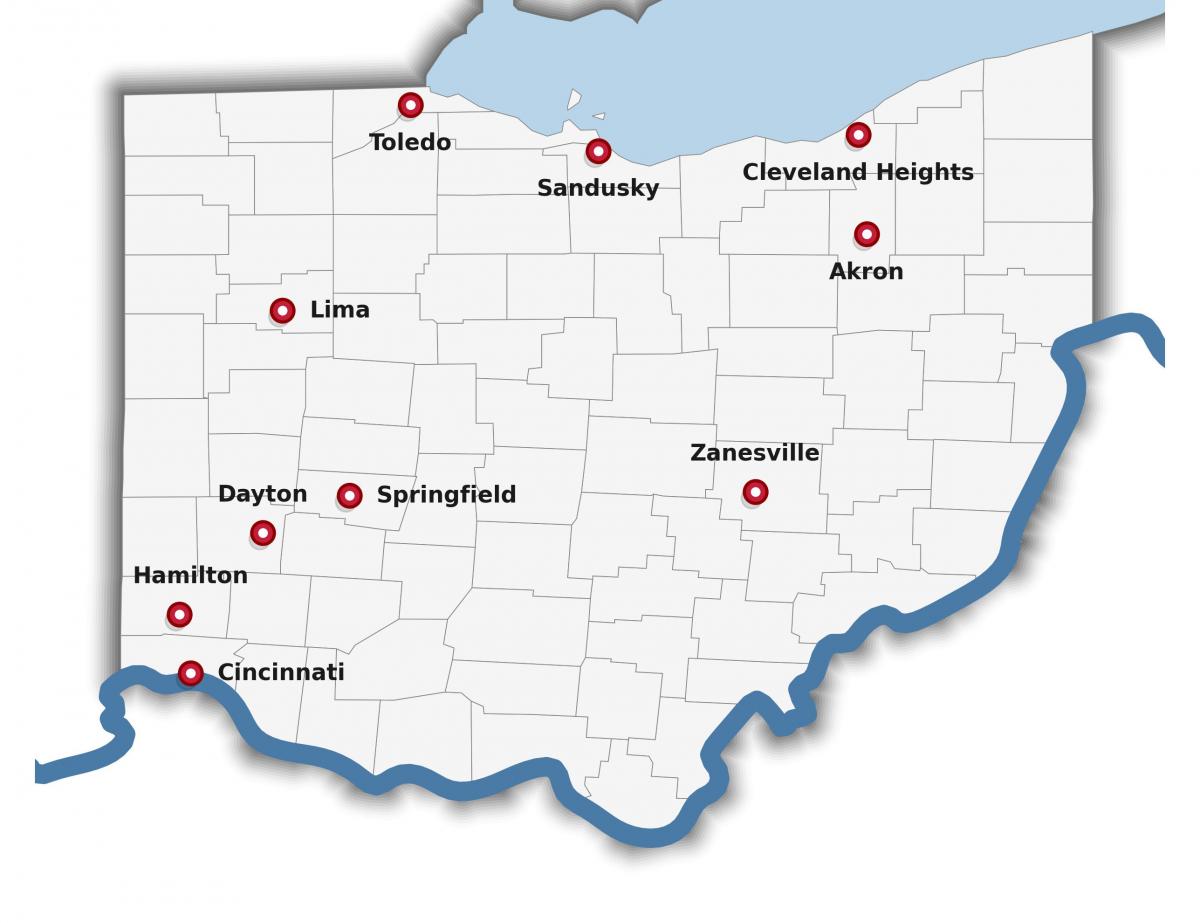
The process has generated public-sector participation—10 cities of various sizes have formed a “community of practice” to examine how to implement the toolkit, including some that are moving toward adopting pre-approved building plan programs. The report is authored by the Pattern Zones Co. of Fayetteville, Arkansas, led by Matthew Petty and Matt Hoffman, with Neil Heller, who won a CNU Charter Award for the Vermont Homes for All Toolkit.
The toolkit is divided into three parts, according to the authors:
First, zoning adjustment recommendations address common regulatory barriers: permitting housing mix, reducing lot minimums to match historic platting patterns, eliminating redundant standards like density limits and minimum floor areas, and right-sizing parking requirements. These changes are simple enough for city staff to implement without outside consultants.
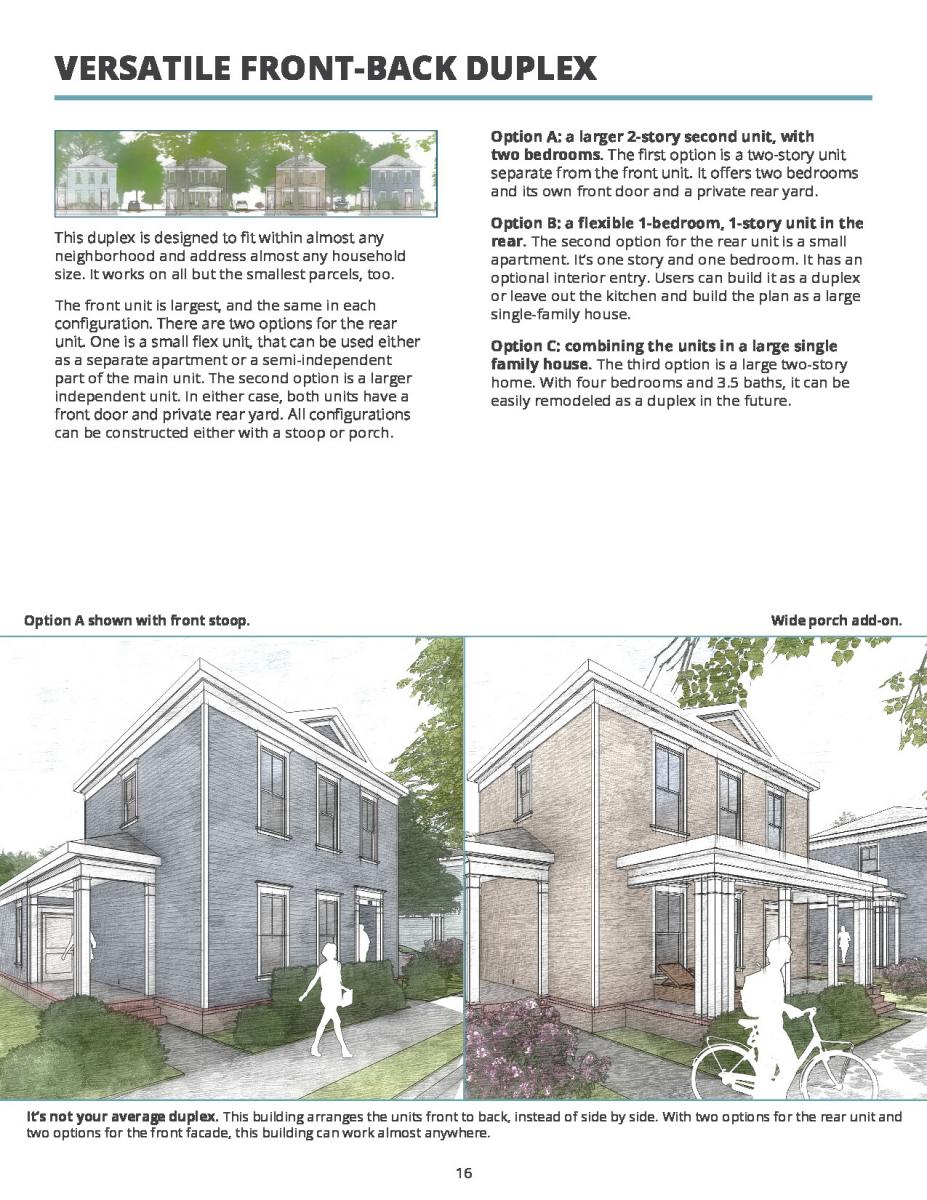
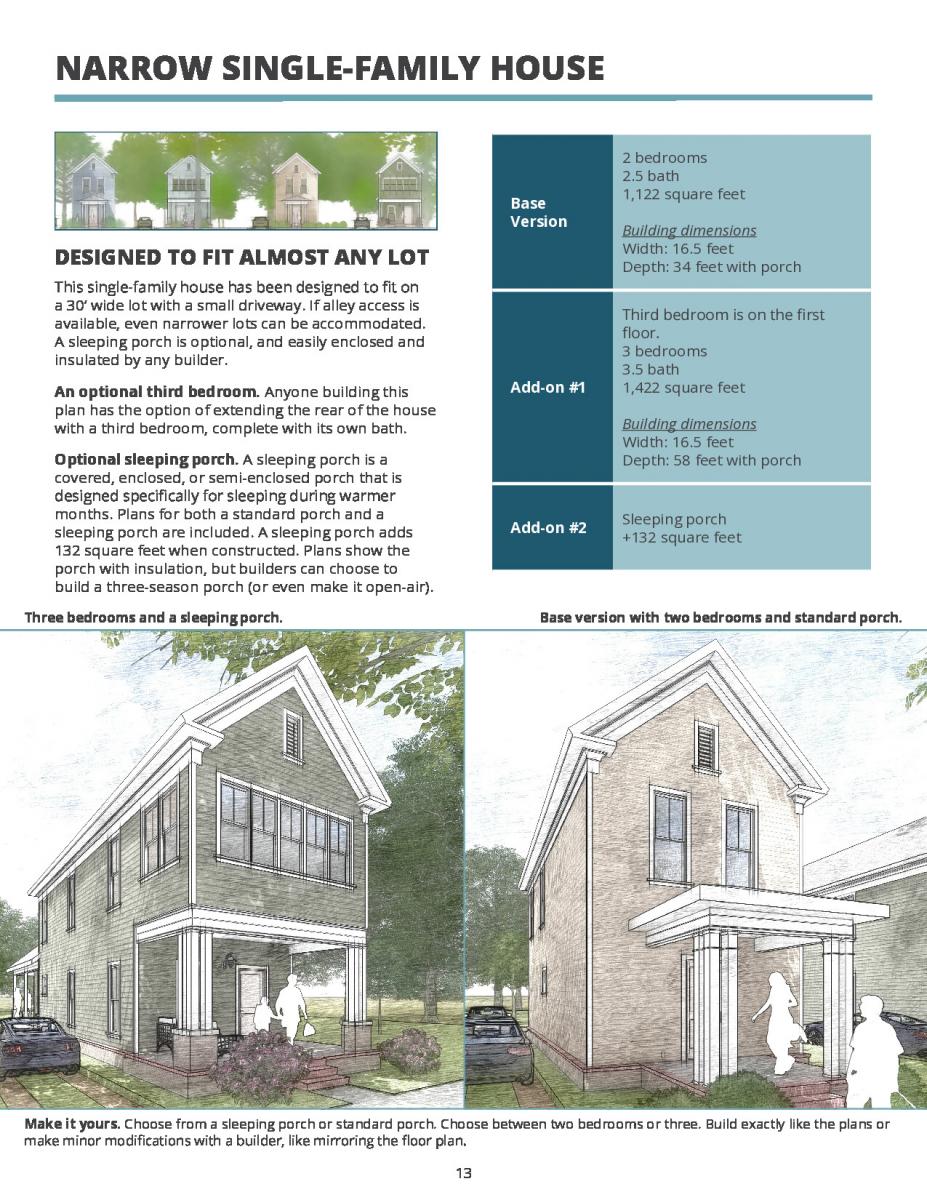
Second, two architect-designed building plans–a narrow single-family home and a front-back duplex–are available at no cost. The narrow house fits lots as small as 30 feet wide; the duplex offers flexible configurations from one-bedroom units to a four-bedroom single-family home. Both include variations (sleeping porches, optional bedrooms) that expand their applicability. The design constraint was explicit: plans must work on approximately 80 percent of Ohio's infill lots. This estimate was developed with an advisory committee of active builders, city officials, and land bank leaders who reviewed designs against actual lot inventories and market conditions.
Third, an implementation guide provides a step-by-step roadmap for pre-approved plans programs. This is the mechanism that transforms free plans into expedited permits. The guide includes checklists, FAQs, and a case study, enabling planners and building officials to act without outside technical assistance.
“Housing Ohio: Tools for Development is a game-changer,” says Michelle Billings, president of Ohio Realtors. “By providing a streamlined approach to home design and development, this resource empowers local leaders, builders, and policymakers to create high-quality, attainable housing.”
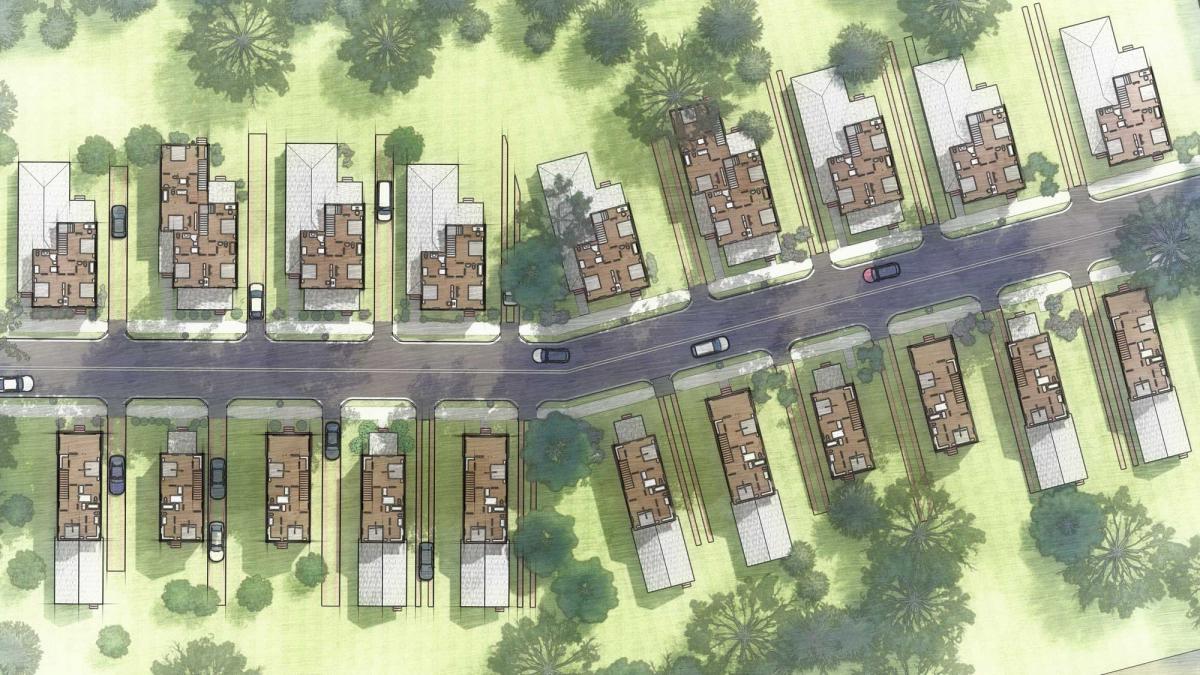
Like many states, Ohio is facing a housing shortage—in its case, more than 250,000 units. Home prices are 2.6 times median income, the highest level since 2005, before the Great Recession. At the same time, 71 county land banks hold thousands of parcels connected to existing infrastructure that are available for redevelopment.
The problem is that many infill parcels are constrained by zoning barriers and building costs. The toolkit offers a path for municipalities to overcome some of these issues and unlock the potential of infill sites. Infill sites alone will probably not solve the state’s housing supply problems, but they could make a substantial dent while offering opportunities for small local builders and housing organizations to create attainable living spaces, including through land banks. Marrying pre-approved building plans with targeted zoning reform could have a greater impact than either approach in isolation, especially in traditional cities. The zoning reform ideas were geared to supporting pre-approved plans throughout the state.
The two plans emerged from addressing the context of cities around the State. The front-back duplex is a particularly creative solution. Duplexes are typically side-by-side or stacked. This version looks like a single-family house and works on a typical urban lot, whether or not the site has an alley. Both units have a street entrance, but the back unit’s is unobtrusive, set off to the side. Both houses have access to a rear yard for privacy. A small soundproof wall area is required between the two units. This allows for the creation of two units on the same parcel, cutting land costs. In the case of a land-bank lot, it could double production at near-zero land outlay.
The narrow-lot house is designed for tight infill lots and fits most urban lots in the state’s legacy cities. The creation of these house plans is designed to spur full pre-approved house plan programs—like a starter kit for cities. It’s one thing to explain how such programs work; it’s another to jump-start them with state-specific plans.
Since its launch in 2025, the toolkit has generated interest without a marketing budget: more than 700 plan downloads, with representatives from 23 municipalities among the users, according to the authors. A modular housing construction factory is preparing the narrow house plan for production, they report. One county land bank issued an RFP to produce a pattern book. The “community of practice” is exploring pre-approved plans. “This model of structured cohorts advancing together rather than isolated jurisdictions waiting for consultant capacity should be applied to other policy innovations where implementation knowledge is scarce,” the authors state.
Attempts to redirect development to the core often involve some kind of disincentive to sprawl—e.g., greenbelts, agricultural land preservation, low-density zoning. “This project takes the opposite approach: rather than penalizing peripheral development, it reduces the friction of building inward. The logic is that infill fails not because developers prefer greenfields, but because small urban lots carry disproportionate soft costs and regulatory complexity,” they explain.
The project emerged from a partnership between a statewide trade association and a policy research organization, with technical guidance from urban design and planning consultants specializing in form-based codes and pattern books, the authors note. A multi-sector advisory committee included builders, housing advocates, architects, planners, elected officials, and land bank leaders. The committee vetted every zoning recommendation and reviewed architectural designs through multiple iterations, ensuring the toolkit reflects both professional standards and market realities.