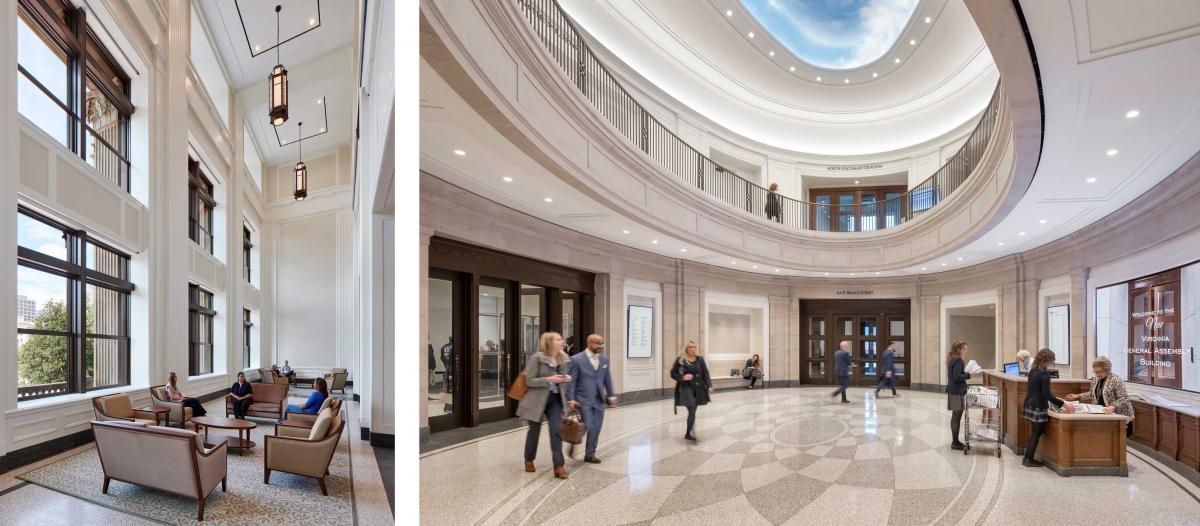
Traditional design enhances the public realm


The recent General Assembly Building (GAB) in Richmond, Virginia, is a great example of the unique work of Robert A.M. Stern, the influential traditional architect who died Thanksgiving Day. The Urban Guild recognized the building, located on Richmond’s historic Capitol Square, for Design Excellence in the Civic category. The award went to Glavé & Homes, responsible for the architectural interiors of floors 4 through 14, with Robert A.M. Stern Architects (RAMSA), the lead architect.
As RAMSA described, the new building replaces “an existing jumble of buildings cobbled together over time” on the northwest corner of the square, which surrounds Thomas Jefferson’s Virginia statehouse in downtown Richmond. “Two historic facades of the Life Insurance Company of Virginia building (Clinton & Russell, 1912) are preserved and integrated into the new building; our design carries cornice and datum lines from the historic facades across the new facades,” RAMSA reports.
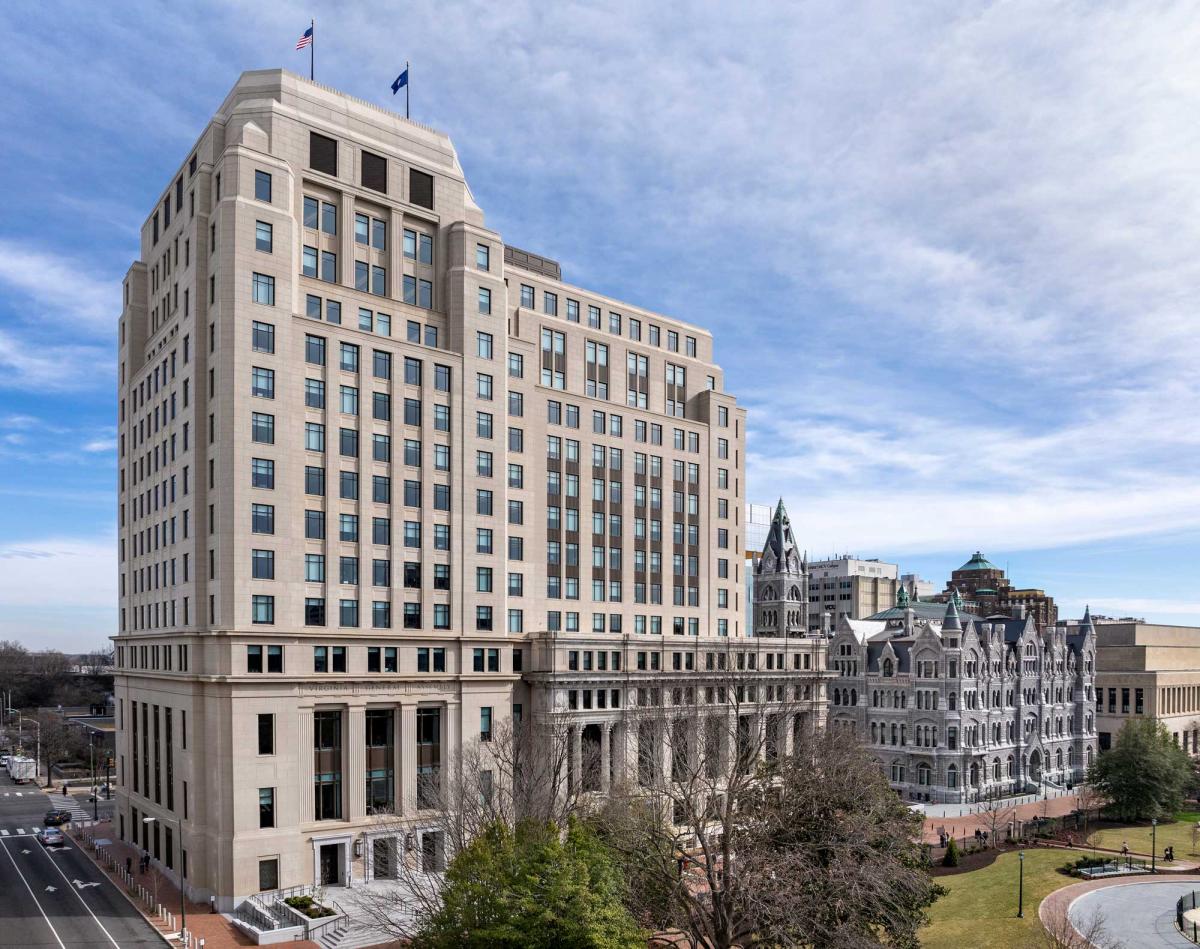
The building is typical of many RAMSA designs, inspired by Art Deco precedents in Richmond. Another major influence is the classical façade that was integrated into the GAB, says Andrew Moore of Glavé & Homes. “So, I would characterize the lower levels as stripped classicism aligned to the preserved façade and the tower floors as art deco-leaning.”
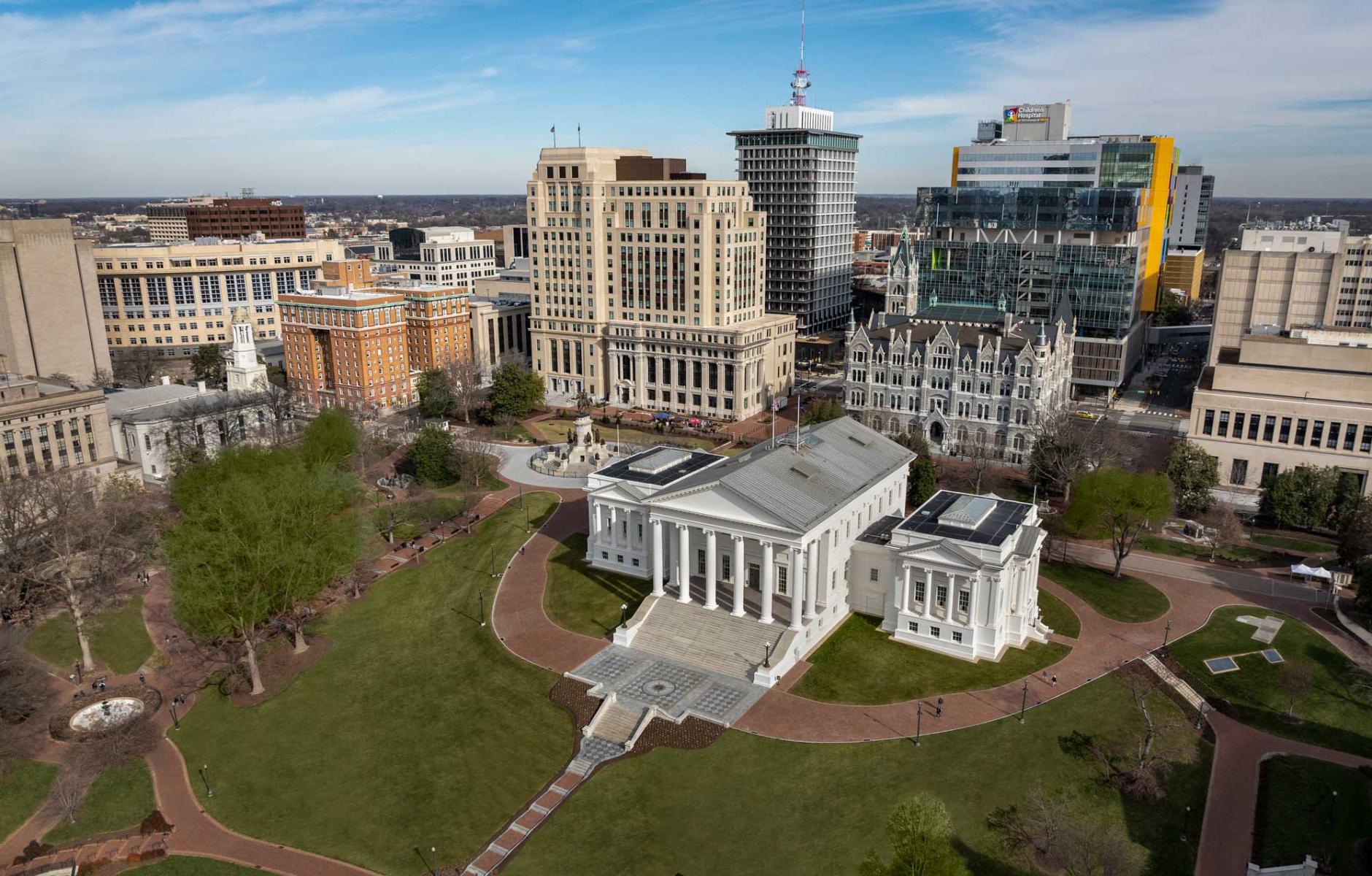
The building is the first purpose-built home for the General Assembly since Jefferson’s Capitol, shown in the foreground. Designed to support the work of 140 legislators and their staff, the building includes individual offices, public meeting rooms, committee spaces, a cafeteria, and essential administrative functions, the Urban Guild notes. Designed to meet the complex needs of modern governance, the building also reflects the Commonwealth’s commitment to environmental responsibility. The project is on track to achieve LEED Gold certification, incorporating sustainable strategies that ensure long-term performance.
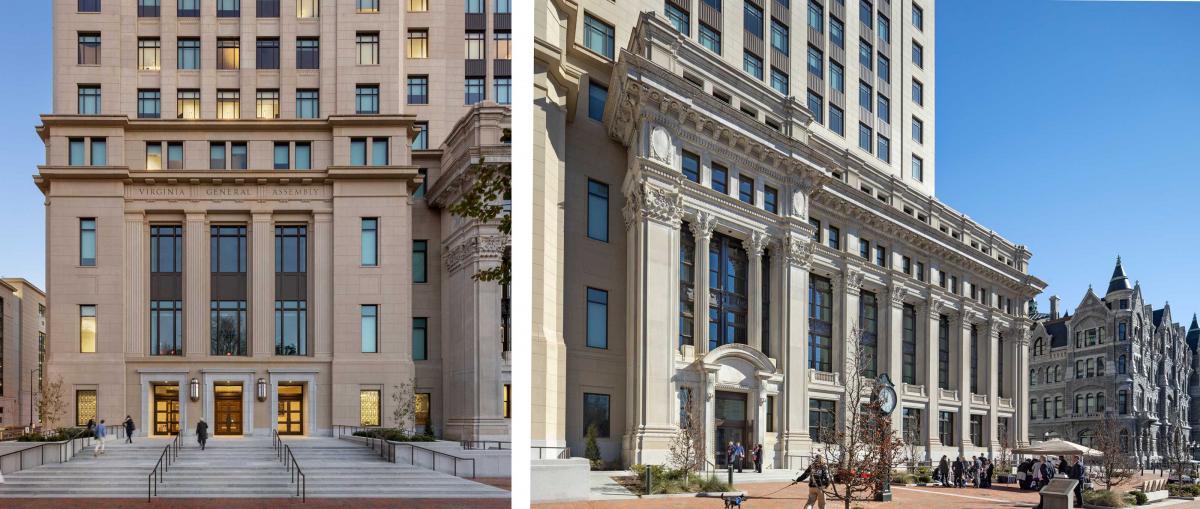
Completed in 2023, the building looks like it could have occupied the site for a century or more. Its solid façade is dominated by ;masonry rather than glass, creating a strong boundary for the public space. The first-floor frontage is engaging to pedestrians, particularly the steps leading to the main entrance and a plaza on the street. In other words, the architecture enhances the urbanism of a site that is historically important.
RAMSA was the design lead and responsible for the exterior and interior of the public spaces. Glavé & Homes was the local partner and responsible for the interior architecture and design of the tower floors—General Assembly member offices, staff support offices, and smaller assembly spaces (e.g. subcommittee rooms).