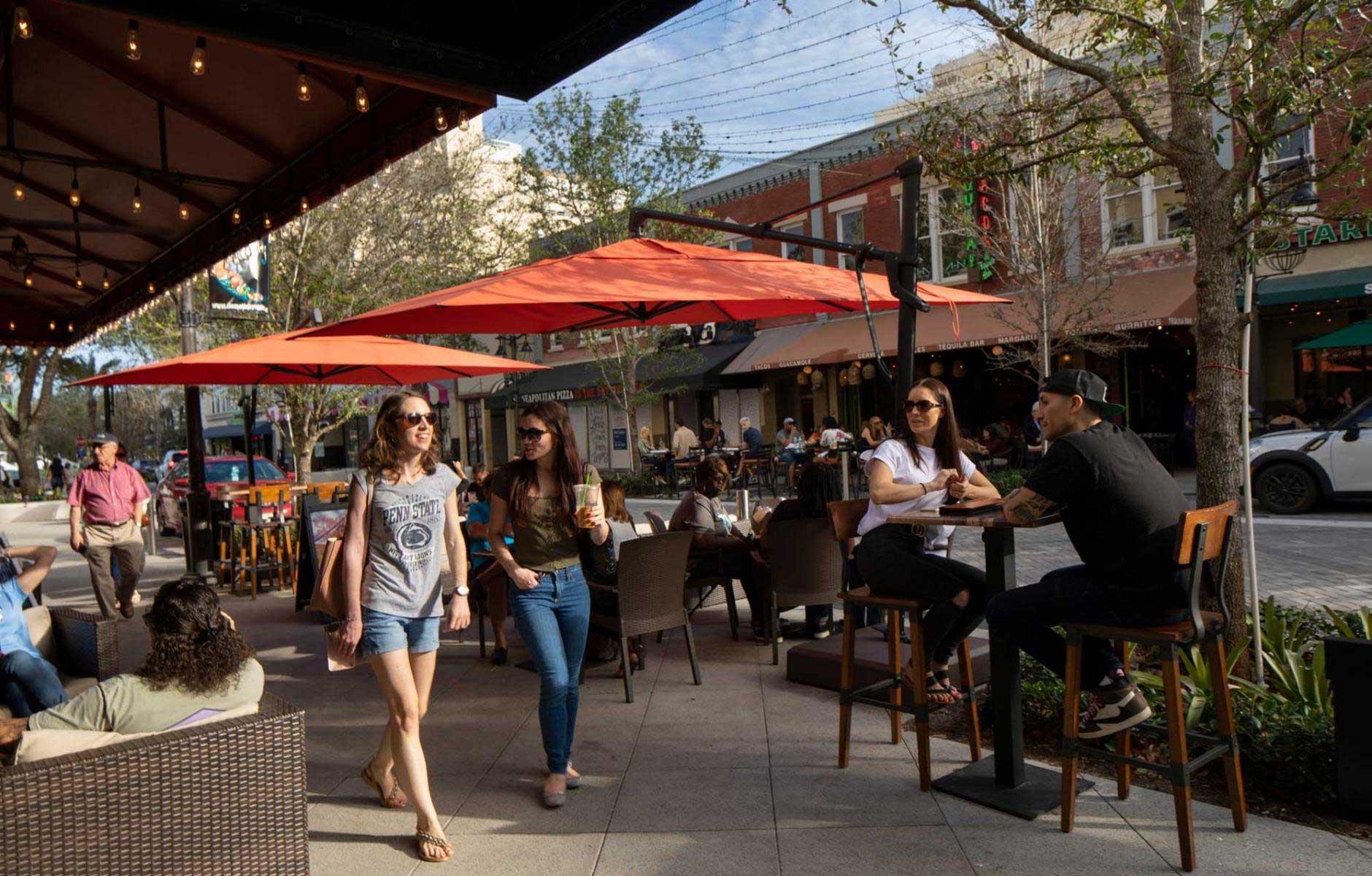
Walkability in high demand, Realtors say


A large majority of homebuyers are willing to pay a premium for living in walkable neighborhoods, according to a survey of the National Association of Realtors, Realtor.com reported. “Americans are prioritizing walkability in a way they haven't since the pre-Henry Ford era,” the home-buying website states. Seventy-nine percent of respondents rate walkability as important, while 78 percent say they would be willing to pay more for this feature. That figure goes way up with younger buyers. “A whopping 90 percent of Gen Z and millennial respondents said they’d pay more for a home in a walkable community; with a third saying they’d ‘pay a lot more.’ ”
Howard Hanna, CEO of the national Howard Hanna Real Estate Services, says that buyers will pay 10-20 percent more for what he calls a “step out and go” lifestyle. New Urbanist planner Mike Hathorne told Realtor.com that “these aren’t passing preferences—they are signs of a generational pivot.”
The homebuying market has long been willing to pay a premium for walkability—especially since this quality is undersupplied. However, I have never seen numbers this high.
In other housing news, Oregon has written a new model code that cities must adopt (or a local version that is not less restrictive) into their zoning and land division ordinances and comprehensive plans, as required by state legislation. The code “will re-legalize three-to four-story apartments buildings, especially on smaller parcels in neighborhoods served by water and sewer, according to the Sightline Institute.
“The system will steer all of Oregon’s 58 largest cities, plus those in tourism-heavy Tillamook County, to gradually make their local zoning codes no more restrictive than the state’s. But the state standards will essentially become mandatory for cities flagged by the state for permitting fewer total homes, and/or fewer affordable homes, relative to their economic and/or geographic peer cities,” Sightline reports.
The code also “includes generous density and FAR bonuses for long-term, income-restricted cooperative housing (limited-equity, shared-equity, community-land trust and co-op models),” according to planner Garlynn Woodsong of Woodsong Associates, based in Portland.
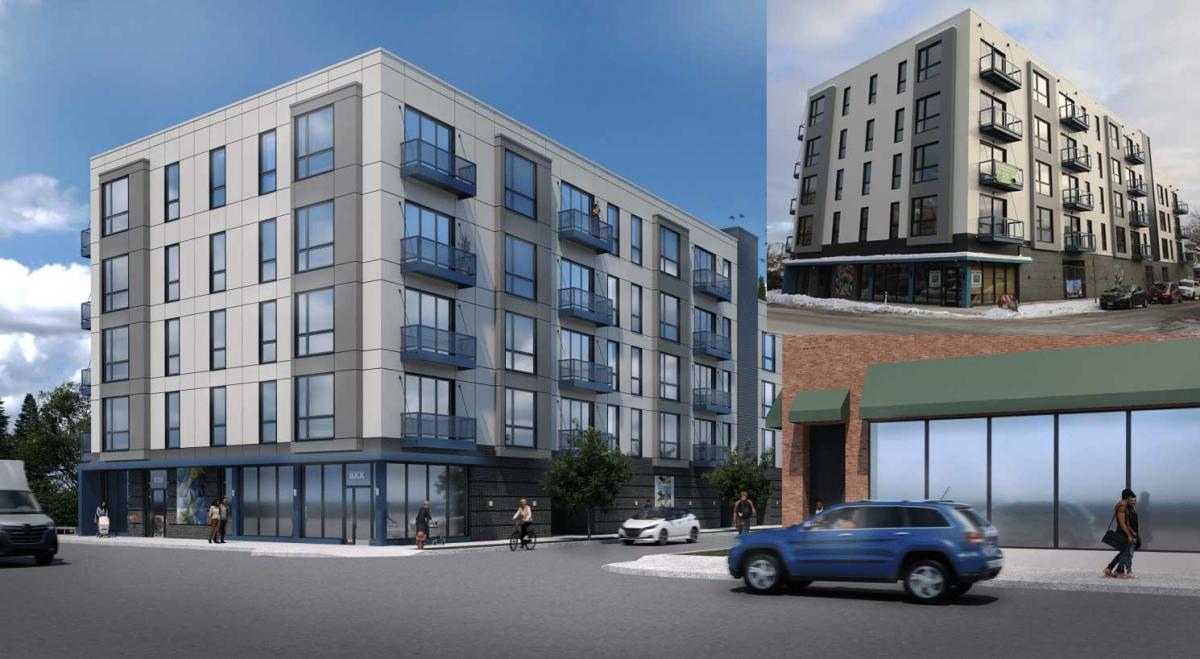
Near Chicago, residents are ready to move into an “urban cohousing” development. The Oak Park Commons Cohousing is being built in the dense, first-ring suburb of Oak Park, about five miles west of The Loop. “Our building is built with the very best ‘green’ materials we could afford and our location is excellent for daily living without the need for a car, as many daily necessities are within walking or biking distance, including a hospital,” notes Sheila Flaherty, who is in charge of membership and marketing for the organization. “Train stations to the city of Chicago and to the suburbs are also within walking distance.”
The cohousing model was initially applied in the US to more rural/suburban locations. In Oak Park, it takes a more urban form—a building of adjoining apartments that share common spaces intentionally designed to encourage social interaction. Shared spaces include a common room, quiet room, children’s room, exercise room, and expansive roof garden with tables for eating. Members will be moving into the new building soon, Flaherty notes.
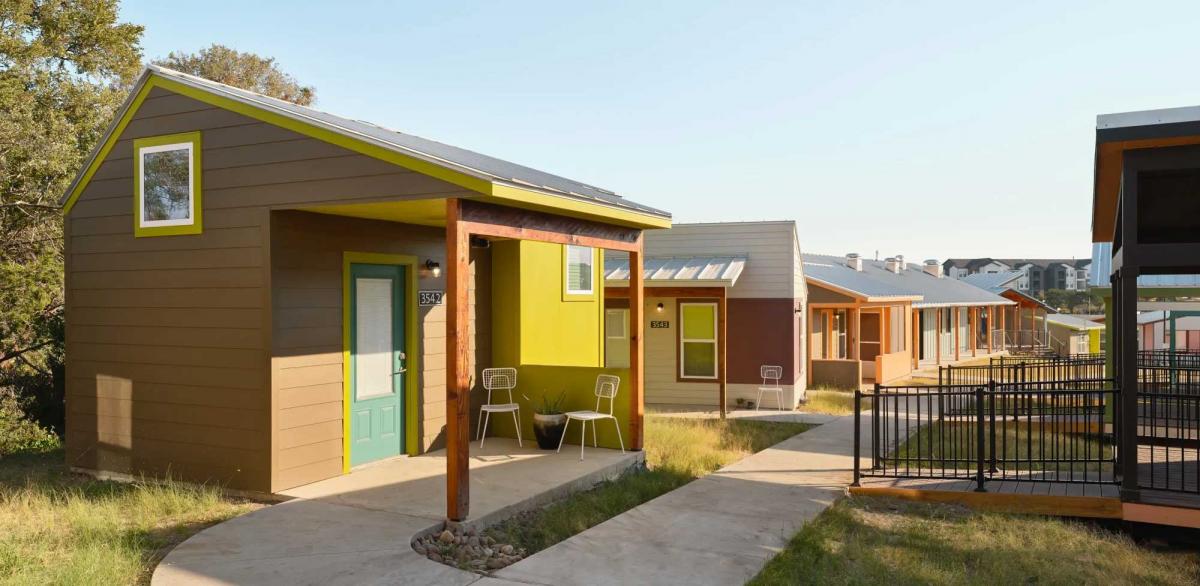
One of the largest communities for formerly homeless people is being built in Austin, Texas. The Community First! village is already home to more than 400 men and women who previously lived on the streets. A new expansion is designed with 600 “microhomes” ranging from 144 to 200 square feet, according to a report in Architect Magazine. The architect, Mark Odom Studio, partnered with the nonprofit developer, Mobile Loaves and Fishes.
The six models are cute—all with small porches—although not traditional in design. The units are arranged for social interaction, although three of the designs are built with outdoor spaces designed for residents who prefer more privacy.
The village has a large community building as a gathering space, in addition to community gardens and public spaces. It is located about five miles east of downtown—not a walkable neighborhood.