Suburb has a chance to build downtown


A new Bus Rapid Transit (BRT) system called Metro Express opened last fall, connecting Homestead, FL, to Miami’s Metrorail system and creating the potential for transit-oriented development in the rapidly growing suburb of 83,000 people.
Due to the area's growth history, Homestead has a significant opportunity to create a new mixed-use downtown. The city has grown by 260 percent since 2000, but a 245-acre downtown area with a street grid remains largely underdeveloped beyond Krome Avenue, the main street. A Google search shows a predominance of green, empty parcels and parking lots throughout much of the area.
In 2024, a charrette led by Valle Valle & Partners, sponsored by citizens of Homestead, showed the remarkable potential for the downtown. The 15-minute-city downtown redevelopment plan won an Award of Excellence from Florida chapter of the American Planning Association. The plan emphasized collaboration between the community members, stakeholders, and local leadership, Valle Valley & Partners notes.
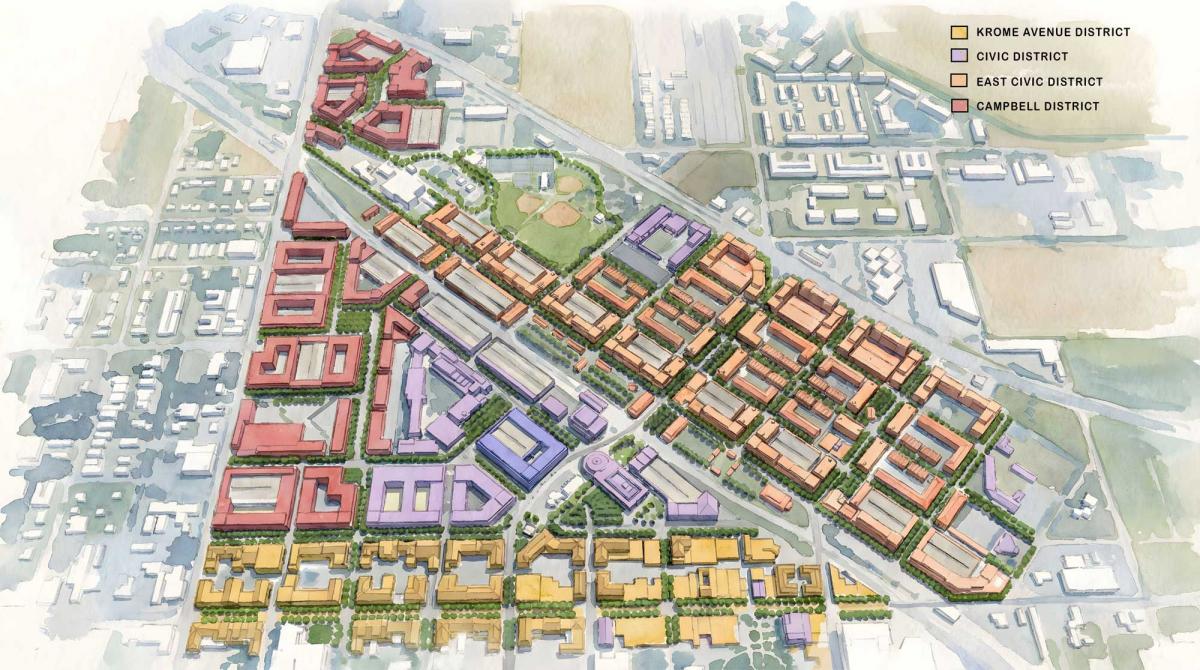
“The study area is organized into four distinct districts, each characterized by its own intensity and development pattern,” the firm says. “Housing options range from townhomes to multifamily apartments, offering a diverse mix of residential choices. Building heights are capped at six stories across the area, with select districts limited to three stories to maintain a human-scaled environment. The overall proposed density averages 20 units per acre, yielding approximately 4,900 new residential units.”
The downtown plan has four neighborhoods in the triangular area, according to the project team:
- Civic Center: A vibrant cultural anchor, the Civic Center will feature museums, theaters, galleries, and open plazas that invite residents and visitors to gather, celebrate, and engage with the arts. Its public spaces will serve as the city’s “living room.”
- East Civic District: Positioned as a hub for medical research and innovation, this district will provide housing for medical professionals, researchers, and students.
- Campbell Drive District: This district blends residential living with commercial vitality. Large retail anchors sit alongside local shops, offering a mix of everyday conveniences and shopping experiences.
- Krome Avenue Downtown District: Anchoring the historic core, Krome Avenue will retain its small-town charm while becoming a vibrant destination for dining, entertainment, and cultural experiences.
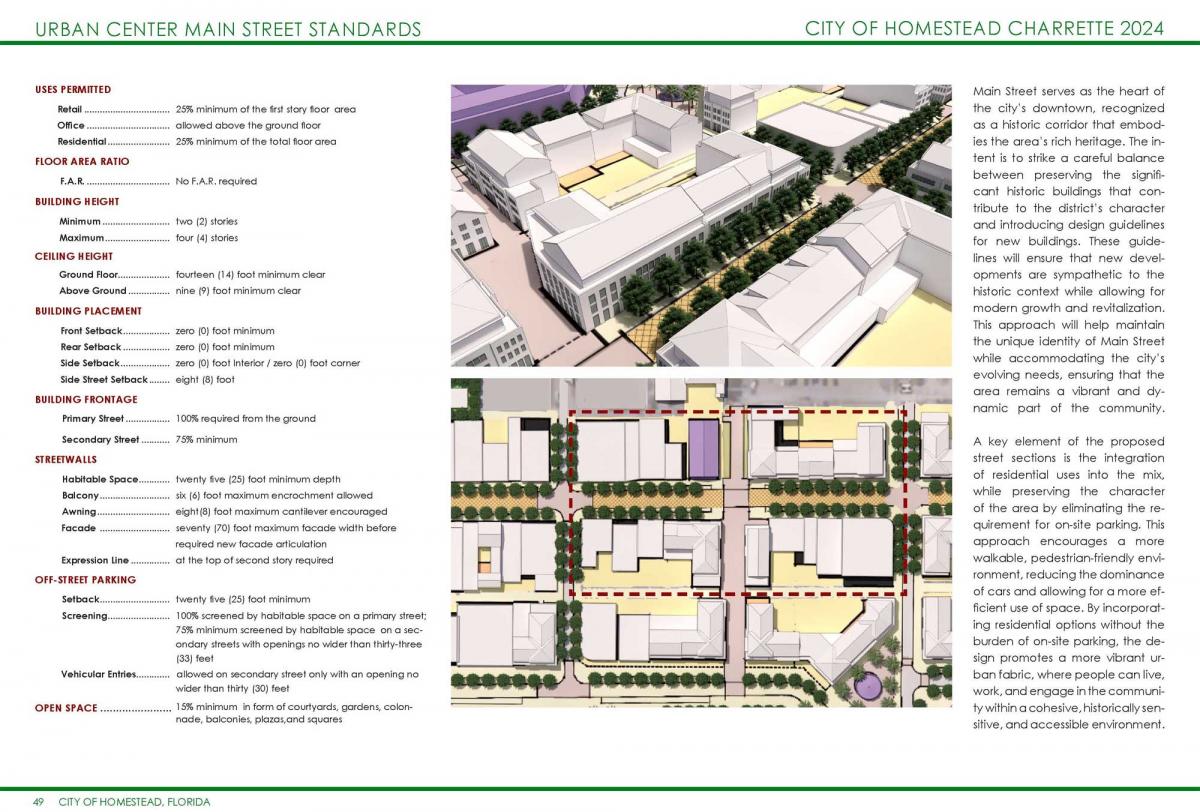
The East Civic and the Krome Avenue Downtown districts already have a strong block and street structure, but the team to the Civic Center and the Campbell Drive districts to make them more walkable and urban. The site has a large park, J.D. Redd Park, that is retained, in addition to the Miami-Dade College Homestead Campus. Because streets are so important to the plan, the team developed street standards. This is important because the streets today lack walkable urban detailing, like trees for shade and generous sidewalks. The adjacent properties in the area are often lined by blank walls, parking lots, or just vacant lots.
The site’s key attribute for making a lively downtown possible is the amount of underutilized frontage on the existing blocks, in addition to the new blocks that are created.
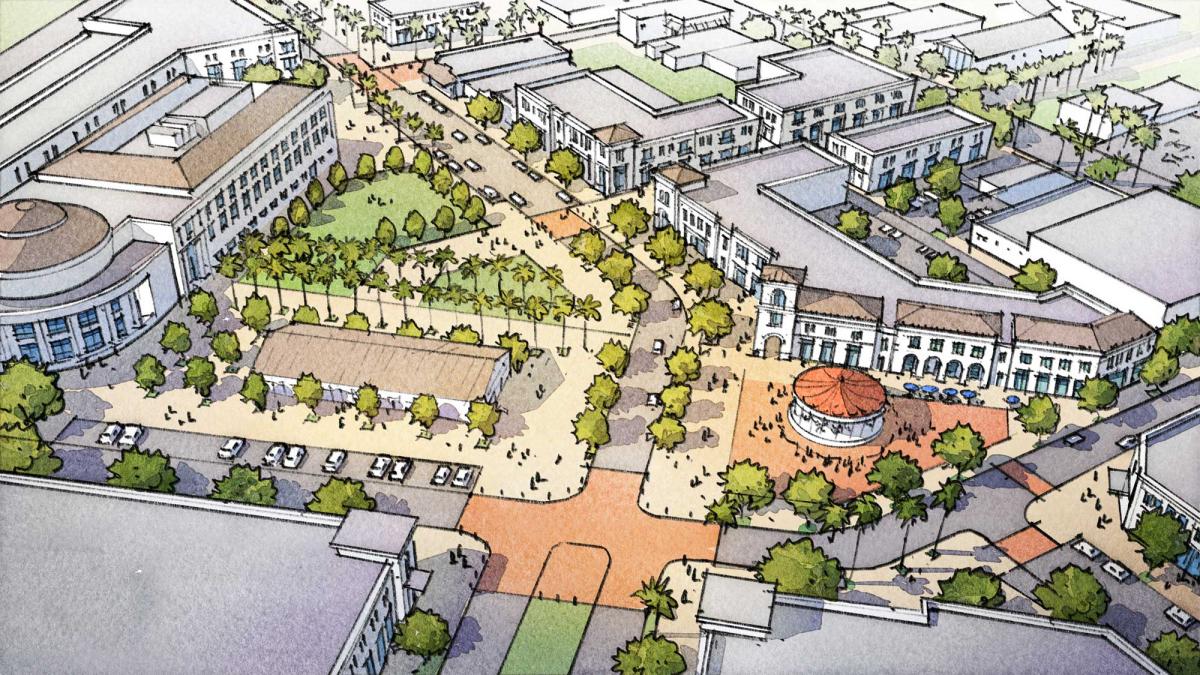
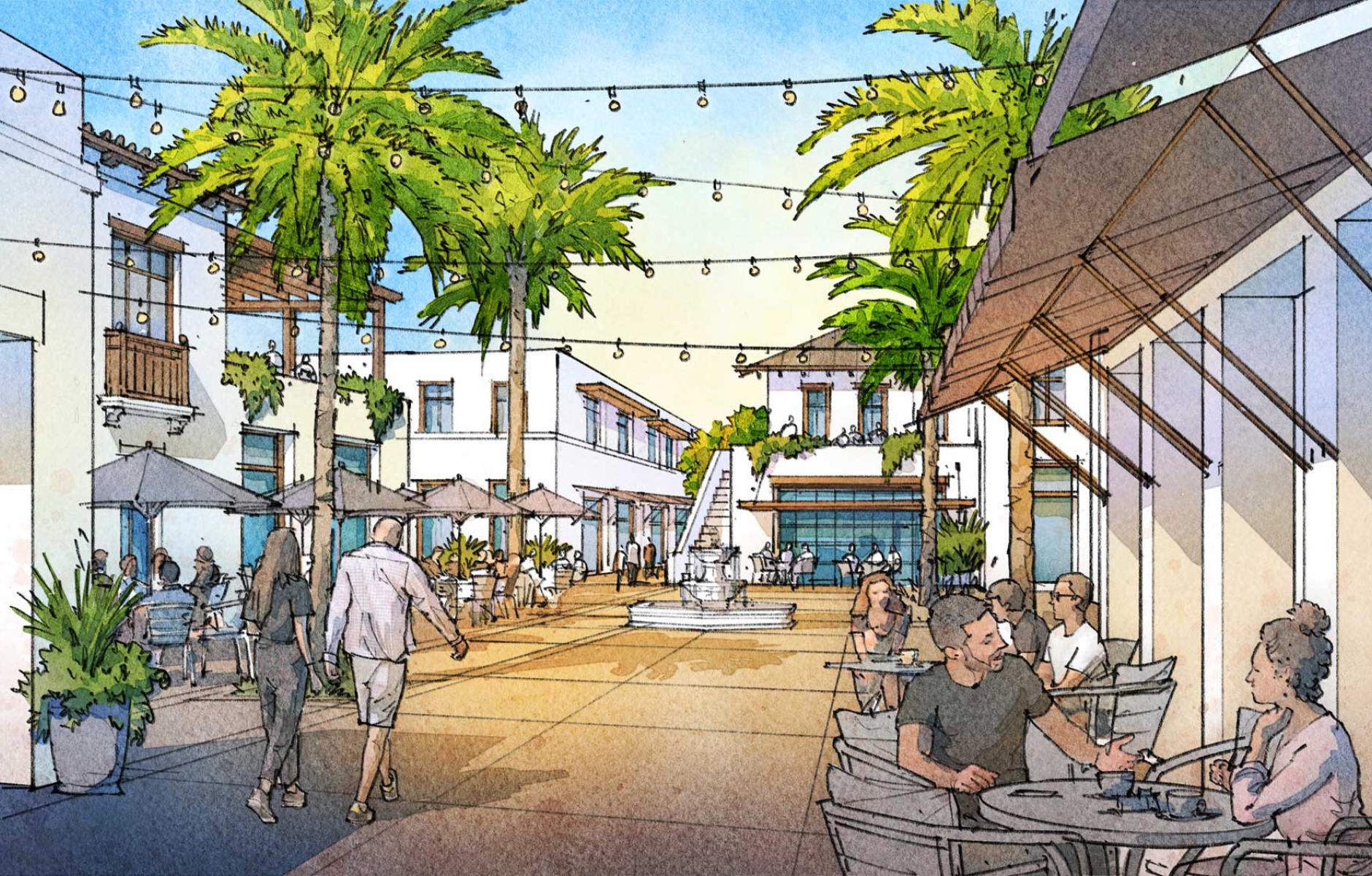
The renderings of the public spaces look really appealing. With the exception of Krome Avenue, the main street, no place in the downtown area is currently very pleasant. The renderings allow citizens to picture themselves in new public spaces that look attractive, enabled by infill growth that doesn’t use up surrounding farmland.
The Downtown plan envisions a true urban center for Homestead, a growing mid-sized city, with strong employment, cultural centers and attractions, civic structures, and nearly 5,000 new residents.