Walkability in high demand


Walkability is a high priority for American homebuyers, according to the National Association of Realtors (NAR)—and this is driving up prices in walkable neighborhoods. In a survey of 2,000 residents in America’s 50 largest metropolitan areas, nearly two-thirds (63 percent) say they would be willing to pay more to live in a community where they could easily walk to parks, shops, and restaurants. When presented with a choice between a larger home site requiring more driving and a smaller lot in a walkable neighborhood, 59 percent preferred the walkable option.
These two findings, taken together—a willingness to pay more and accept a smaller lot trade-off for walkability—indicate a strong market for walkable neighborhoods, NAR states in the National Smart Growth Frequencies survey.
The survey also indicates that residents may have different interpretations of walkability. About two-thirds (65 percent) strongly or somewhat agree that “There are lots of places to walk nearby, such as shops, cafes, and restaurants” where they live. So, a majority of Americans say that they already live in a neighborhood that is at least somewhat walkable.
Walkability is somewhat subjective to Americans. Another recent survey, using more objective criteria, makes clear that few places in America are highly walkable. An analysis published in April shows that only 11 percent (one in nine) Americans live in a neighborhood with a Walk Score of 80 or higher, classified as “very walkable.” This research by SafeStreets involving 220,000 census blocks across the US reveals that very walkable neighborhoods (80 or higher Walk Score) carry a substantial premium: Highly walkable census blocks have a “median home-value-to-income ratio of 5.98, versus 3.40 elsewhere, a 76 percent premium.”
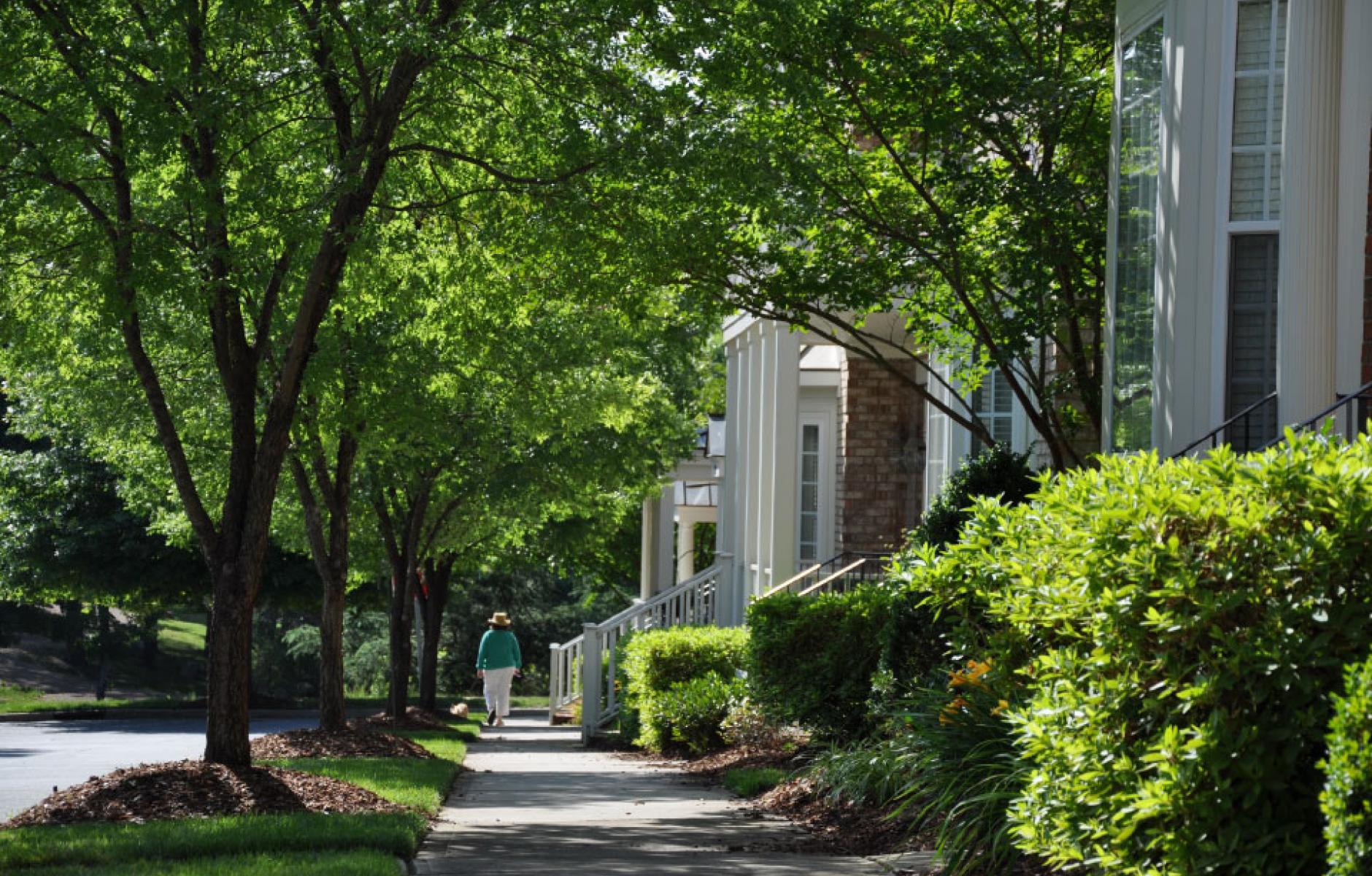
A Walk Score of 80 or higher aligns more closely with what New Urbanists have in mind when talking about a “walkable neighborhood.” Most of these neighborhoods feature a highly connected network of streets and blocks, nearby destinations like shops, cafes, schools, and parks, and likely have streetscape amenities like street trees. The substantial premium clearly demonstrates a shortage of such neighborhoods compared to the overall market.
Back to the NAR survey:
Walkability remains a top priority for homebuyers and residents, NAR reports.
- 89% say sidewalks and places to walk are important when deciding where to live.
- 82% say that being within an easy walk of shops and parks is important when deciding where to live.
- 74% say having a place to walk or exercise a pet is important.
- 71% say that the places they need to go are too far to walk.
- The weather (41%) and concerns about safety because of traffic (39%) are other major barriers to walking.
There is meaningful support for reducing driving trips through community design, NAR reports.
- 46% of respondents say it should be a high priority for local governments to make it easier to develop communities where people do not have to drive long distances to work or shop. 39% say it should be a middle priority.
- Only 15% of respondents think community design that reduces long drives should be a low priority. Support is strongest for practical housing solutions that expand choice.
- 63% say small-lot single-family homes are a good idea for their communities.
- 51% support townhomes, duplexes, and other attached housing options.