Prosperous main streets in the online era


The importance of main streets and small downtowns for walkable urban places was highlighted at the recent CNU 34 congress in Northwest Arkansas. One of the fastest-growing regions in the US, Northwest Arkansas is not centered on a single downtown but rather on a series of smaller downtowns that all have experienced a resurgence in recent years.
Smaller towns in the region also have main streets that can create walkable centers in suburban and rural areas. Ongoing planning is looking to expand these mixed-use centers to improve walkable living options as the market continues to grow.
Main streets, new and historic, are key to creating and reinvesting in walkable places. A growing body of research demonstrates the social, health, and economic benefits of main streets. And yet empty storefronts and the rise of e-commerce raise questions: Are main streets the future? Doesn’t that belong to e-commerce, which surged in popularity during Covid lockdowns? Aren’t stores closing on our main streets and in our downtowns?
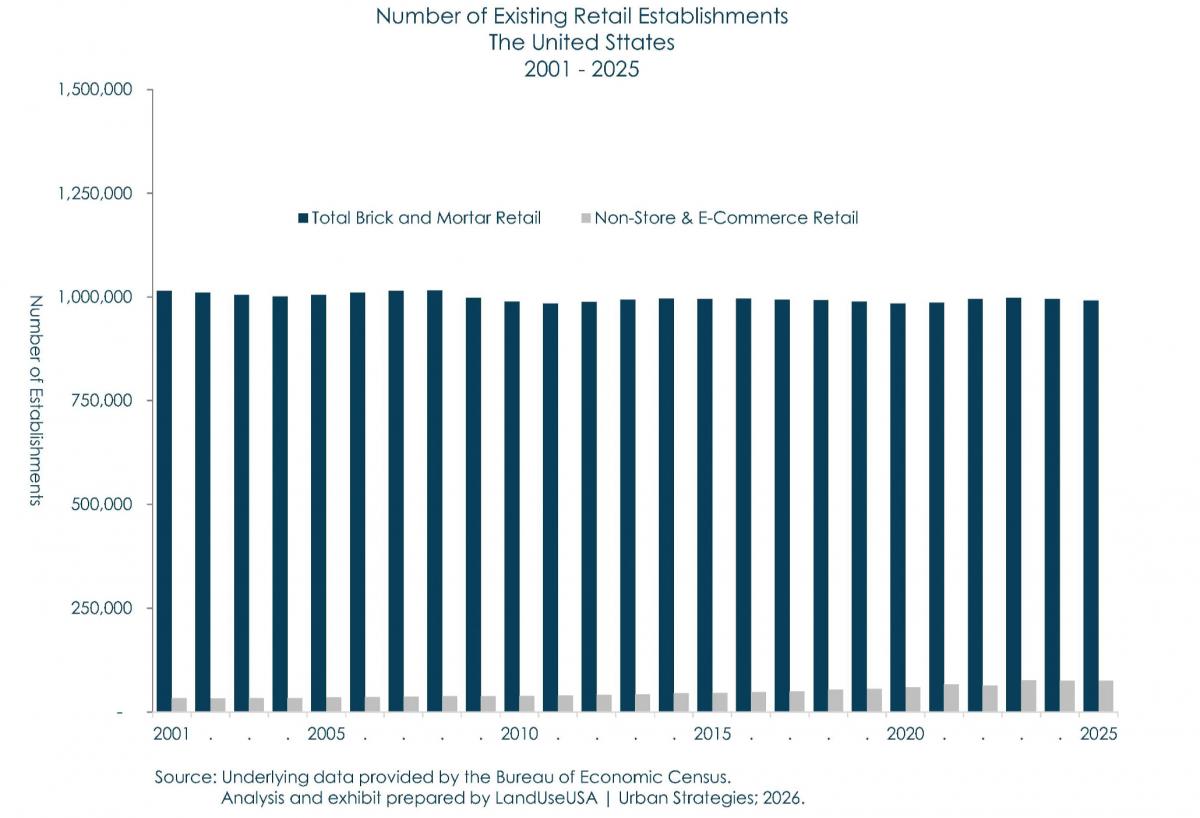
In the current retail landscape, many obsolete, outdated, redundant, retail formats and national chains have been rebranding, contracting, and right-sizing—and others have been closing altogether or are being redeveloped as mixed-use. However, for every chain store that closes, a smaller chain store or merchant opens. Plus, at least one new restaurant, eatery, specialty food store (like a butcher, baker, or cake-maker), or drinking establishment (like a microbrewery, brew pub, winery, or martini bar) also opens. As a result, the total number of retail and restaurant establishments is actually increasing (see graph above). The replacements tend to be smaller, but they are more likely to appeal to the lifestyle preferences of urban and pedestrian shoppers.
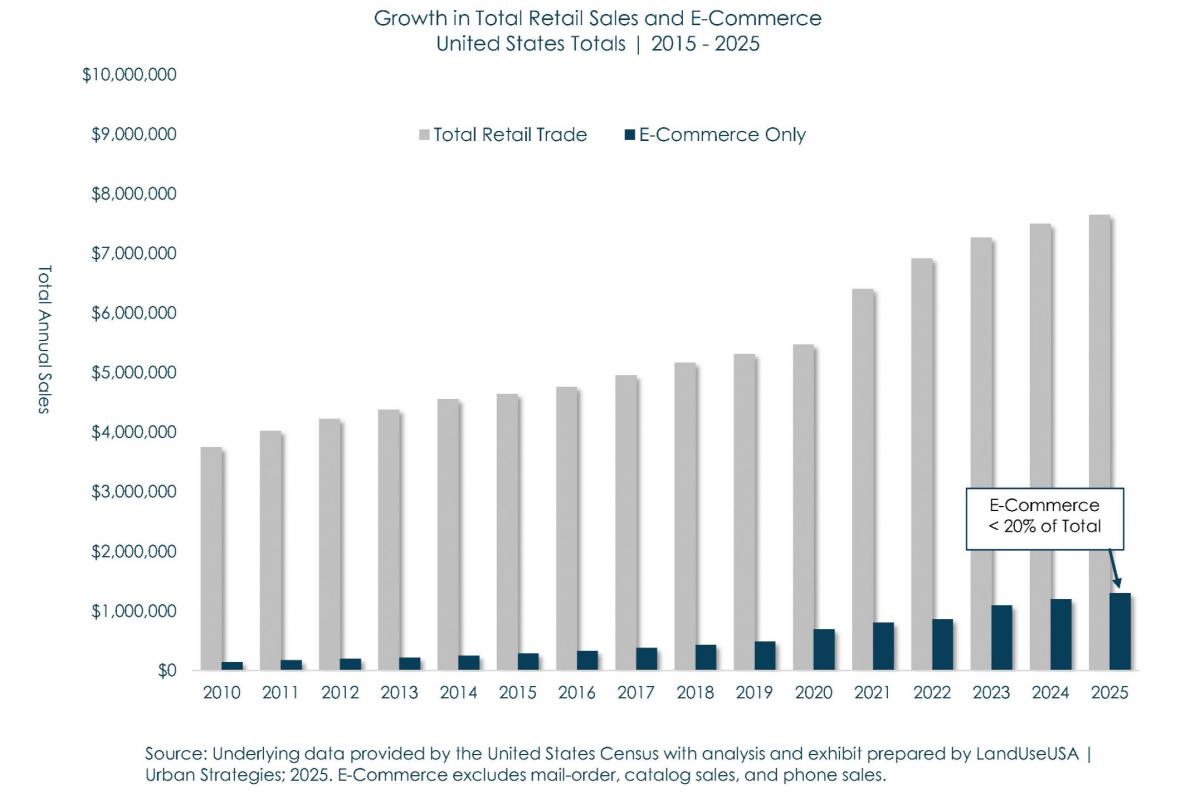
E-commerce, mail order houses, and other non-store businesses are shown in the figure above. E-commerce represented less than 5 percent of retail sales through the 1990s and now is approaching 20 percent. The growth rate of e-commerce is now slowing and should plateau at about 30 percent of retail sales over the next few decades. Meanwhile, real brick-and-mortar stores are here to stay, and there can be a substantial “halo effect” for merchants who effectively leverage e-commerce to boost sales by growing their following of loyal shoppers.
In other words, it is absolutely safe to make a long-term investment in our downtowns and main streets—especially in communities that are benefiting from additional investment, such as improved infrastructure and new housing options. So, what strategies are helping downtowns and main streets be successful as retail and shopping destinations?
Location and design
When designing main streets and small downtowns, it is important to carefully locate and orient buildings and storefronts to maximize visibility for prospective shoppers. This can be best achieved by implementing a combination of the following strategies:
- Whenever possible, neighborhood retail should be located at intersections that help connect neighborhoods. For example, one retail node can effectively serve and connect four adjacent neighborhoods, which creates more opportunities for social interaction. In addition, a shared corner store also could serve those connected neighborhoods.
- Within downtowns and main streets, the retail should not be buried in the center of the project, where it is invisible to drive-by traffic. Instead, the retail components should be integrated into the gateway or entrance into the new town center. This will help the local merchants attract shoppers from a larger geographic trade area, which in turn will optimize sales, revenues, and rents.
- Main streets and pedestrian shopping shouldn’t be turned perpendicular to the main thoroughfare unless no other solutions can be found to manage traffic speeds and ensure pedestrian safety. Whenever possible, slip streets, boulevards, bump-outs, on-street parking, and other road diets and traffic-calming strategies should be used to maximize retail exposures to drive-by traffic while also addressing pedestrian safety.
- Along the main streets, the corner parcels with traffic in all four directions will be premier locations for anchor stores. Mid-block parcels with visibility to traffic in two directions are secondary locations; and locations along one-way streets will be at a significant disadvantage. If visibility is obscured by large or overgrown trees, protruding structures, or inadequate illumination, then the location will be further compromised.
- The depths of retail spaces can vary depending on the setting, building, format, and lot size. Liner buildings as shallow as 24 feet have been used effectively to hide a parking lot, for example.
- Small downtowns generally are not designed to accommodate big-box retailers. Even so, big-box corporations are getting better at designing multi-level urban building formats and smaller store prototypes that can be more easily integrated into urban places. If big-box and medium-sized national chains become anchors, then any blank walls or parking decks should be lined with small merchant spaces.
Discovery businesses
What are the kinds of businesses that make for a successful main street in 2026? Every town center should ideally have three essential anchors in the core— specifically grocery, pharmacy, and hardware stores. They can be right-sized at 2,000 to 6,000 square feet, which is much smaller than a typical Kroger supermarket (45,000 square feet) and even smaller than a typical CVS pharmacy (14,000 square feet).
Retail, restaurants, and brick-and-mortar types of entertainment venues should be intentionally clustered together. They should not be fragmented or scattered along the main street, or interrupted by non-retail types of services, offices, and civic buildings. Successful retailers and merchants will offer consumers opportunities to discover new merchandise, enjoy an experience that engages all of the senses, and feel socially connected with other shoppers and the local community. These strategies will provide the best shopping experience while also helping the smaller merchants leverage the synergistic benefits of cross-shopping and critical mass.
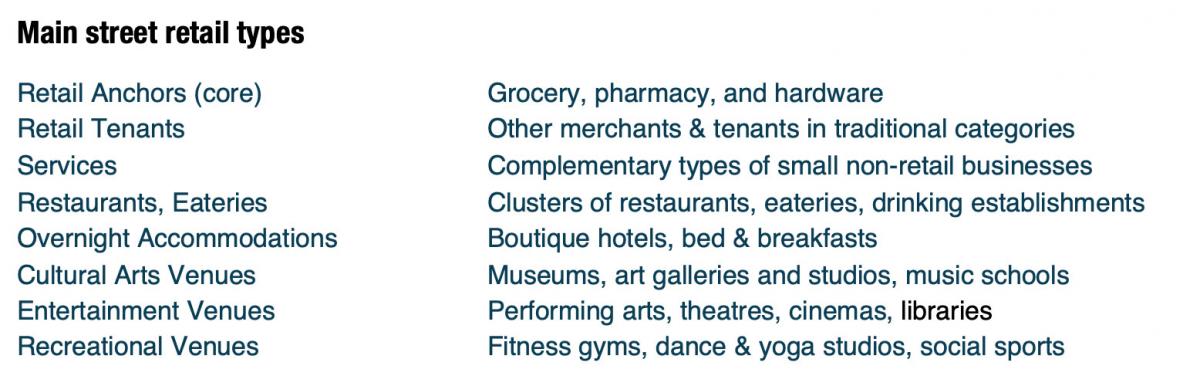
Whenever possible, the primary street fronts along main streets should be reserved for merchants, retailers, restaurants, and complementary independent entrepreneurs and small businesses. Complementary uses can enhance the environment and provide additional opportunities for discovery and social interaction. A classic example is barber shops, which have a rich history as being the go-to place for neighborhood news and gossip.
Current-day examples of complementary small businesses include opticians offering fashion eyewear; brokerage offices selling houses; salons and image consultants specializing in hair, nails, inking, and piercing; fitness centers with yoga, dance, and martial arts studios; marketing services offering printing, signs, banners, and team sports apparel; music recording studios; and cafés connected to co-working spaces.
In comparison, non-discovery businesses such as insurance agents, title companies, medical practitioners (other than optical), and attorneys can disrupt the retail environment and the shopping experience. Therefore, they should be located along perpendicular and side streets whenever possible; and retail spaces with frontage onto main street should be reserved for merchants and retailers.
In summary, retail is here to stay, is an integral ingredient to the success of traditional downtown and main streets, and should be thoughtfully and carefully integrated into the planning of new town centers. By following the strategies outlined above, a retail node can serve as the heart of the community. It can and should be effectively used not only to provide essential shopping choices but also to help residents, visitors, and shoppers feel socially connected and fulfilled.