The hard work of New Urbanism, on the ground in Northwest Arkansas


New Urbanism has shown that it can produce better streets, neighborhoods, and civic places. The harder question is whether it can shape growth at the regional scale in ways that give great places a fighting chance; something felt acutely across the Northwest Arkansas region. If New Urbanism is to matter in the decades ahead, it must show that its principles can shape regional growth patterns, not just improve isolated sites. Project-level successes still count, but if the dominant pattern at the regional scale remains fiscally careless and diffuse, those successes will remain partial, however good they are individually. That is the real challenge before us, and Northwest Arkansas is one of the few places in America where we have a real chance to test solutions, validate what works, and build a model that the rest of the country can learn from.
This region is not being offered as a finished model. It is one of the fastest-growing regions in the country, and it is still being shaped. According to a January 2026 regional assessment prepared by DPZ CoDesign, Northwest Arkansas continues to grow quickly, with strong job creation, rising incomes, and sustained in-migration, but that growth is also generating mounting pressure on housing affordability, transportation, infrastructure, and land use. About 19 percent of the region's population moved in the past year, and the four largest cities are projected to absorb roughly half of all new regional residents by 2050, which means the strongest pressure is where infill and compact growth matter most.
It is worth being precise about what kind of growth we are talking about. Population growth and land consumption are not the same thing, and the difference matters enormously. A region can absorb significant numbers of new residents through infill, redevelopment, and compact neighborhood development without dramatically expanding its physical footprint. What Northwest Arkansas has experienced instead is growth in people accompanied by a nearly proportional expansion of developed land, with average residential density remaining largely constant over four decades. That gap shows how much land consumption exceeds what population growth alone would require. It is the signature of a development pattern shaped not by neutral market forces but by decades of infrastructure subsidy, zoning practice, and financing norms that have made dispersed, low-density expansion the path of least resistance. The market that produces this pattern is not a free market. It is a manipulated one, and understanding that is essential to changing it.
The problem is not outward growth itself. A polycentric pattern of growth, where expansion is tied to real urban structure, coherent infrastructure planning, and honest fiscal analysis showing it will pay its own way, is not the enemy. Fiscal urban conservatism is a useful frame: growth should be judged not by its pace or its political popularity but by whether it is solvent and responsible over the long term. And when growth is directed with that kind of intention, rural landscapes and small towns are among the primary beneficiaries. Farmland is preserved, rural character is protected, and small towns retain their identity rather than being absorbed into an undifferentiated suburban fringe. The tension between growth and rural preservation becomes more navigable when growth is guided rather than simply allowed, and the people who care most about keeping the countryside rural often share more common ground with urbanists than either side expects.
The Charter has always pointed beyond the individual project, treating metropolitan regions as the fundamental unit and calling for the kinds of discipline that most regional growth systems still lack: clear edges between urban and rural landscapes, infill and redevelopment prioritized over peripheral expansion, and transportation and land use aligned rather than working against each other. Those are governance principles as much as design principles, and they are where the real outcomes are decided.
We in this movement are often at our best when shaping the artifact: the block, the building, the civic space, the street. That work matters, but the harder task is the governing apparatus, the zoning map, the infrastructure extension policy, the subdivision code, the corridor plan, the development finance structure, and the regional institution that does or does not have the authority to align any of it. The apparatus is less visible and less legible than the artifact, but it is precisely where growth patterns are decided.
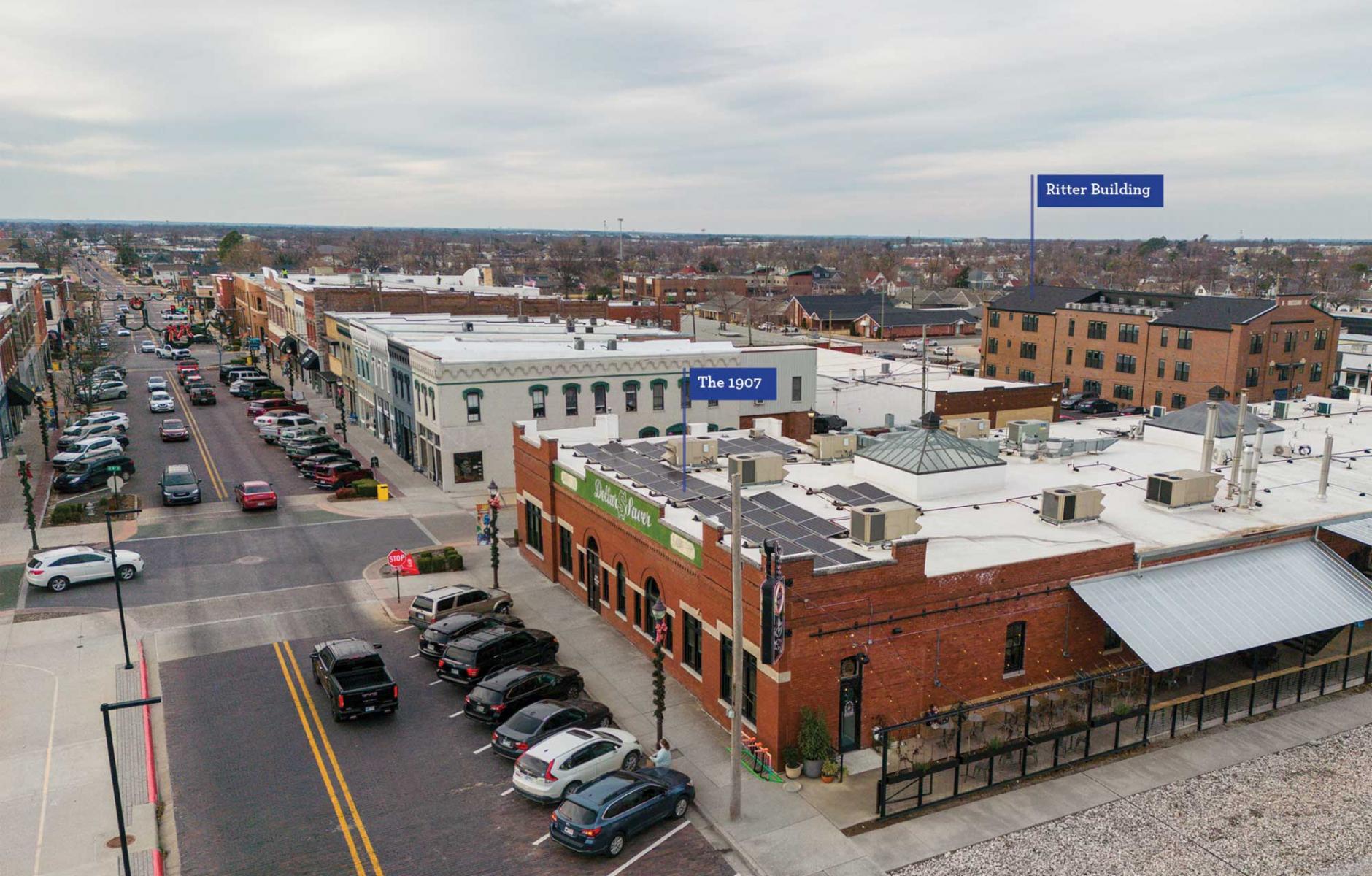
I have seen this firsthand. In my capacity as Director of Community Development for the city of Rogers, we replaced our use-based development code with a form-centric code that features ministerial approvals of compliant development, no parking minimums, complete street and public space requirements, no exclusionary zoning, and not a single mention of density management in any of its flavors. We stopped allowing annexations. We have seen real progress, and we will be glad to show you some of it. But even a city that reforms its code cannot solve a regional problem by itself. Finance, infrastructure extension decisions, and regional capacity matter just as much.
That is exactly why Northwest Arkansas is useful for this conversation. A 2025 regulatory analysis of Benton and Washington counties found that zoning across the region is misaligned with local goals, market demand, and infrastructure realities, with 75 percent of all residentially zoned land allowing only single-family detached development and only 9 percent of urban land permitting multifamily housing. When infill is difficult to permit, development pressure shifts outward, rural land is subdivided in response to demand that cities have not accommodated, and the resulting pattern fragments farmland, strains roads and utility systems, and raises long-term costs for local governments, all without any intentional decision to direct growth that way. It just happens when we allow it, and it is how fiscally unsustainable growth reproduces itself, not through malice but through a system of defaults that no one has been challenged to change. The regional assessment found that most cities in the region are already operating at roughly an 80 percent gap between what road maintenance requires and what is actually being spent. These are not design findings. They are fiscal ones, and they make the case for smarter growth in language that travels across political lines.
The governance dimension is harder to resolve. A white paper on regional capacity prepared as part of the ongoing Growing Home NWA strategy found that Northwest Arkansas has successfully elevated the quality of its built environment and civic culture, but that the institutional structures responsible for managing growth have not kept pace, leaving a growing mismatch between regional problems and regional authority. Transportation, housing, environmental systems, and infrastructure all operate at regional scale, but authority, funding, and accountability remain fragmented among municipalities and the state, and as the paper puts it, the middle layer where regional problems live remains largely unowned. That is not a condition unique to Northwest Arkansas. Most fast-growing American regions face the same gap.
What makes this region different is that the conversation is already happening here, and at an unusual level of sophistication. Matt Lambert, Principal at DPZ CoDesign and co-author of the forthcoming NWA Growth Study, put it plainly after touring the region: "There is no other place with nearly the level of awareness among mayors and staff. Shockingly so. We are all, together, battling a systemic barrier, in all its nuanced forms." That awareness is exactly the foundation this work requires, and it is why the original proposal that brought CNU to Northwest Arkansas called it a crossroads of opportunity and risk, framing regional growth management as the first legacy priority and grounding the work in the things that actually determine regional outcomes: land use, infrastructure alignment, rural preservation, and the coordination tools required to act across jurisdictions.
CNU 34 will not resolve these questions, and no single Congress can. But it can be a place where we engage them seriously, with practitioners working inside real systems in a region where the decisions are not yet made and the outcome is still worth fighting for.
In the end, this is why design matters. We are not talking about aesthetics for their own sake. We are arguing about the physical conditions that make community possible: places where people meet, recognize one another, and come to feel some measure of responsibility for each other. That is what great urbanism is actually for, and it is worth fighting for. But it depends on regional patterns that either give good design room to take hold or crowd it out with growth that is cheap, careless, and indifferent to long-term consequence. Northwest Arkansas is a place where those patterns are still being decided, and where the work is alive and real. We hope you will come engage in it with us.
CNU 34 will be held May 12-16 in Northwest Arkansas.