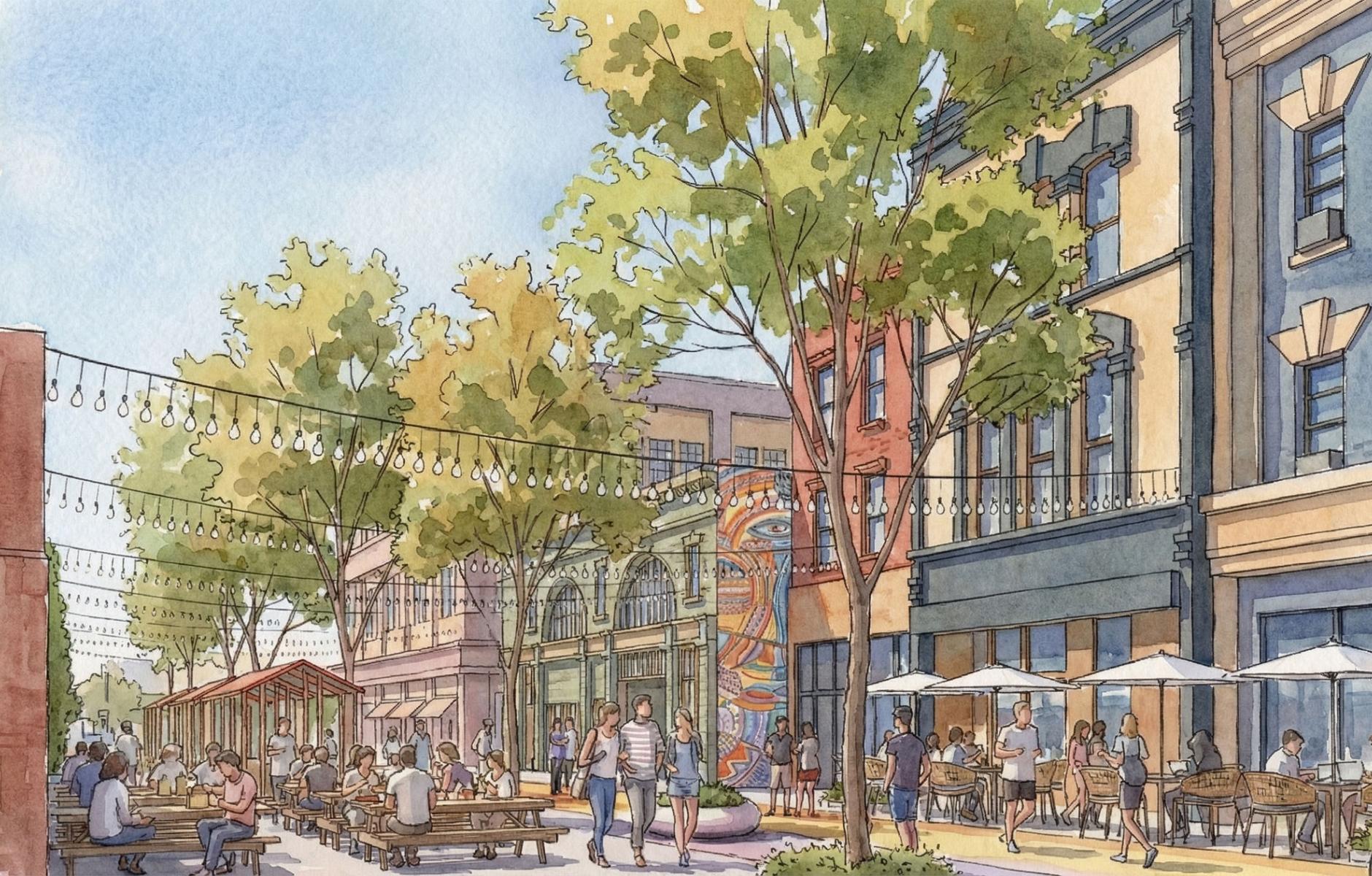
District transformation starts with streets, blocks


La Plaza District in Rogers, Arkansas, looks similar, in many ways, to a thousand other suburban commercial districts—situated at the crossroads of two arterial roads. Around the 8th and Walnut streets intersection are large strip malls—including one that used to house the nation’s first Walmart—big parking lots, outbuildings, and other automobile-oriented development.
The District includes unique ethnic businesses, such as Supermercado La Vallita, a Latino supermarket (Rogers is one-third Hispanic/Latino). It also has a Walmart Neighborhood Market and a sprawling Walmart administrative building that is used for storage (Walmart’s international headquarters is located just a few miles away in Bentonville).
La Plaza District is less than a half mile from downtown Rogers, the walkable heart of this fast-growing city in Northwest Arkansas. Poplar Street, recently redesigned with bike lanes and pedestrian facilities, connects the district to downtown.
It’s hard to picture the current La Plaza District as a walkable, mixed-use, compact urban place, yet a CNU Legacy Project in March developed a plan to make that vision a reality while retaining the thriving businesses that already exist. The District could become an extension of, and a gateway to, Rogers’ downtown.
David Green of Arup, the international design firm leading the Legacy project team, says the transformation depends on four basic elements of urban planning: Streets, blocks, parcels, and buildings. Legacy Projects leverage CNU’s planning and design expertise to make a long-term impact on the host region of the annual Congress, which will be CNU 34 in NWA, May 12-16. The Legacy Project event included community partners Vasquez Results, LLC, and the City of Rogers, with additional support from local firms Hight Jackson Associates and ISG, and DPZ CoDesign of Miami. Plans will be presented at CNU 34.
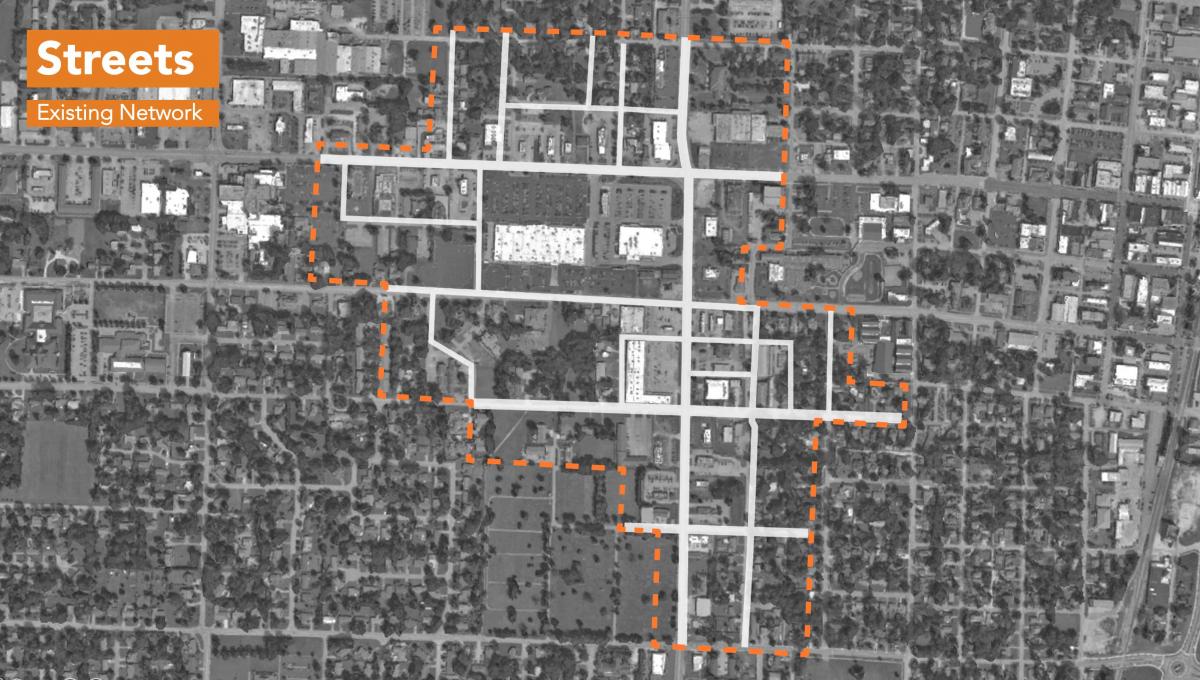
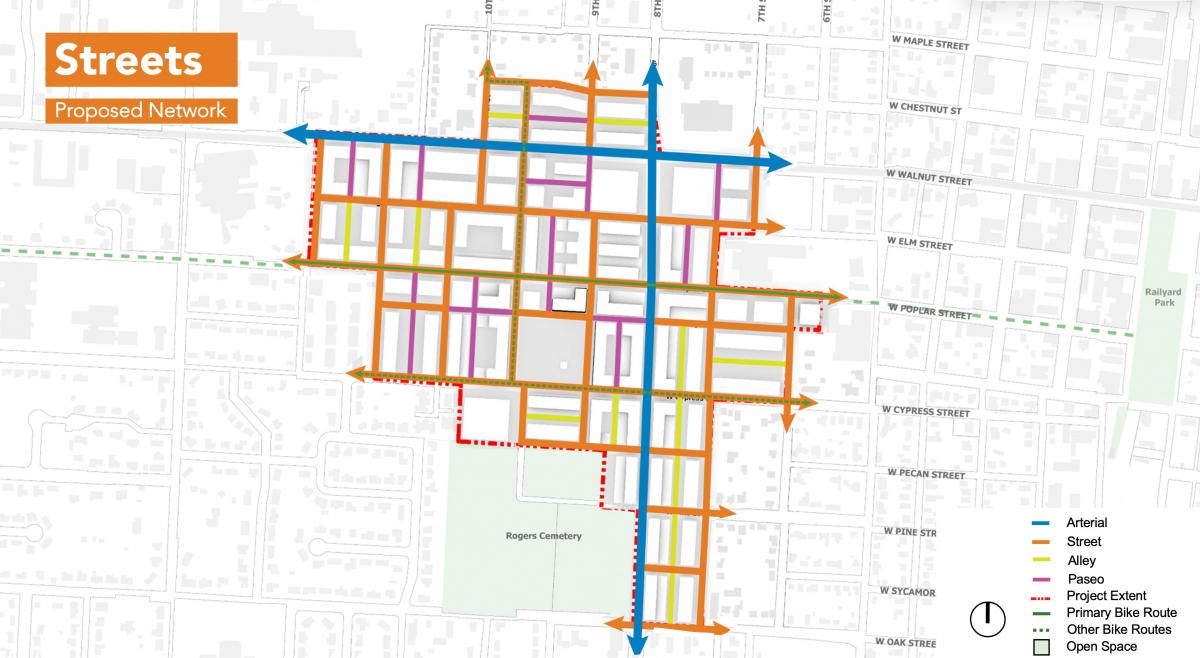
To illustrate Green’s point, the design team mapped the existing street network in the 50-plus-acre District, which is composed of large blocks with parking-lot frontages. Without changing the existing network, “I want to make it clear that you will never have a walkable place,” Green says. “There is no place in the world without a highly connected network of rights-of-way that is eminently walkable.” So, the designers superimposed a grid on the District with smaller blocks shaped like those in the adjacent downtown. The new streets largely follow existing lot lines.
Alex Vasquez, a local resident and attorney, has been a proponent of redesigning the La Plaza District since 2022. He attended an Urban Land Institute webinar on Latino placemaking. “It grabbed my attention,” he says. “I came to the intersection and looked around. It looked just like the shopping center in the case study.” He had a vision for a new community, with housing, building upon the current ethnic businesses, and welcoming to everyone. The zoning was already favorable to mixed-use development, but has become even more so since Rogers adopted a form-based code in 2024, Vasquez explains.
Interestingly, the downtown grid fits. The proposed plan would greatly boost potential real estate values in the area by multiplying the number of frontages, where urban buildings can be placed. The streets in the network needn’t all be the same, but could include a mix of regular streets, streets with bike lanes, narrow “paseos,” and alleyways. The two arterials, which are state routes, are not likely to change much anytime soon, but they could benefit from improved crossings.
The street network would establish the small blocks. The blocks contain parcels, and the parcels are building sites. The buildings would be governed by Rogers’ unified code, enabling mixed use and urban density while ensuring pedestrian-friendly frontages. The District should grow organically, says Green. “The blocks can accommodate many kinds of uses. But they are also geared for local, incremental development, not national mega projects. We are projecting new streets for this area that are comfortable to walk on, but also eminently developable.”
The analogy he uses is Manhattan, where the city commissioners sponsored a street plan in 1811. At the time, most of the island was farms and villages. The surveyors marked the future intersections. The plan established rights-of-way through landholdings, securing land for public use and exponentially increasing real estate values for everyone. The island grew organically, but the master street plan provided the foundation for a walkable place.
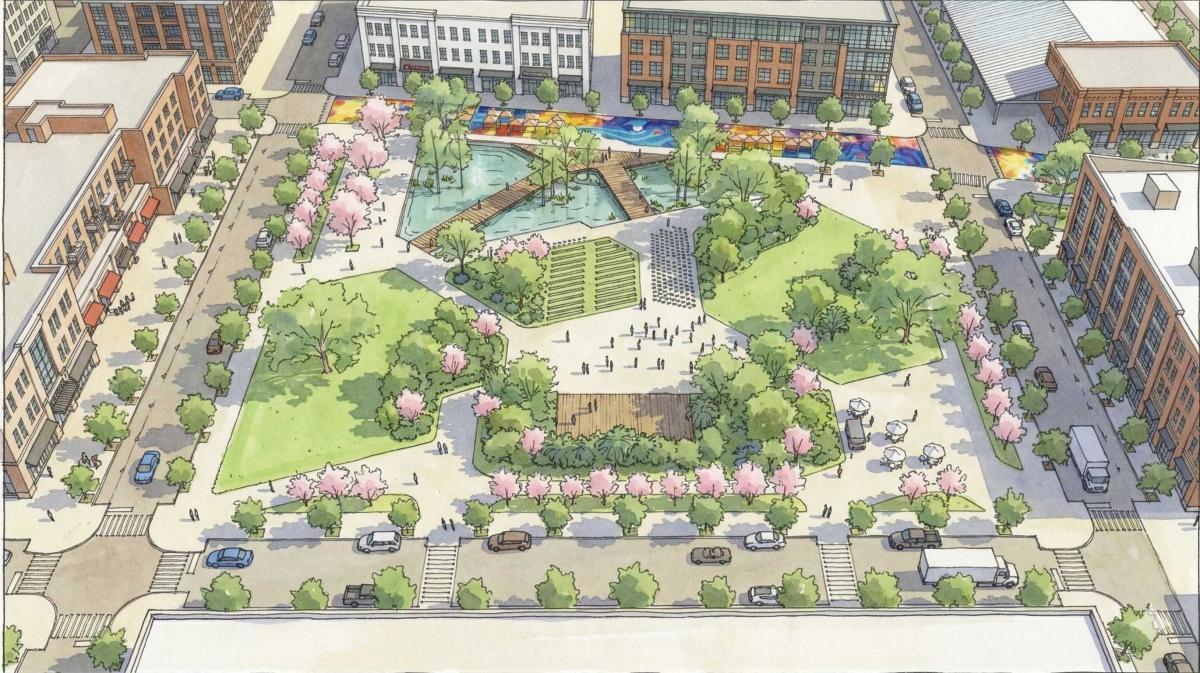
A fifth important element of urbanism, public space, is accommodated in the street grid. The plan shows a primary square at the District center, the size of a downtown block, that could accommodate events and serve as an important gathering spot for the city. Borrowing from South American cities, small pocket plazas are envisioned throughout the plan, connected by narrow walkable paseos. “Once a street becomes a paseo, it is important that you can walk down the entire paseo,” he says. A “mosaic market”—a place for small businesses, local artisans, and specialty food producers—is envisioned in the District as a regional destination. That would build on the current ethnic flavor.
“While we are doing this, we can’t lose the businesses that are actually thriving,” Green says. To change the character of the District without losing enterprises, “a lot of these changes can be incremental. You figure out other places where people can park. You could have a pop-up market, a couple of days a week or full-time, on a portion of a parking lot.”
The plan does not envision any immediate changes to Walmart-owned properties. The Neighborhood Market is a key anchor business. While the administration building is underutilized at present, Green is confident that the retail giant will support the transformation of La Plaza District in time.
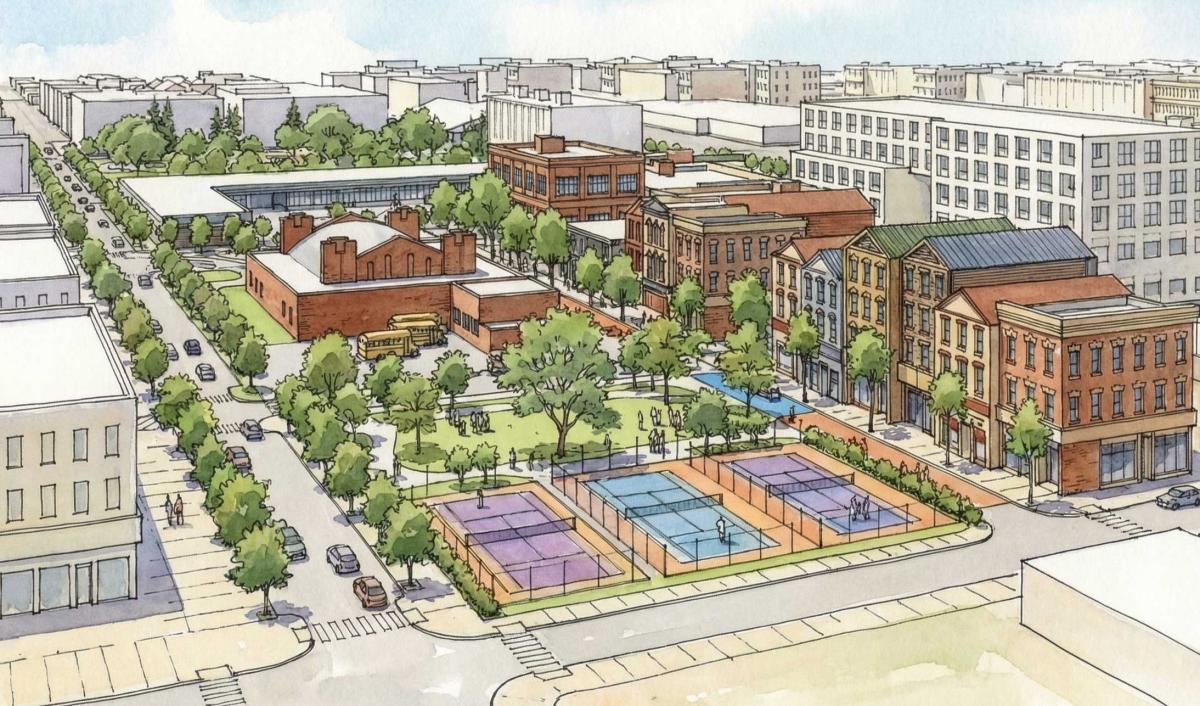
The plan for La Plaza District offers a path to suburban transformation that could be relevant beyond Rogers. Automobile-oriented commercial districts are plentiful coast to coast, and many need a fresh approach. One idea would be to draw up a crazy, unique plan for transformation, but Green suggests a better path: focus on basic urban elements that follow the pattern of how every urban place in history has taken shape.
“We are getting back to the basics of how we build communities,” Green says. “We are trying to build walkable places. This stuff was simple; we did it for thousands of years. It really just revolves around where we put streets, the blocks that come from the streets, the way we set up parcels in the blocks, and the way we build buildings on those sites.”