Trail-oriented development is transforming a region


Northwest Arkansas (NWA) is historically a region of small towns that are growing into mid-sized cities, largely due to Fortune 1000 companies located there, especially Walmart. NWA is one of the fastest-growing regions in the US, which poses problems because growth is occurring in an era when highways and low-density sprawl still hold sway over growth patterns.
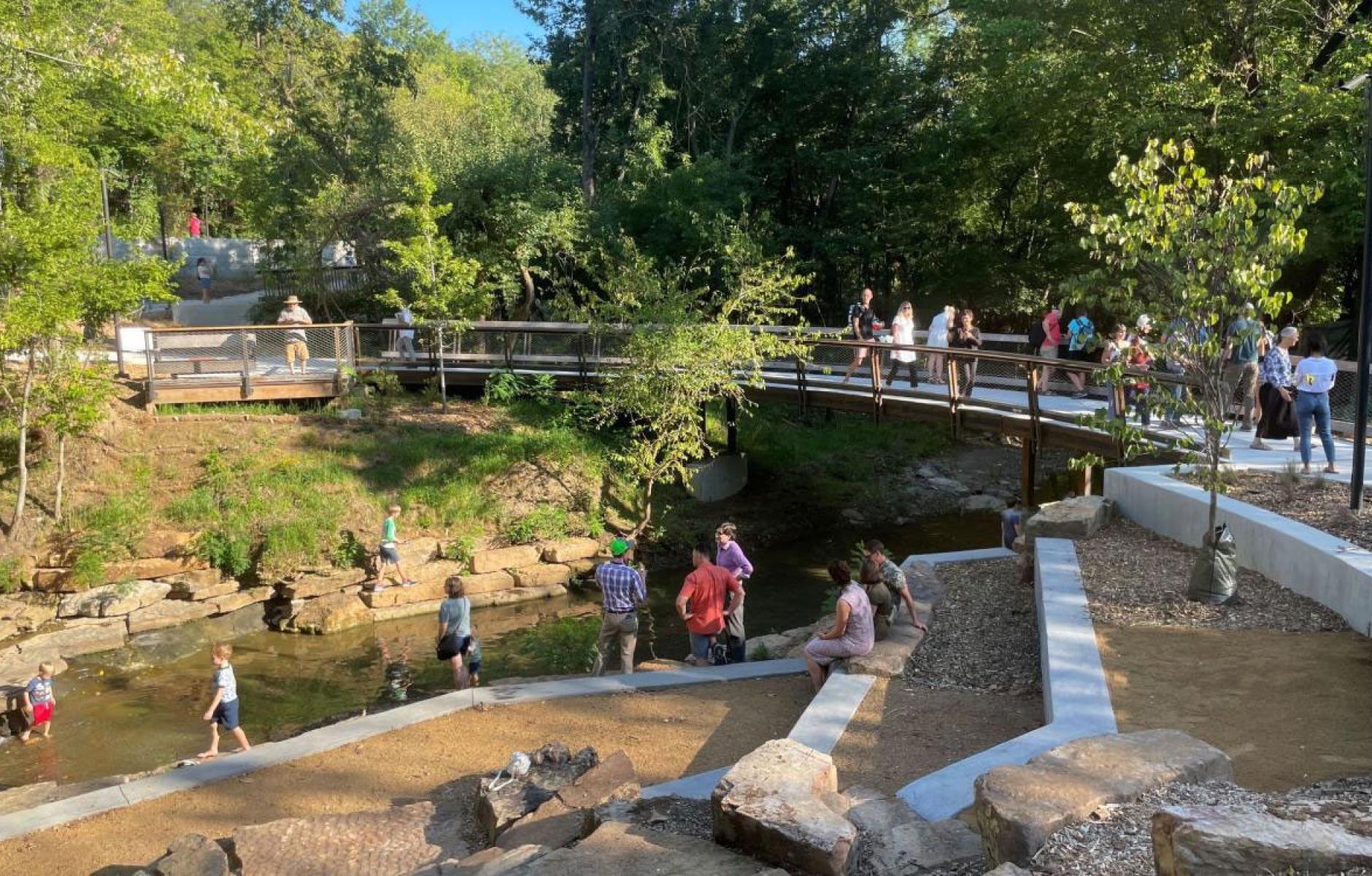
NWA is seeking a more sustainable model that preserves the natural environment that is so attractive in this Ozark Mountain region. The strongest infrastructure tool for reshaping growth is a recently built, 40-mile-long bicycle and walking trail called the Razorback Greenway.
Trail-oriented development, a concept that is starting to catch on nationally, is a surprisingly effective tool for reshaping the region. Municipalities, the Northwest Arkansas Regional Planning Commission, and the Walton Family Foundation (WFF) are using the Rural-to-Urban Transect and placemaking along the Greenway to move the region toward more effective neighborhoods. The Razorback Greenway Corridor Plan and a Design Excellence Program to create important public spaces along the trail were discussed on this week's On the Park Bench webinar, Transformative Trail-Oriented Development: Razorback Greenway.
The region is expected to nearly double in population by mid-century, according to Meredith Bergstrom of WFF, a major funder of the Greenway. “We have a tremendous opportunity to get that growth right,” she told On the Park Bench, and the upcoming CNU 34, to be held in NWA, could be key to propelling a vision forward.
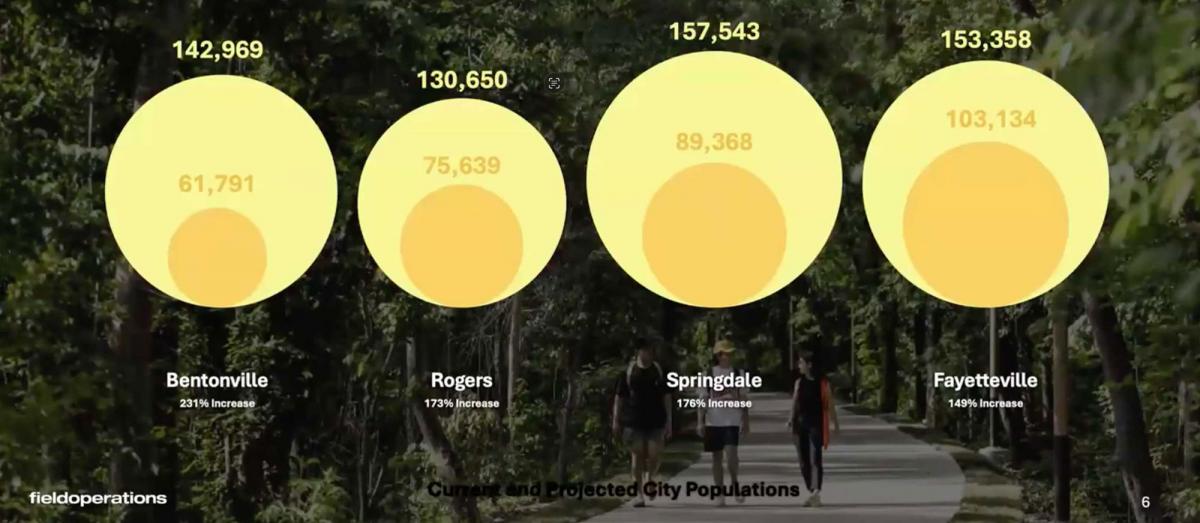
The north-south Greenway was planned 10 years ago for 30 miles at a cost of $1 million per mile, with expenses split between the federal government and WFF. It has since been expanded 10 miles, with additional east-west trails connected at key junctures. Unlike many urban trails built on former rail lines, the Greenway was mostly carved out of existing neighborhoods in four main cities—Fayetteville, Springdale, Rogers, and Bentonville—and three smaller towns (some portions of the Greenway were on former rail ROWs).
About half of the region's residents live within a short walk or bike ride of the trail, according to Matt Hoffman, an architect with MBL Planning of Fayetteville, which is working on the Corridor Plan with lead firm Field Operations. As the region grows, that percentage could increase if the current plan is successful.
This system has greatly expanded bicycle access in the region, and bicycling generates an estimated $159 million in economic benefits annually in NWA. And the trail's impact could be greater in the future. “What began as a recreational trail now functions as a transportation route as well as economic and civic infrastructure,” Bergstrom notes. Each city has major new public spaces connected to the Greenway, funded by the Design Excellence Program.
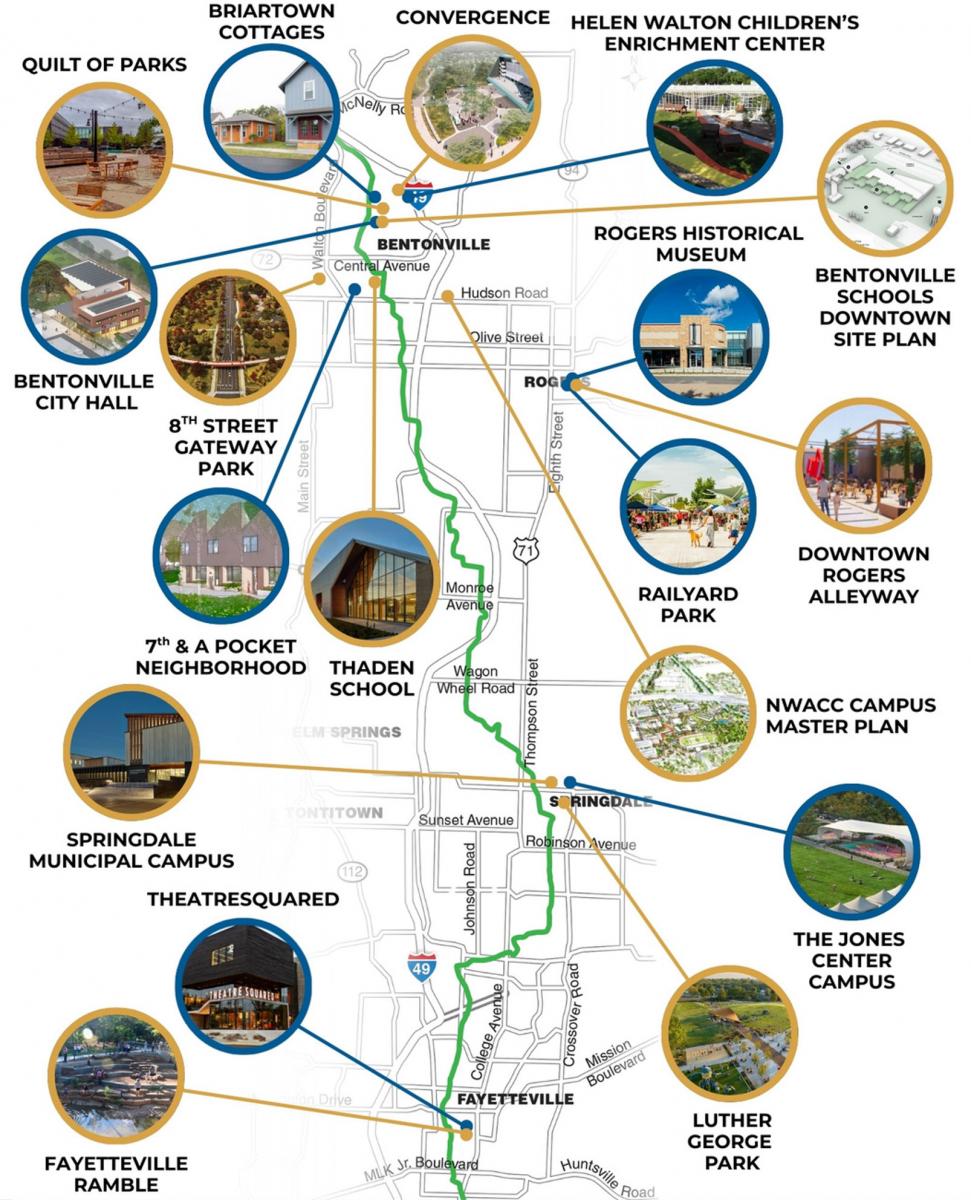
The Corridor Plan has six main components:
- Protect and restore creek corridors
- Rewild (portions of) the Greenway
- Manage stormwater
- Grow new neighborhoods along the Greenway
- Build a bicycle network
- Connect destinations and experiences
Growing new neighborhoods and connecting destinations and experiences are key to how the Greenway is reshaping the region. The Greenway runs through existing neighborhoods, and many of these have vacant land, parking lots, and low-slung buildings. “We are using the Transect approach to understand how we can transition each of these different contexts,” to contribute to placemaking, mixed-use, and density of Missing Middle housing, Hoffman says.
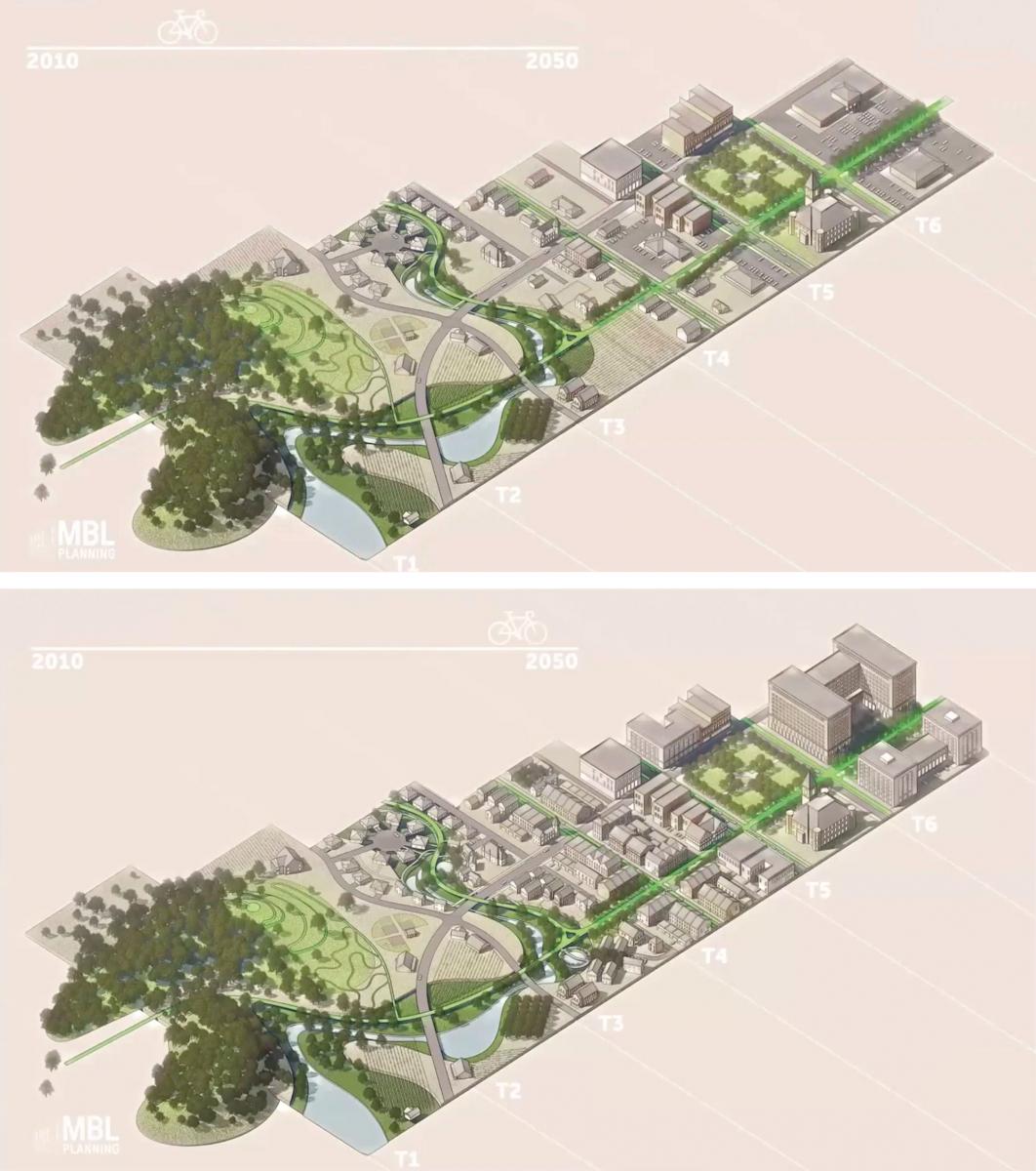
“It’s not about complete erasure and large-scale development, but about an incremental redevelopment plan over the full course of that 25-year period,” he says. “It’s got to be a great place at every step along the way.”
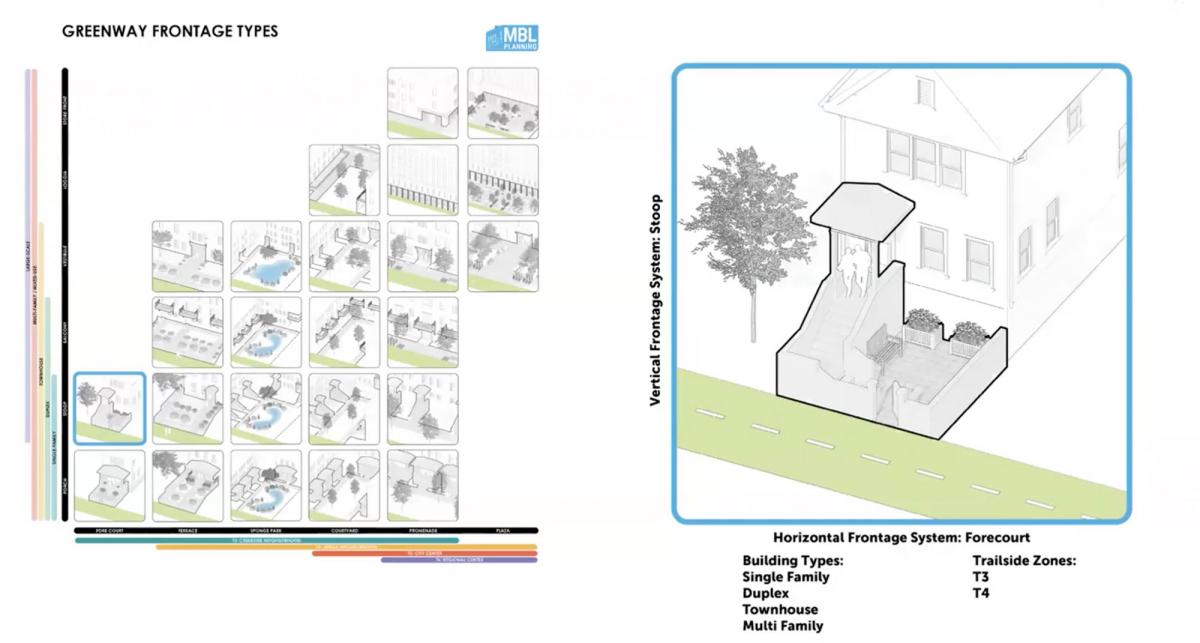
One challenge is ensuring appropriate frontages of new buildings along the Greenway. Typical production developers don’t even think much about street frontages, let alone how a building should face a trail. The planners are examining the likely types of housing that will be built along the Greenway and how the buildings could appropriately front onto it.
“We are using the Transect approach to understand how we can transition each of these different contexts” to better front and respect the Greenway with new and modified development.
The seven municipalities all have different codes and plans. “This Transect approach is really critical to helping everyone come to the table with a consistent vocabulary,” Hoffman explains.
The planners applied Transect zones by bringing planners from seven municipalities together for a workshop. Each planner applied T-zones to the corridor, but not in their own town. Afterward, planners were asked to critique how the other planners applied the zones to their town. The process was effective in daylighting important issues and achieving consensus on a regional development vision, Hoffman says.
A draft version of the Razorback Greenway Corridor Plan was released for public comment this week. It is worth a look. Watch the entire video from On the Park Bench: