Torti Gallas recognized for low-income community design


Torti Gallas + Partners, which has designed more than 40,000 units of affordable and workforce housing built across the US, received the 2026 Gindroz Award for Excellence in Affordable Housing. The Institute of Classical Architecture & Art (ICAA), which gave the award, recently hosted the 2026 Gindroz Symposium on Affordable Housing in Washington, DC, to celebrate Torti Gallas's work and explore where the field has been and where it is headed.
The award and symposium are named for Ray Gindroz, FAIA, a pioneer of New Urbanism who has dedicated his career to transforming public and affordable housing. Much of the symposium focused on HOPE VI and Choice Neighborhoods, federal programs that have brought design front and center to public housing and neighborhood revitalization. The discussion was timely because of the study published this year by Harvard-based Opportunity Insights, which was able to quantify the multigenerational economic and social benefits of the HOPE VI program. Conducted by Raj Chetty, who presented the results at the opening keynote of CNU 34 earlier this year, the report is concrete evidence of the positive impact of New Urbanist principles and is fueling coordination between CNU and other partners to coordinate further leadership around the urban conditions and the economic opportunity that Chetty describes, as a way to help communities prioritize reinvestment and improve policies that attempt to lift up struggling neighborhoods.
Torti Gallas + Partners created one of the earliest HOPE VI designs to feature New Urbanism principles: a 1994 plan to transform Lafayette Courts in Baltimore, Maryland. That was two years before the Congress for the New Urbanism worked with HUD to create design guidelines for HOPE VI, eventually leading to the benefits documented in the research by Chetty. Lawrence “Murphy” Antoine, President and Board Chair of Torti Gallas, described the Lafayette Courts project as a “turning point” for the firm, which had a long history from the mid-20th Century of serving as a “developer’s architect” on largely suburban designs when the firm was named CHK.
John Torti and Tom Gallas took over the practice in the early 1990s and committed to New Urbanism and the new HOPE VI program, Antoine says. The Lafayette Courts project came when a confluence of firms and thinkers—such as Urban Design Associates and its cofounder Gindroz—and urban planners like Elinor Bacon promoted new ideas on how to design public and affordable housing. Baltimore was just up Interstate 95 from Torti Gallas’s offices, and the firm won the competitive design process. Torti Gallas + Partners went on to become one of the most prolific New Urbanist and affordable housing designers over the last three decades.
The jury was “Excited about the incredible richness of their work. They have demonstrated results and impacts, and shaped their firm to address the needs of affordable housing across their services—from planning to architectural design to construction documents,” says Eric Osth, ICAA Board Member, Chair of the Gindroz Award panel, and Managing Principal and Chairman of UDA.
Osth remarked that the New Urbanism was once criticized for focusing on building better suburbs, but the work on HOPE VI demanded attention to a different part of the Transect. “This work requires intensely urban solutions with deep collaboration between consultants and the community,” he says. Given the firm’s suburban history, HOPE VI launched Torti Gallas + Partners into a new aspect of the built environment. The program's scale, creating entirely new neighborhoods in cities across the US, enabled the impact Chetty documented on its residents.
The neighborhood scale and focus on housing appealed to Torti Gallas’s skill set, honed through work for developers on large suburban projects. The firm hired urban designers and architects adept at traditional design to enable New Urbanism at scale.
Another architect on the jury, Union Studio founder Donald Powers, notes that “Union Studio has always looked to Torti Gallas as a model for our practice for many reasons including their humble but profound mission to make neighborhoods better. But we especially admire the seriousness and sensitivity with which they approach the design of affordable housing—it’s been a real inspiration for us at Union.”
Of Torti Gallas’s large catalog of projects, the ICAA jury focused on many specific ones, including:
Skyline Terrace in Pittsburgh, PA. The existing neighborhood included 726 units on a 40-acre parcel. Torti Gallas provided a site analysis, facilitated community meetings, and conducted a three-day workshop that enabled the development of a consensus-based neighborhood design. The master plan for 400 new homes strengthens vehicular and pedestrian connections to the surrounding Centre Avenue community, providing outdoor spaces that capitalize on views to downtown and the Monongahela River, and home designs that blend with the surrounding context.
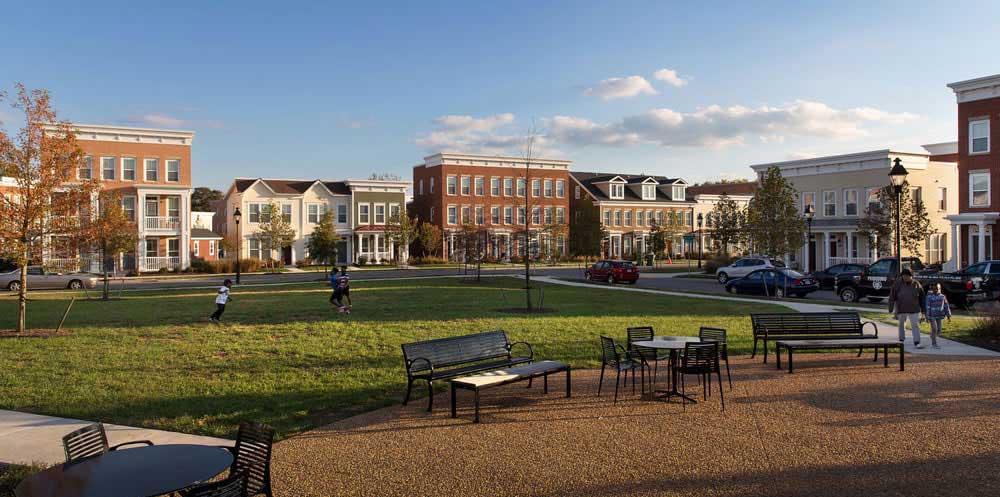
Church Hill North in Richmond, VA. The transformation of the East End of Richmond, Virginia, is sparked by the revitalization of Creighton Court, a 500-plus unit public housing project at Nine Mile Road and Interstate 64. By using a derelict, City-controlled, 20-acre site across the street from Creighton Court to initiate the first phases of the revitalization, the project minimizes displacement and relocations at Creighton proper. The redevelopment is multi-phased and made possible with a variety of funding sources including Low Income Housing Tax Credits (LIHTC) and the RAD Program.
Approximately 300 homes—a mix of bungalows, duplexes, townhouses, stacked flats, and elevator-served apartments— on a transformed site honor the history and set the stage for continued neighborhood growth. The neighborhood features formal and informal parks, a small Neighborhood Center, regular blocks, and pleasant, walkable streets serving a mix of income ranges from very low income to market rate, including rental, homeownership, and senior living opportunities.
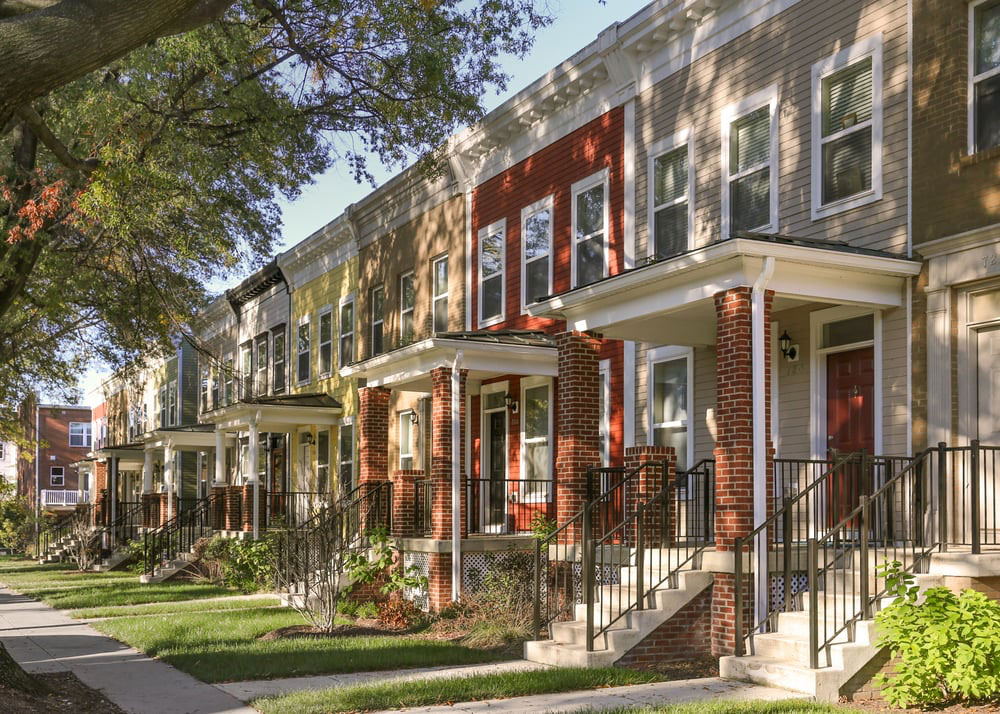
MetroTowns at Parkside in Washington, DC. The MetroTowns neighborhood provides one-for-one replacement of the 42 “Parkside Additions” affordable rental units that were razed to make way for this new development. MetroTowns consists of 125 new for-sale and rental homes on 9 acres. Nineteen of the homes are accessible or adaptable units. MetroTowns is close to the Minnesota Avenue Metro Station, the César Chávez public charter school and National Park Service (NPS) land. Paths were created to public areas where residents can enjoy the new neighborhood park, corner park, and walking/biking trail. Grading strategies were employed to reduce the number of accessible ramps and increase the number of visitable units on site. Indigenous vegetation, a mature tree-save strategy, innovative stormwater management techniques, and the use of rain barrels are just a few of the sustainable features found throughout the neighborhood.
Martin Luther King Plaza in Philadelphia, PA. The transformation of Martin Luther King Plaza and the comprehensive revitalization of the surrounding Hawthorne community restored to health what was once a vibrant, architecturally rich, working-class neighborhood in South Philadelphia. The urban design does this through a twofold approach: First, through construction of 128 new homes for mixed-income renters and homeowners that replaced four dilapidated high-rise towers on the public housing site with more sensitive urban rowhouses on new and existing streets, and a new urban square to knit the community back together; and Second, through the sensitive infill of 121 new homes and new community and retail uses in the surrounding 30-block area.
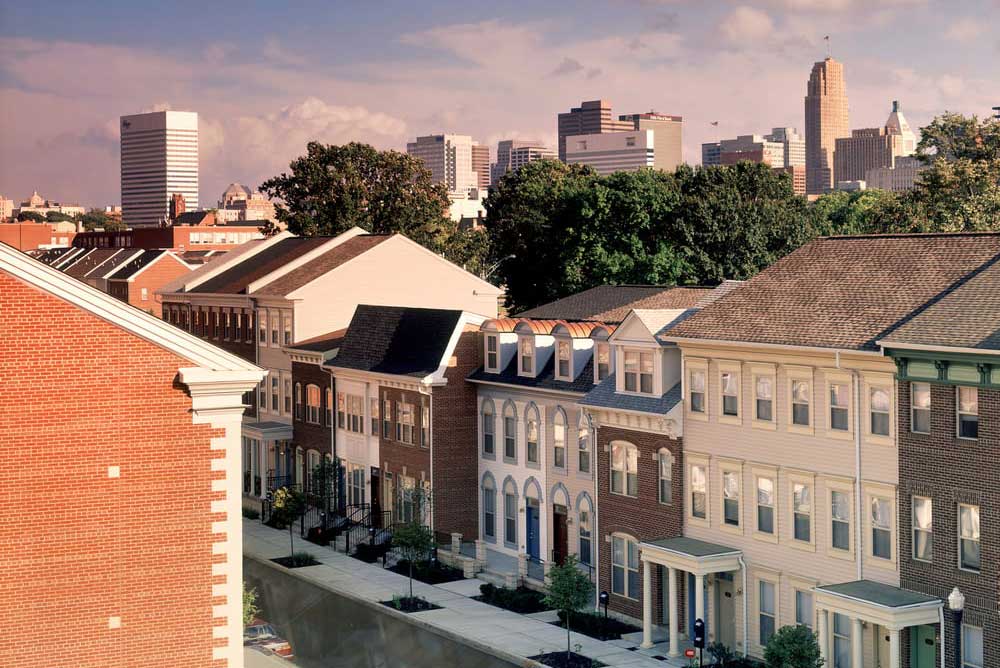
City West Revitalization in Cincinnati, OH. Seeded with a HOPE VI grant, this revitalization in the City West neighborhood replaced more than a thousand, mostly one-bedroom, public housing apartments with a neighborhood of rowhouses and duplexes for families of various incomes and sizes. The site plan subdivided the formerly disconnected “superblock” layout into a gridded pattern of regular blocks that connect to adjacent revitalization activities, the City’s greater West End, and Downtown Cincinnati. A sympathetic interpretation of Cincinnati’s historic residential architecture gives the new homes a solid character that upholds the best West End traditions.
Salishan Neighborhood Revitalization in Tacoma, WA. For one of the largest HOPE VI revitalizations in the nation, healing both physical and environmental deterioration was key to Salishan's transformation. During active participation in community charrettes and workshops, residents emphasized the neighborhood's poor physical condition. In response, Torti Gallas designed a master plan and multiple housing configurations for 1,200 new homes based on pervasive multigenerational and multicultural family structures. Having a mix of rental, for-sale, and senior living homes created a neighborhood that addresses all phases of life. Salmon are considered a sacred and endangered fish in the Northwest. In order to protect them from polluted stormwater runoff, Torti Gallas designed a “low-impact” master plan that captures and filters 91 percent of all stormwater runoff.
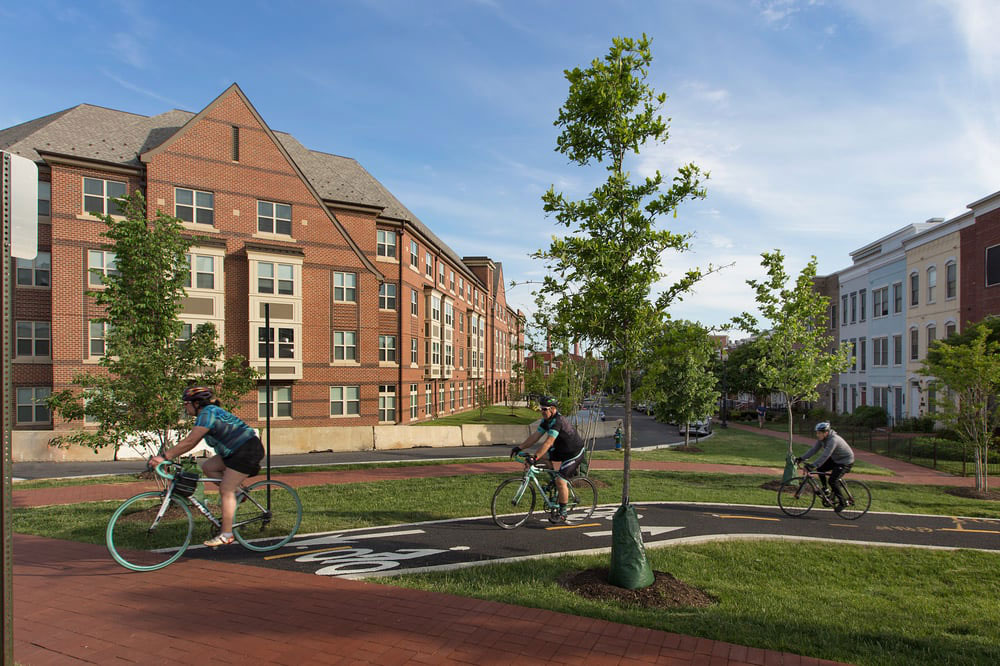
Arthur Capper/Carrollsburg Community in Washington, DC. The Arthur Capper/Carrollsburg site was somewhat isolated from the rest of the city and specifically the Capitol Hill neighborhood, by the freeway and the Federal Government uses surrounding the area. Additionally, the site faced pressure from adjacent new, higher-density development triggered by the influx of new federal employees to the Washington Navy Yard. The design challenge was to create a revitalized, mixed-income/mixed-age/mixed-use neighborhood that would extend the Capitol Hill neighborhood toward the Anacostia River. The solution placed higher-density office, senior, and workforce housing along the commercially oriented M Street and the newly created Canal Park. Two new streets were cut through the larger “superblocks” in order to create a finer neighborhood block pattern. Townhouses are located in the middle portion of the site. The three four-story apartment buildings serve as a transition between higher- and lower-density portions areas. The LEED-certified Neighborhood Community Center is within walking distance of the entire community.
Belmont Heights in Tampa, FL. The Belmont Heights Neighborhood Revitalization transformed a gated barracks-style public housing project into a new 860-unit mixed-income residential neighborhood. The master plan, generated through a series of charrettes and workshops, knits the new streets and houses into the surrounding traditional neighborhoods. The plan capitalizes on the site’s best natural amenity—beautiful large Live Oaks and other tree species—by maintaining the tree-canopied streets and creating new parks and greens that preserve large stands of mature trees. The architectural style for the new homes is characteristically Floridian.
Villages of Noisette in North Charleston, SC. The revitalization of the Villages at Noisette (formerly North Park Village) in the heart of North Charleston forged a physically and socially vibrant neighborhood out of a distressed public housing project. The master plan provided 500 homes for prospective mixed-income purchasers and renters, including former North Park Village residents, seniors, empty nesters, first-time home buyers, single parents, young professionals, and families.
Victory Heights in Washington, DC. Victory Heights is a 75-unit, affordable, transit-friendly option for senior residents of the Columbia Heights neighborhood. Located immediately adjacent to the Metro Station and several Metro bus lines, this new, urban residential facility offers seniors easy access to public transportation as well as all of the shopping and dining venues available in this rapidly transforming neighborhood. Victory Heights was funded under HUD’s Section 202 Program.
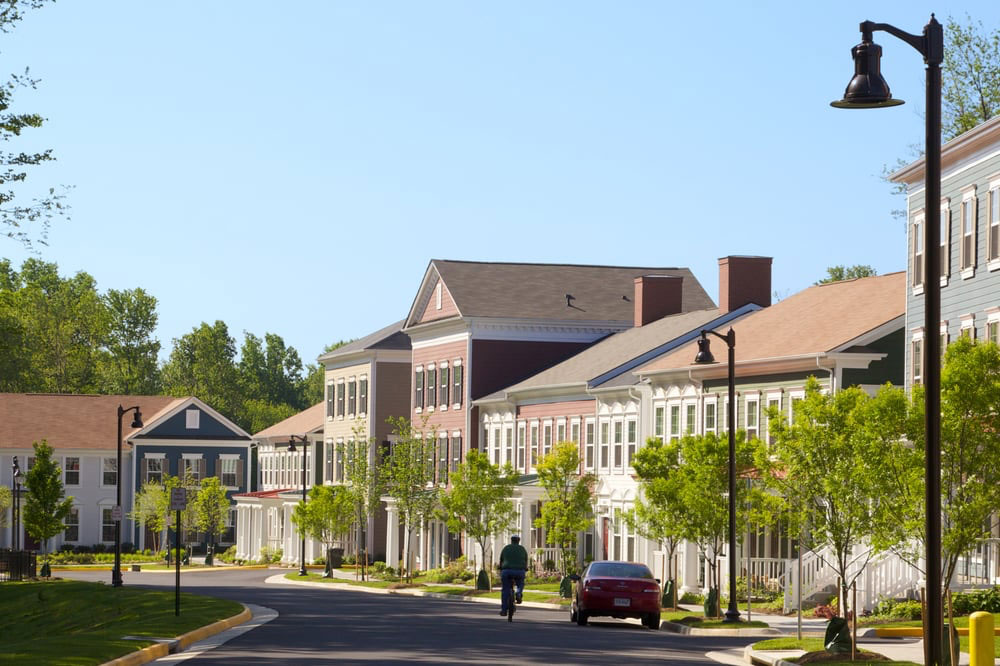
Masonvale, George Mason University in Fairfax, VA. Facing a rising cost of living and a critical need for affordable housing in Northern Virginia, George Mason University chose to develop some of its vacant property to attract and retain young faculty and staff. The University selected Torti Gallas as part of a development team to design, build, and manage housing on the Fairfax Campus. The program included 157 units, ranging from one- and two-bedroom flats to three-bedroom townhouses and duplexes on a 16-acre site on the east side of the campus.
The primary design challenge was to craft new walkable neighborhoods that would seamlessly knit together the University and the surrounding Fairfax City community, while also managing the rapid development expected to continue into the next decade. It establishes connections between town and gown, while discouraging increased through-traffic. The house designs capitalize on the best of the traditional architecture of Old Town Fairfax.
College Park Revitalization in Memphis, TN. Located in southern Memphis, LeMoyne Gardens was an existing public housing community that was radically remade as a result of a 1994 HOPE VI grant. The site, now known as College Park, sits between a historic African American college, a cemetery, and a stable single-family neighborhood. A central design challenge for Torti Gallas + Partners was to marry the new mixed-income neighborhood to its diverse context, substantially increase density, and create a seamless transition with the surrounding single-family community. By reusing as many existing street rights-of-way as possible, the project saved most existing trees, giving the “new” neighborhood a mature character. Additional streets were added to improve walkability, connectivity, and density. The design features a palette of small buildings containing 1 to 4 units, each with unique character and massing, inspired by the best surrounding single-family neighborhoods.
Previous winners of the Gindroz Award include Nansledan, Artspace, Union Studio, and the City of Santa Barbara.