Right street, right place


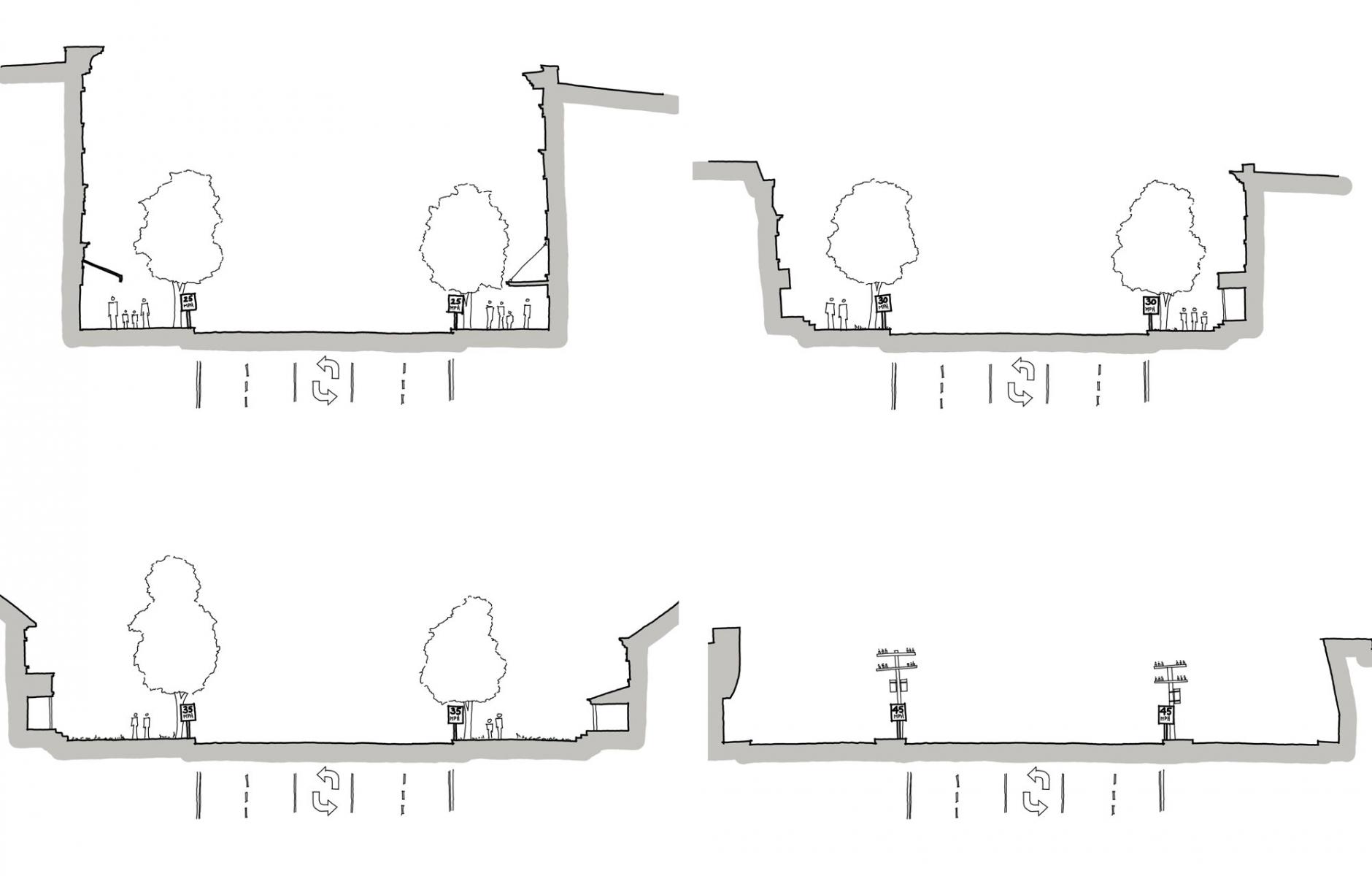
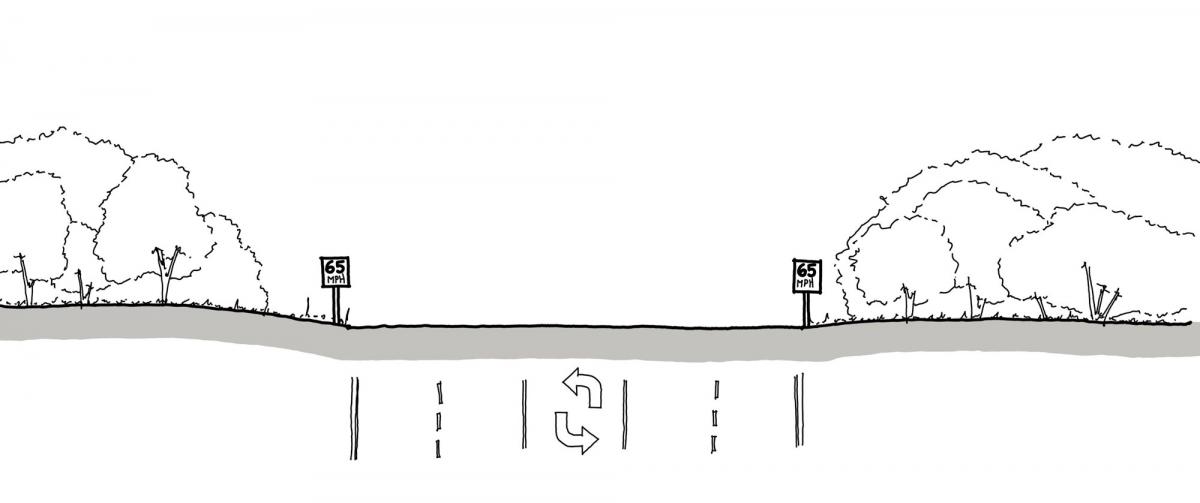
I’ve been noticing something more and more when I travel; while on a road trip, the design of the pavement will be the same regardless of what is around me. A highway surrounded by nature leads to a strip mall area, then to a residential neighborhood, then to a main street, and the only thing that changes is the posted speed limit.
We don’t make the same building over and over and say, "This box is a shop, this box is a house, this box is an office, this box is a school." The exact same building design does not work for these different uses. We even change our shoes for different occasions. Why are we okay with the same design for highways as for our downtown streets? To do so suggests that either the main street is over-designed, or the highway is inadequate.
In contrast, many new and historic examples show streets that feel a part of the neighborhood. From grid layouts of Savannah, Georgia, and Hudson, New York, to the picturesque organization of Charleston, South Carolina, and Forrest Hills in Queens, to the diagonally-organized plans of Washington DC and Chicago, it is possible to see how the design of streets change as the surrounding context changes. New places such as Glenwood Park, Norton Commons, Assembly Row, Buena Vista, and the trifecta of Seaside, Rosemary Beach, and Alys Beach, among others, implement this principle as well. All of these locations are sought out as places to visit and live.
So, what can we learn from this?
Street design needs to respond to its context. Highways have their place, and their design should match that. Likewise, our residential neighborhoods and main streets should reflect a design for slower traffic and multi-modal transportation, and contribute to the community context around them. This includes narrower lanes, tighter curb radii, on-street parking, street trees, and more space for pedestrians—even in our more auto-oriented situations.
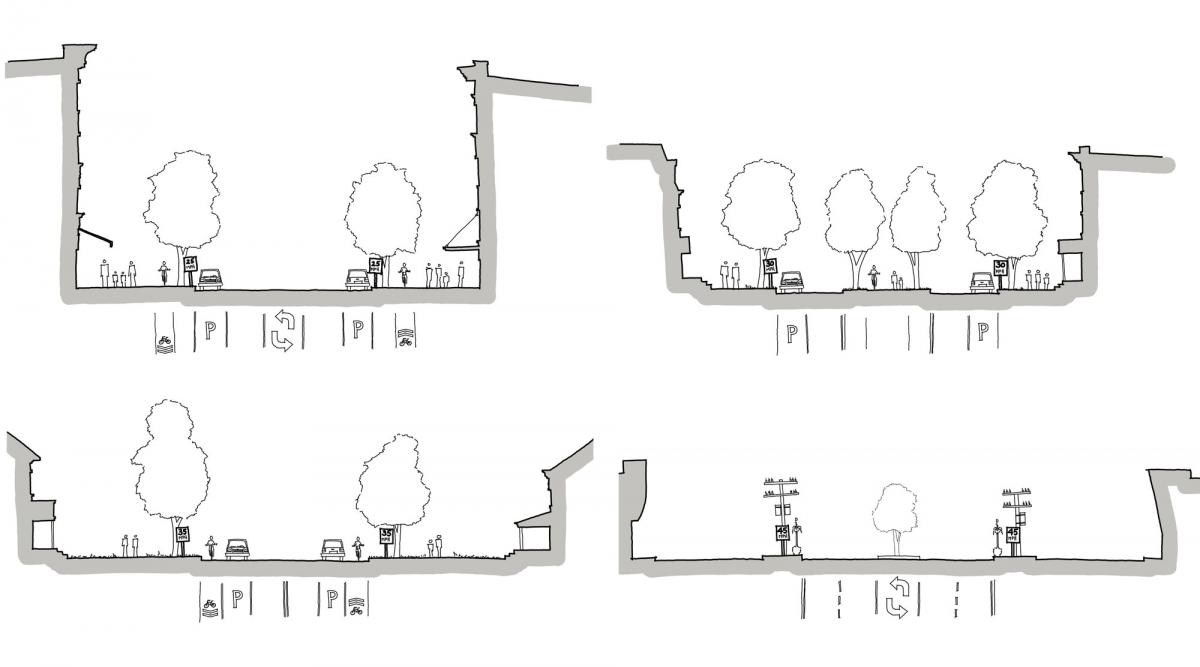
Within the same curb-to-curb space as a 5-lane highway, we have the opportunity to tailor our streets to provide for the needs of their context through:
- The number and widths of lanes that meet the desired speed
- A range of bicycle infrastructure
- More generous sidewalk widths
- Medians that create esplanades
- More space for trees
- On-street parking
These are just a handful of tools that we can use to make the places we live not only safer, but more enjoyable. To do this means we need to acknowledge and incorporate the range of options beyond the typical functional classification of arterial, collector, and local street types.
There are resources that we can use to give us the full range of possibilities.
- Street Design: The Secret to Great Cities and Towns by John Massengale and Victor Dover outlines the many types of streets and illuminates how they can make the places we live pleasant, memorable, and human-oriented (2nd edition coming soon).
- The NACTO Urban Street Design Guide and its other resources are a good place to start when getting familiar with what municipalities in the US have done.
Take a look around your community. If you notice that the streets are all the same even though what is around them is different, grab these books and find the right street design, go to your local municipal offices, point to an example, and say, “Let’s have this in our community.” Then our places can wear the right shoe for the right occasion.